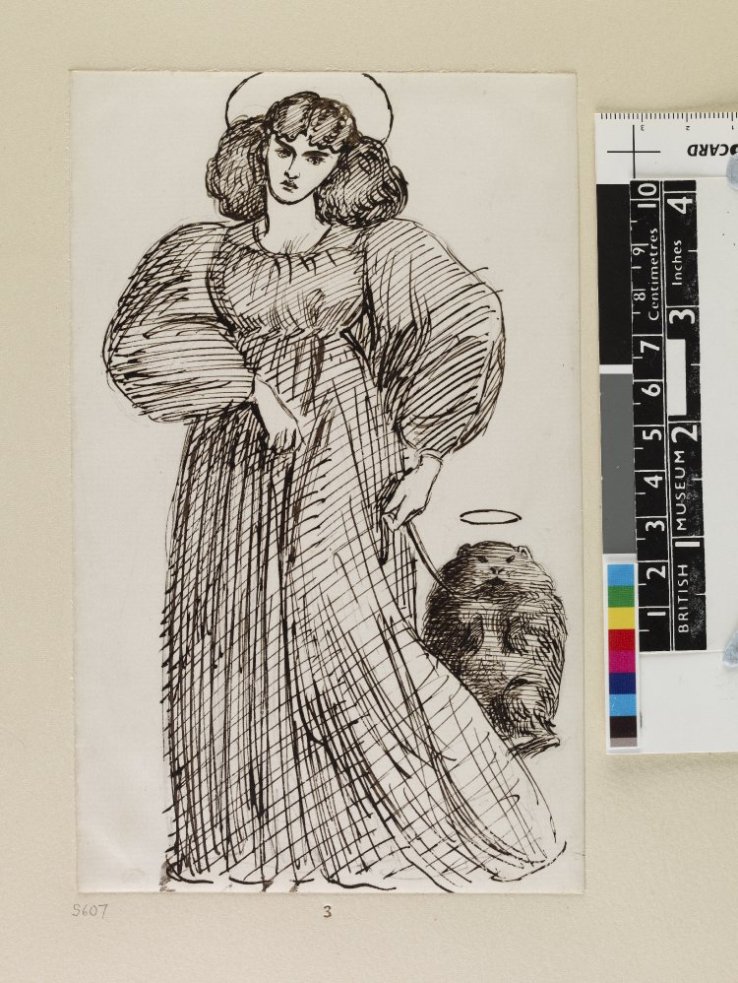
In September 1869, Dante Gabriel Rossetti bought the first of two pet wombats….In the 1860s, Rossetti often took his friends to visit the wombats at the zoo, sometimes for hours on end. On one occasion Rossetti wrote to Ford Madox Brown: ‘Dear Brown: Lizzie and I propose to meet Georgie and Ned [the Burne-Jones] at 2 pm tomorrow at the Zoological Gardens—place of meeting, the Wombat’s Lair.’ In this period a number of new wombats arrived at the Regent’s Park Zoo: a rare, hairy-nosed wombat on 24 July 1862, and two common wombats despatched from the Melbourne Zoo on 18 March 1863. As well, Rossetti made regular visits with his brother, William Michael, to the Acclimatisation Society in London and its counterpart in Paris, to keep an eye on the hairy-nosed wombats residing in both places. This was no passing fancy.
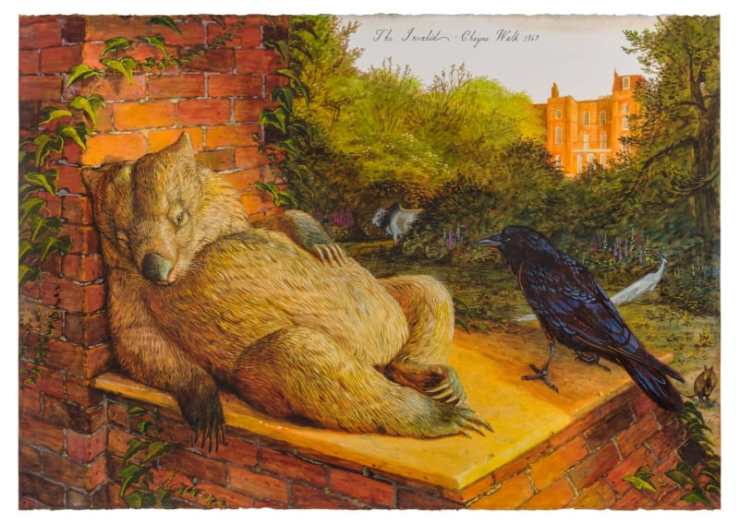
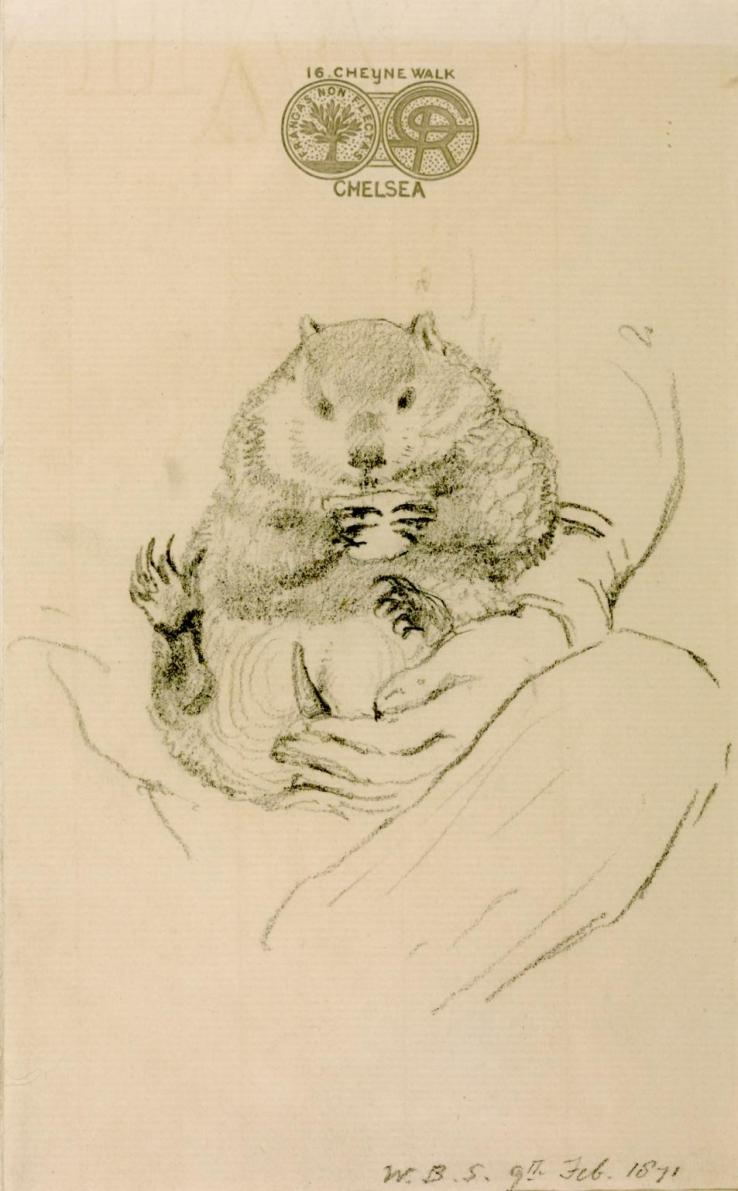
Earlier, in 1862, Rossetti had moved to Tudor House, at 16 Cheyne Walk, Chelsea. Spacious, with plenty of room for family and friends including George Meredith and the deeply unattractive poet and semi-professional sadomasochist Algernon Charles Swinburne—who liked to slide naked down the banisters—the house had four-fifths of an acre of garden, with lime trees and a big mulberry. As soon as he arrived, Rossetti began to fill the garden with exotic birds and animals. There were owls, including a barn owl called Jessie, two or more armadillos, rabbits, dormice and a racoon that hibernated in a chest of drawers. There were peacocks, parakeets, and kangaroos and wallabies, about which we know frustratingly little. There was a Canadian marmot or woodchuck, a Pomeranian puppy called Punch, an Irish deerhound called Wolf, a Japanese salamander and two laughing jackasses. We know the neighbours were tolerant up to a point but Thomas Carlyle, for one, was driven mad by the noise. At length there was a small Brahmin bull that had to go when it chased Rossetti around the garden, and, in September 1869, a long-awaited wombat.
Shortly before this date there had been a number of animal deaths at Cheyne Walk, so Rossetti raised the animal-collecting stakes considerably. …His object was to purchase a young African elephant, but he balked at the price of £400. Rossetti’s income for 1865 was £2000.
…Soon, however, Top the wombat was ailing. William Michael wrote: ‘The wombat shows symptoms of some malady of the mange-kind, and he is attended by a dog doctor.’ The next day: ‘Saw the wombat again at Chelsea. I much fear he shows already decided symptoms of loss of sight which effects so many wombats.’ At length, on 6 November, the wombat died. Rossetti had him stuffed and afterwards displayed in the front hall.
Rossetti’s famous self-portrait with Top, the deceased wombat, is satirical but was apparently prompted by genuine grief. The accompanying verses are bleak indeed:
I never reared a young wombat
To glad me with his pin-hole eye,
But when he most was sweet and fat
And tailless, he was sure to die!





 Biblioklept