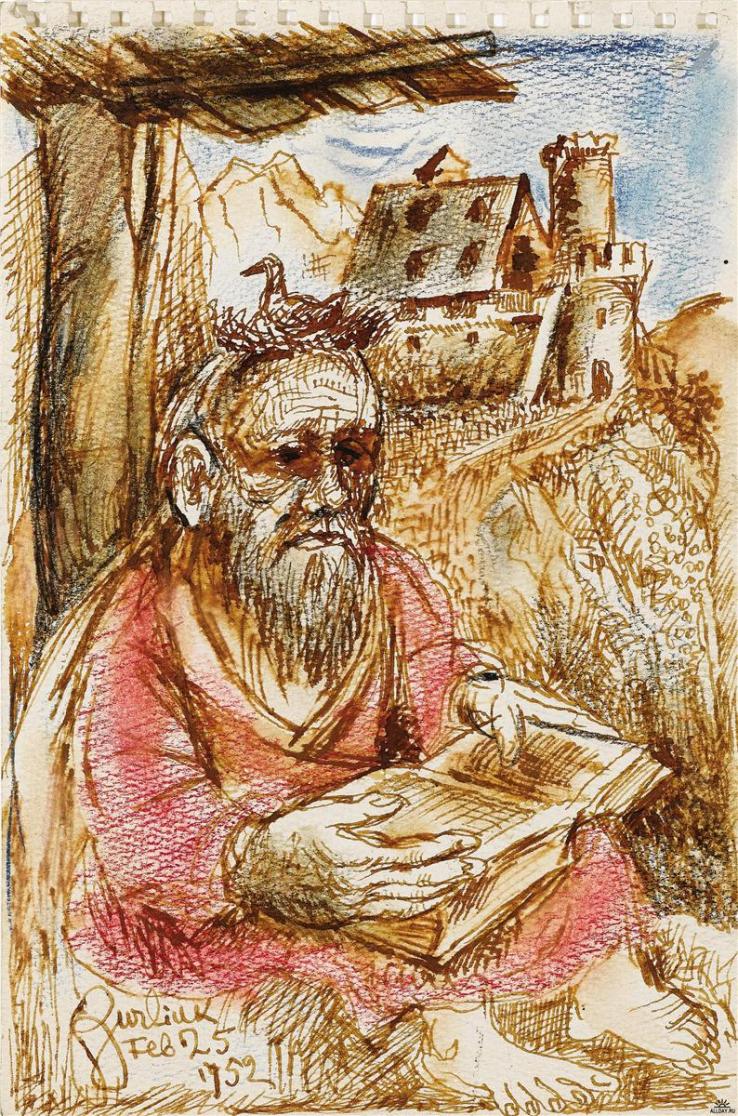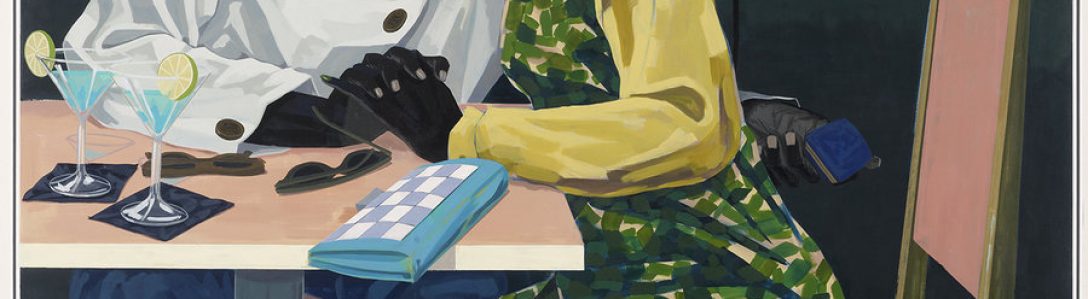
“…however baby man may brag of his science and skill…” (Moby-Dick)

But though, to landsmen in general, the native inhabitants of the seas have ever been regarded with emotions unspeakably unsocial and repelling; though we know the sea to be an everlasting terra incognita, so that Columbus sailed over numberless unknown worlds to discover his one superficial western one; though, by vast odds, the most terrific of all mortal disasters have immemorially and indiscriminately befallen tens and hundreds of thousands of those who have gone upon the waters; though but a moment’s consideration will teach, that however baby man may brag of his science and skill, and however much, in a flattering future, that science and skill may augment; yet for ever and for ever, to the crack of doom, the sea will insult and murder him, and pulverize the stateliest, stiffest frigate he can make; nevertheless, by the continual repetition of these very impressions, man has lost that sense of the full awfulness of the sea which aboriginally belongs to it.

The first boat we read of, floated on an ocean, that with Portuguese vengeance had whelmed a whole world without leaving so much as a widow. That same ocean rolls now; that same ocean destroyed the wrecked ships of last year. Yea, foolish mortals, Noah’s flood is not yet subsided; two thirds of the fair world it yet covers.

Wherein differ the sea and the land, that a miracle upon one is not a miracle upon the other? Preternatural terrors rested upon the Hebrews, when under the feet of Korah and his company the live ground opened and swallowed them up for ever; yet not a modern sun ever sets, but in precisely the same manner the live sea swallows up ships and crews.

But not only is the sea such a foe to man who is an alien to it, but it is also a fiend to its own off-spring; worse than the Persian host who murdered his own guests; sparing not the creatures which itself hath spawned. Like a savage tigress that tossing in the jungle overlays her own cubs, so the sea dashes even the mightiest whales against the rocks, and leaves them there side by side with the split wrecks of ships. No mercy, no power but its own controls it. Panting and snorting like a mad battle steed that has lost its rider, the masterless ocean overruns the globe.

Consider the subtleness of the sea; how its most dreaded creatures glide under water, unapparent for the most part, and treacherously hidden beneath the loveliest tints of azure. Consider also the devilish brilliance and beauty of many of its most remorseless tribes, as the dainty embellished shape of many species of sharks. Consider, once more, the universal cannibalism of the sea; all whose creatures prey upon each other, carrying on eternal war since the world began.

Consider all this; and then turn to this green, gentle, and most docile earth; consider them both, the sea and the land; and do you not find a strange analogy to something in yourself? For as this appalling ocean surrounds the verdant land, so in the soul of man there lies one insular Tahiti, full of peace and joy, but encompassed by all the horrors of the half known life. God keep thee! Push not off from that isle, thou canst never return!

From “Brit,” Chapter 58 of Herman Melville’s Moby-Dick
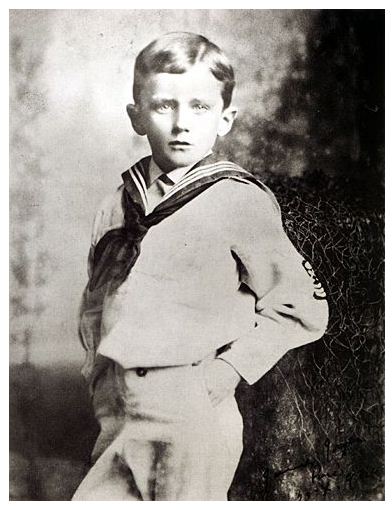
James Joyce, Six Years Old, Rockin’ a Sailor Suit

six year old james joyce

“Brief Incident in Short a, Long a, and Schwa” — Lydia Davis

“Brief Incident in Short a, Long a, and Schwa” by Lydia Davis

Cat, gray tabby, calm, watches large, black ant.  Man, rapt, stands staring at cat and ant.  Ant advances along path.  Ant halts, baffled.  Ant back-tracks fast—straight at cat.  Cat, alarmed, backs away.  Man, standing, staring, laughs.  Ant changes path again.  Cat, calm again, watches again.

(Read more Davis shorties/via).


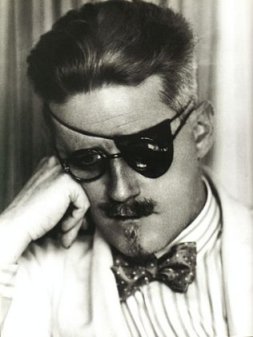
Scent of Darkness (Book Acquired, 1.18.2013)

20130120-174109.jpgScent of Darkness by Margot Berwin. New in hardback from Random House. Their blurb:
In her best-selling debut, Hothouse Flower and theNine Plants of Desire, Margot Berwin brought us to the rain forests of Mexico—to a land of shamans, spirit animals, and snake charmers—in the search for nine rare and valuable plants. Now, with her hotly anticipated second novel, Berwin takes us somewhere darker: deep into the bayous of Louisiana, to a world of fortune-tellers, soothsayers, and potent elixirs. Scent of Darknessis a magical, seductive story about the power of scent, and about what happens when a perfume renders a young woman irresistible.

Evangeline grows up understanding the extraordinary effects of fragrance. Her grandmother Louise is a gifted aromata, a master of scent-making and perfume. When Eva was a girl, Louise carefully explained that lavender under her pillow would make her dream of the man she would marry; eucalyptus would make her taller; almandine, fatter; and jasmine, Louise promised, would wrap her life in a mystery. When Eva is eighteen, Louise leaves her the ultimate gift—a scent created just for her. The small perfume vial is accompanied by a note in Louise’s slanted script: “Do not remove the stopper, Evangeline, unless you want everything in your life to change.”

From the moment Eva places a drop—the essence of fire, leather, rose, and jasmine—on her neck, men dance closer to her, women bury their noses deep into her hair, even the cats outside her bedroom cry to be near her. After a lifetime spent blending into the background, Eva is suddenly the object of intense desire to everyone around her. Strangers follow her down the street; a young boy appears at her door asking for a favor; and two men, one kind and good, the other dark and seductive, fall deeply, madly in love with her. As her greatest gift becomes an unbearable curse, Eva must uncover the secret of her scent and the message her grandmother, the woman who loved her most, wanted to tell her.

A bewitching tale of love, blood, power, and magic, Scent of Darkness is a wildly inventive novel that will seduce the reader’s every sense

This is kinda weird, because there’s another novel named Scent of Darkness, by Christina Dodd. I’m not sure if this book is for me. I don’t know. Bewitched perfume? Maybe.

Download RTÉ’s Superb Audio Production of James Joyce’s Ulysses

patch2James Joyce’s Ulysses might seem like a prohibitively difficult book, but it’s not as hard to read as its reputation suggests. There are any number of strategies for tackling the great tome (although enjoying or experiencing are more fitting verbs here), but one that many readers might overlook is listening to an audio recording.
I’ve tried a few audio versions of Ulysses, and none can hold a candle to RTÉ’s 1982 full cast production. I reviewed it a few years ago, and wrote:

I listened to, absorbed, choked up at, guffawed about, cackled around, and generally loved RTÉ’s 1982 dramatized, soundtracked, sound-effected, lovingly detailed recording of Ulysses, a work crammed with voices to match (if perhaps not equal) Joyce’s big fat work. This recording is not as widely available as LibriVox’s (free) full cast production or Jim Norton’s Naxos reading, but, after sampling both, I’d argue that it’s better. The Irish players bring sensitivity and humor to their roles, but beyond that pathos, the energy of RTÉ’s troupe is what really makes the book sing. Leopold Bloom gets his own voice, as does Stephen Dedalus and Molly (and all the characters). This innovation propels the narrative forward with dramatic power, and clarifies the oh-so indirectness of Joyce’s free indirect style, making the plot’s pitfalls and pratfalls more distinct and defined. There are songs (and dances) and music (and musing) and humming (and hemming and hawing and reverb). There is chanting and chawing and brouhaha. There is chaos and calamity and confusion. There is brilliance and peace and transcendence. It’s all very good, great, wonderful.

You can listen to and/or download the production here (big thanks to reader Eve for sending the link in!).

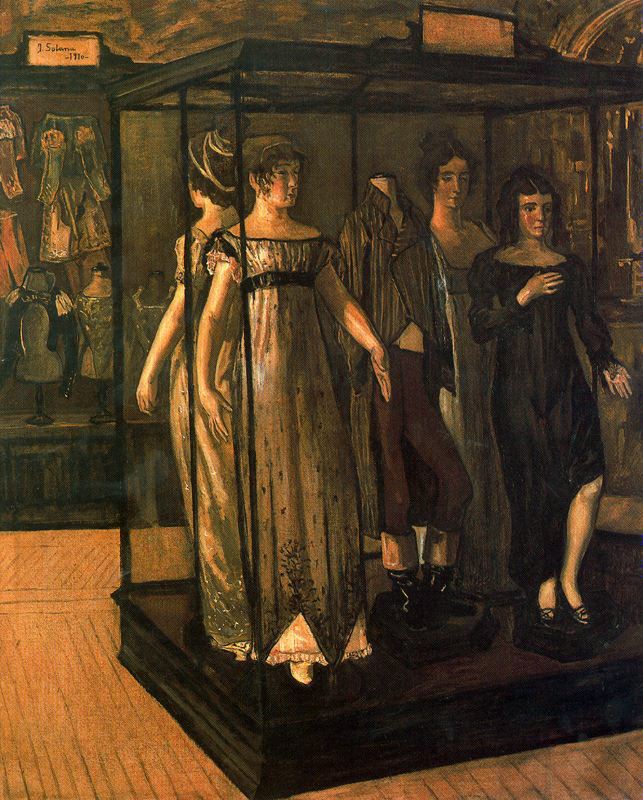
The Cabinets — Jose Gutierrez Solana

the-cabinets

“Soliloquy on a Park Bench” — Conrad Aiken

“Soliloquy on a Park Bench” by Conrad Aiken

The model for the afternoon hour was an Italian boy–about her own age, she thought. His face had a heavy beauty, sombre as that of the sleeping Medusa, particularly in profile; seen fully, it was a little stupid. But his torso was what most delighted her, and this she drew with careful strong strokes, luxuriating in a new sense of precision. Her pleasure in this was exquisite, was prolonged. “Extraordinary!” she murmured, and found herself oddly frowning at the dark beauty of the skin, the well-muscled shoulders, and arched ribs, in the April sunlight that slanted from the half. shaded window. She was sorry when the hour was over. Miss N, thrusting off her apron, paused beside her and asked if she were going “down town.” She repressed a shade of annoyance–though she liked Miss N–and replied vaguely that she “had some things to do.” This was not true, and she felt a slight contrition when she saw that Miss N was unconvinced and a little hurt. However! . . . She put on her hat and escaped into the soft afternoon.

The parkway invited her–it was vague, it was hazily green with new leaves and buds, the muddy river gleamed sleepily here and there as it curved among flat gardens and under small stone arches, and the drowsy quackings and laconic comments of waterfowls seemed only to add to the immense and melancholy stillness. She caressed affectionately, with a fugitive hand, as she walked, the low stone wall that led to a ridiculously conceited little bridge. She slid two fingers over the white flank of a birch. Further on, she touched her palm, and scratched it, against a barberry frond, on which two elfin red-peppers still hung. . . . Why had she rebuffed Miss N? . . . Well, really, one wanted, sometimes, to be alone. Particularly when one was–what? . . . Her eyes wandered from the word, she paused to watch a duck stand on his head in the still water, and then walked on absorbed. The benches here were too crowded. A nursemaid scolded a child, lifting an angry round eye from her knitting. A small boy was digging in the gravel with a bit of broken glass, murmuring “It’s like this–it’s like this.” A bored perfumed lady waited patiently for her Pomeranian; which suddenly twinkled after her as if on wire springs. . . . The bells in St Matthew’s Church began striking five, and it seemed to her that the slow deep tones hung afterwards among the trees and over the water like a mist. White and purple crocuses were sunning themselves in a corner by a wall–absurd! She felt suddenly like laughing at everything, and then, just as suddenly, for no reason, felt unhappy, as if she had a bird shut ,in her heart who wanted to escape. She found a deserted bench and sat down, at the end nearest the water. Grackles made scraping sounds in the maple tree over her head–scolding at sparrows. Cruel birds, grackles! . . . Who was it that had told her of seeing a grackle pursue a sparrow tirelessly till he had worn it out, and then stab it to death on the ground? . . . How horrible, and in April . . . There was a grackle now. He walked awkwardly by the water’s edge–a bedraggled fellow, getting on in years; but what a beautiful iridescence on his black feathers! . . . It was Fred Thomas who had told her. He always came out to smoke his pipe here after lunch. A curious, a nice thing for a man to do, an unexpected concession–as if the grackle should pause and admire a crocus! She laughed to herself, and half shut her eyes to make a picture of the water, with a round cold cloud in it, and part of the stone arch of a bridge. Continue reading ““Soliloquy on a Park Bench” — Conrad Aiken”

Scientist — David Burliuk

scientist-1952.jpg!HD