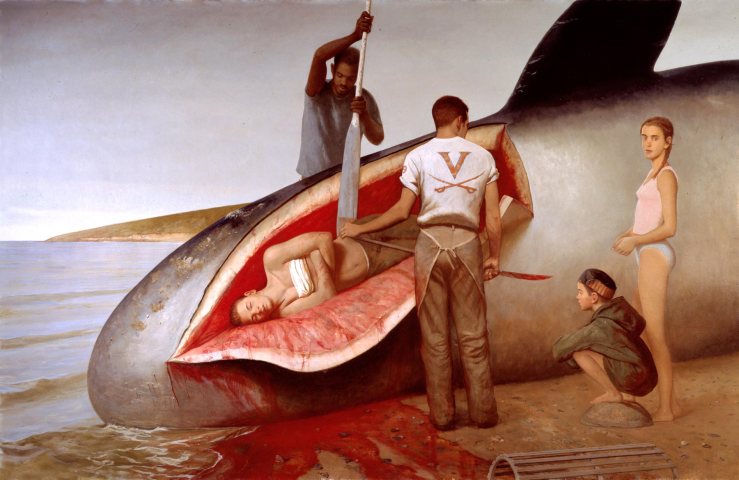
Leviathan — Bo Bartlett

2000-leviathan-lg

“All Things Decay and Die” — Robert Herrick

Screenshot 2015-05-11 at 8

Critical Mass (Gravity’s Rainbow)

“I think that there is a terrible possibility now, in the World. We may not brush it away, we must look at it. It is possible that They will not die. That it is now within the state of Their art to go on forever—though we, of course, will keep dying as we always have. Death has been the source of Their power. It was easy enough for us to see that. If we are here once, only once, then clearly we are here to take what we can while we may. If They have taken much more, and taken not only from Earth but also from us—well, why begrudge Them, when they’re just as doomed to die as we are? All in the same boat, all under the same shadow… yes… yes. But is that really true? Or is it the best, and the most carefully propagated, of all Their lies, known and unknown?

“We have to carry on under the possibility that we die only because They want us to: because They need our terror for Their survival. We are their harvests… .

“It must change radically the nature of our faith. To ask that we keep faith in Their mortality, faith that They also cry, and have fear, and feel pain, faith They are only pretending Death is Their servant—faith in Death as the master of us all—is to ask for an order of courage that I know is beyond my own humanity, though I cannot speak for others… . But rather than make that leap of faith, perhaps we will choose instead to turn, to fight: to demand, from those for whom we die, our own immortality. They may not be dying in bed any more, but maybe They can still die from violence. If not, at least we can learn to withhold from Them our fear of Death. For every kind of vampire, there is a kind of cross. And at least the physical things They have taken, from”“Earth and from us, can be dismantled, demolished—returned to where it all came from.

“To believe that each of Them will personally die is also to believe that Their system will die—that some chance of renewal, some dialectic, is still operating in History. To affirm Their mortality is to affirm Return. I have been pointing out certain obstacles in the way of affirming Return…”

From pages 539-40 of Thomas Pynchon’s novel Gravity’s Rainbow.

The sermon is from a Jesuit, one Father Rapier, and takes place in one of GR’s stranger episodes (which is really saying something, that adjective there). Before the sermon—a “Critical Mass,” our narrator takes unusual pains to make sure that we get it, that we understand that the Jesuit is here to preach “against return. Here to say that critical mass cannot be ignored. Once the technical means of control have reached a certain size, a certain degree of being connected one to another, the chances for freedom are over for good.”

Compare the Jesuit’s notation of “once, only once” to the passage on pages 412-13 on Kekulé, the snake that eats its own tale: “…a quote from Rilke: ‘Once, only once…’ One of Their favorite slogans. No return, no salvation, no Cycle—”. The sermon also echoes the They/We riff on page 521.

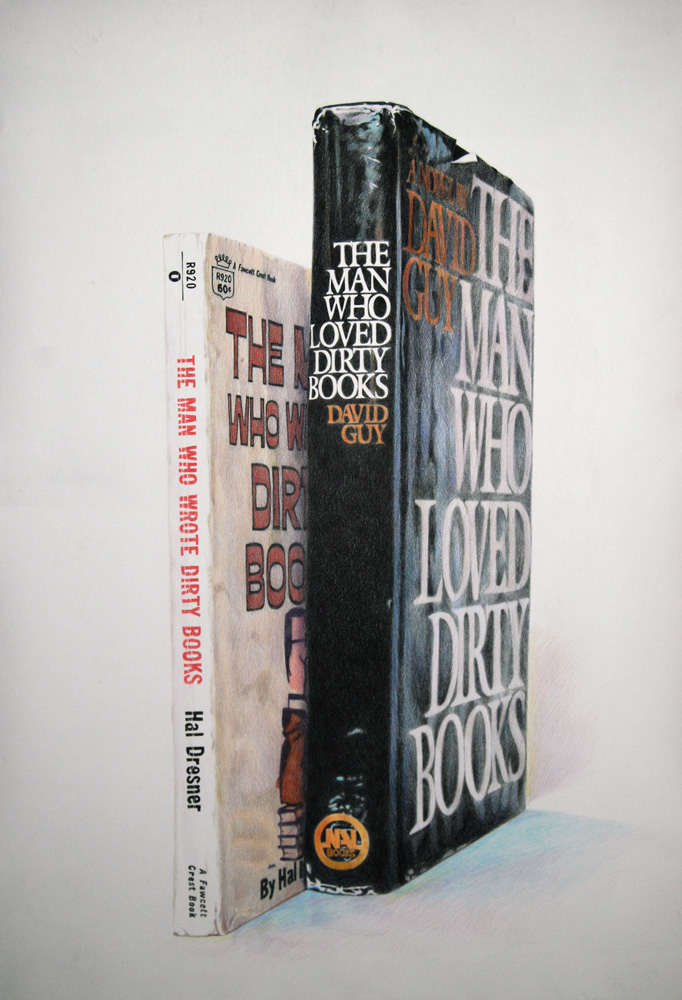
A Dirty Pair — Eric Yahnker

2011_ADirtyPair

May 11, 1838 entry from Nathaniel Hawthorne’s Note-Books

May 11, 1838.–At Boston last week. Items:–A young man, with a small mustache, dyed brown, reddish from its original light color. He walks with an affected gait, his arms crooked outwards, treading much on his toes. His conversation is about the theatre, where he has a season ticket,–about an amateur who lately appeared there, and about actresses, with other theatrical scandal.–In the smoking-room, two checker and backgammon boards; the landlord a great player, seemingly a stupid man, but with considerable shrewdness and knowledge of the world.– F—-, the comedian, a stout, heavy-looking Englishman, of grave deportment, with no signs of wit or humor, yet aiming at both in conversation, in order to support his character. Very steady and regular in his life, and parsimonious in his disposition,–worth $50,000, made by his profession.–A clergyman, elderly, with a white neck-cloth, very unbecoming, an unworldly manner, unacquaintance with the customs of the house, and learning them in a childlike way. A ruffle to his shirt, crimped.–A gentleman, young, handsome, and sea-flushed, belonging to Oswego, New York, but just arrived in port from the Mediterranean: he inquires of me about the troubles in Canada, which were first beginning to make a noise when he left the country,–whether they are all over. I tell him all is finished, except the hanging of the prisoners. Then we talk over the matter, and I tell him the fates of the principal men,–some banished to New South Wales, one hanged, others in prison, others, conspicuous at first, now almost forgotten.–Apartments of private families in the hotel,–what sort of domesticity there may be in them; eating in public, with no board of their own. The gas that lights the rest of the house lights them also, in the chandelier from the ceiling.–A shabby-looking man, quiet, with spectacles, at first wearing an old, coarse brown frock, then appearing in a suit of elderly black, saying nothing unless spoken to, but talking intelligently when addressed. He is an editor, and I suppose printer, of a country paper. Among the guests, he holds intercourse with gentlemen of much more respectable appearance than himself, from the same part of the country.–Bill of fare; wines printed on the back, but nobody calls for a bottle. Chairs turned down for expected guests. Three-pronged steel forks. Cold supper from nine to eleven P.M. Great, round, mahogany table, in the sitting-room, covered with papers. In the morning, before and soon after breakfast, gentlemen reading the morning papers, while others wait for their chance, or try to pick out something from the papers of yesterday or longer ago. In the forenoon, the Southern papers are brought in, and thrown damp and folded on the table. The eagerness with which those who happen to be in the room start up and make prize of them. Play-bills, printed on yellow paper, laid upon the table. Towards evening comes the “Transcript.”

From Nathaniel Hawthorne’s American Note-Books.