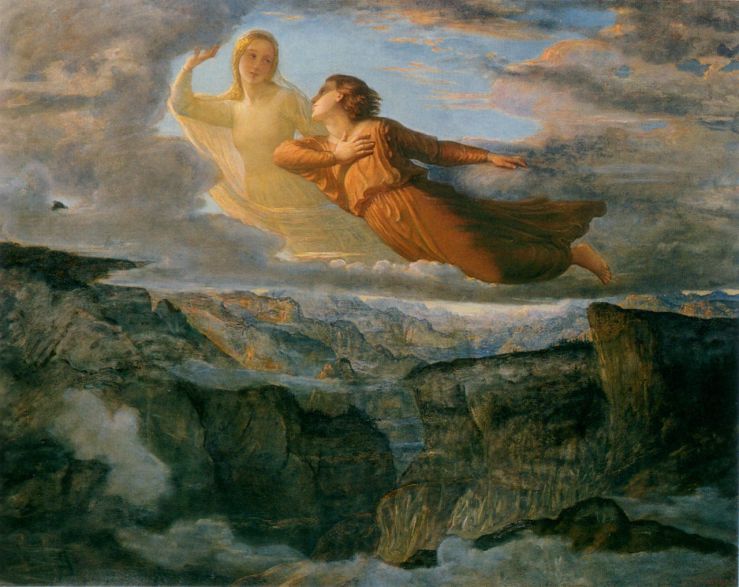
Poème de l’âme 17: L’Idéal Louis Janmot (Poem of the Soul 17: The Ideal) by Louis Janmot (1814-1892)
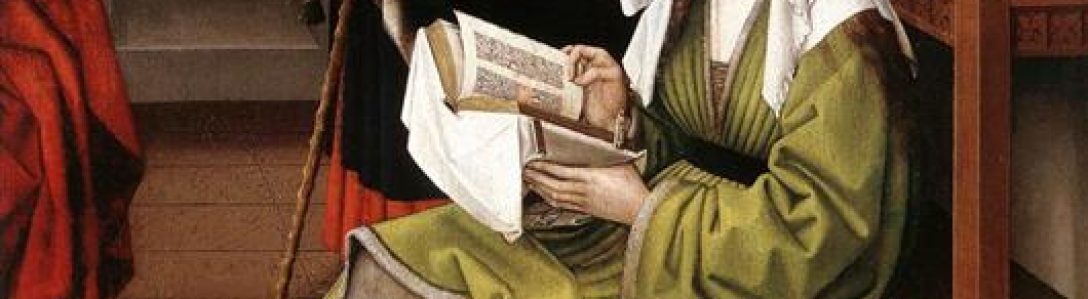
Poème de l’âme 17: L’Idéal Louis Janmot (Poem of the Soul 17: The Ideal) by Louis Janmot (1814-1892)
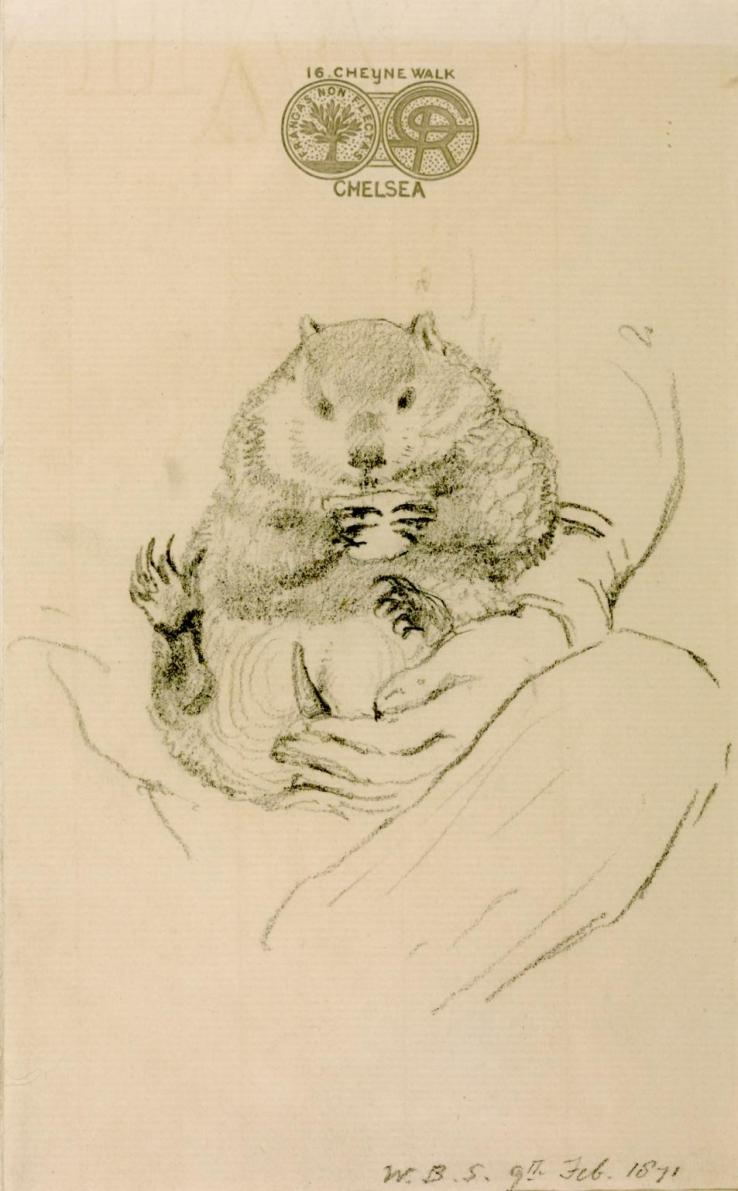
Rossetti’s Wombat Seated in his Master’s Lap 1871 by William Bell Scott (1811-1890)
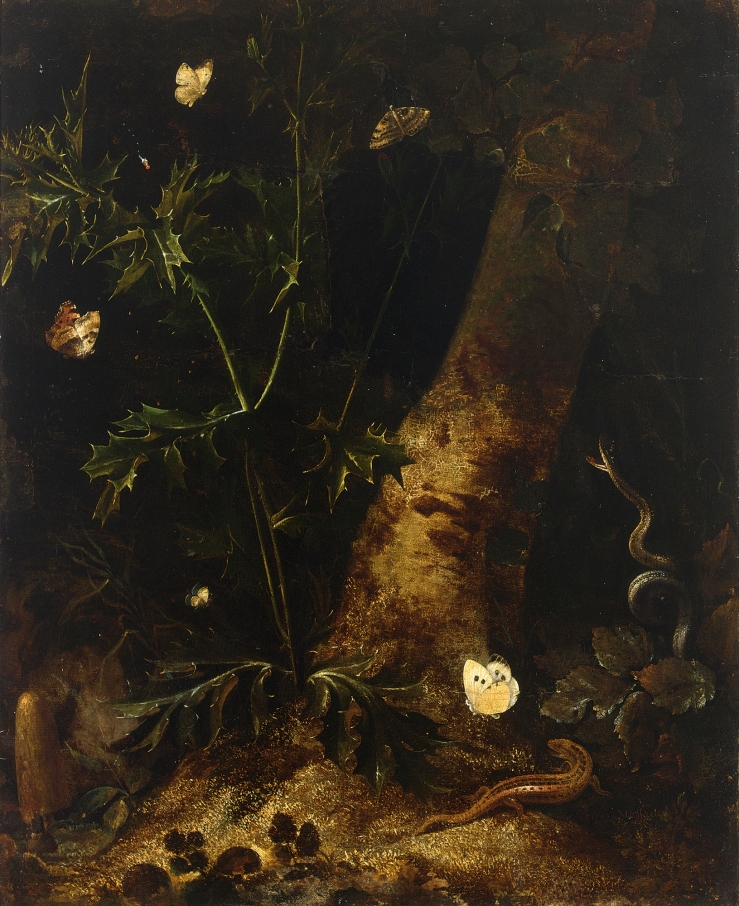
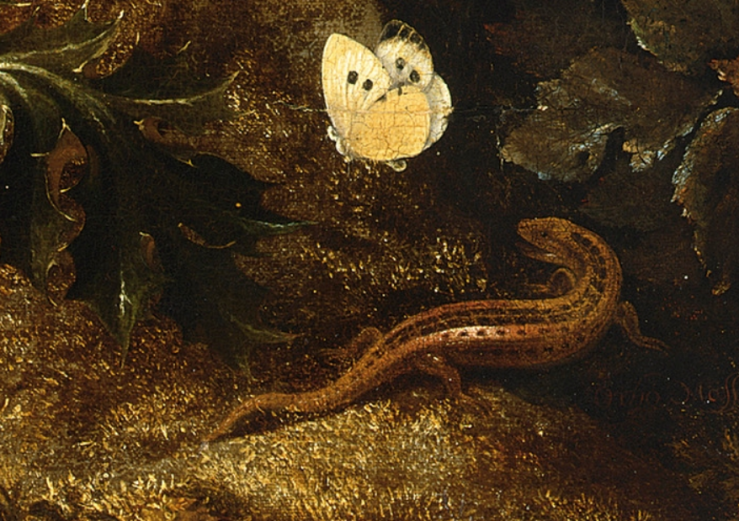
Forest Floor Still Life with a Salamander, Snake and Various Butterflies around a Thistle, by Otto Marseus van Schrieck (1613-1678)
November 8th.–I am sorry that our journal has fallen so into neglect; but I see no chance of amendment. All my scribbling propensities will be far more than gratified in writing nonsense for the press; so that any gratuitous labor of the pen becomes peculiarly distasteful. Since the last date, we have paid a visit of nine days to Boston and Salem, whence we returned a week ago yesterday. Thus we lost above a week of delicious autumnal weather, which should have been spent in the woods or upon the river. Ever since our return, however, until to-day, there has been a succession of genuine Indian-summer days, with gentle winds, or none at all, and a misty atmosphere, which idealizes all nature, and a mild, beneficent sunshine, inviting one to lie down in a nook and forget all earthly care. To-day the sky is dark and lowering, and occasionally lets fall a few sullen tears. I suppose we must bid farewell to Indian summer now, and expect no more love and tenderness from Mother Nature till next spring be well advanced. She has already made herself as unlovely in outward aspect as can well be. We took a walk to Sleepy Hollow yesterday, and beheld scarcely a green thing, except the everlasting verdure of the family of pines, which, indeed, are trees to thank God for at this season. A range of young birches had retained a pretty liberal coloring of yellow or tawny leaves, which became very cheerful in the sunshine. There were one or two oak-trees whose foliage still retained a deep, dusky red, which looked rich and warm; but most of the oaks had reached the last stage of autumnal decay,–the dusky brown hue. Millions of their leaves strew the woods and rustle underneath the foot; but enough remain upon the boughs to make a melancholy harping when the wind sweeps over them. We found some fringed gentians in the meadow, most of them blighted and withered; but a few were quite perfect. The other day, since our return from Salem, I found a violet; yet it was so cold that day, that a large pool of water, under the shadow of some trees, had remained frozen from morning till afternoon. The ice was so thick as not to be broken by some sticks and small stones which I threw upon it. But ice and snow too will soon be no extraordinary matters with us.
During the last week we have had three stoves put up, and henceforth no light of a cheerful fire will gladden us at eventide. Stoves are detestable in every respect, except that they keep us perfectly comfortable.
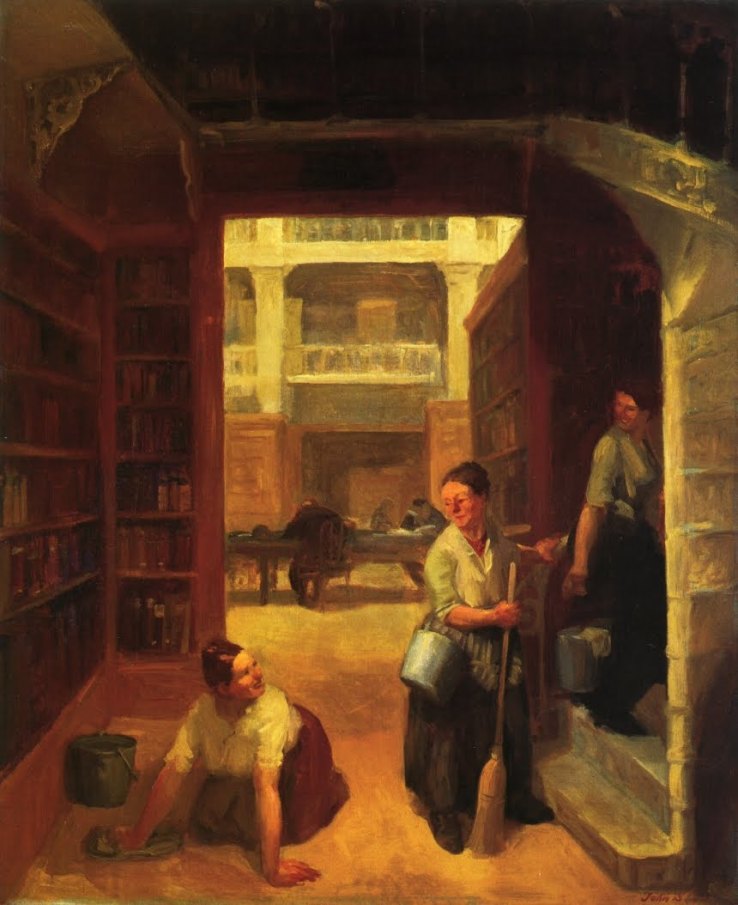
Scrubwoman, Astor Library, 1911 by John French Sloan
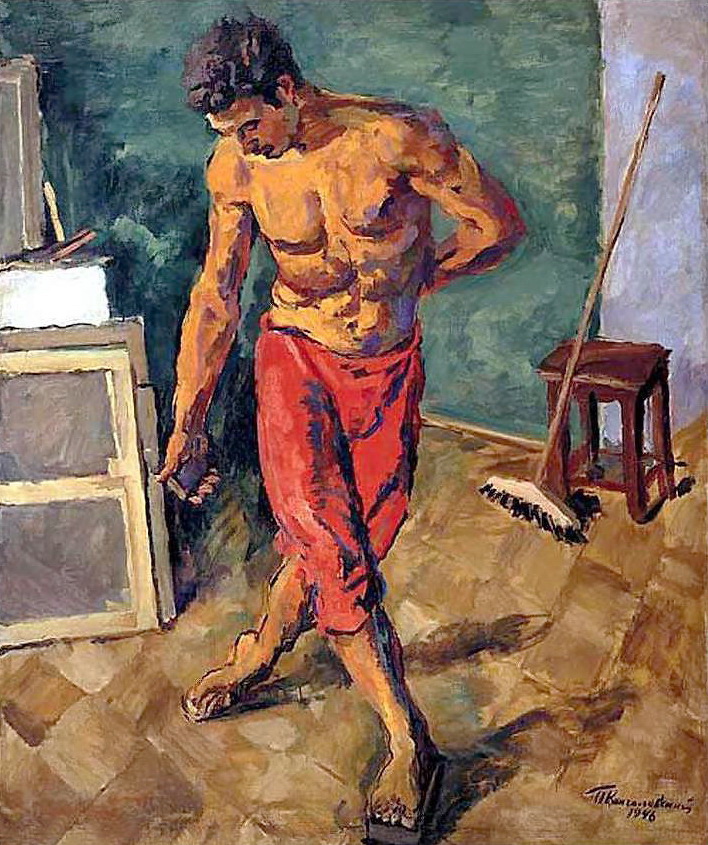
Floor Polisher, 1946 by Pyotr Konchalovsky (1876–1956)
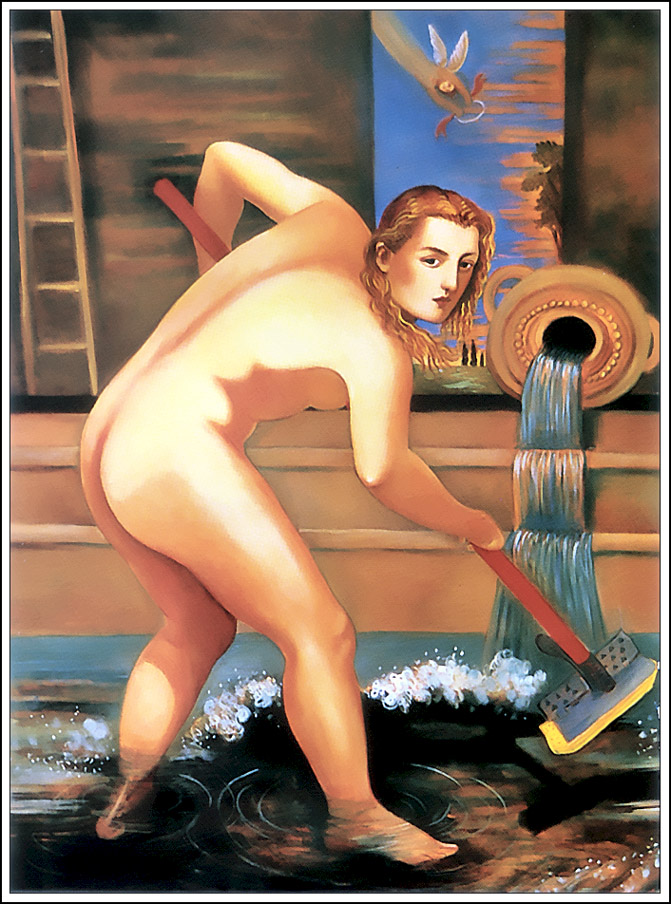
Eternal Mopping by Edith Vonnegut (b. 1949)
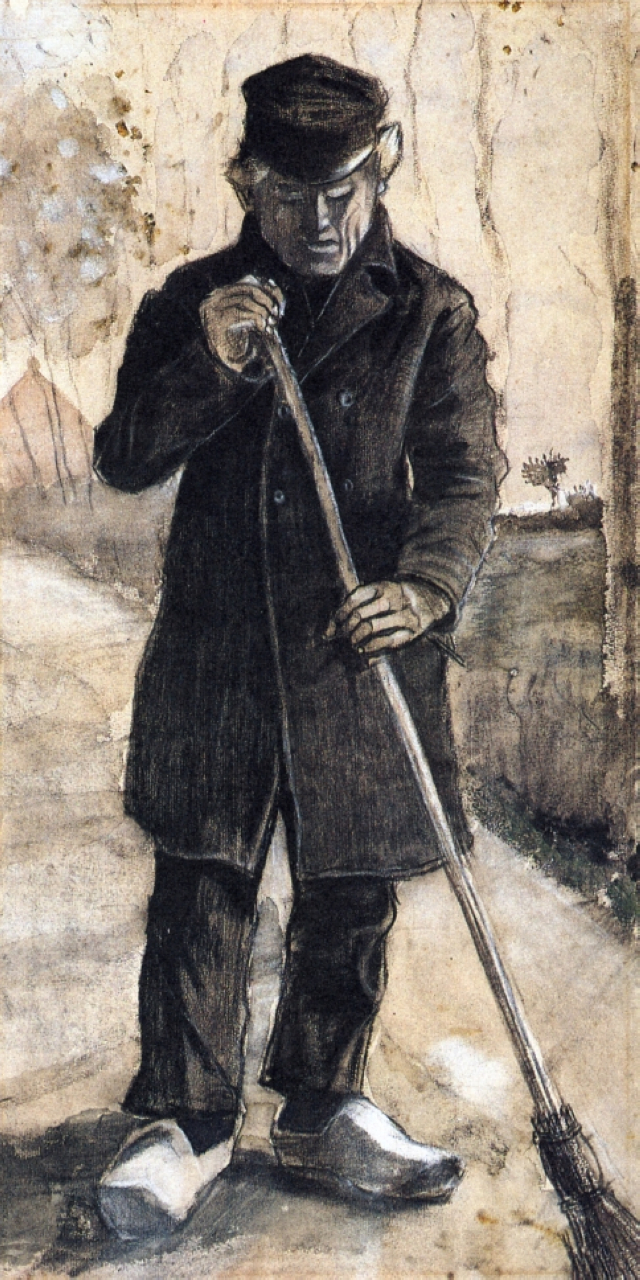
A Man with a Broom, 1881 by Vincent van Gogh (1843-1890)

New Broom, 1987 by Tim Mara (1948–1997)
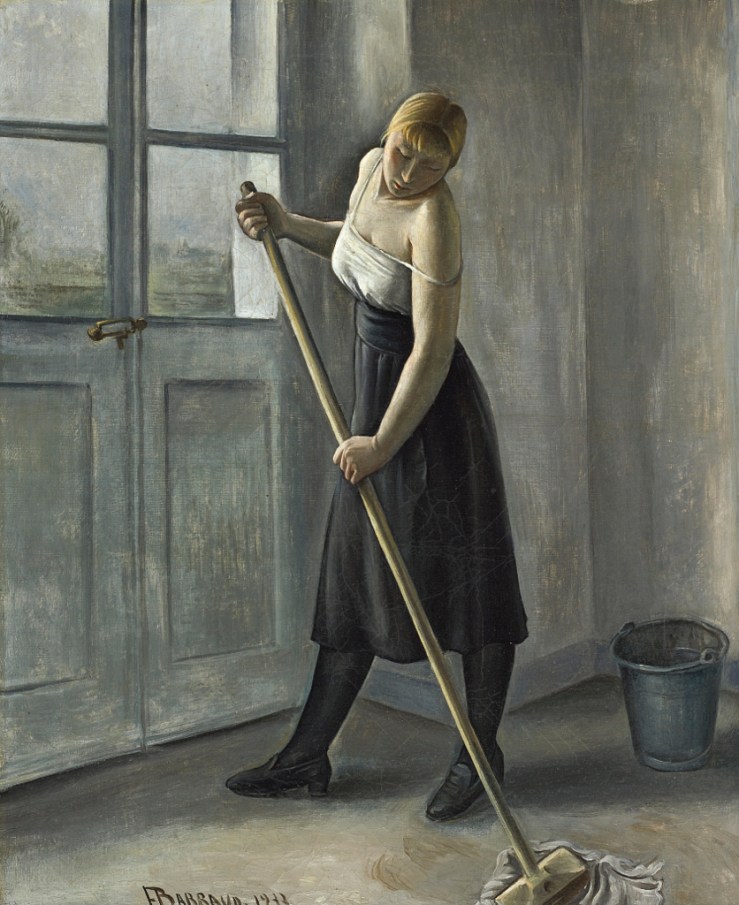
Girl Cleaning, 1933 by François Barraud (1899–1934)
“Slang in America”
by
Walt Whitman
View’d freely, the English language is the accretion and growth of every dialect, race, and range of time, and is both the free and compacted composition of all. From this point of view, it stands for Language in the largest sense, and is really the greatest of studies. It involves so much; is indeed a sort of universal absorber, combiner, and conqueror. The scope of its etymologies is the scope not only of man and civilization, but the history of Nature in all departments, and of the organic Universe, brought up to date; for all are comprehended in words, and their backgrounds. This is when words become vitaliz’d, and stand for things, as they unerringly and soon come to do, in the mind that enters on their study with fitting spirit, grasp, and appreciation.
Slang, profoundly consider’d, is the lawless germinal element, below all words and sentences, and behind all poetry, and proves a certain perennial rankness and protestantism in speech. As the United States inherit by far their most precious possession—the language they talk and write—from the Old World, under and out of its feudal institutes, I will allow myself to borrow a simile even of those forms farthest removed from American Democracy. Considering Language then as some mighty potentate, into the majestic audience-hall of the monarch ever enters a personage like one of Shakspere’s clowns, and takes position there, and plays a part even in the stateliest ceremonies. Such is Slang, or indirection, an attempt of common humanity to escape from bald literalism, and express itself illimitably, which in highest walks produces poets and poems, and doubtless in pre-historic times gave the start to, and perfected, the whole immense tangle of the old mythologies. For, curious as it may appear, it is strictly the same impulse-source, the same thing. Slang, too, is the wholesome fermentation or eructation of those processes eternally active in language, by which froth and specks are thrown up, mostly to pass away; though occasionally to settle and permanently crystallize.
To make it plainer, it is certain that many of the oldest and solidest words we use, were originally generated from the daring and license of slang. In the processes of word-formation, myriads die, but here and there the attempt attracts superior meanings, becomes valuable and indispensable, and lives forever. Thus the term right means literally only straight. Wrong primarily meant twisted, distorted. Integrity meant oneness. Spirit meant breath, or flame. A supercilious person was one who rais’d his eyebrows. To insult was to leap against. If you influenced a man, you but flow’d into him. The Hebrew word which is translated prophesy meant to bubble up and pour forth as a fountain. The enthusiast bubbles up with the Spirit of God within him, and it pours forth from him like a fountain. The word prophecy is misunderstood. Many suppose that it is limited to mere prediction; that is but the lesser portion of prophecy. The greater work is to reveal God. Every true religious enthusiast is a prophet. Continue reading ““Slang in America,” an essay by Walt Whitman”
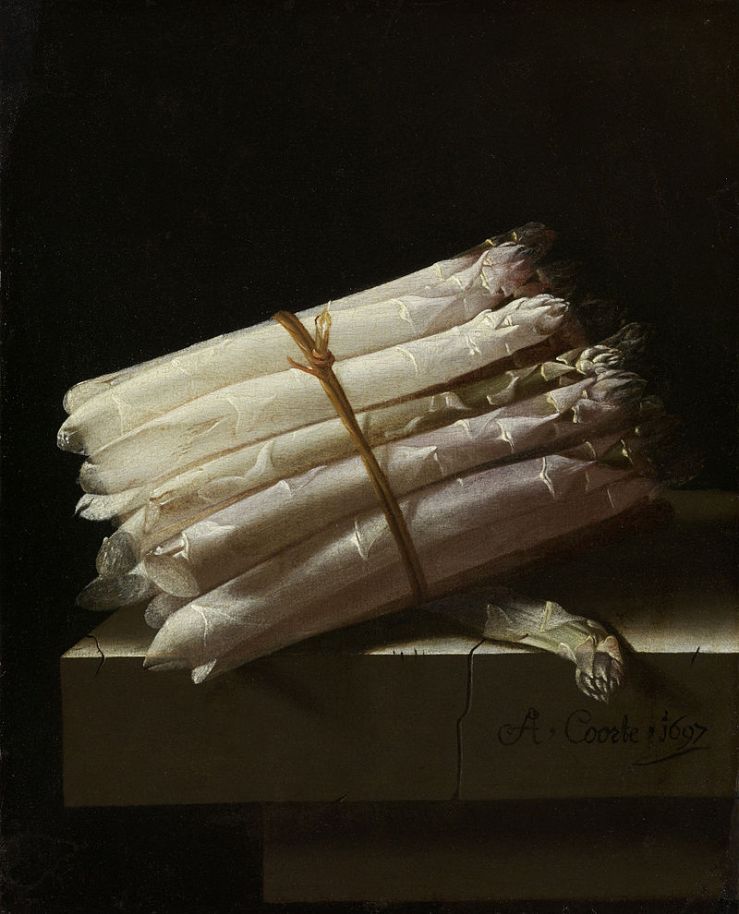
Asparagus, 1697 by Adriaen Coorte (ca. 1665–1707)
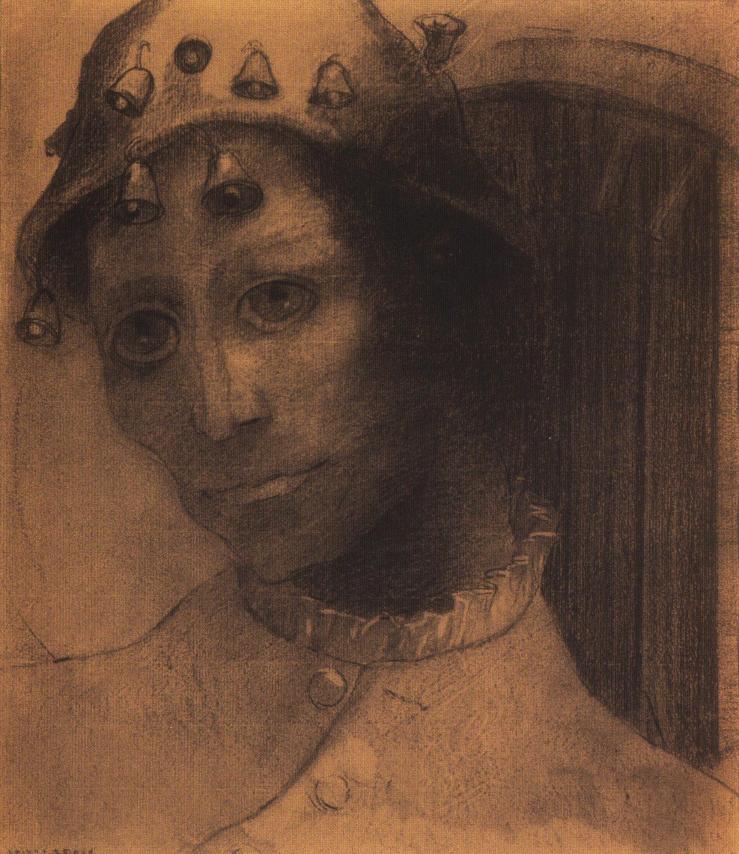
Madness, 1883 by Odilon Redon (1840-1916)

Interior with Young Woman from Behind, 1904 by Vilhelm Hammershøi (1864-1916)
“Horses”
by
Stephen Crane
Richardson pulled up his horse, and looked back over the trail where the crimson serape of his servant flamed amid the dusk of the mesquit. The hills in the west were carved into peaks, and were painted the most profound blue. Above them the sky was of that marvellous tone of green—like still, sun-shot water—which people denounce in pictures.
José was muffled deep in his blanket, and his great toppling sombrero was drawn low over his brow. He shadowed his master along the dimming trail in the fashion of an assassin. A cold wind of the impending night swept over the wilderness of mesquit.
“Man,” said Richardson in lame Mexican as the servant drew near, “I want eat! I want sleep! Understand—no? Quickly! Understand?”
“Si, señor,” said José, nodding. He stretched one arm out of his blanket and pointed a yellow finger into the gloom. “Over there, small village. Si, señor.”
They rode forward again. Once the American’s horse shied and breathed quiveringly at something which he saw or imagined in the darkness, and the rider drew a steady, patient rein, and leaned over to speak tenderly as if he were addressing a frightened woman. The sky had faded to white over the mountains, and the plain was a vast, pointless ocean of black.
Suddenly some low houses appeared squatting amid the bushes. The horsemen rode into a hollow until the houses rose against the sombre sundown sky, and then up a small hillock, causing these habitations to sink like boats in the sea of shadow.
A beam of red firelight fell across the trail. Richardson sat sleepily on his horse while his servant quarrelled with somebody—a mere voice in the gloom—over the price of bed and board. The houses about him were for the most part like tombs in their whiteness and silence, but there were scudding black figures that seemed interested in his arrival. Continue reading ““Horses,” a short story by Stephen Crane”

The Knucklebone Player, 1867 by Frederic Leighton (1830-1896)
 Biblioklept