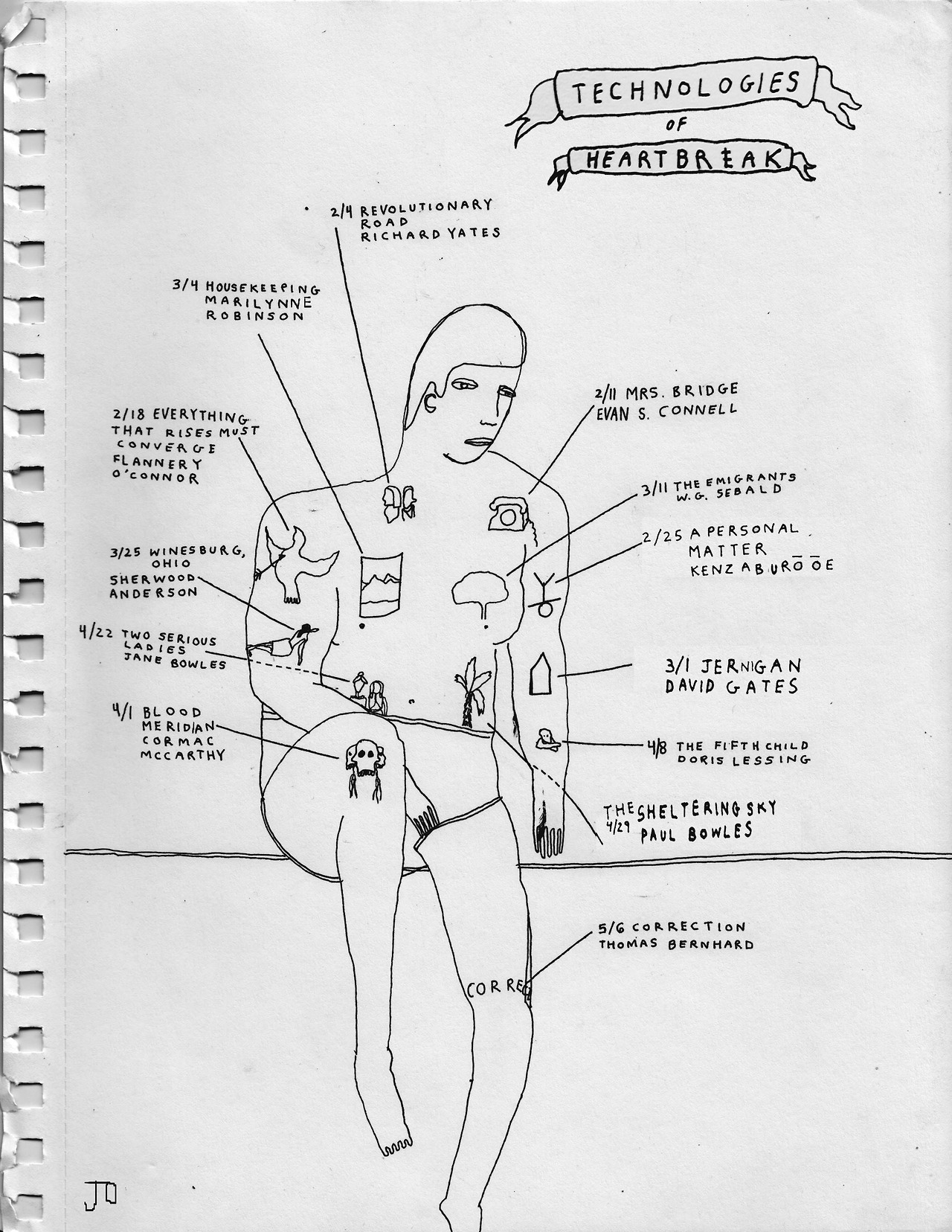
“Technologies of Heartbreak” — Josephine Demme

tumblr_n7osgziyJc1qzh8wko1_1280

Illustration for a syllabus by Ben Marcus. (via)

A Letter From James Joyce to Nora Barnacle, 12/13/1909

James_and_Nora

I would be delighted to feel my flesh tingling under your hand. Do you know what I mean, Nora dear? I wish you would smack me or flog me even. Not in play, dear, in earnest and on my naked flesh. I wish you were strong, strong, dear, and had a big full proud bosom and big fat thighs.  I would love to be whipped by you, Nora love! I would love to have done something to displease you, something trivial even, perhaps one of my rather dirty habits that make you laugh: and then to hear you call me into your room and then to find you sitting in an armchair with your fat thighs far apart and your face deep red with anger and a cane in your hand. To see you point to what I had done and then with a movement of rage pull me towards you and throw me face downwards across your lap. Then to feel your hands tearing down my trousers and inside clothes and turning up my shirt, to be struggling in your strong arms and in your lap, to feel you bending down (like an angry nurse whipping a child’s bottom) until your big full bubbies almost touched me and to feel you flog, flog, flog me viciously on my naked quivering flesh!!

Books Acquired (Most of April)

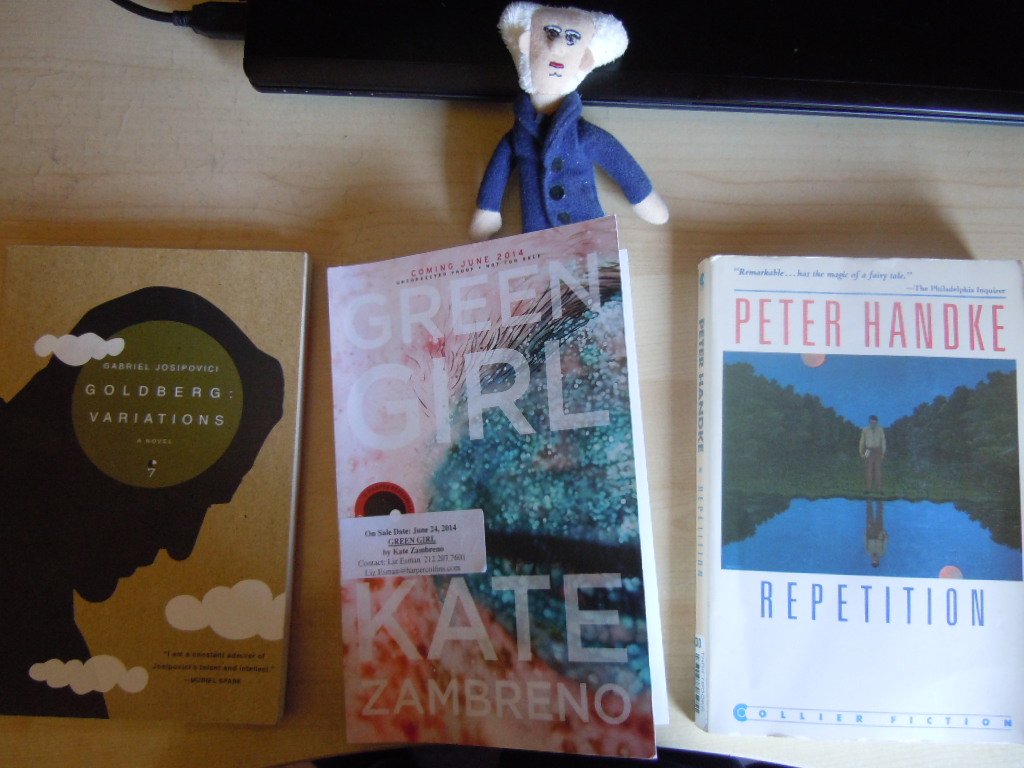
I thought I’d jump in on the Books Acquired feature on the blog, so below is a picture and some words about the books I got this past April. Significantly fewer than average as I’m *trying* to read the books I already have but, you know, it doesn’t really ever stop.

Little Schopenhauer wanted to be in the picture.


It was in this interview on the blog that I heard about Gabriel Josipovici’s philosophical novel. I’ve been on the hunt for more books like this in the past couple of years, and if it’s anyone’s recommendation about novels that wax philosophical, it’d be a philosopher’s. Goldberg: Variations also promises to slake an obsessive thirst for books about composers and their madness (or illness). I also seem unable to shake an attraction for books that tell stories about other stories, with the latter being the “actual story” of the book. From the back: “At the turn of the eighteenth century, a writer–a Jew–enters an English country manor, where he has been invited to read through the night to his host until the gentleman falls asleep. What unfolds then are seemingly unconnected stories covering a vast array of topics–from incest to madness to a poetic competition in the court of George III. And what emerges by the end is a breathtaking tapestry in which past and present, imagination and truth, are intricately woven together into one remarkable whole.”

I saw Kate Zambreno read from this book back in 2011 when it was originally published by Emergency Press. Since then she’s written a “critical memoir” titled Heroines, which explores the writer’s relationship with the “wives and mistresses” of the 20th-Century modernist greats. It’s my understanding that Zambreno has also reworked through Green Girl for this republish. Which I can’t imagine doing. Seems terrifying and harrowing. Only about 20 pages in so far, but it definitely has, for desperate lack of a better term, a European feel to it that’s rare for American writers. The sentences vibrate along the same manic, anxious and panicky frequencies of favorites like Bernhard, Rhys and Woolf. From the back: “Ruth is a young American in London, trying desperately to navigate a world in which she attracts the unwanted gaze of others while grappling with the uncertainty of her own self-regard. Haunted equally by self-doubt and by a morbid fascination with the beautiful, cruel, and empty people around her, Ruth darts quietly through the rainy sidewalks of her present, trying to escape her future.”

I know Steve Mitchelmore, blogger of This Space, is a big Peter Handke fan. I tweeted him a couple of months ago and he recommended that I start with this one. I’m looking forward to reading an Austrian (or Austro-Hungarian and descendants of) that isn’t cantankerous and odorous a la Bernhard. But, as expected, this book seems like it’s going to be really fucked up. The back: “In the summer of 1960, Filip Kobal leaves his home in search of his missing brother, Gregor. Not quite twenty, he is armed only with two of his brother’s books; a copybook and a dictionary in which Gregor has, revealingly, marked certain words. Filip’s investigations of language–of the laws of naming objects, and of the roots of alienation in the discrepancy between objects’ names and our experience of them–becomes, finally, an investigation of himself and the world around him.”

“Darüber spricht man nicht” (One doesn’t talk about that)–Thomas Bernhard on Sexuality

Sexuality was drastically restricted in my case, because the moment it began to stir, you see, and I noticed somehow, aha, these are pretty mysterious forces, which suddenly set you in motion and toward certain objects. [Laughs.] That’s when I became mortally ill somehow. And that’s why it was all quite bottled up and kept in check for years. Which is a pity, really, because just at the time when sexuality has its greatest appeal, that is when it awakens so to speak, when that little weenie starts to stir, to put it plainly, you see, that’s when I was in the hospital. Everything was limp, more or less, and one lies there and is kept down, simple as that. When I finally got out, I was rather tired and a little weak. But, between twenty-two and thirty, everything was in place and normal, I believe, you see. With all the pleasure and all the ups and downs, literally and metaphorically–don’t be embarrassed now.

Krista Fleischmann, Thomas Bernhard: Eine Begegnung. (Vienna: Österreichische Staatsdruckerei, 1991), 53-4. Quoted in Thomas Bernhard: The Making of an Austrian, Gitta Honegger. (New Haven: Yale University Press, 2001), 62. Trans. Gitta Honegger.

“Killing yourself makes just as little sense as continuing to live does” (Thomas Bernhard)

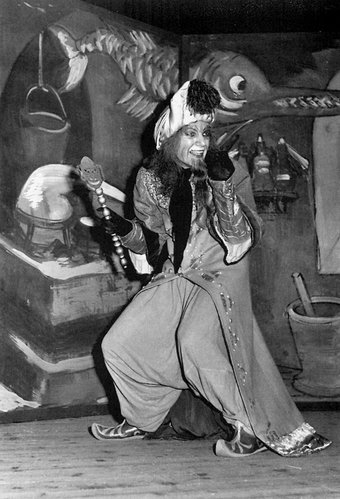
Thomas Bernhard as a sorcerer in Klaus Gmeiner's "Enchanted Forest."
Thomas Bernhard as a sorcerer in Klaus Gmeiner’s “Enchanted Forest.”

Douglas Robertson, who runs the blog The Philosophical Worldview Artist, has for some time been translating a selection of Thomas Bernhard’s interviews, reviews, and letters into English on his blog. A very welcome resource for English readers of Bernhard, as there is a giant dearth of this secondary material available. Have a look here.

The Seventh Continent — Michael Haneke (Full Film)


“I am learning to see.” (Rilke)

Have I said it already? I am learning to see. Yes, I’m beginning. It is still going badly. But I want to make use of my time.

For instance, I never realized how many faces there are. There are lots of people but still more faces, for everyone has several. There are people who wear a face for years, of course it wears out, gets dirty, cracks in the folds, stretches like a glove one has worn on a journey. Those are thrifty, simple people: they don’t change it, they don’t even have it cleaned. It’s good enough, they maintain, and who can convince them otherwise? The question does arise, since they have several faces, what do they do with the others? They keep them in reserve. Their children will get to wear them. But it also happens that their dogs wear them when they go out. And why not? Face is face.

Other people put on their faces with uncanny rapidity, one after the other, and wear them out. At first it seems to them as if they have them forever, but they are barely forty and this one is already the last. That of course has its tragic side. They are not used to take care of faces, they run through the last one in a week, there are holes in it, in many places it is as thin as paper, and then slowly what’s underneath emerges, the not-face, and they walk around with that.

From The Notebooks of Malte Laurids Brigge. Translated by Burton Pike.

“A Country On The Far Side of Fiction” — Riffing Over Gerald Murnane’s Barley Patch

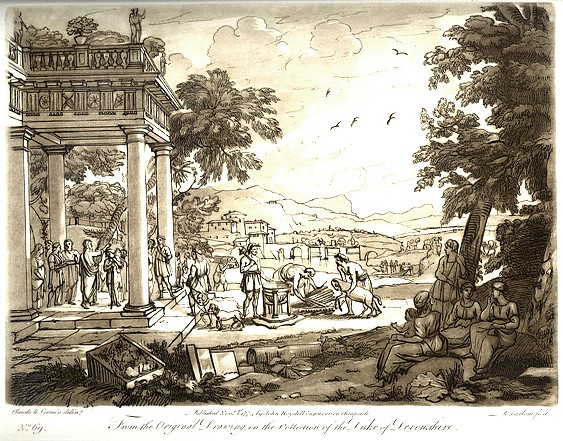
Claude Lorrain’s "Landscape with Samuel Anointing David."
Claude Lorrain’s “Landscape with Samuel Anointing David.”


In my last riff on Gerald Murnane, I wrote about his book Inland, and that he wanted to “craft a universally mutable and relational ‘I.'” And I started off with a quote. I’m going to do that now. This is a short passage from Ludwig Wittgenstein’s The Blue and Brown Notebooks.

The word “I” does not mean the same as “L.W.” even if I am L.W., nor does it mean the same as the expression “the person who is now speaking”. But that doesn’t mean: that “L.W.” and “I” mean different things. All it means is that these words are different instruments in our language.

Think of words as instruments characterized by their use, and then think of the use of a hammer, the use of a chisel, the use of a square, of a glue pot, and of the glue. (Also, all that we say here can be understood only if one understands that a great variety of games is played with the sentences of our language: Giving and obeying orders; asking questions and answering them; describing an event; telling a fictitious story; telling a joke; describing an immediate experience; making conjectures about events in the physical world; making scientific hypotheses and theories; greeting someone, etc., etc.) The mouth which says “I” or the hand which is raised to indicate that it is I who wish to speak, or I who have toothache, does not thereby point to anything. If, on the other hand, I wish to indicate the place of my pain, I point. And here again remember the difference between pointing to the painful spot without being led by the eye and on the other hand pointing to a sac on my body after looking for it. (“That’s where I was vaccinated”.)—The man who cries out with pain, or says that he has pain, doesn’t choose the mouth which says it (67-8).


The “I” in Barley Patch, as it is ostensibly used in the literary sense, merely implies the presence of the author. The “I” is as much of a fiction as the collection of words around it. Barley Patch is a strange, strange fiction. I’m honoring the narrator’s/implied author’s/personage’s/ghostly presence’s/reader’s/image-person’s wishes by not calling it a novel, an essay, a memoir, an autobiography. And though Barley Patch is all of these forms, often simultaneously, ultimately it is a “report,” to use the narrator’s term, of how a story becomes removed from itself. Some questions BP asks: How do I know that am I me? Am I the imagined personage of a writer in a “country on the far side of fiction?” How do I know where I am is really where I am?


Continue reading ““A Country On The Far Side of Fiction” — Riffing Over Gerald Murnane’s Barley Patch”

An Excerpt From Gerald Murnane’s Barley Patch

After the young man of the upstairs flat had first disclosed his plans for the Black Mass in the building of several storeys, it became the custom on every Friday and Saturday evening for all of the young persons gathered in the upstairs flat, including the young woman who lived there, to spend some or another part of each evening in discussing how they might spend one or another Friday or Saturday evening in the building of several storeys after the young man of the upstairs flat had bought the building and had fitted it out to his liking. The discussions at first were simple. The young man of the upstairs flat owned a copy each of several issues of the American magazine Playboy, which had recently been allowed into Australia after having been previously a prohibited import. All of the persons gathered in the upstairs flat would look at one after another illustration of a bare-breasted young woman from the magazines and would cast votes in order to decide whether or not the young woman should spend some time as a guest in the building of several storeys. The young woman of the upstairs flat was interested in dance and music and would describe some of the items that she would later choreograph, as she put it, for performance by herself and other naked young women during banquets. The chief character tried to amuse the others by reading to them parodies he had composed of prayers from the Mass. In each parody words such as God, angels, and sacrifice were replaced by words such as Lucifer, devils, and farce. However, few of the persons in the flat knew anything about Catholic doctrine and liturgy, and the parodies aroused little interest. The only means that the chief character found for amusing the others in the upstairs flat was his performing a brief mime in which he took the role of a priest first turning from the altar towards his congregation with his head bowed and his eyes closed, then seeming to notice something was amiss, and finally looking aghast. (The chief character never held back from discussing with the other persons in the upstairs flat the details of the banquets and the orgies in the building of several storeys, but he was never able to imagine himself as taking part in an orgy. Whenever the chapel of the building of several storeys appeared as an image in his mind, it was always fitted with a so-called side-chapel, a sort of alcove with a few pews to one side of the altar. If an orgy seemed about to begin, he would slip unnoticed into the front pew of the side-chapel and would there masturbate quietly while he watched the goings-on in the sanctuary.)

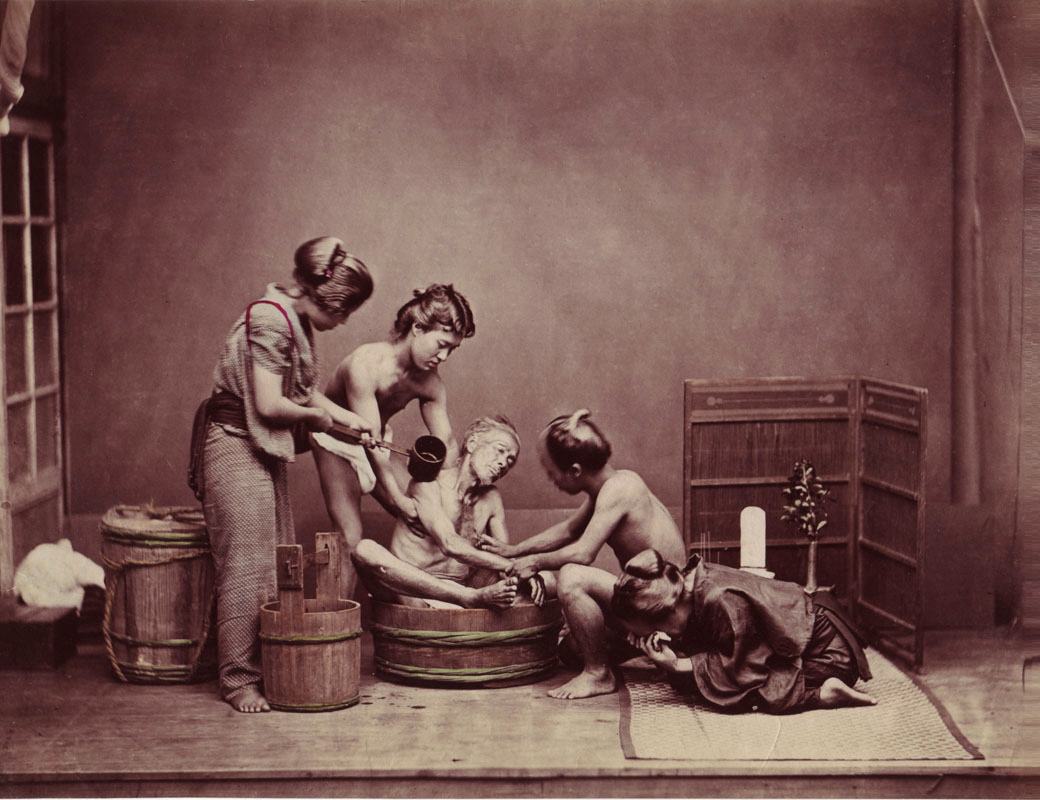
A Japanese Family Prepares a Corpse for Burial

abMeK(Via.)

An Excerpt From Karl Ove Knausgaard’s My Struggle II: A Man in Love

She fell into a pit that autumn. And she reached out for me. I didn’t understand what was happening. But it was so claustrophobic that I turned away from her, tried to maintain a distance, which she tried to close.

I went to Venice, wrote in a flat my publishing house had at its disposal, Linda was supposed to follow and stay for just under a week, then I would work for a few more days and return. She was so black, she was so heavy, kept saying I didn’t love her, I didn’t really love her, I didn’t want her, I didn’t really want her, this wasn’t working, it would never work, I didn’t want it to, I didn’t want her.

“But I do!” I said as we walked in the autumn chill in Murano with eyes hidden behind sunglasses. However, when she said I didn’t really love her, I didn’t really want to be with her, I wanted to be alone all the time, on my own, it became a little truer.

Where did her despair come from?

Had I brought it with me?

Was I cold?

Did I only think of myself?

I no longer knew what it would be like when my working day was over and I went to her place. Would she be happy, would it be a nice evening? Would she be angry about something, if for example we no longer made love every night, and so I didn’t love her as much as before? Would we sit in bed watching TV? Go for a walk to Långholmen? And once there, would I be devoured by her demands to have all of me, making me keep her at a distance and have thoughts shooting to and for in my brain that this had to come to an end, it wasn’t working, thus rendering any conversation or attempts to get closer impossible, which of course she noticed and took as proof of her main thesis, that I didn’t want her?

Continue reading “An Excerpt From Karl Ove Knausgaard’s My Struggle II: A Man in Love”

“The Breathing Author” by Gerald Murnane

From Delphic Intimations: Dialogues with Australian Writers and Critics, ed. Pradeep Trikha. 2007: Sarup & Sons, New Delhi.

I have preserved Australian spelling and style.

***

“The Breathing Author” — Gerald Murnane

This essay is the edited version of a talk given at the final session of the Gerald Murnane Research Seminar, held at the University of Newcastle on 20-21 September 2001.

I cannot conceive of myself reading a text and being unmindful that the object before my eyes is a product of human effort.

Much of my engagement with a text consists of my speculating about the methods used by the writer in the putting together of the text, or about the feelings and beliefs that drove the writer to write the text, or even about the life story of the writer.

What I am about to tell you today is the sort of detail that I would have been eager to know if it had been my fate to be a person who was drawn to read these books (points to the stack of his books near by) rather than the person who was drawn to write them.

I have for long believed that a person reveals at least as much when he reports what he cannot do or has never done as when he reports what he has done or wants to do.

I have never been in an aeroplane.

I have been as far north from my birthplace as Murwillumbah in New South Wales and as far south as Kettering in Tasmania; as far east as Bemm River in Victoria and as far west as Streaky Bay in South Australia. The distance between Murwillumbah in the north and Kettering in the south is about 1500 km. It so happens that the distance between Streaky Bay in the west and Orbost in the east is about the same. Until I calculated these distances a few days ago, I was quite unaware that my travels had been confined to an area comprising almost a square, but my learning this was no surprise to me.

I became confused, or even distressed, whenever I find myself among streets or roads that are not arranged in a rectangular grid or are so arranged but not so that the streets or roads run approximately north-south and east-west. Whenever I find myself in such a place, I feel compelled to withdraw from social intercourse and all activities other than what I call finding my bearings. These I try to find by reference to the sun or to roads or streets the alignments of which are known to me. I know I have found my bearings when I can visualise myself and my surroundings as details of a map that includes the northern suburbs of Melbourne and such prominent east-west or north-south thoroughfares of those suburbs as Bell Street or Sydney Road.

My trying to find my bearings takes much mental effort, and I fail more often than I succeed. I often believe I have succeeded but later refer to maps and find that my visualised map was wrong. When I discover this, I feel compelled to attempt a complicated exercise that I have probably never succeeded at. I am compelled first to recall the scene where I tried to find my bearings, then to recall the visualised map that proved to be wrong, and last to try to correct my remembered self, as it were: to relive the earlier experience but with the difference that I get my correct bearings. I sometimes feel this compulsion many years after the original event. While writing these notes, for example, I was compelled to recall the evening in November 1956 when I visited for the first time the suburb or Brighton, on Port Phillip Bay. It was my last day of secondary school, and my class had to meet at the home of the school captain and later to take a train into Melbourne to see a film. I arrived in Brighton by bus, in the company of boys who knew their way around that quarter of Melbourne. Later, when our class arrived on foot at Brighton Beach railway station, I stood with them on the platform where they had gathered, but I was convinced that we were waiting for the train from Melbourne. After the train had arrive and we had boarded, I remained convinced for some time that we were travelling away from Melbourne, and my peace of mind was continually disturbed during the rest of the evening by my wondering how I had so utterly lost my bearings at the railway station. Just now, as I said, I was compelled to relive that experience of more than forty years ago, but I failed yet again to understand how the map of Melbourne in my mind had been stood on its head.

I cannot understand the workings of the International Date Line.

Continue reading ““The Breathing Author” by Gerald Murnane”

An Excerpt From Gerald Murnane’s “Sipping The Essence”

Even drunk on tepid beer we could not talk honestly. Our messages for one another were obliquely worded, or hidden behind childish mimes and antics. At a certain point in the evening Durkin would make a show of examining the tangle of blankets on my bed and finding evidence that a man and a woman had shared it not long before. I would point out what I claimed were signs that a young adult male had recently masturbated there, using a heap of pillows as a surrogate woman and seeing the furthest wrinkles in his blankets as the coastal hills of the Mornington Peninsula. Durkin would then tidy the bedclothes and demonstrate what I ought to do on the bed as soon as I had come to my senses and invited home one of the thousands of girls in Melbourne who were waiting every night by their telephones as anxious to meet a new man as Carolyn had been at Sorrento. Then, if I was drunk enough, I would argue that all those women must have once been to the Gold Coast of Queensland as Carolyn had been and must have learned there too much for a beginner like myself. And if I saw that he was drunk enough I would announce that my last hope was his sixteen-years-old sister. Had he guarded her honour? I would shout at him. Could he keep her from setting out towards the Gold Coast and deliver her to me instead? I would treat her honourably and do no more than read my poems to her until our wedding night and be a fine, boozy brother-in-law to him for the rest of our lives.

When his sister was mentioned he would offer to fight me, and we would grapple on the floor until our buckets of bottles were in danger. Whenever I was on top of him and had him by the throat I boasted that my strength came from my celibate way of life. But whenever he had pinned me to the floor I begged him to procure me his sister or any girl who would give me a strength like his.

Found in the collection Landscape With Landscape.

“…a pipe that springs a leak” (Karl Ove Knausgaard)

Laura Sanders. "Faye Taking A Breath."
Laura Sanders. “Faye Taking A Breath.”


Now I saw his lifeless state. And that there was no longer any difference between what once had been my father and the table he was lying on, or the floor on which the table stood, or the wall socket beneath the window, or the cable running to the lamp beside him. For humans are merely one form among many, which the world produces over and over again, not only in everything that lives but also in everything that does not live, drawn in sand, stone, and water. And death, which I have always regarded as the greatest dimension of life, dark, compelling, was no more than a pipe that springs a leak, a branch that cracks in the wind, a jacket that slips off a clothes hanger and falls to the floor.

“Actually I’m shocked by everything I’ve just written” (Correction, Thomas Bernhard).

Thomas Bernhard died today in 1989. He was buried on the 16th. Three people were present.

tumblr_lyadkzGNjj1qcl8ymo1_1280

I’m getting closer to Altensam, but I’m not getting closer to Altensam in order to solve its mystery; for others to explain it to myself is why I am getting closer to Altensam, to my Altensam, the one that I see. While she lived I never asked my mother, never asked her all these unanswered questions, never once asked her a single crucial question, because I never could formulate such a question, I was afraid I might put such a question wrong somehow, and so I never posed it, and so I got no answer. Now the Eferding woman is dead, I can’t ask her, she can’t answer. But would it be any different now, if I could ask her, and she could answer? We don’t ask those we love, just as we don’t ask those we hate, so Roithamer. Actually I’m shocked by everything I’ve just written, what if it was all quite different, I wonder, but I will not correct now what I’ve written, I’ll correct it all when the time for such correction has come and then I’ll correct the corrections and correct again the resulting corrections andsoforth, so Roithamer. We’re constantly correcting, and correcting ourselves, most rigorously, because we recognize at every moment that we did it all wrong (wrote it, thought it, made it all wrong), acted all wrong, how we acted all wrong, that everything to this point in time is a falsification, so we correct this falsification, and then we again correct the correction of this falsification and we correct the result of the correction of a correction andsoforth, so Roithamer. But the ultimate correction is one we keep delaying, the kind others have made without ado from one minute to the next, I think, so Roithamer, the kind they could make, by the time they no longer thought about it, because they were afraid even to think about it, but then they did correct themselves, like my cousin, like his father, my uncle, like all the others whom we knew, as we thought, whom we knew so thoroughly, yet we didn’t really know all these peoples’ characters, because their self-correction took us by surprise, otherwise we wouldn’t have been surprised by their ultimate existential correction, their suicide.

An Excerpt From The Chapter “Mycobacterium tuberculosis” in Reiner Stach’s Kafka: The Years of Inight

tumblr_my52p06mUb1qzst69o1_1280


They had a difficult time with Kafka. His statements about the dangerous illness seem oddly self-assured, sensory, and at times downright theatrical, even to modern readers who have internalized the paradoxical forms of expression of literary modernity. But when we look over the correspondence of that little circle, it seems equally odd that Brod, Weltsch, and Baum had not developed any real feeling for Kafka’s psychological volatility after more than a decade of close personal contact, or understood his vulnerable, literally exposed life and his sense of reality, maintained in spite of it all. This sense of reality was what told him what to do and what not to do for his illness. But it was a far more basic need, over which he had little control, that compelled him to derive meaning from what had happened.

Continue reading “An Excerpt From The Chapter “Mycobacterium tuberculosis” in Reiner Stach’s Kafka: The Years of Inight”

An Excerpt From Reiner Stach’s “Kafka: The Years of Insight”

Franz-Kafka-with-his-first-fiancee-Felice-Bauer-in-1917-Mono-Print

No sooner was Felice out of her mother’s sight, however, than she blossomed. At the train station in Marienbad, she greeted an anxious Kafka in the tender and natural way he had always hoped for in vain in Berlin. Even the stumbling blocks they had to deal with on their first days in Marienbad–switching hotels, constant rain, and of course Kafka’s sensitivities and rigid habits–did nothing to change that. “Tribulations of living together,” he noted on the third day, and although he was undoubtedly aware that Felice had far more reason to complain, he twisted the knife a little deeper: “Impossibility of living with F. Impossibility of living with anyone at all.”

Continue reading “An Excerpt From Reiner Stach’s “Kafka: The Years of Insight””