Slavoj Žižek Hates Tulips

This video cracks me up. I understand why Žižek is such a divisive thinker, but I just love to hear him ramble on disparate subjects. And really, this is too charming for words. Transcript—

My relationship towards tulips is inherently Lynchian. I think they are disgusting. Just imagine. Aren’t these some kind of, how do you call it, vagina dentata, dental vaginas threatening to swallow you? I think that flowers are something inherently disgusting. I mean, are people aware what a horrible thing these flowers are? I mean, basically it’s an open invitation to all insects and bees, “Come and screw me,” you know? I think that flowers should be forbidden to children.

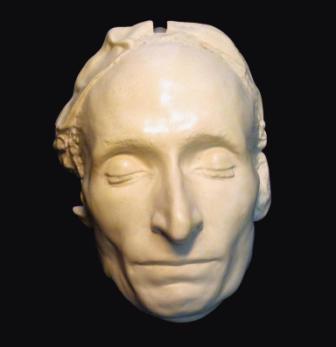
Pascal’s Death Mask

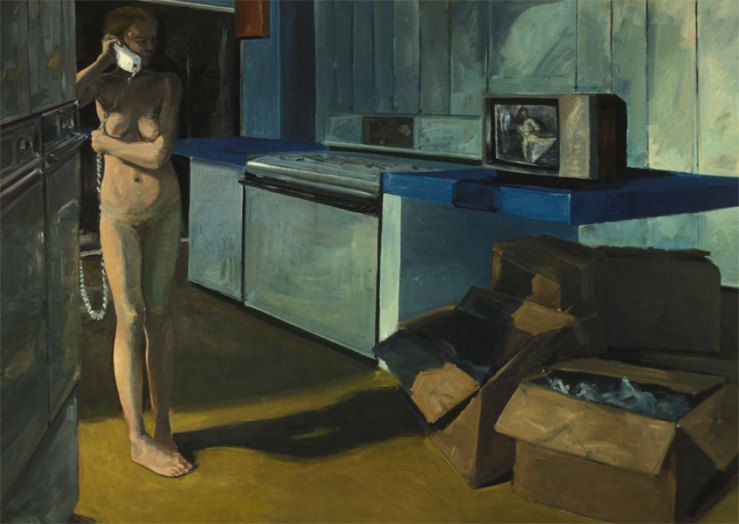
New House — Eric Fischl

The Sopranos Discuss Melville’s Billy Budd

A List of Irish Heroes from Joyce’s Ulysses

One of my favorite passages in Ulysses (it’s from the “Cyclops” chapter, episode 12). Hilarious–

He wore a long unsleeved garment of recently flayed oxhide reaching to the knees in a loose kilt and this was bound about his middle by a girdle of plaited straw and rushes. Beneath this he wore trews of deerskin, roughly stitched with gut. His nether extremities were encased in high Balbriggan buskins dyed in lichen purple, the feet being shod with brogues of salted cowhide laced with the windpipe of the same beast. From his girdle hung a row of seastones which dangled at every movement of his portentous frame and on these were graven with rude yet striking art the tribal images of many Irish heroes and heroines of antiquity, Cuchulin, Conn of hundred battles, Niall of nine hostages, Brian of Kincora, the Ardri Malachi, Art MacMurragh, Shane O’Neill, Father John Murphy, Owen Roe, Patrick Sarsfield, Red Hugh O’Donnell, Red Jim MacDermott, Soggarth Eoghan O’Growney, Michael Dwyer, Francy Higgins, Henry Joy M’Cracken, Goliath, Horace Wheatley, Thomas Conneff, Peg Woffington, the Village Blacksmith, Captain Moonlight, Captain Boycott, Dante Alighieri, Christopher Columbus, S. Fursa, S. Brendan, Marshal Mac-Mahon, Charlemagne, Theobald Wolfe Tone, the Mother of the Maccabees, the Last of the Mohicans, the Rose of Castille, the Man for Galway, The Man that Broke the Bank at Monte Carlo, The Man in the Gap, The Woman Who Didn’t, Benjamin Franklin, Napoleon Bonaparte, John L. Sullivan, Cleopatra, Savourneen Deelish, Julius Caesar, Paracelsus, sir Thomas Lipton, William Tell, Michelangelo, Hayes, Muhammad, the Bride of Lammermoor, Peter the Hermit, Peter the Packer, Dark Rosaleen, Patrick W. Shakespeare, Brian Confucius, Murtagh Gutenberg, Patricio Velasquez, Captain Nemo, Tristan and Isolde, the first Prince of Wales, Thomas Cook and Son, the Bold Soldier Boy, Arrah na Pogue, Dick Turpin, Ludwig Beethoven, the Colleen Bawn, Waddler Healy, Angus the Culdee, Dolly Mount, Sidney Parade, Ben Howth, Valentine Greatrakes, Adam and Eve, Arthur Wellesley, Boss Croker, Herodotus, Jack the Giantkiller, Gautama Buddha, Lady Godiva, The Lily of Killarney, Balor of the Evil Eye, the Queen of Sheba, Acky Nagle, Joe Nagle, Alessandro Volta, Jeremiah O’Donovan Rossa, Don Philip O’Sullivan Beare. A couched spear of acuminated granite rested by him while at his feet reposed a savage animal of the canine tribe whose stertorous gasps announced that he was sunk in uneasy slumber, a supposition confirmed by hoarse growls and spasmodic movements which his master repressed from time to time by tranquillising blows of a mighty cudgel rudely fashioned out of paleolithic stone.

(And yes, we know we posted this before, but not on St. Patrick’s Day!)
James Joyce, Son, Roman Catholic, Can Read & Write, 19, Male, Student, Unmarried, Speaks Irish

“Death in the Comic Tradition” — Tom McCarthy on Heroism and Authenticity

A passage from Simon Critchley’s new collection of interviews and meditations, How to Stop Living and Start Worrying in which author Tom McCarthy (Critchley’s partner in the International Necronautical Society) talks about the question of an authentic, heroic self—

. . . in the heroic tradition in literature, which pits the self against death in a way that produces authenticity, you find a hero that runs into death like a fly slamming into an electric field, and which goes out in a tremendous spark of authentic apotheosis. There’s a lot about that, aesthetically, which is very seductive. However, we at the INS strongly reject that. Instead, we feel more seduced by the comic tradition in which the fly can’t even reach the electric field. It keeps tripping over its legs, or becomes distracted by something — dog shit, for example. So death in the comic tradition is not that of authentic self-mastery, but rather of a slippage; it’s about the inability to be oneself, and to become what one wants to be. And we think that that kind of tradition or logic is much more rich and fruitful.

Juxtapoz Interviews Walton Ford

Deborah Eisenberg Wins the 2011 PEN/Faulkner Award for Fiction

Deborah Eisenberg wins the 2011 PEN/Faulkner Award for The Collected Stories of Deborah Eisenberg. Here she is reading—

“Murder Is Natural” — A Clip from Peter Brook’s Film Marat/Sade

“The White Fires of Venus” — Denis Johnson

“The White Fires of Venus” by Denis Johnson

We mourn this senseless planet of regret,
droughts, rust, rain, cadavers
that can’t tell us, but I promise
you one day the white fires
of Venus shall rage: the dead,
feeling that power, shall be lifted, and each
of us will have his resurrected one to tell him,
“Greetings. You will recover
or die. The simple cure
for everything is to destroy
all the stethoscopes that will transmit
silence occasionally. The remedy for loneliness
is in learning to admit
solitude as one admits
the bayonet: gracefully,
now that already
it pierces the heart.
Living one: you move among many
dancers and don’t know which
you are the shadow of;
you want to kiss your own face in the mirror
but do not approach,
knowing you must not touch one
like that. Living
one, while Venus flares
O set the cereal afire,
O the refrigerator harboring things
that live on into death unchanged.”

They know all about us on Andromeda,
they peek at us, they see us
in this world illumined and pasteled
phonily like a bus station,
they are with us when the streets fall down fraught
with laundromats and each of us
closes himself in his small
San Francisco without recourse.
They see you with your face of fingerprints
carrying your instructions in gloved hands
trying to touch things, and know you
for one despairing, trying to touch the curtains,
trying to get your reflection mired in alarm tape
past the window of this then that dark
closed business establishment.
The Andromedans hear your voice like distant amusement park music
converged on by ambulance sirens
and they understand everything.
They’re on your side. They forgive you.

I want to turn for a moment to those my heart loves,
who are as diamonds to the Andromedans,
who shimmer for them, lovely and useless, like diamonds:
namely, those who take their meals at soda fountains,
their expressions lodged among the drugs
and sunglasses, each gazing down too long
into the coffee as though from a ruined balcony.
O Andromedans they don’t know what to do
with themselves and so they sit there
until they go home where they lie down
until they get up, and you beyond the light years know
that if sleeping is dying, then waking
is birth, and a life
is many lives. I love them because they know how
to manipulate change
in the pockets musically, these whose faces the seasons
never give a kiss, these
who are always courteous to the faces
of presumptions, the presuming streets,
the hotels, the presumption of rain in the streets.
I’m telling you it’s cold inside the body that is not the body,
lonesome behind the face
that is certainly not the face
of the person one meant to become.

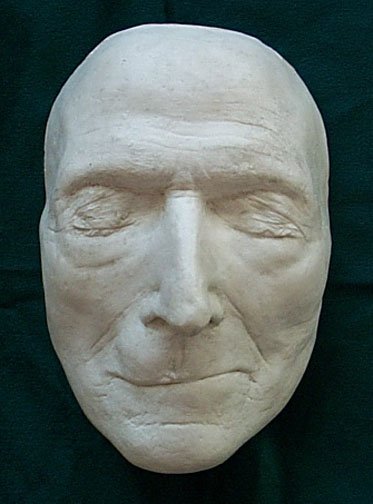
John Wesley’s Death Mask

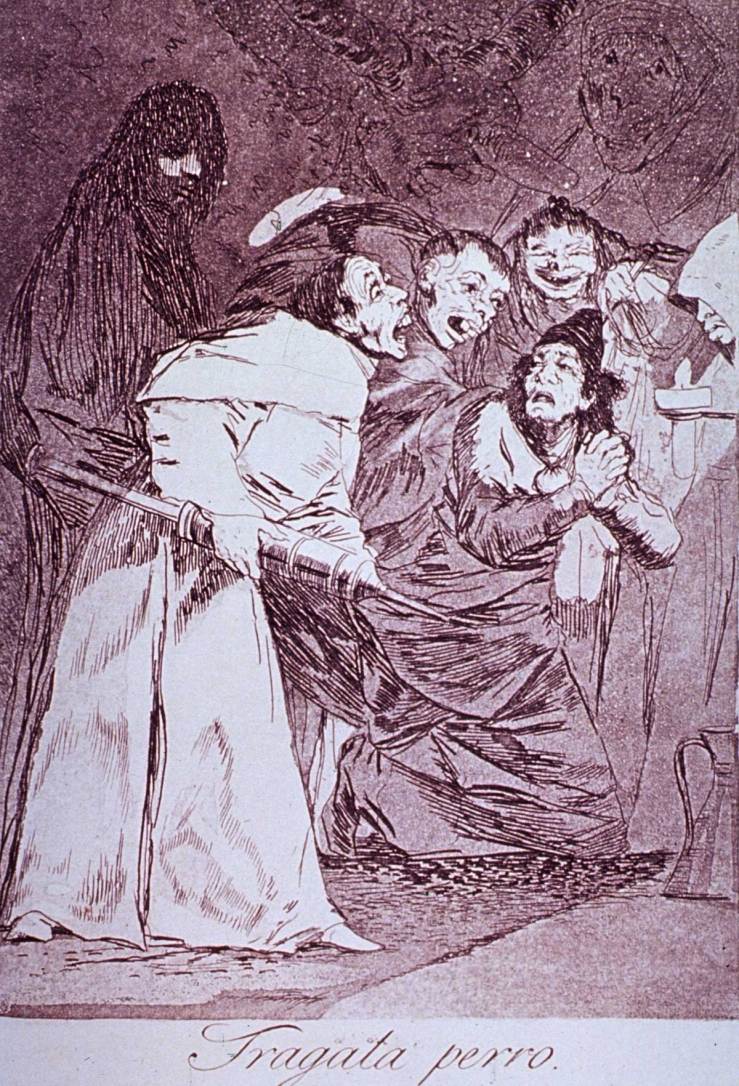
Swallow It, Dog — Francisco Goya

“He who lives amongst men will be irremediably vexed” — Goya

Volcano: An Inquiry into the Life and Death of Malcolm Lowry

Vodpod videos no longer available.

Volcano: An Inquiry into the Life and Death of Malcolm Lowry is a 1976 documentary by directors Donald Brittain and John Kramer. Featuring Richard Burton reading from Lowry’s work. (Via).

“Your Dog Dies” — Raymond Carver

“Your Dog Dies” by Raymond Carver–

It gets run over by a van.
you find it at the side of the road
and bury it.
you feel bad about it.
you feel bad personally,
but you feel bad for your daughter
because it was her pet,
and she loved it so.
she used to croon to it
and let it sleep in her bed.
you write a poem about it.
you call it a poem for your daughter,
about the dog getting run over by a van
and how you looked after it,
took it out into the woods
and buried it deep, deep,
and that poem turns out so good
you’re almost glad the little dog
was run over, or else you’d never
have written that good poem.
then you sit down to write
a poem about writing a poem
about the death of that dog,
but while you’re writing you
hear a woman scream
your name, your first name,
both syllables,
and your heart stops.
after a minute, you continue writing.
she screams again.
you wonder how long this can go on.


Book Trailer: Simon Critchley’s How to Stop Living and Start Worrying

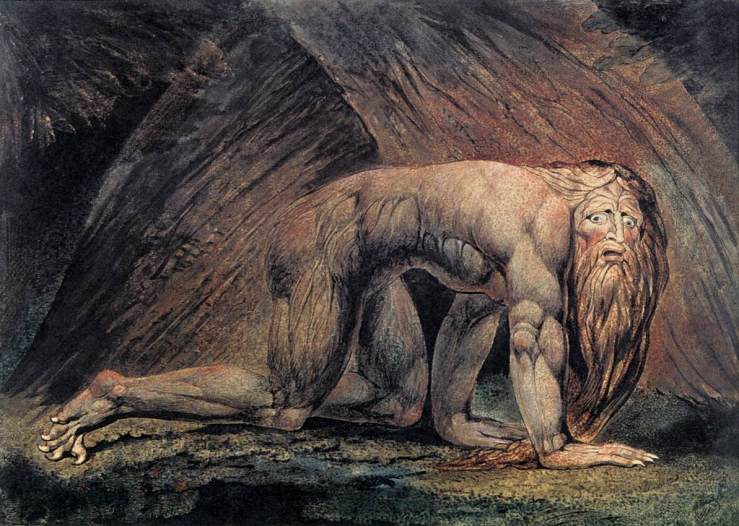
Nebuchadnezzar — William Blake