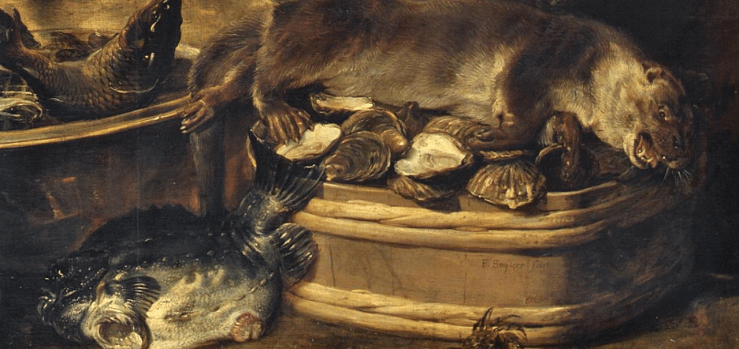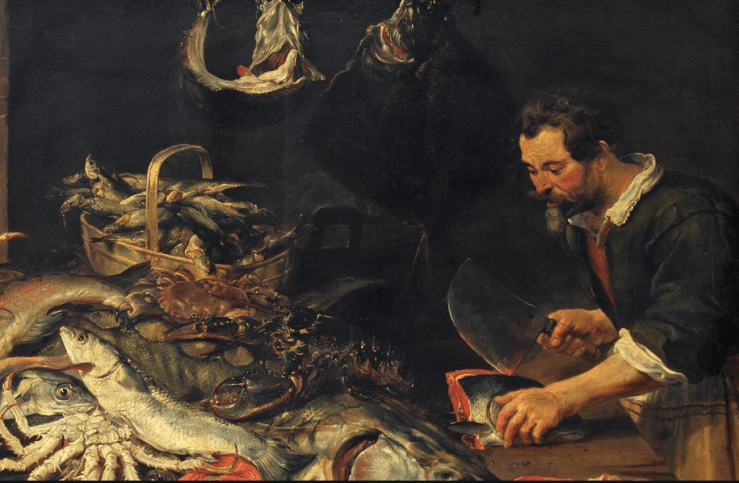
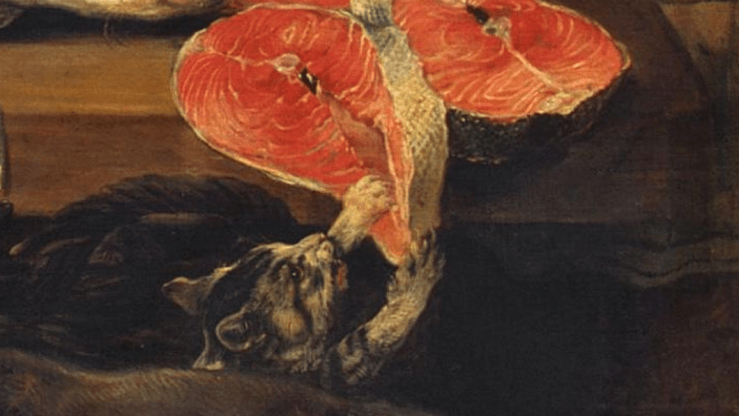
Fish Stall (Detail) — Frans Snyders

Fish Stall (Detail), c. 1620  by Frans Snyders (1579–1657)

Girl Eating — Michaël Borremans

Girl Eating, 2014 by Michaël Borremans (b. 1963)

Ladies Suit — Remedios Varo

Ladies Suit, 1957 by Remedios Varo (1908-1963)

Surrealism is no longer considered modern today | Leonora Carrington


Art in London didn’t seem quite modern enough and I began to want to study in Paris where the Surrealists were in full cry. Surrealism is no longer considered modern today and almost every village rectory and girl’s school have surrealist pictures hanging on their walls. Even Buckingham Palace has a large reproduction of Magritte’s famous slice of ham with an eye peering out. It hangs, I believe, in the throne room. Times do change indeed. The Royal Academy recently gave a retrospective expedition of Dada art and they decorated the gallery like a public lavatory. In my day people in London would have been shocked. Today the Lord Mayor opened the exhibition with a long speech about the twentieth-century masters and the Queen Mother hung a wreath of gladiola on a piece of sculpture called “Navel” by Hans Arp.

From Leonora Carrington’s 1976 novel The Hearing Trumpet.

The Navel Bottle, 1923 by Hans Arp (1886–1966)

Fish Stall (Detail) — Frans Snyders

Fish Stall (Detail), c. 1620  by Frans Snyders (1579–1657)

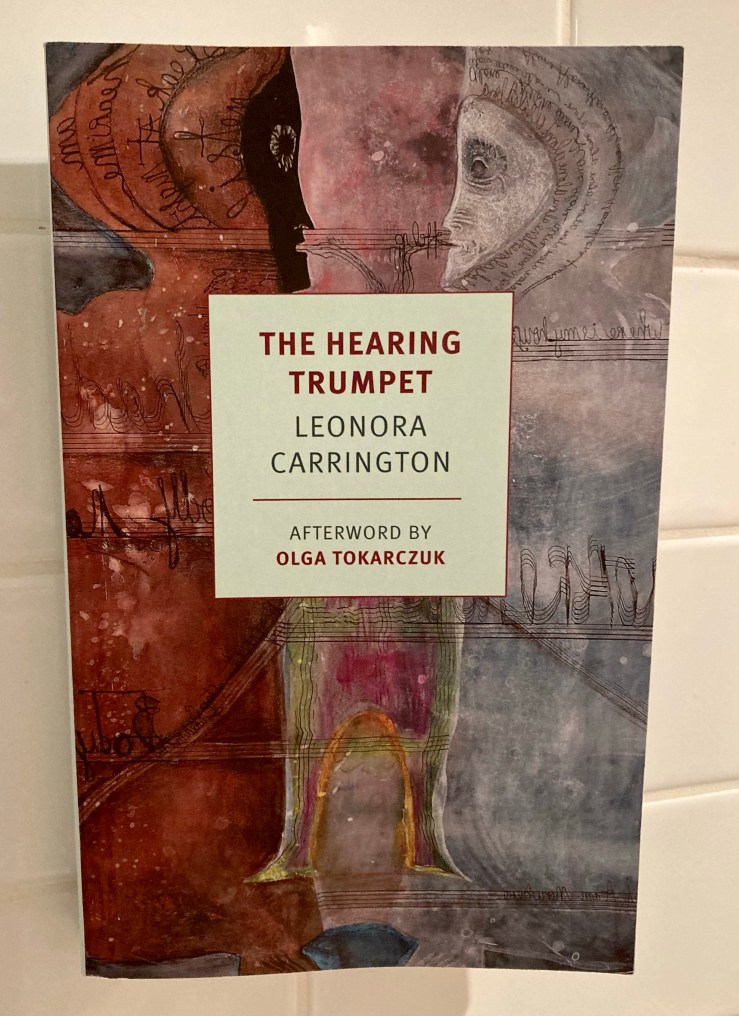
Leonora Carrington’s The Hearing Trumpet (Book acquired, 1 Dec. 2020)

NYRB will have a new edition of surrealist painter Leonora Carrington’s 1976 novel The Hearing Trumpet out in early January of 2021. I started it this afternoon, and the first 20 or so pages seem to divert in style from the short stories I’ve read by her—definitely chock full of quirky imagery, but also relatively straightforward in their execution. At around the 20 page mark, though, the narrative dips into demented dreamland. Ali Smith’s blurb promises there’s more under the surface:

The Hearing Trumpet . . . reads on its parodic surface like an Agatha Christie domestic mystery, but one melted, dissolved by extreme heat into something unthinkably other, and reconstructed as the casebook of an alchemist. . . . It asks its readers to allow the dark, allow the wild and rethink how power works. It is a work of massive optimism. . . . One of the most original, joyful, satisfying, and quietly visionary novels of the twentieth century.

I also love the blurb from Luis Buñuel:

Reading The Hearing Trumpet liberates us from the miserable reality of our days.

Here’s NYRB’s blurb:

Leonora Carrington, painter, playwright, and novelist, was a surrealist trickster par excellence, and The Hearing Trumpet is the witty, celebratory key to her anarchic and allusive body of work. The novel begins in the bourgeois comfort of a residential corner of a Mexican city and ends with a man-made apocalypse that promises to usher in the earth’s rebirth. In between we are swept off to a most curious old-age home run by a self-improvement cult and drawn several centuries back in time with a cross-dressing Abbess who is on a quest to restore the Holy Grail to its rightful owner, the Goddess Venus. Guiding us is one of the most unexpected heroines in twentieth-century literature, a nonagenarian vegetarian named Marian Leatherby, who, as Olga Tokarczuk writes in her afterword, is “hard of hearing” but “full of life.”

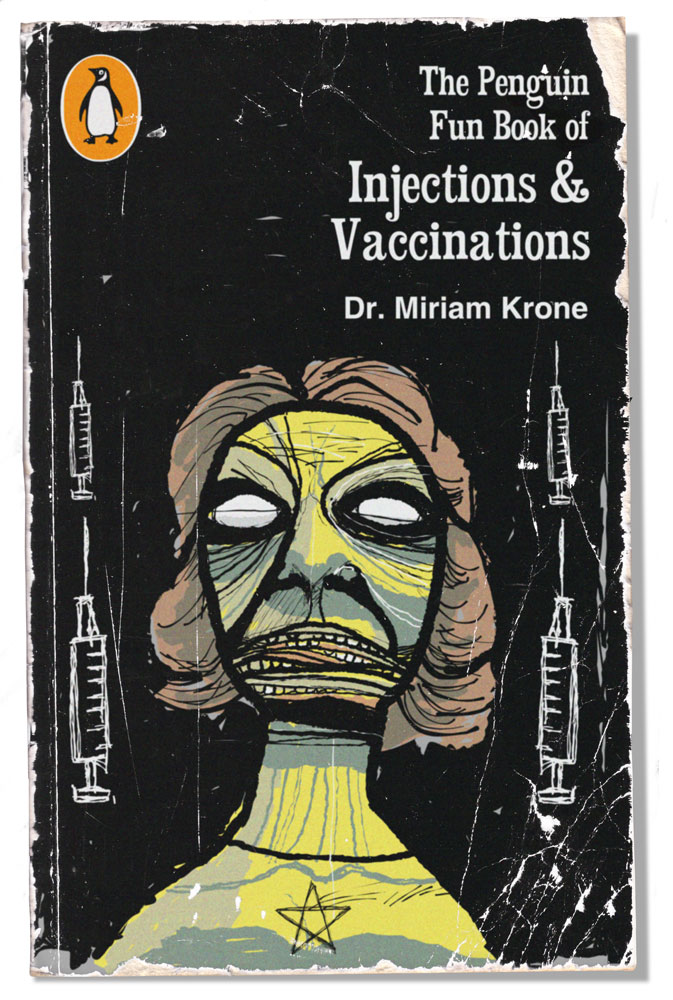
The Penguin Fun Book of Injections & Vaccinations

Via; more Scarfolk.

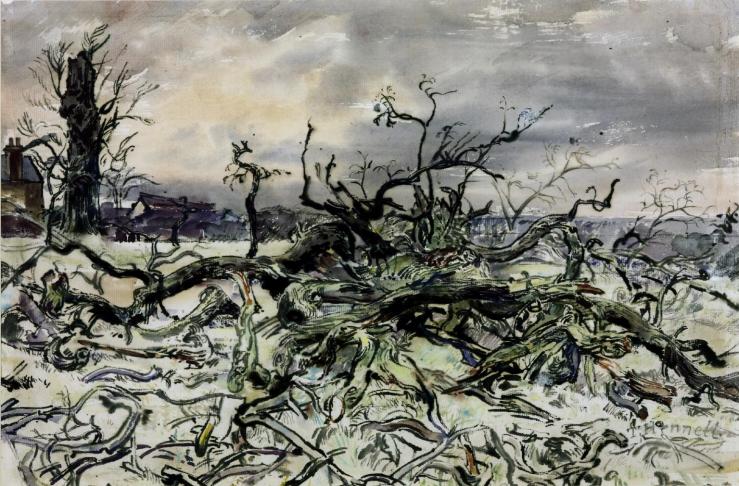
The Tree — Thomas Hennell

The Tree, c.1938-40 by Thomas Hennell (1903-1945)

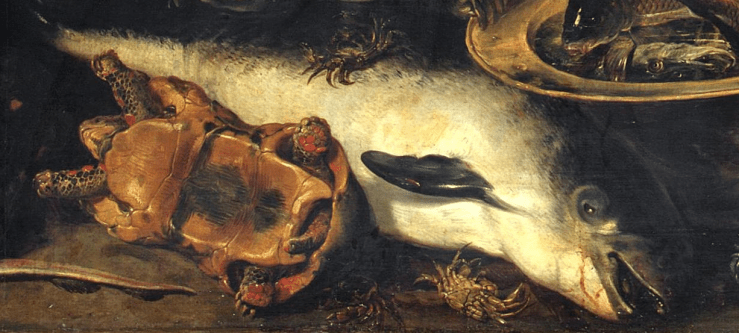
Fish Stall (Detail) — Frans Snyders

Fish Stall (Detail), c. 1620  by Frans Snyders (1579–1657)

It wasn’t so bad really, the commercial Christmas (Walker Percy)

…it all comes back, the old pleasant month-long Santy-Claus-store-window Christmas. It wasn’t so bad really, the commercial Christmas, a month of Christmas Eves, stores open every night, everyone feeling good and generous and spending money freely, handsome happy Americans making the cash registers jingle, the nice commercial carols, Holy Night, the soft-eyed pretty girls everywhere—

From Walker Percy’s 1971 dystopian speculative fiction novel Love in the Ruins. The narrator, Dr. Thomas More, a bit drunk, reflects back to the pre-revolutionary days of a commercial Christmas.

Do Electric Sheep Dream of Transgenic Flowers? — Clive Smith

Do Electric Sheep Dream of Transgenic Flowers?, 2019 by Clive Smith (b. 1967)

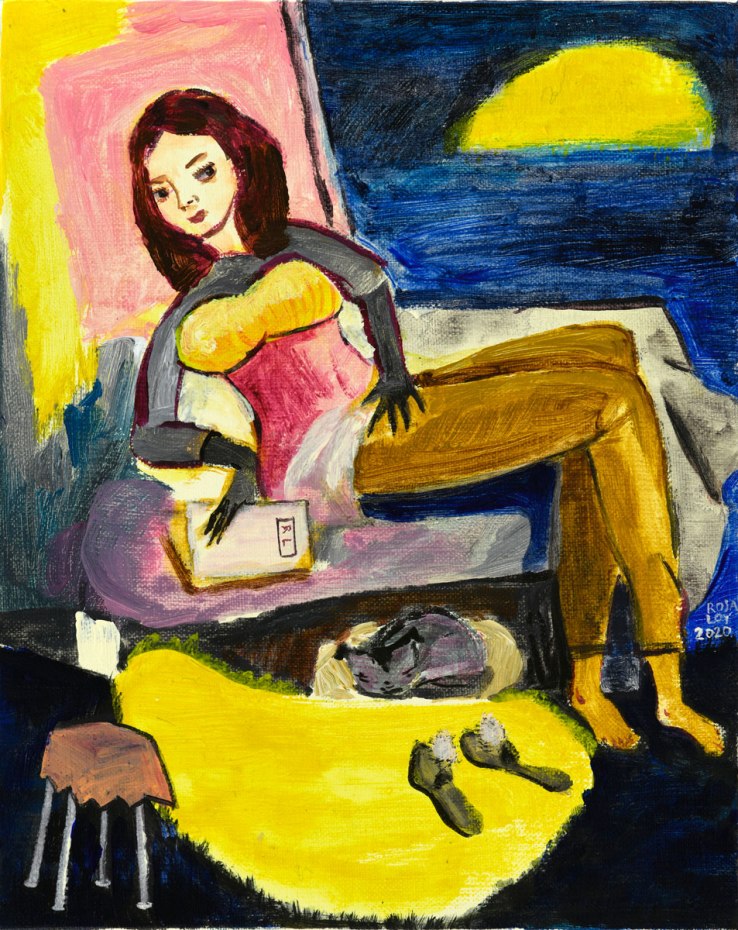
Rough Nights — Rosa Loy

Rauhnächte (Rough Nights), 2020 by Rosa Loy (b. 1958)

Fish Stall (Detail) — Frans Snyders

Fish Stall (Detail), c. 1620  by Frans Snyders (1579–1657)

December — Paul Jacoulet

December, 1953 by Paul Jacoulet (1896-1960)

Theory of Catastrophe — Malcolm Morley

Theory of Catastrophe, 2004 by Malcolm Morley (1931-2018)

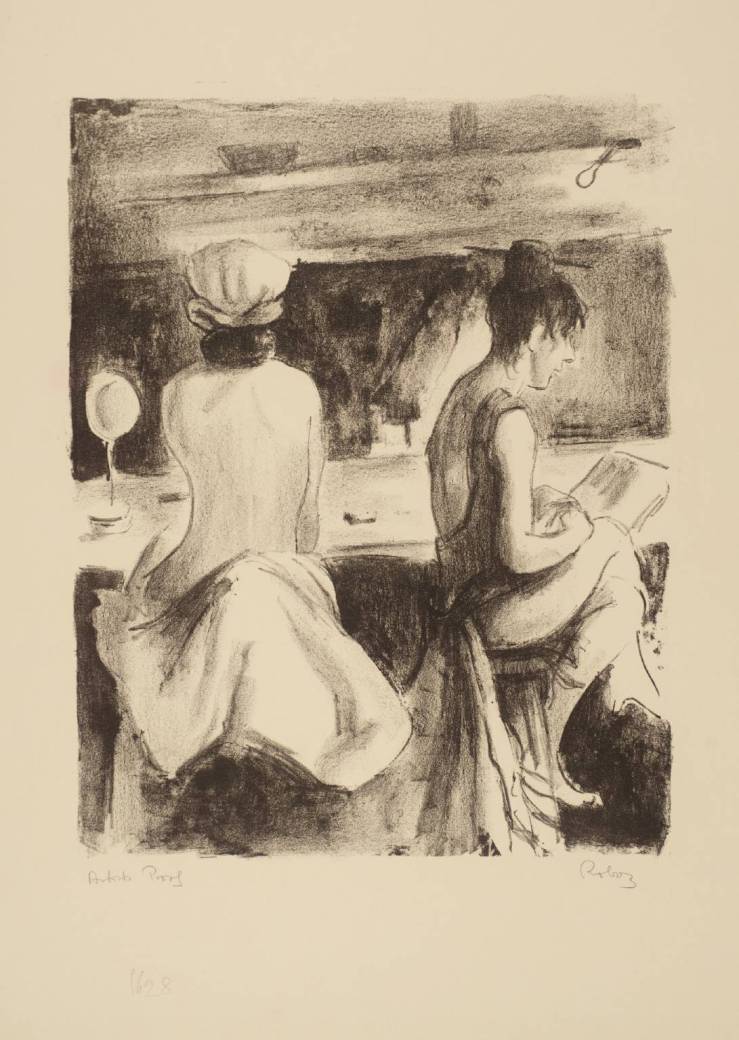
Interval — Zsuzsi Roboz

Interval, 1975 by Zsuzsi Roboz (1939–2012)

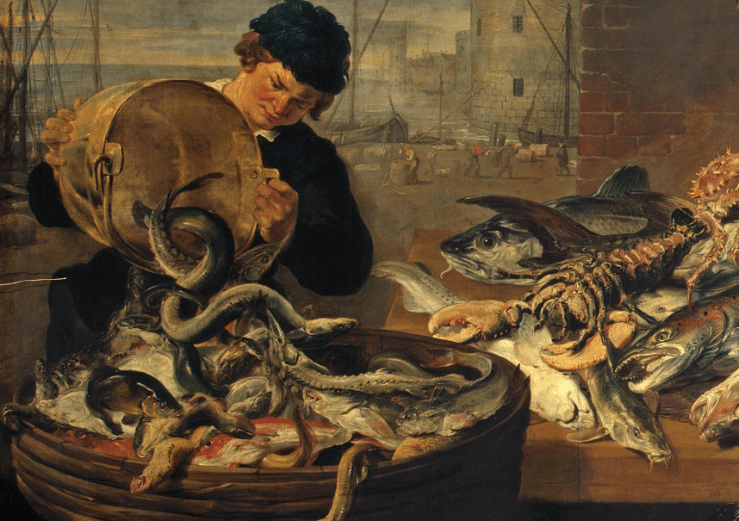
Fish Stall (Detail) — Frans Snyders

Fish Stall (Detail), c. 1620  by Frans Snyders (1579–1657)