
The Eyes in the Grillwork, 1942 by Wilfredo Lam (1902-1982)

The Eyes in the Grillwork, 1942 by Wilfredo Lam (1902-1982)
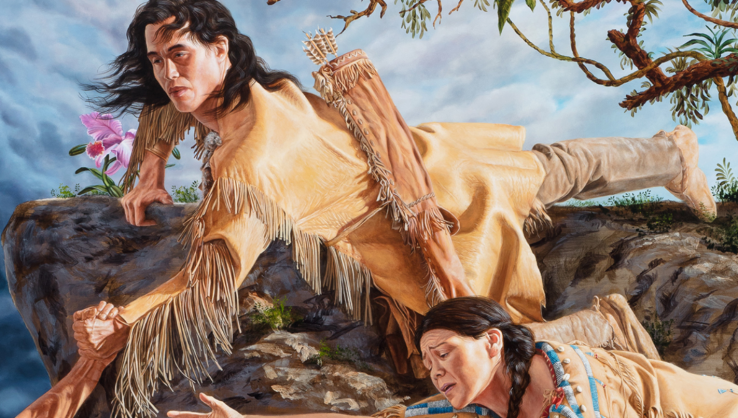
 Unclothe Hercules, 2015 by Xiao Guo Hui (b. 1969)

Gluttony, 1904 — James Ensor (1860-1949)
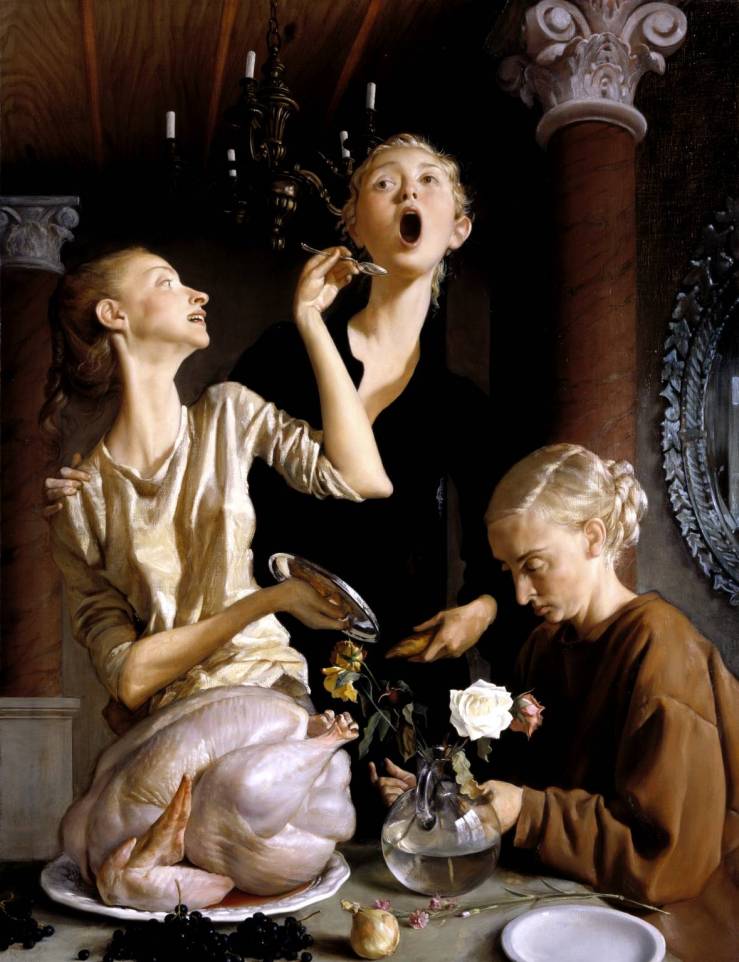
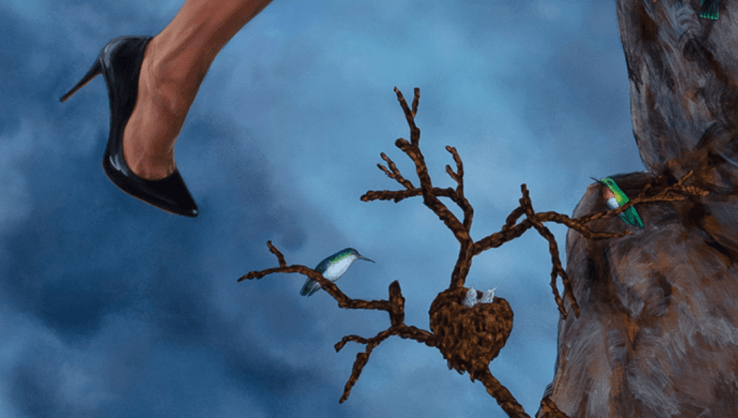
Thanksgiving, 2003 by John Currin (b. 1962)
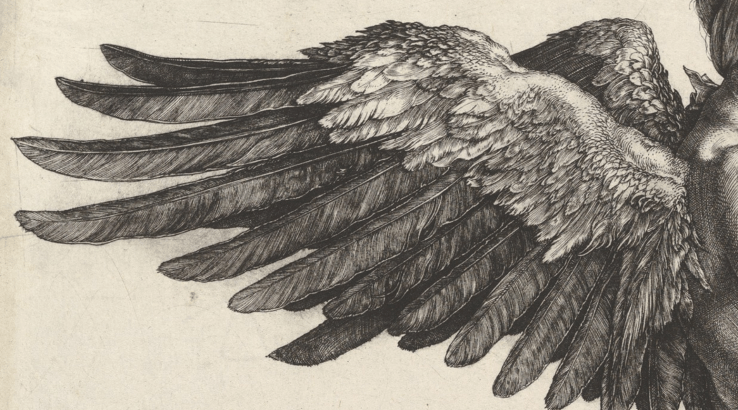
Nemesis (Detail), 1503 by Albrecht Durer (1471-1528)
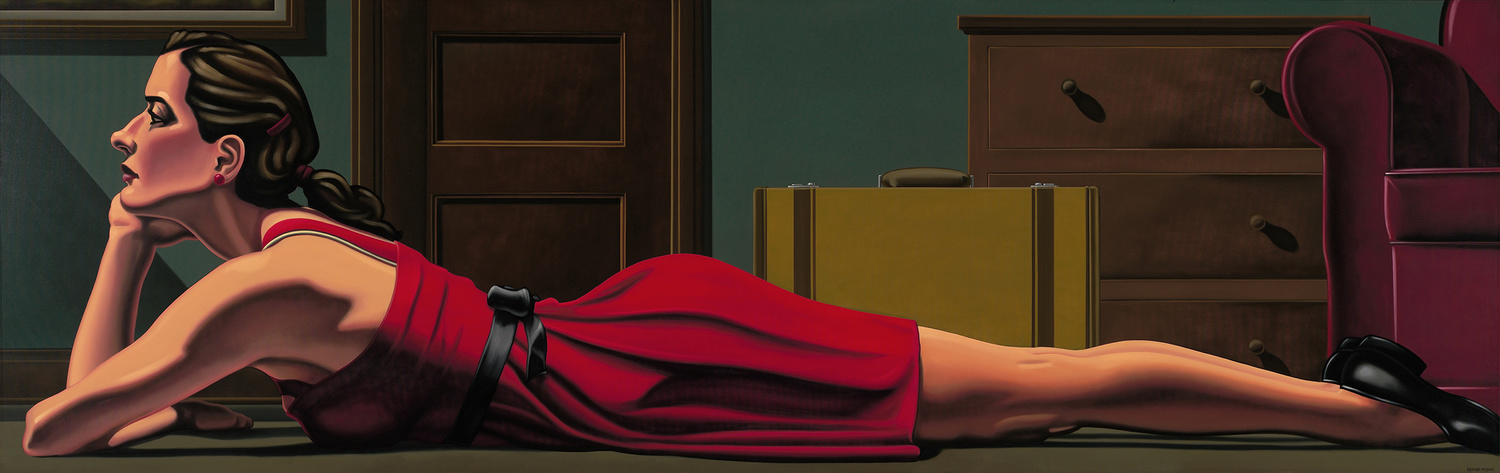
Wait by Kenton Nelson (b. 1954)

Under the Volcano by Malcolm Lowry. 1965 hardback from Lippincott. Jacket design by David Lunn.

Under the Volcano by Malcolm Lowry. 2014 trade paperback from Harper Perennial Olive Editions. Cover design and illustration by Milan Bozic.

Under the Volcano by Malcolm Lowry. 1962 paperback from Vintage. Cover design by Harry Ford.
I have now bought four copies of Malcolm Lowry’s 1947 novel Under the Volcano. The first copy I bought was a cheap movie tie-in edition with a ghastly cover. I later replaced it with the 1962 edition, and reread it. A few years later I resisted buying a 2007 Harper Perennial paperback edition that featured an afterword by William Vollmann. (You can read Vollmann’s afterword—and the entire book, if a 700 page pdf is your thing—here).
On 8 Nov. 2019, I picked up the 2014 Olive edition.
On 22 Nov. 2019, I picked up the 1965 Lippincott hardback, blowing the rest of my store credit in the process. I couldn’t not buy it. I had to have it.
It also matches a folding hard print of Hokusai’s Red Fuji that a student gave me as a gift when I left Tokyo.

This clipping of a 1984 not-really review of John Huston’s film adaptation was folded inside of the book.

I wrote a review of Under the Volcano on this website back in 2011. From that review:
For all its bleak, bitter bile, Volcano contains moments of sheer, raw beauty, especially in its metaphysical evocations of nature, which always twist back to Lowry’s great themes of Eden, expulsion, and death. Lowry seems to pit human consciousness against the naked power of the natural world; it is no wonder then, against such a grand, stochastic backdrop, that his gardeners should fall. The narrative teems with symbolic animals — horses and dogs and snakes and eagles — yet Lowry always keeps in play the sense that his characters bring these symbolic identifications with them. The world is just the world until people walk in it, think in it, make other meanings for it.
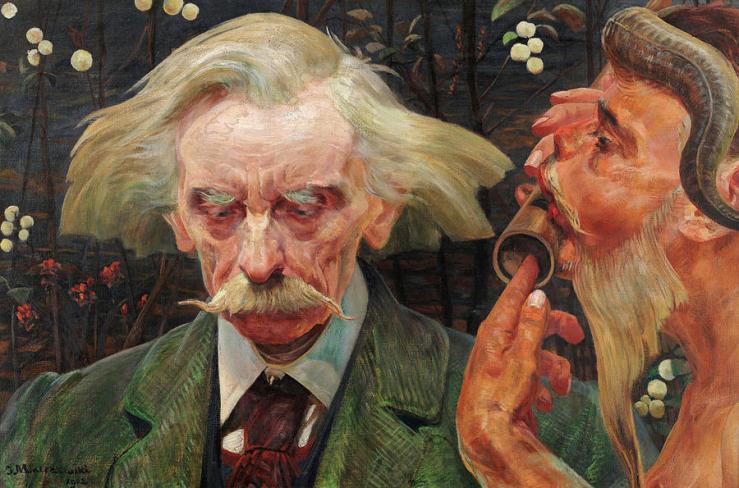
The Unknown Note, 1902 by Jacek Malczewski (1854-1929)

Saltwood Window, c. 1955 by Robin Ironside (1912-1965)
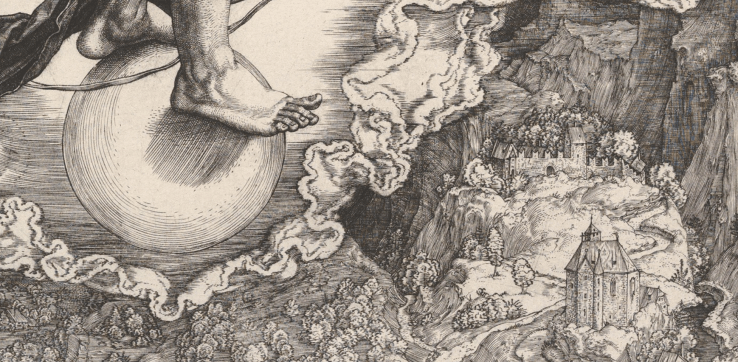
Nemesis (Detail), 1503 by Albrecht Durer (1471-1528)
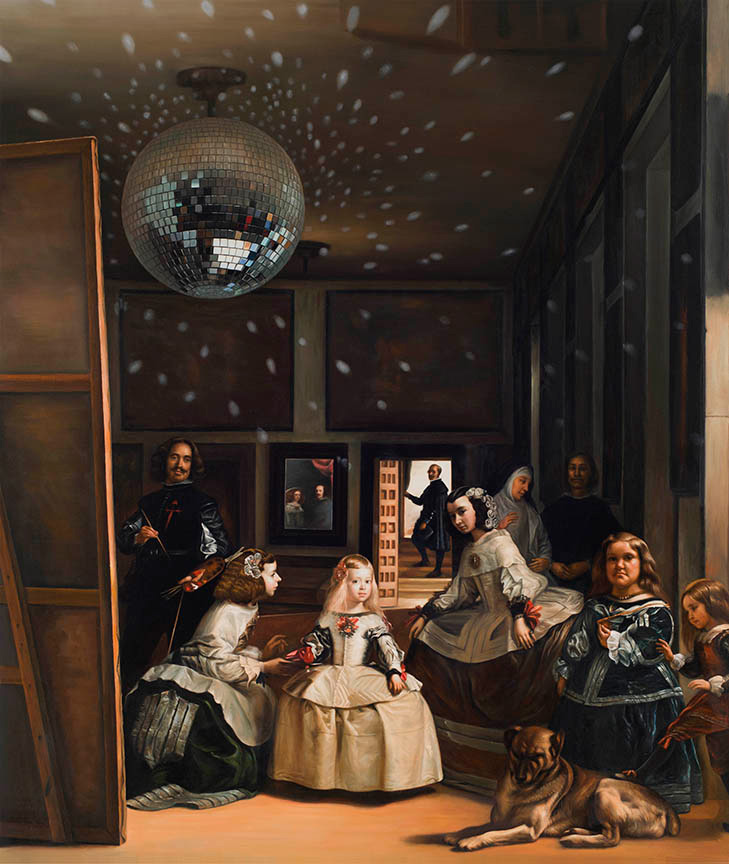
Rock Star, 2015 by Marc Dennis (b. 1971)
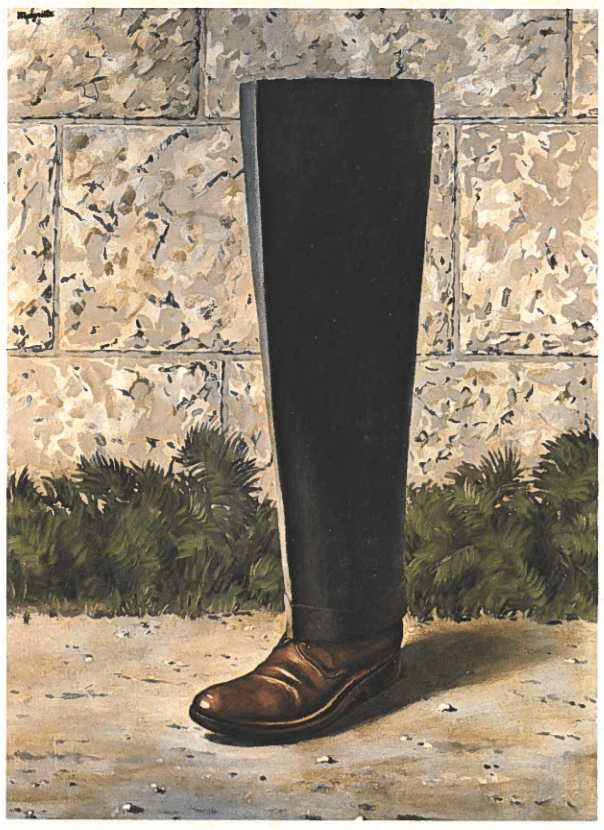
The Well of Truth, 1963 by René Magritte (1898-1967)

From the review:
Rusty Brown, Ware’s latest novel (or, more precisely, novel-in-progress) strengthens the argument that Ware is a Serious American Novelist, one who deserves a large crossover audience. Like Jimmy Corrigan and Building Stories, Rusty Brown has a central primary setting, a small private school in Nebraska. And like those novels, Rusty Brown comprises material (lightly reworked) from Ware’s Acme Novelty Library series (issues 16, 17, 19, and 20, specifically). The cast here is much larger and the themes are arguably more ambitious though.
Rusty Brown is a sprawling story about memory and perception, about minor triumphs and chronic failures, about how our inner monologues might not match up to the reality around us. In Ware’s world, life can be blurry, spotty, fragmented. His characters are so bound up in their own consciousnesses that they cannot see the bigger picture that frames them.

Escaping the Candy Jail with My Good Eye Closed 1, 2016 by Drew Simpson

Three Baskets, 1995 by Stephen McKenna (1939–2017)


 Biblioklept