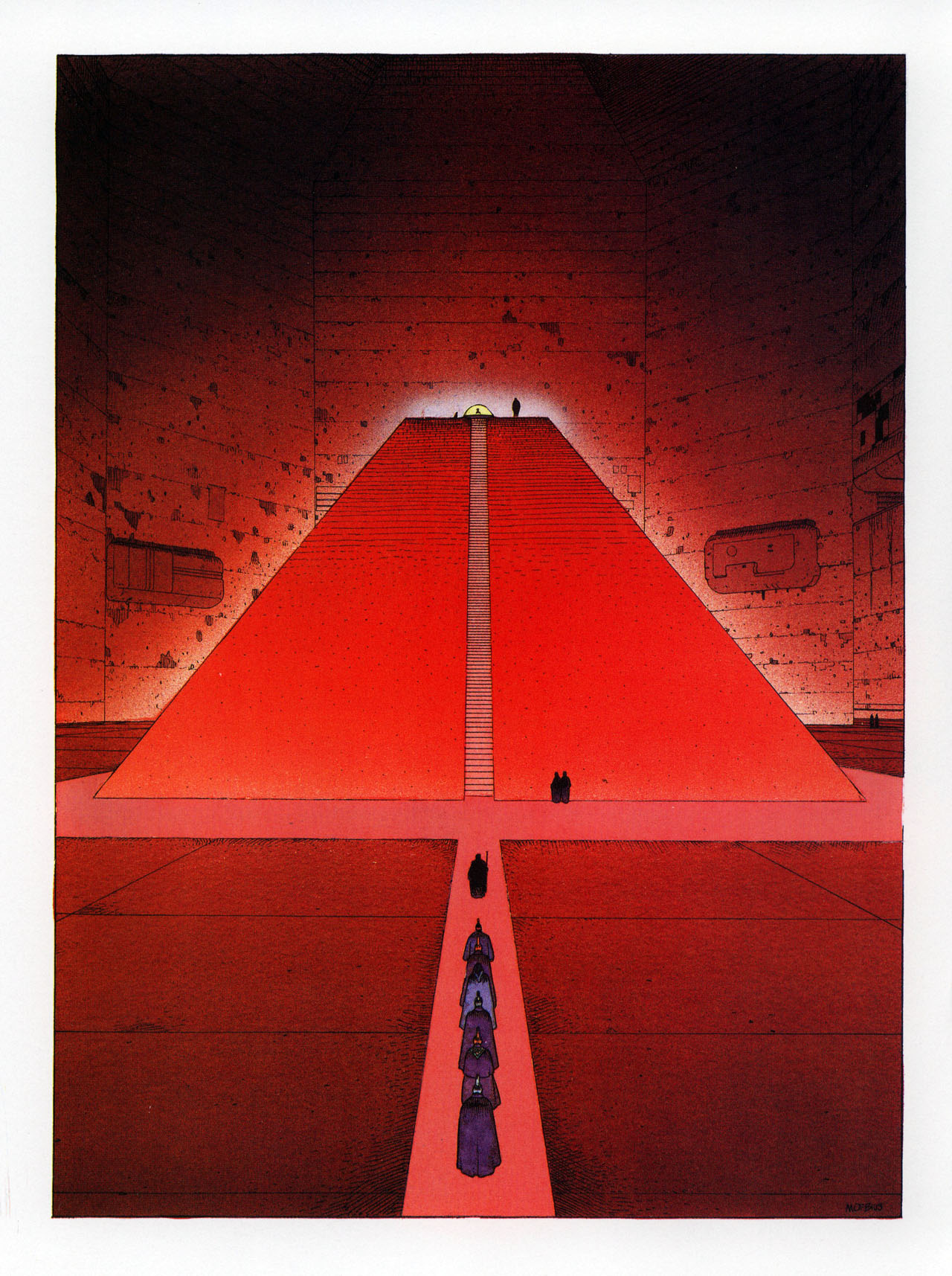
Untitled (Approaching the Paternum) — Moebius

Page from The Goddess, 1990 by Moebius (Jean Giraud, 1938–2012)

“The Wayfarer” — Robert Coover

“The Wayfarer”

by

Robert Coover


I came upon him on the road. I pulled over, stepped out, walked directly over to him where he sat. On an old milestone. His long tangled beard was a yellowish gray, his eyes dull with the dust of the road. His clothes were all of a color and smelled of mildew. He was not a sympathetic figure, but what could I do?

I stood for a while in front of him, hands on hips, but he paid me no heed. I thought: at least he will stand. He did not. I scuffed up a little dust between us with the toe of my boot. The dust settled or disappeared into his collection of it. But still, he stared obliviously. Vacantly. Perhaps (I thought): mindlessly. Yet I could be sure he was alive, for he sighed deeply from time to time, He is afraid to acknowledge me, I reasoned. It may or may not have been the case, but it served, for the time being, as a useful premise. The sun was hot, the air dry. It was silent, except for the traffic.

I cleared my throat, shifted my feet, made a large business of extracting my memo-book from my breast pocket, tapped my pencil on it loudly. I was determined to perform my function in the matter, without regard to how disagreeable it might prove to be. Others passed on the road. They proffered smiles of commiseration, which I returned with a pleasant nod. The wayfarer wore a floppy black hat. Tufts of yellow-gray hair poked out of the holes in it like dead wheat. No doubt, it swarmed. Still, he would not look at me.

Finally, I squatted and interposed my face in the path of his stare. Slowly—painfully, it would seem—his eyes focused on mine. They seemed to brighten momentarily, but I am not sure why. It could have been joy as easily as rage, or it could have been fear. Only that: his eyes brightened; his face remained slack and inexpressive. And it was not a glow, nothing that could be graphed, it was just a briefest spark, a glimmer. Then dull again. Filmy as though with a kind of mucus smeared over. And he lost the focus. I don’t know whether or not in that instant of perception he noticed my badge. I wished at the time that he would, then there could be no further ambiguities. But I frankly doubted that he did. He has traveled far, I thought. Continue reading ““The Wayfarer” — Robert Coover”

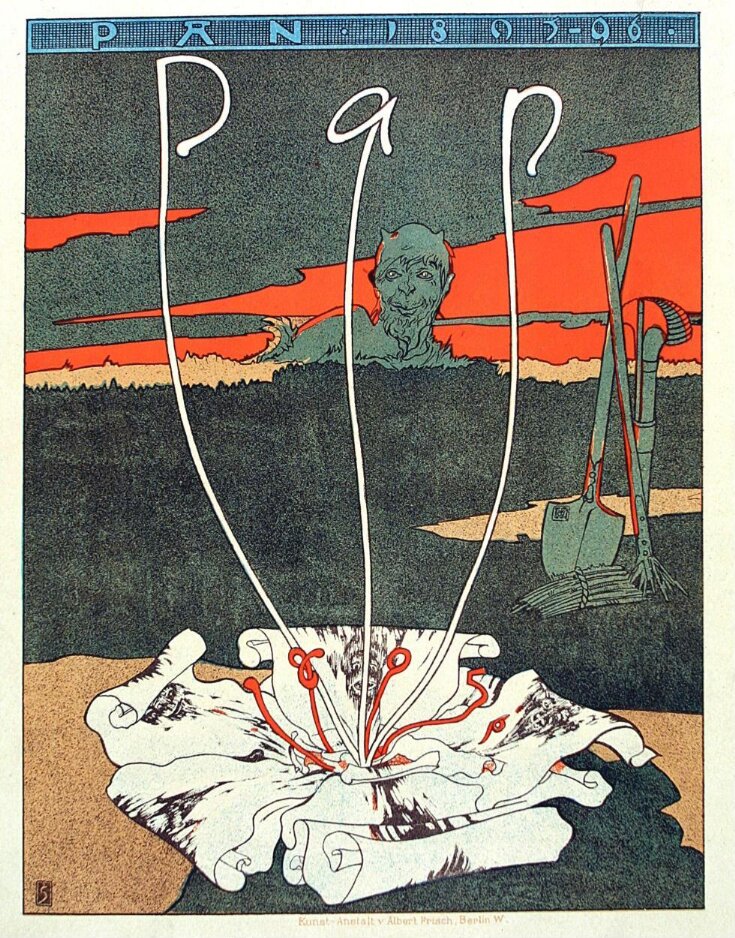
Pan — Joseph Sattler

Pan, 1895 by Joseph Sattler (1867-1931)

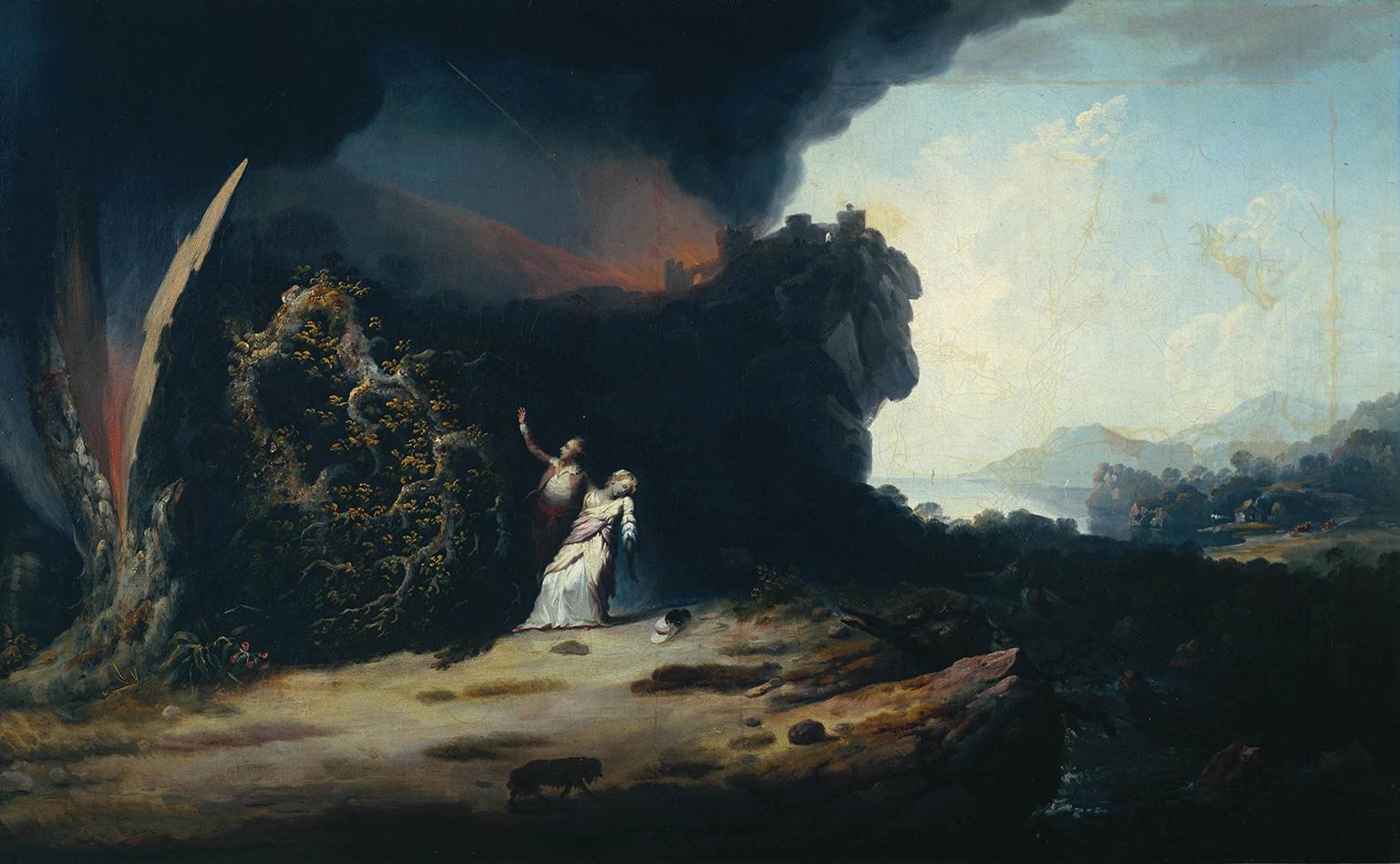
Thunderstorm with the Death of Amelia — William Williams

Thunderstorm with the Death of Amelia, 1784 by William Williams (active 1758-1797)

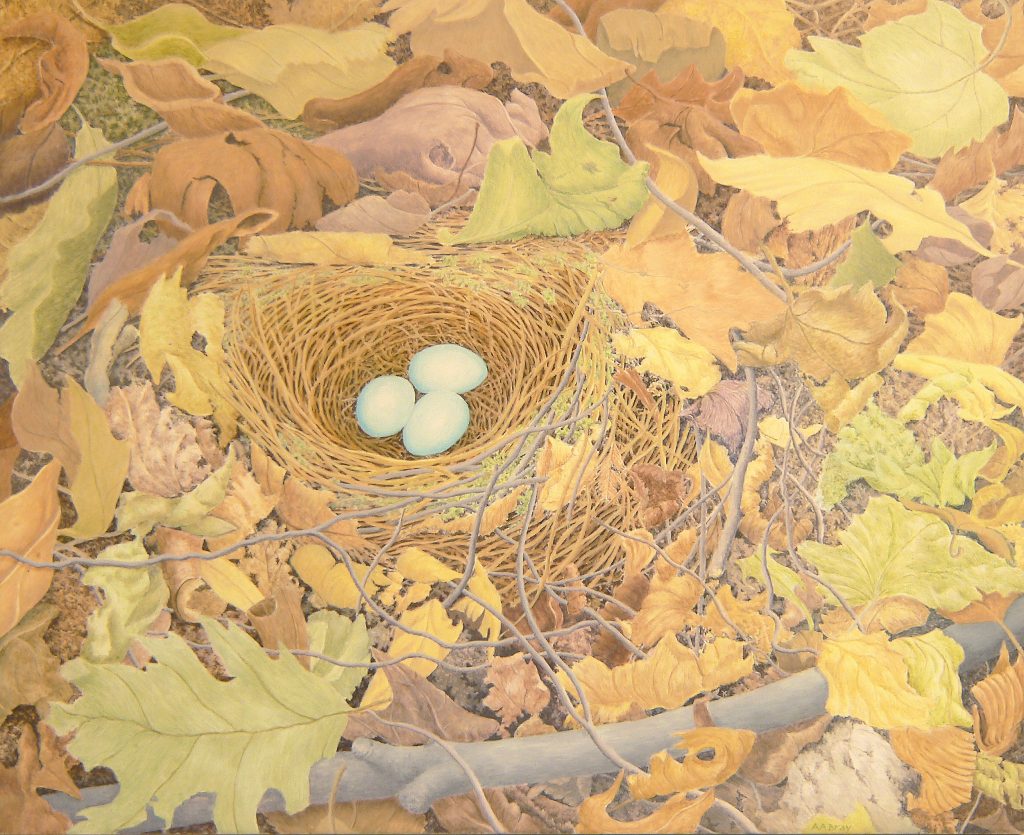
Hermit Thrush — Alan Bray

Hermit Thrush, 2022 by Alan Bray (b. 1946)

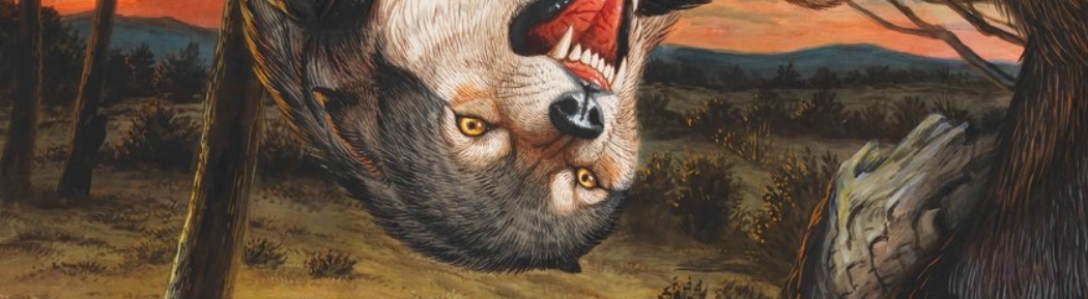
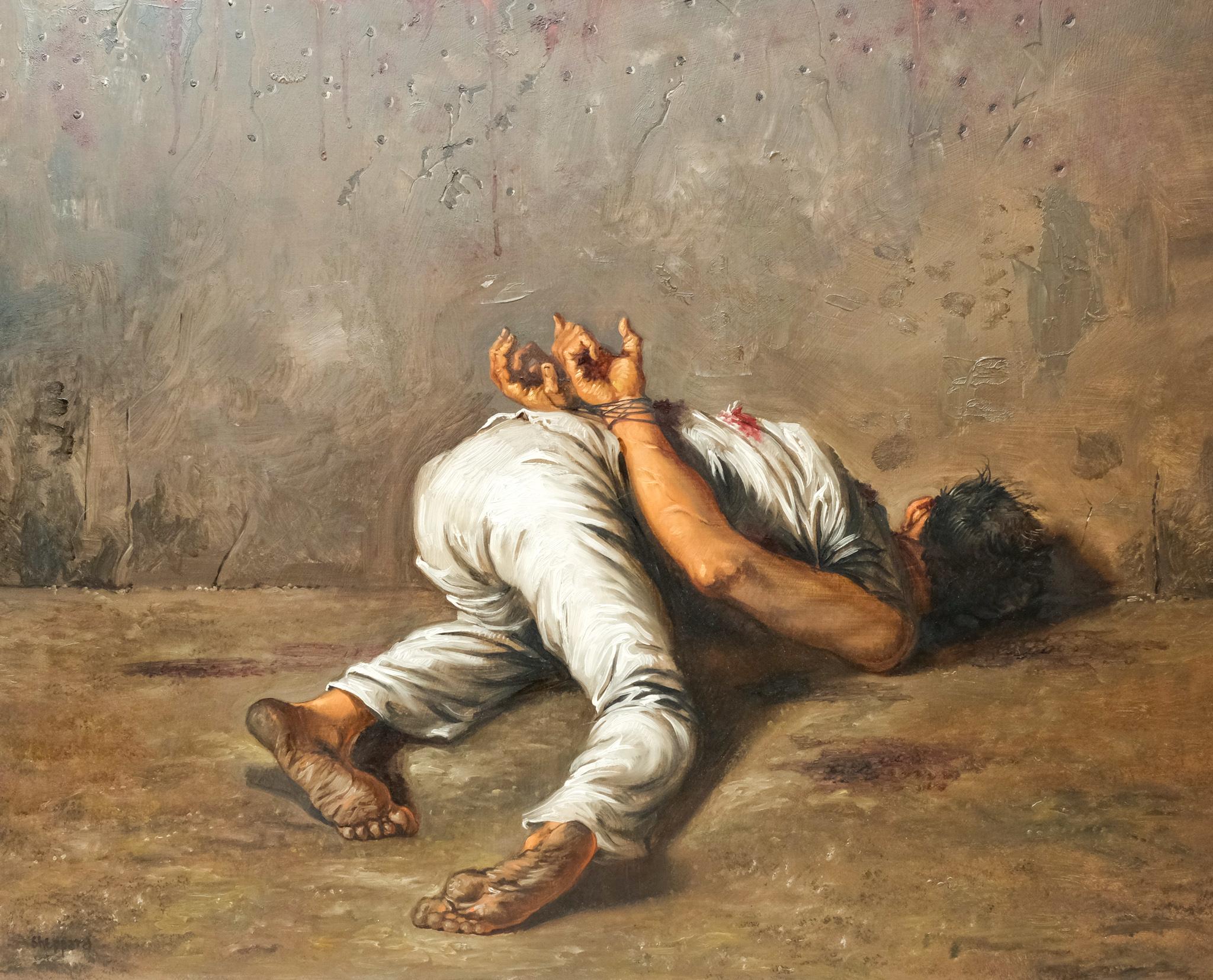
A Bloody End — Joseph Sherly Sheppard

A Bloody End, Joseph Sherly Sheppard (b. 1930)

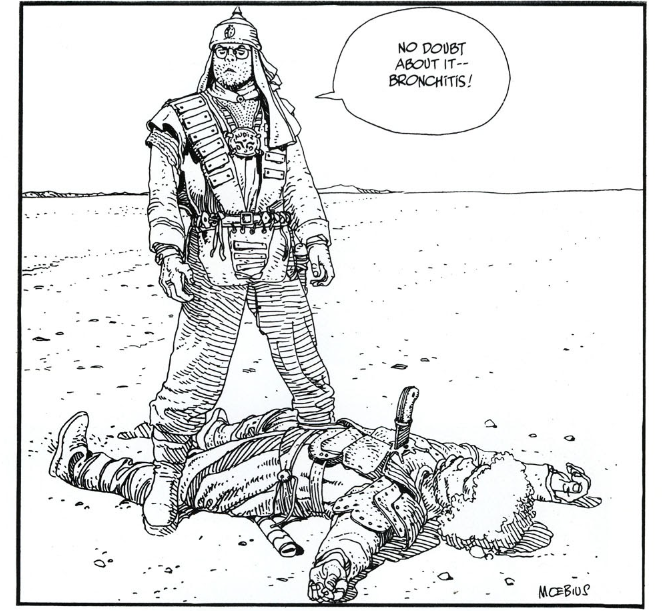
Diagnosis (Moebius)

Writing? (George Herriman’s Krazy Kat)

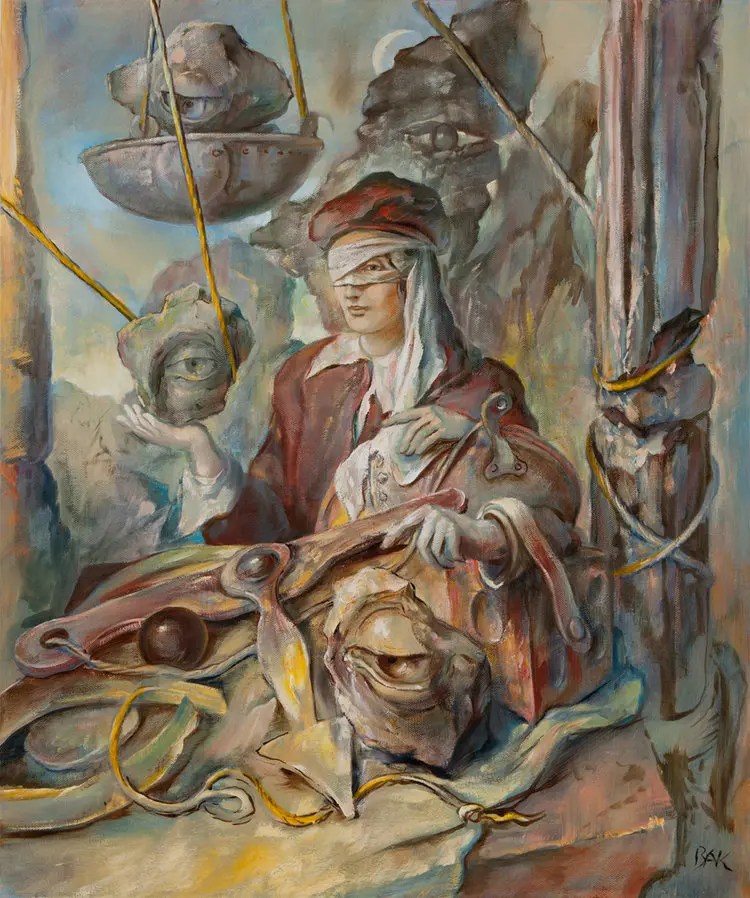
In Search of a Portrait B — Samuel Bak

In Search of a Portrait B, 1974 by Samuel Bak (b. 1933)

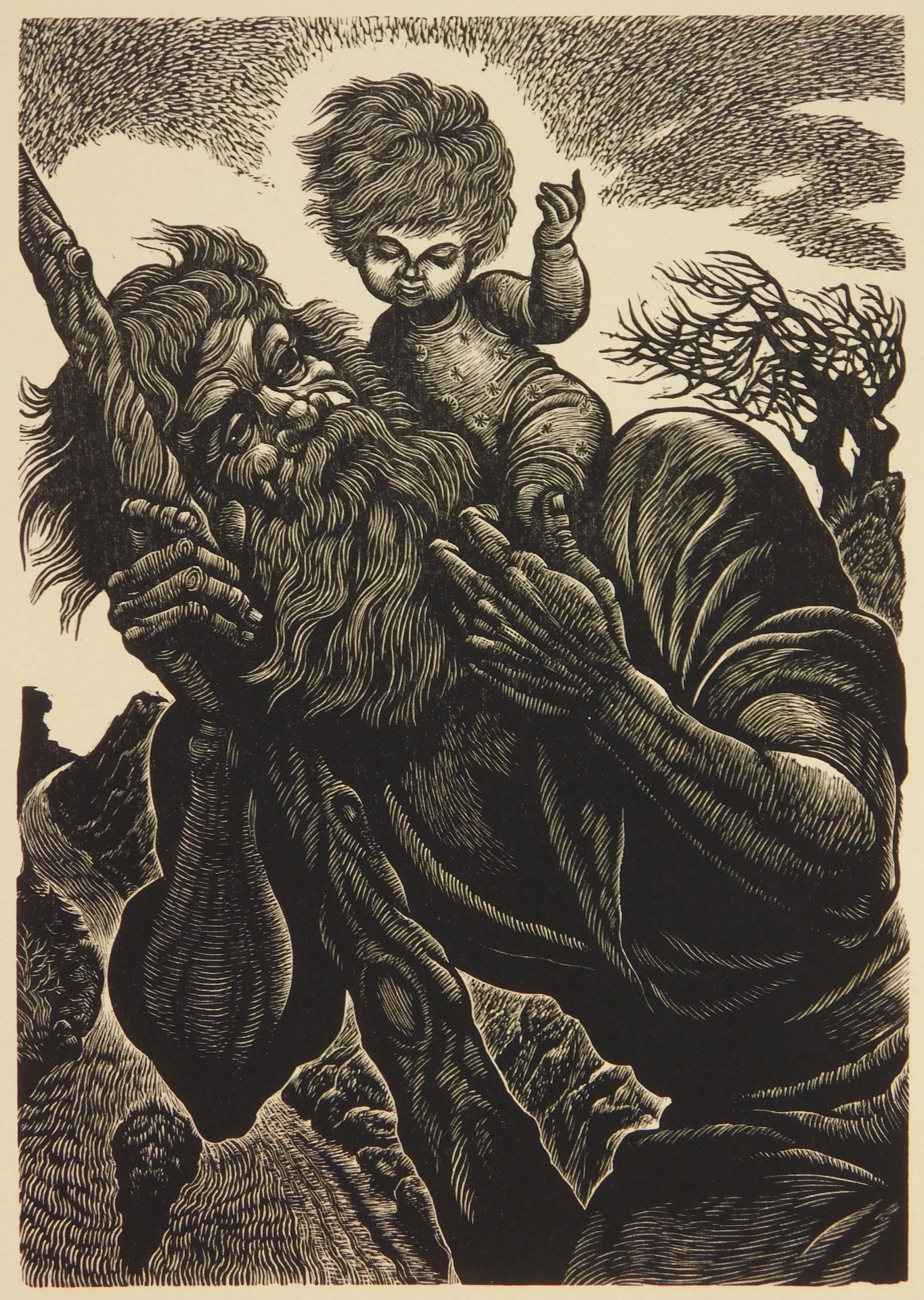
St. Christopher — Fritz Eichenberg

St. Christopher, 1949 by Fritz Eichenberg (1901-1990)

Chariot — John Jacobsmeyer 

Chariot, 2018 by John Jacobsmeyer (b. 1964)

“Chairs” — Stanley Elkin

Compared to many forms that lend themselves to art or craft—drama, the novel, painting, the composition of music, even the interpretation of music, like, oh, say, singing the national anthem before the game, infinite other forms that seem to thrive, almost to wallow, in permutation, assuming new content, a mother lode of fresh ideas and differentiated styles as they’re taken up by one artist after another—it’s extraordinary how furniture is like most other furniture, as if furniture, alone among crafts, not only lived along the perimeters of some platonic ideal but had somehow actually managed to colonize it: an imperialism of the conventional. Except for a detail here, a detail there, inlay, marquetry, the pile-on of money, of pharaohs’ or aristocracy’s royal dispensations, a couch is a couch, an escritoire an escritoire. Beds resemble beds, tables and chairs are like tables and chairs. In domestic arrangements, form, bound to the custom cloth of human shape, really does follow function. The height of a table has to do with average lap tolerances. Chairs and beds are the hard aura of a strictly skeletal repose. Even so, something’s busted, I think, in the imagination of the furniture designers—I except the art directors of certain major motion pictures set in Manhattan apartments; talkin’ environment, the ecology of “life-style,” of plot and character, what the principals look like against the bookcase, propped among the furnishings; one must learn the script of one’s life and be able to afford it; because only in movies does furniture play well—all lamps and appointments, all cunning, edge-of-the-field doodad and inspired house-dower; one has at least the illusion one could live with this stuff, that it won’t vanish in a season like a Nehru shirt—something stuck in the vision, some sorcerer’s-apprentice effect, which permits to keep on coming and keep on coming with minimal variation, if any, what has come before. It isn’t anything elegant as highest math happening here, just lump-sum arrangement, ball-park figure, bottom line. It’s the fallacy of the assembly line, the notion that only costs get cut in such a wide sweep of swath. No, but really. Isn’t it astonishing that personality, surely as real as the width of one’s shoulders or the breadth of one’s beam, should be so infinite but attention to body so meager and hand-to-mouth that—chairs, say chairs, I know about chairs—there’s been less progress in the design of chairs than in the design of luggage. (I speak as a cripple full-fledged—chairs are a hangup with me—but set that aside.) It’s as if clothing came in a single size, pants like tube socks, every dress like a muumuu. And a rule of the chair seems to be that if it’s beautiful it’s rarely comfortable, if comfortable it rarely makes the cut to beauty.

Indeed, there are so few contemporary “museum-quality” chairs one can almost list them—Marcel Breuer’s side chairs, his “Wassily” chair like a leather-and-steel cat’s cradle; Jacobsen’s “Egg” chair; Thonet’s bentwood rockers; Mies Van Der Rohe’s “Barcelona”; Saarinen’s molded plastic chairs on their round bases and tapered stems like cross sections of parfaits; all Eames’s ubiquitous plastic like stackable poker chips or the pounded, hollowed-out centers of catchers’ mitts, and as locked into a vision of the fifties as pole lamps, his famous lounge chair and ottoman that, like the Nehru shirt, have become a cliché. A spectrum of vernacular chairs—soda-fountain chairs, directors’ chairs, black canvas camp chairs, those crushed—almost imploded—white or charcoal leather pillow chairs like soft fortresses or marshmallow thrones; some of the new ergonomic chairs that sit on you as much as you ever manage to sit on them.

So I know about chairs and still have my eye out, never mind I’m sixty if I’m a day, for that evasive, lost-chord masterpiece of the genre, which, like love, I’ll know when I see like a sort of fate.

Though maybe not. Not because I haven’t the imagination to cut my losses, or even the courage to finesse my life and choose to sit out the close of my days in desuetudinous splendor, but because it may not exist. The chair, my gorgeous prosthetic of choice, may not have been fashioned yet. Because oddly, strangely, ultimately, chairs are all attitude, molds of the supine or up on pointe, aggressive or submissive as sexual position. Occupied or unoccupied either, they are shadows, ghosts, signs of the been-and-gone, some pipe-and-slippers choreography of spiritual disposition, how one chooses to acquit oneself, highly personalized as an arrangement of flowers, and oh, oh, if one but had the body for it one would live out one’s days in Van Gogh’s room at Arles, eating up comfort and beauty and having it, too, there in one last fell binge of boyhood in the cane and wood along those powder-blue walls of the utile, of basin and pitcher, of military brush and drinking glass, of apothecary bottles clear as gin on a crowded corner of the nightstand, to be there on the feather bed, on the oilcloth-looking floor amid one’s things. All, as I say, you have to know is the script of your life.

From Stanley Elkin’s 1991 essay “Some Overrated Masterpieces.” Collected in Pieces of Soap.

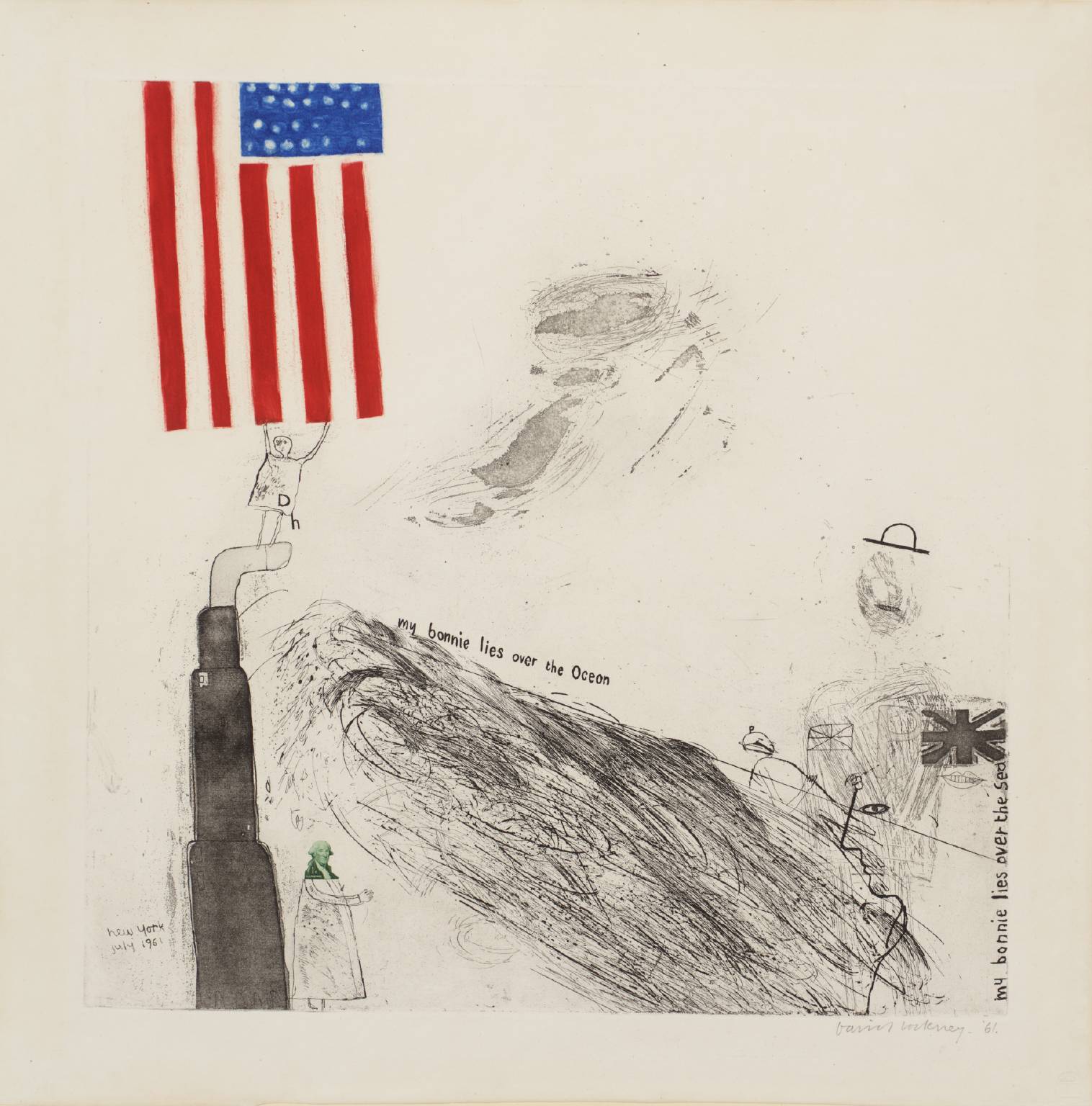
My Bonnie Lies Over the Ocean — David Hockney

My Bonnie Lies Over the Ocean, 1962 by David Hockney (b. 1937)

“Neglect” — Joy Williams

“Neglect”

by

Joy Williams

from 99 Stories of God


The Lord was asked if He believed in reincarnation.

I do, He said. It explains so much.

What does it explain, Sir? someone asked.

On your last Fourth of July festivities, I was invited to observe an annual hot-dog-eating contest, the Lord said, and it was the stupidest thing I’ve ever witnessed.

NEGLECT

The Signing of the Declaration of Independence — Sandow Birk 

The Signing of the Declaration of Independence, 2022 by Sandow Birk (b. 1962)

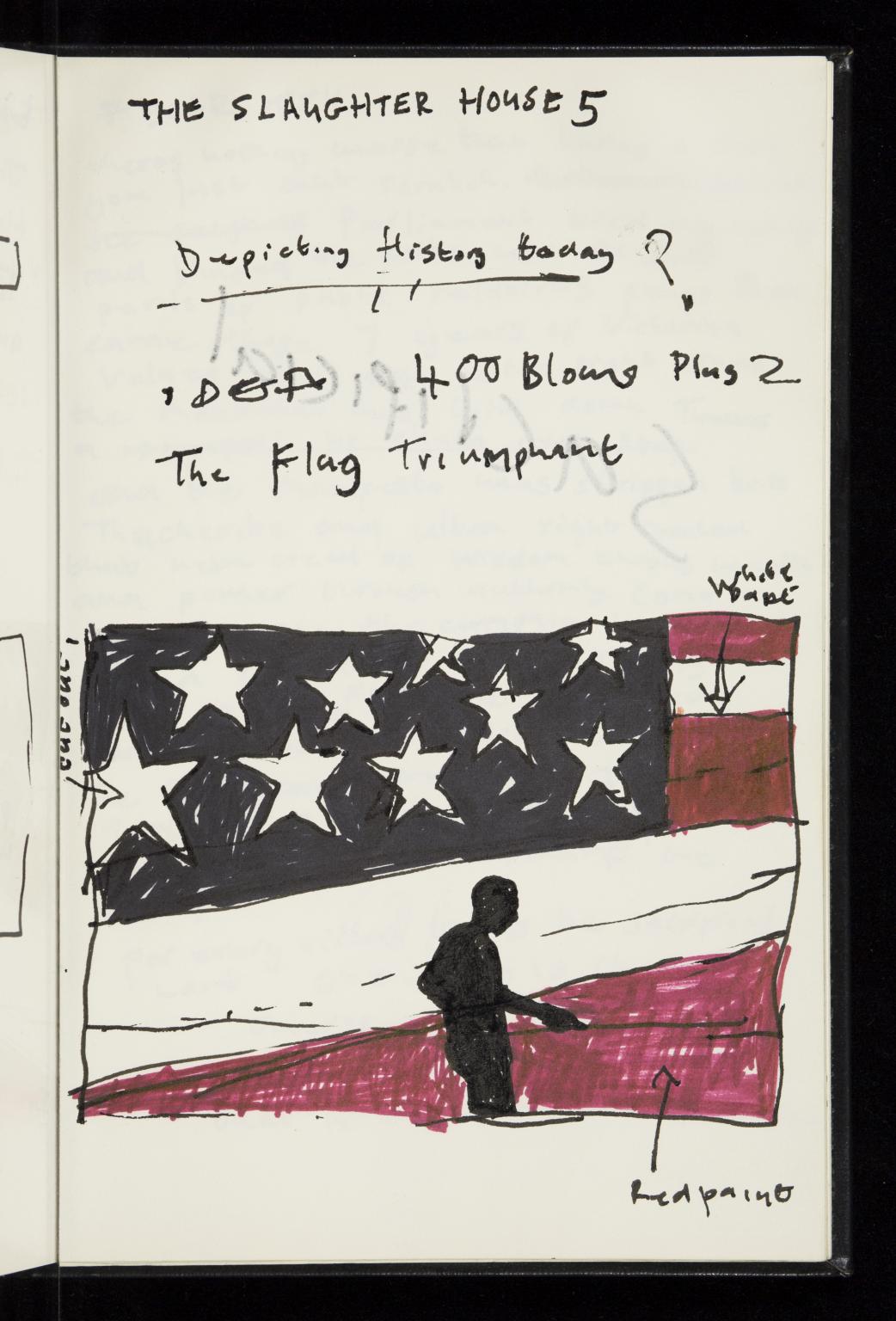
The Slaughter House 5 — Donald Rodney

The Slaughter House 5, 1987 by Donald Rodney (1961–1998)

“One Train May Hide Another” — Kenneth Koch

“One Train May Hide Another”

by Kenneth Koch


(sign at a railroad crossing in Kenya)

In a poem, one line may hide another line,
As at a crossing, one train may hide another train.
That is, if you are waiting to cross
The tracks, wait to do it for one moment at
Least after the first train is gone. And so when you read
Wait until you have read the next line—
Then it is safe to go on reading.
In a family one sister may conceal another,
So, when you are courting, it’s best to have them all in view
Otherwise in coming to find one you may love another.
One father or one brother may hide the man,
If you are a woman, whom you have been waiting to love.
So always standing in front of something the other
As words stand in front of objects, feelings, and ideas.
One wish may hide another. And one person’s reputation may hide
The reputation of another. One dog may conceal another
On a lawn, so if you escape the first one you’re not necessarily safe;
One lilac may hide another and then a lot of lilacs and on the Appia Antica
     one tomb
May hide a number of other tombs. In love, one reproach may hide
     another,
One small complaint may hide a great one.
One injustice may hide another—one colonial may hide another,
One blaring red uniform another, and another, a whole column. One bath
    may hide another bath
As when, after bathing, one walks out into the rain.
One idea may hide another: Life is simple
Hide Life is incredibly complex, as in the prose of Gertrude Stein
One sentence hides another and is another as well. And in the laboratory
One invention may hide another invention,
One evening may hide another, one shadow, a nest of shadows.
One dark red, or one blue, or one purple—this is a painting
By someone after Matisse. One waits at the tracks until they pass,
These hidden doubles or, sometimes, likenesses. One identical twin
May hide the other. And there may be even more in there! The
     obstetrician
Gazes at the Valley of the Var. We used to live there, my wife and I, but
One life hid another life. And now she is gone and I am here.
A vivacious mother hides a gawky daughter. The daughter hides
Her own vivacious daughter in turn. They are in
A railway station and the daughter is holding a bag
Bigger than her mother’s bag and successfully hides it.
In offering to pick up the daughter’s bag one finds oneself confronted by
     the mother’s
And has to carry that one, too. So one hitchhiker
May deliberately hide another and one cup of coffee
Another, too, until one is over-excited. One love may hide another love or
     the same love
As when “I love you” suddenly rings false and one discovers
The better love fingering behind, as when “I’m full of doubts”
Hides “I’m certain about something and it is that”
And one dream may hide another as is well known, always, too. In the
     Garden of Eden
Adam and Eve may hide the real Adam and Eve.
Jerusalem may hide another Jerusalem.
When you come to something, stop to let it pass
So you can see what else is there. At home, no matter where,
Internal tracks pose dangers, too: one memory
Certainly hides another, that being what memory is all about,
The eternal reverse succession of contemplated entities. Reading A
     Sentimental Journey look around
When you have finished, for Tristram Shandy, to see
If it is standing there, it should be, stronger
And more profound and theretofore hidden as Santa Maria Maggiore
May be hidden by similar churches inside Rome. One sidewalk
May hide another, as when you’re asleep there, and
One song hide another song; a pounding upstairs
Hide the beating of drums. One friend may hide another, you sit at the
     foot of a tree
With one and when you get up to leave there is another
Whom you’d have preferred to talk to all along. One teacher,
One doctor, one ecstasy, one illness, one woman, one man
May hide another. Pause to let the first one pass.
You think, Now it is safe to cross and you are hit by the next one. It can be
     important
To have waited at least a moment to see what was already there.