Three Books

image

The Crack-Up by F. Scott Fitzgerald; edited by Edmund Wilson. A 1956 New Directions mass market paperback. No designer credited. The Crack-Up collects autobiographical pieces by Fitzgerald, along with letters and essays by some of Fitzgerald’s contemporaries and near-contemporaries—but the highlight is the inclusion of Fitzgerald’s note-books. (I shamelessly plundered them on this blog for years). Its cover is black and white and gray.image

An Armful of Warm Girl by W.M. Spackman. 1981 trade paperback edition by Van Vactor & Goodheart. Cover design by Leslie Evans. A perfect little novella, with a perfect opening page. Its cover is black and white and gray.
image

Flee by Evan Dara. 2013 trade paperback edition by Aurora. Design by Todd Michael Bushman. Blogged about it here and here. Its cover is black and white and gray.


Three Books

IMG_0046

Killers of the Dream by Lillian Smith. Doubleday Anchor, 1963 mass market paperback edition. Cover design by George Giusti. Smith’s memoir-essay-critique is an underappreciated masterful dissection of the South in particular and humanity in general.IMG_0047

Moses, Man of the Mountain by Zora Neale Hurston. First-edition clothbound hardback from J. B. Lippincott, 1939. The dust jacket is missing, and no designer is credited in the book. I picked this up for eight dollars a few years ago. I lent my paperback copy to a student years ago; she never returned it. (Good for her!).IMG_0048

Afro-Cuban Tales by Lydia Cabrera. 2004 trade paperback by the University of Nebraska Press. Book design by R. Eckersley; cover illustration by Lydia Cabrera. Cabrera (1899-1991), an ethnographer, went beyond documenting the tales and fables of her native Cuba: she synthesized them into new tellings, new variations (not unlike Zora Neale Hurston’s folklore work in Mules and Men and Tell My Horse). Cabrera deserves a wider audience.

Three Books

IMG_0010

Kleinzeit by Russell Hoban. 1983 Summit Books trade paperback edition. Cover design by Fred Marcellino. A stark and funny retelling of the Orpheus myth, Hoban’s second novel obsesses over illness and art. Fans of Tom McCarthy might dig this one.

IMG_0012The Lion of Boaz-Jachin and Jachin-Boaz by Russell Hoban. 1983 Summit Books trade paperback edition. Cover design by Fred Marcellino. Hoban’s first novel. Not my favorite Hoban.IMG_0013 Pilgermann by Russell Hoban. 1984 Washington Square Press trade paperback. No designer is credited, but look closely under the horse’s fore hooves and note the signature “Rowena” — Rowena Morrill. (Note also the pig and naked lady). Pilgermann, Hoban’s follow-up (and somehow-sequel) to Riddley Walker, was the occasion for this Sunday’s Three Books post. I was reminded of this strange, wicked, dark, funny, apocalyptic book as I finished a reread of Cormac McCarthy’s Blood Meridian and began Kazuo Ishiguro’s The Buried Giant this weekend. Pilgermann is difficult but rewarding, and probably underappreciated, even as a cult novel.

Three Books

IMG_8503

The House at Pooh Corner by A.A. Milne. A 1961 hardback by E.P. Dutton & Co. “Decorations” by Ernest H. Shepard; design credited to Warren Chappell. All three books this week come from a box my mother-in-law dropped off, containing maybe two dozen of her old books.

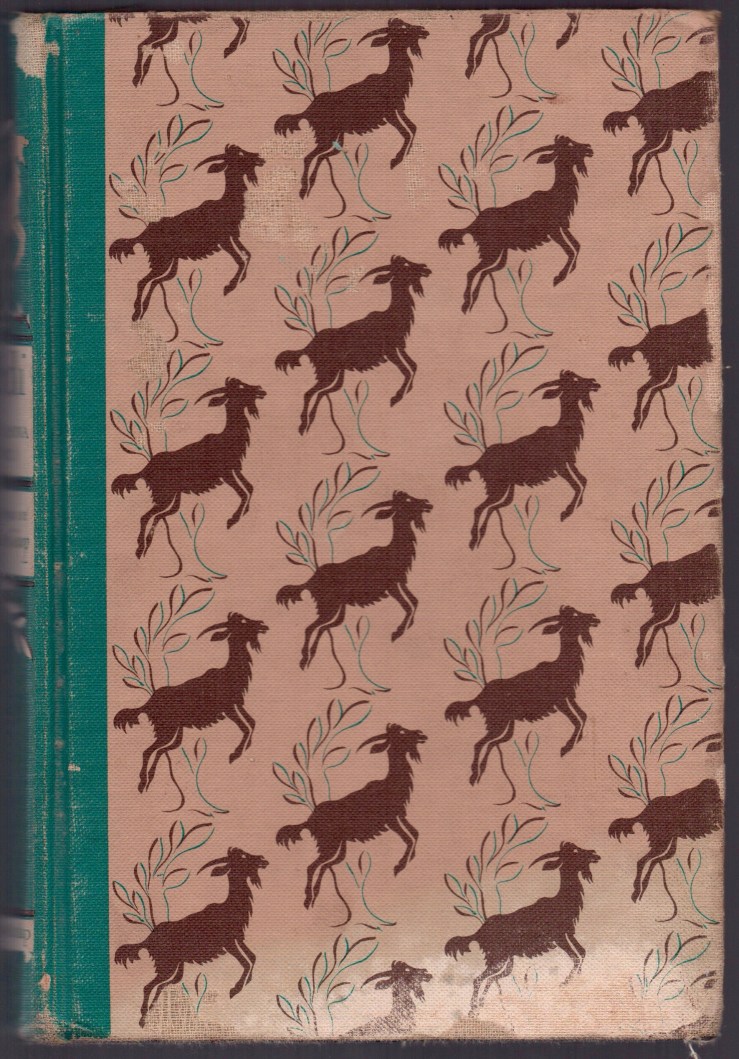
IMG_8504Heidi by Johanna Spyri. A 1945 Grosset & Dunlap Illustrated Junior Library hardback edition. Illustrations are by William Sharp, but no designer is credited for the hardback cover. My guess is that there was a dust jacket for this book at one point.
IMG_8505

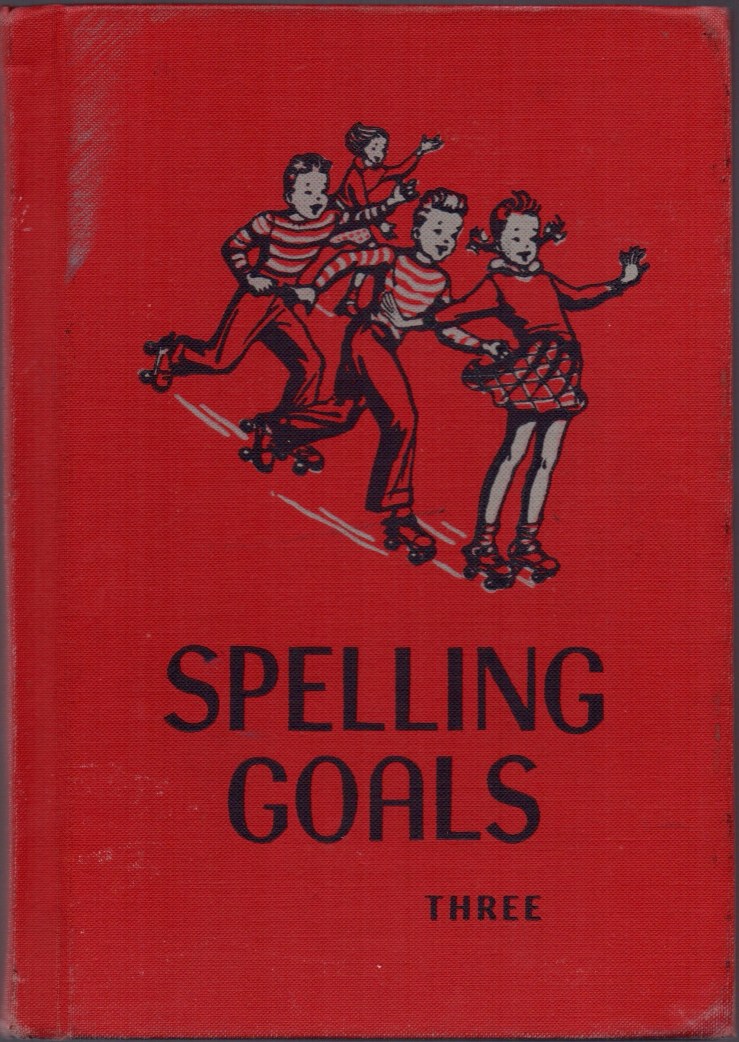
Spelling Goals (Three) by May Lambader, William Kottmeyer, and Rose Wickey. 1951, hardback, Webster. Illustrations by Edward Miller and cover by Christine Chisolm.

Three Books

IMG_8401

Victor Halfwit: A Winter’s Tale by Thomas Bernhard. English translation by Martin Chalmers. Illustration and design by Sunandini Banerjee. First edition oversized hardback from Seagull Books. On thick, heavy paper, Banerjee’s rich full-color digital collages illustrate what is essentially a microfiction by Thomas Bernhard. I bought this a few years ago at Faulkner House, a tiny bookstore in New Orleans.

IMG_8403

Go Down, Moses by William Faulkner. 1973 Vintage mass-market paperback edition. Cover photo by Robert Wenkham; no designer credited. My favorite Faulkner, although I’ve not read them all. I bought this for grad school, which explains the cheap used mass-market edition, but I love the cover. IMG_8402 Fractured Karma by Tom Clark. First edition trade paperback from Black Sparrow Press. Design by Barbara Martin. The cover painting, Waiting Room for the Beyond, is by John Register. This is the first Tom Clark book I read. Amazing.

Three Books

image

Love and Death in the American Novel by Leslie A. Fiedler. First edition hardback published by Criterion in 1960. Cover design by Sidney Feinberg. I was dismayed when I first found Fiedler—he’d arrived at his thesis—and supported it with a big fat book—decades before me. I was hipped to this by a kindly professor in graduate school, who suggested I read and then credit Fiedler. I pulled this book out to help me in an American lit course I’m teaching this fall.

IMG_8254

Suttree by Cormac McCarthy. First edition trade paperback published by Vintage Contemporaries. Cover design by Lorraine Louie; cover photo illustration by Marc Tauss. I’ve already written about my love of Vintage Contemporaries covers, and finding this copy of Suttree a few years ago was glorious. I’ve been rereading the novel—auditing it, really, through a superb reading by Michael Kramer. I’ve had this edition out as I go. Suttree, by the way, fits nicely neatly perfectly into Fielder’s thesis about American lit.
IMG_8300

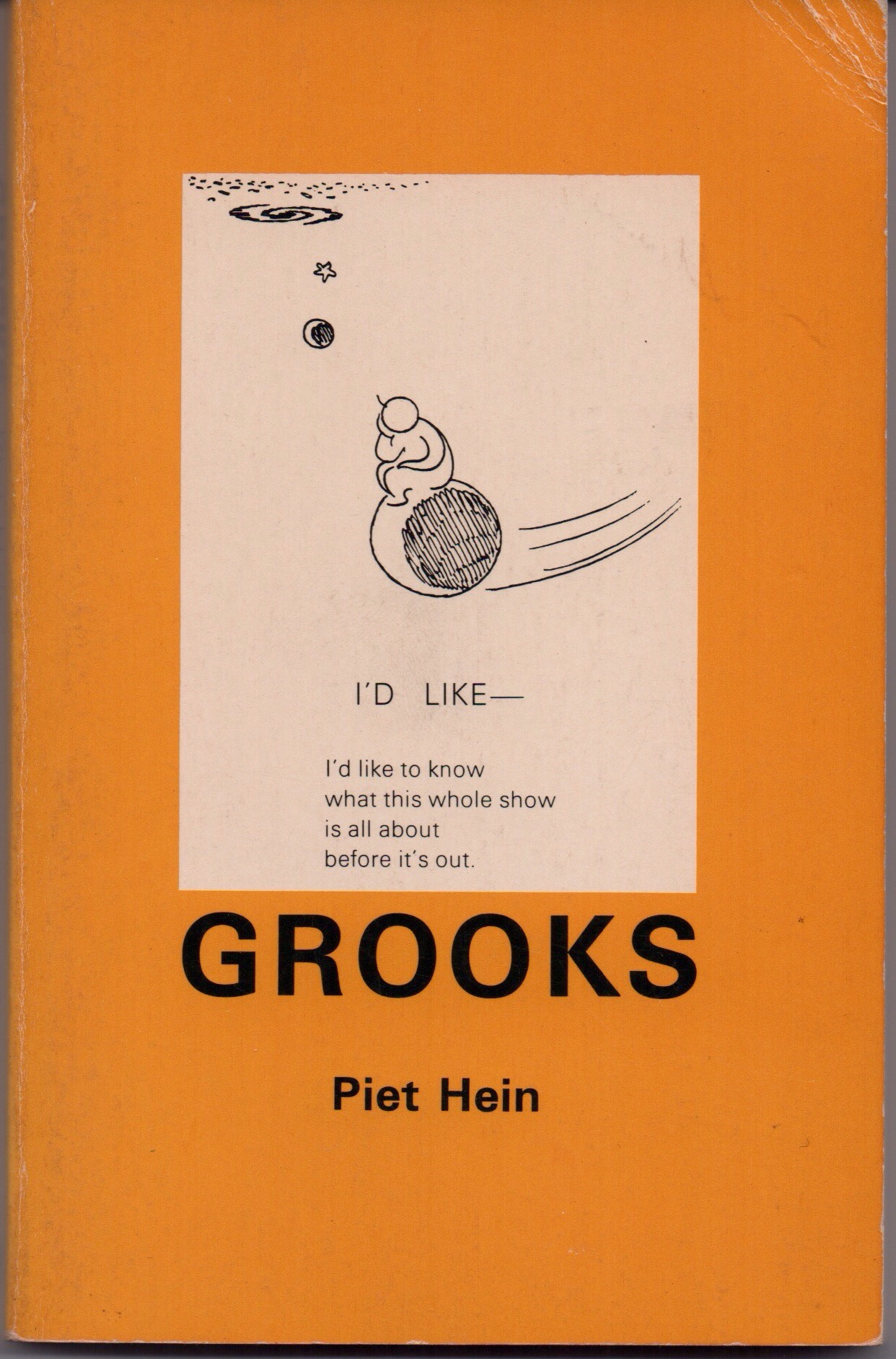
Grooks by Piet Hein. Cute little pocket-sized paperback. Second-edition published by the M.I.T. Press. Cover illustration is by Hein; I can’t find a credit for the designer. I found this in the bookstore the other day when I was looking for something else in the poetry section. Hein’s grooks can be clever, but also occasionally a bit too pithy, if that makes sense. Still.

Three Books

image

I, Robot by Isaac Asimov. Hardback. A Doubleday “Book Club Edition.” No clear date of publication, but the jacket design is by Johannes Regn. This book was my father’s. I’ve only kept it because of the cover. I keep it facing out, covering the broken spines of other Asimov novels I’ll never read again.image

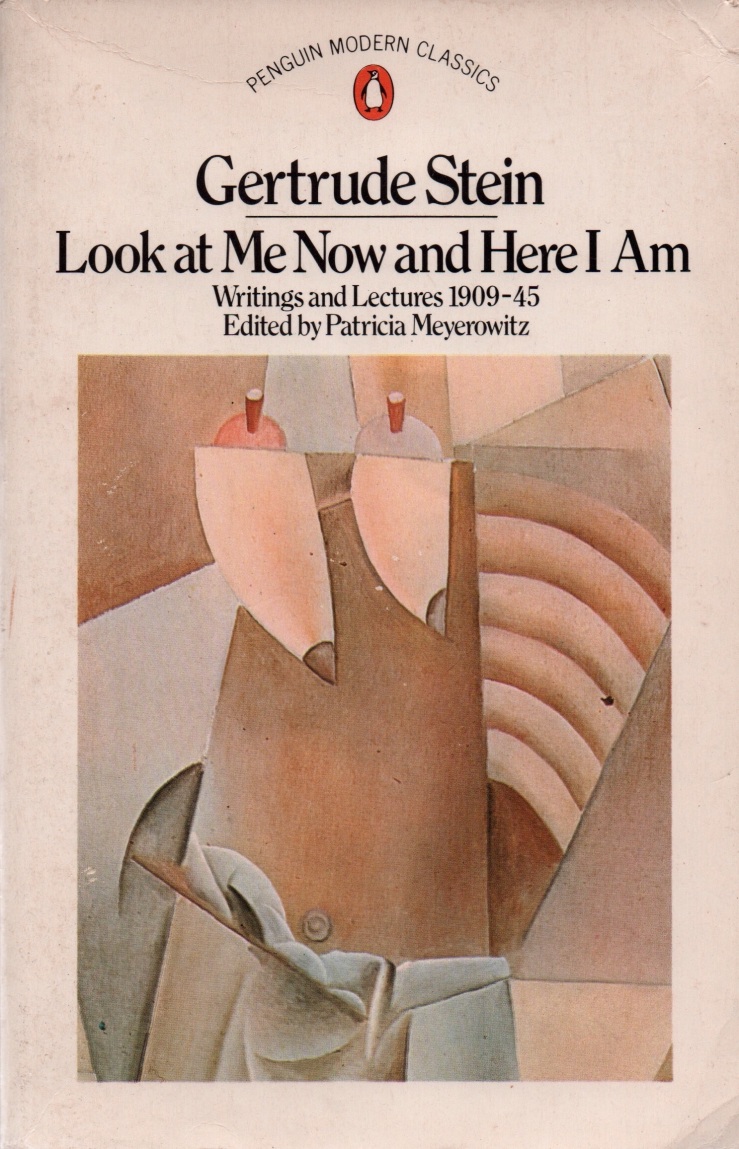
Look at Me Now and Here I Am: Writings and Lectures 1909-1945 by Gertrude Stein (edited by Patricia Meyerowitz. A Penguin Modern Classics trade paperback edition, printed in 1984 (I think) in Great Britain (I think–the colophon is confusing as hell). The cover features a detail from Picasso’s Woman in an Armchair. I spent 10 minutes flicking through Phil Baines’s Penguin by Design but couldn’t determine the designer. The first page bears two bookstore stamps, one from Russakoff’s Bookstore in Philadelphia, and one from the bookstore where I bought it. This is a book one can just pick up and read and random and be rewarded. I’m always reading bits of it so it’s never shelved.image

The Lime Works by Thomas Bernhard. A 2010 first edition trade paperback by Vintage International. The cover design is by Eva Brandstotter, who designed all of these Bernhard editions for Vintage. I was lucky enough to scoop up five TB’s all at once at my favorite used bookstore. I’ve had the urge to read Thomas Bernhard but it’s still too damn hot here in swampy muggy humid Florida to read Thomas Bernhard which I think only makes sense, this sentiment I’ve just expressed, if you’ve actually read Thomas Bernhard.