This weekend, I watched and thoroughly enjoyed David Fincher’s Zodiac, a film I initially had no interest in seeing, but nonetheless dutifully queued up when it wound up on numerous critics’ year-end top ten lists. When Zodiac came out last year, I prejudicially–and wrongly–assumed that the film, the tale of the infamous Zodiac killer who menaced California in the late sixties and early seventies, would be a moody character study, all ominous texture, smoggy chase scenes, and desperate anger à la Fincher’s 1995 thriller, Se7en (that movie where Gwyneth Paltrow’s head gets chopped off), or even worse, Fincher’s awful 1997 effort The Game. Most Hollywood suspense films–Fincher’s included–propel themselves on chase sequences, meaningless yelling, and overstated light and music queues that seem to scream “this is the part where you feel tense.” Zodiac, however, eschews all of these often vacuous tropes in favor of simply telling a story.
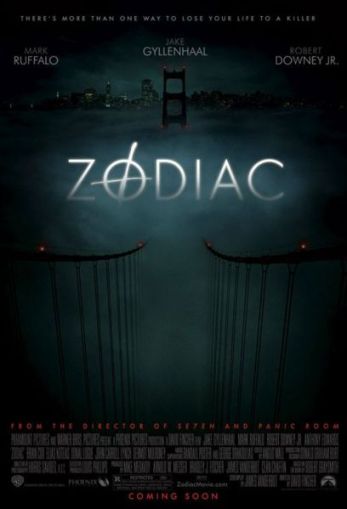
In today’s issue of Slate, Elbert Ventura points out in his write-up of the director’s cut DVD of Zodiac that the film is “a cop epic without a single shootout, a serial-killer flick in which all the blood is shed in the first act, and a taut procedural in which the case is never solved. In fact, it’s one of the most unsatisfying thrillers you’ll ever see—which is precisely how Fincher intended it.” Ventura’s review is fantastic, and I highly recommend reading it. He discusses the underlying politics of Zodiac, arguing that the film champions due process over vigilante “justice,” an important position to reaffirm in an age of Jack Bauerisms and actual debates over what constitutes torture.
What I really enjoyed about the film wasn’t so much its sense of values (something I honestly only realized after Ventura’s review), but the fact that the story was told without the intrusions of the personal lives of the principals involved as some kind of dramatic back story. Too often, Hollywood feels the need to muddy a perfectly good story with an unnecessary secondary plot about the personal conflict that the dramatic action in the main plot creates for its protagonists. Zodiac seems to understand that the obsessive hunt for the Zodiac killer is a source of personal conflict for the characters. To be sure, wives are annoyed with husbands, family duties are overlooked, and characters have substance abuse problems. However, Fincher is never tempted to exploit these “issues” for dramatic fodder. Instead, what might’ve served as a dramatic back drop in a standard Hollywood movie becomes little more than a character tic.
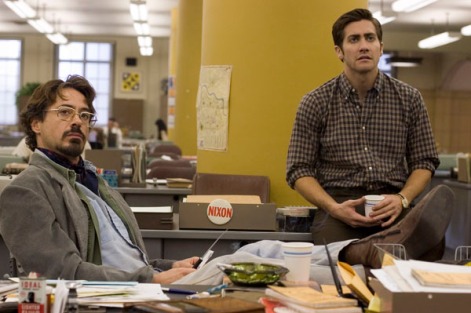
This is not to say that the film is not character-driven. Zodiac is anchored by stellar performances by that guy from Donnie Darko, that guy from Less Than Zero, and that guy from Eternal Sunshine of the Spotless Mind, and also features great supporting parts from that chick from Gummo, that guy from Revenge of the Nerds, and that guy who was in everything. Hell, even that guy from Mr. Show has a bit part.
Too bad that Zodiac was a flop. There should be more Hollywood thrillers like this, films unafraid to simply tell a great story, even if that story doesn’t have gunslinging heroes or damsels in distress, even if the bad guy gets away. Check it out on DVD.


 In my original review of
 Biblioklept