Category: Art
The Model — Jacek Malczewski

Hesiod and the Muse — Gustave Moreau

Painter’s Inspiration — Jacek Malczewski

What Kant meant when he said that the aesthetic experience is not mediated by concepts (William H. Gass)
My photographs, I used a lot, but I used them as a teaching tool, and they really worked wonderfully,in a sense. Let’s suppose you’re trying to get the students to understand what [Immanuel] Kant meant when he said that the aesthetic experience is not mediated by concepts. Okay, show them a photograph of a floor of an abandoned building—I used to go into all of these abandoned buildings—that’s been sitting abandoned for years, and there are all these pigeons flying around, and they’ve layered the floor with guano, pigeon shit. Huge warehouses, light coming in shining off this, and it’s gorgeous. So you take a picture, which looks like—you know how with aluminum foil, when you crumple it up and then smooth it out again you have all these little lines and it shines and stuff? That’s what it looks like. So you show them a slide. “Oh, boy,” they say. Then you say, “It’s pigeon shit.” Concept. Bing! And I used to take pictures of dog deposits and bird shit, especially during the season when there was lots of huckleberries, some berries that would stain it, and sometimes it would be quite nice, and I’d use things like this, so they’d see it right away, they’d understand that there are names for things, forbidden them to see, and to get them used to seeing, because they’ll never have an aesthetic experience until they can do that. So I used a lot of it, and some of it would have been okay to put in along with an essay as an illustration, but not as “Look at this as a photograph.”
William H. Gass, in a 2013 interview with Rain Taxi.
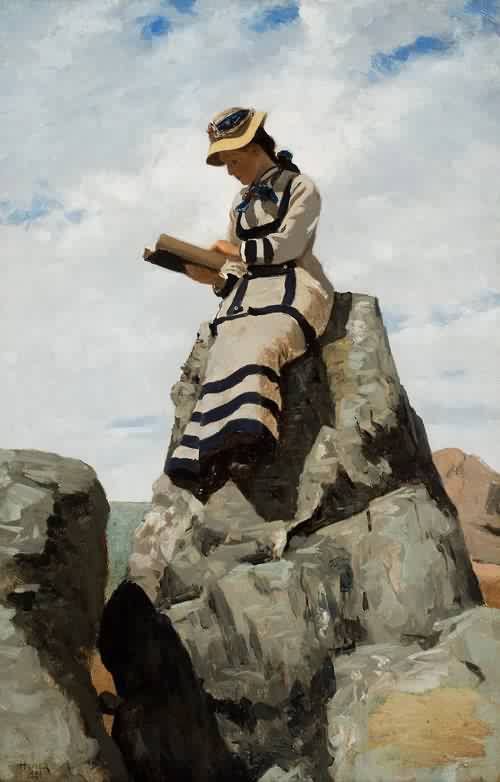
Reading on the Rocks — John George Brown
The Drinkers (After Daumier) — Vincent van Gogh

Drunkenness of Noah — Giovanni Bellini

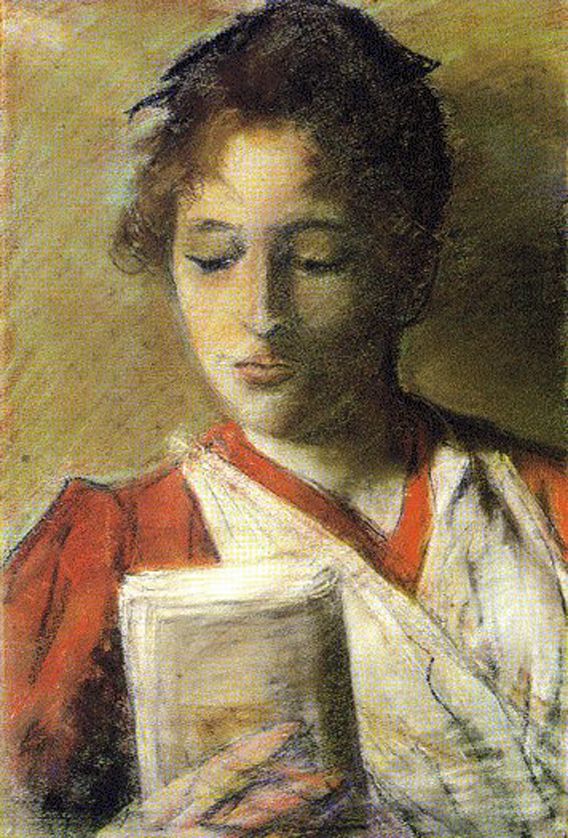
Reader — Giovanni Fattori
Melancholy — Otto Dix

The Ecstatic Virgin Anna Katharina Emmerich — Gabriel von Max

Pain wears no mask (Oscar Wilde)
I now see that sorrow, being the supreme emotion of which man is capable, is at once the type and test of all great art. What the artist is always looking for is the mode of existence in which soul and body are one and indivisible: in which the outward is expressive of the inward: in which form reveals. Of such modes of existence there are not a few: youth and the arts preoccupied with youth may serve as a model for us at one moment: at another we may like to think that, in its subtlety and sensitiveness of impression, its suggestion of a spirit dwelling in external things and making its raiment of earth and air, of mist and city alike, and in its morbid sympathy of its moods, and tones, and colours, modern landscape art is realising for us pictorially what was realised in such plastic perfection by the Greeks. Music, in which all subject is absorbed in expression and cannot be separated from it, is a complex example, and a flower or a child a simple example, of what I mean; but sorrow is the ultimate type both in life and art.
Behind joy and laughter there may be a temperament, coarse, hard and callous. But behind sorrow there is always sorrow. Pain, unlike pleasure, wears no mask. Truth in art is not any correspondence between the essential idea and the accidental existence; it is not the resemblance of shape to shadow, or of the form mirrored in the crystal to the form itself; it is no echo coming from a hollow hill, any more than it is a silver well of water in the valley that shows the moon to the moon and Narcissus to Narcissus. Truth in art is the unity of a thing with itself: the outward rendered expressive of the inward: the soul made incarnate: the body instinct with spirit. For this reason there is no truth comparable to sorrow. There are times when sorrow seems to me to be the only truth. Other things may be illusions of the eye or the appetite, made to blind the one and cloy the other, but out of sorrow have the worlds been built, and at the birth of a child or a star there is pain.
More than this, there is about sorrow an intense, an extraordinary reality. I have said of myself that I was one who stood in symbolic relations to the art and culture of my age. There is not a single wretched man in this wretched place along with me who does not stand in symbolic relation to the very secret of life. For the secret of life is suffering. It is what is hidden behind everything. When we begin to live, what is sweet is so sweet to us, and what is bitter so bitter, that we inevitably direct all our desires towards pleasures, and seek not merely for a ‘month or twain to feed on honeycomb,’ but for all our years to taste no other food, ignorant all the while that we may really be starving the soul.
From Oscar Wilde’s essay De Profundis.
The Screen Porch — Fairfield Porter

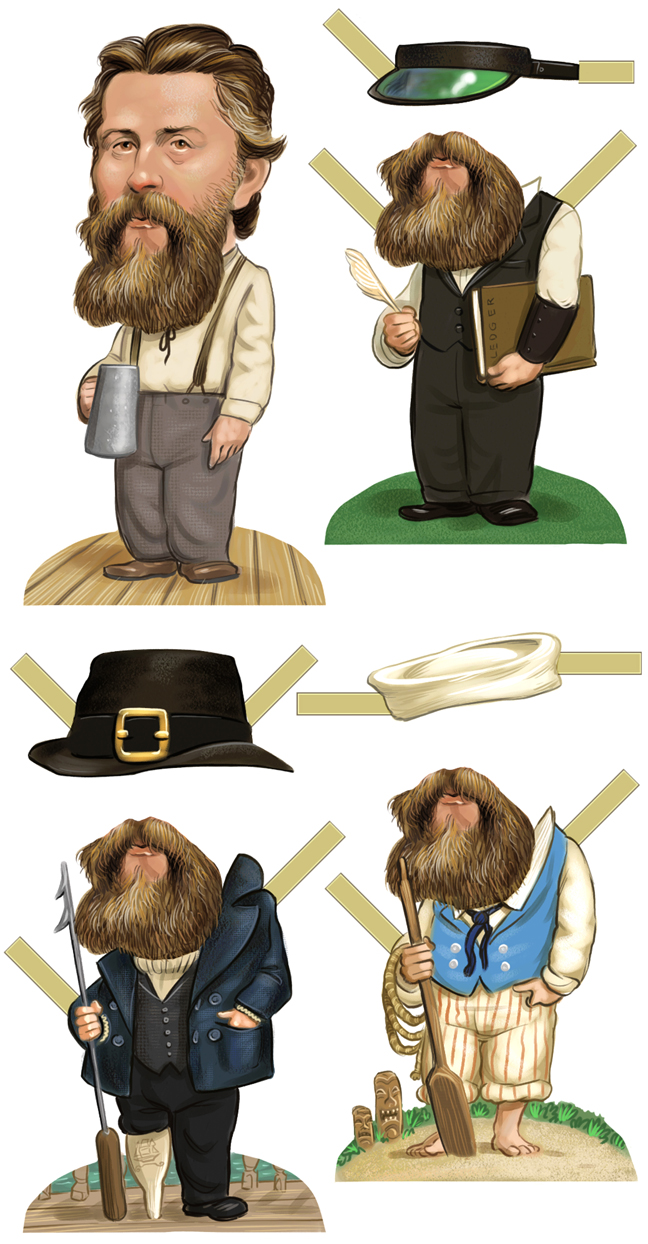
Herman Melville Paper Doll
Reflection II — Fernando O’Connor
Self-Portrait — Gerrit Dou

Edge of August — Mark Tobey

 Biblioklept