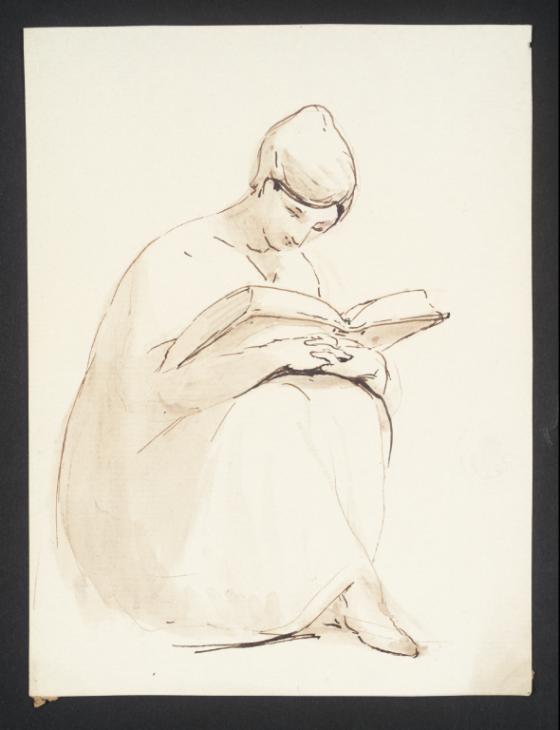

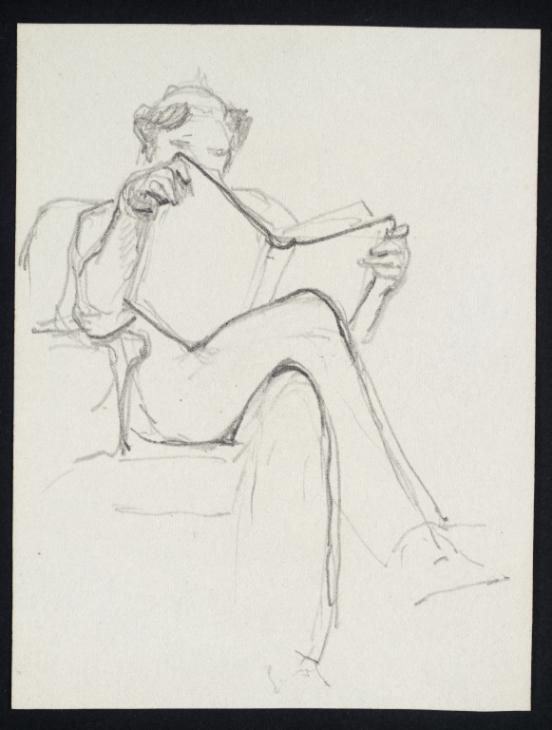
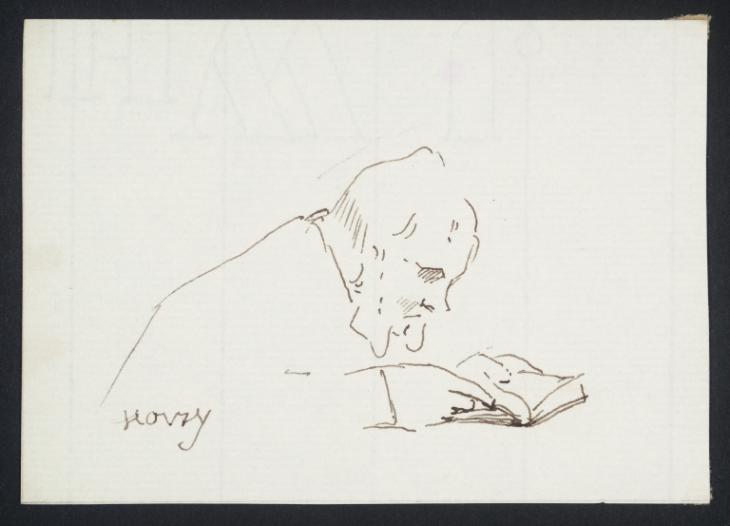
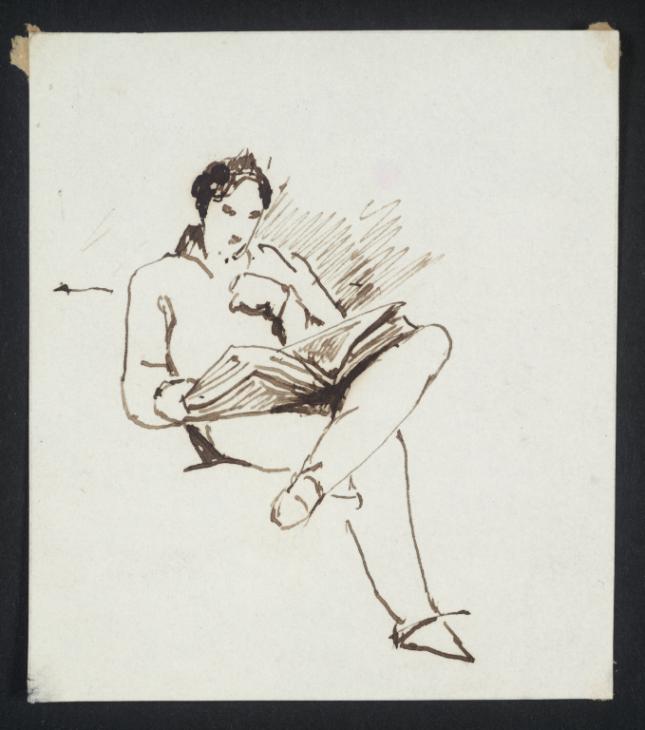


Untitled, undated sketches of readers by George Jones (1786–1869)
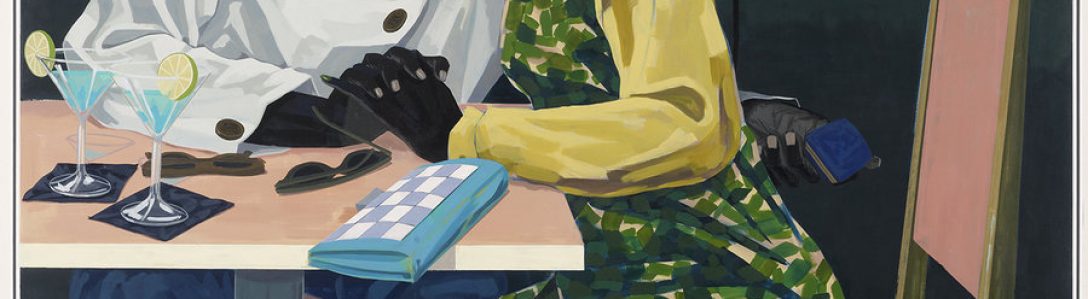
Untitled, undated sketches of readers by George Jones (1786–1869)

Salomé, 1916 by Paul Iribe (1883–1935)

Off to the Pub, 1911 by Walter Richard Sickert (1860-1942)
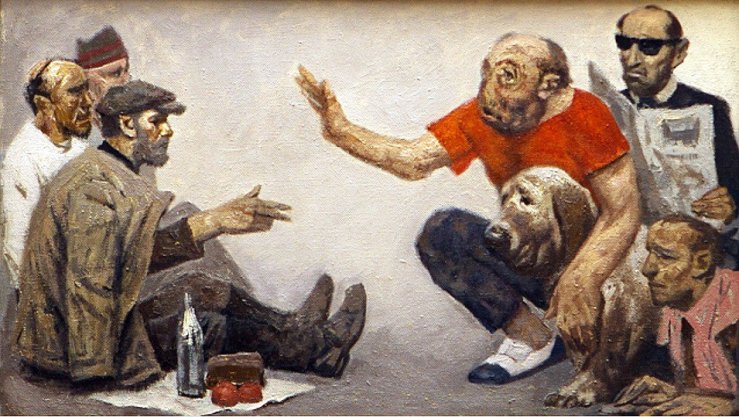
Peasants Arguing with Mutants, 1992 by Gely Korzhev (1925-2012)
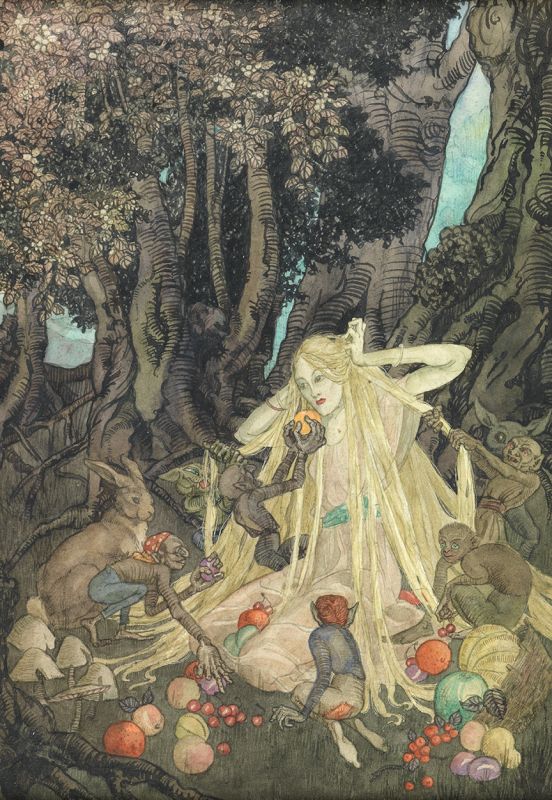
Goblin Market, by Primrose Harley (1908-1978)
“Goblin Market”
by
Christina Rossetti
Morning and evening
Maids heard the goblins cry:
“Come buy our orchard fruits,
Come buy, come buy:
Apples and quinces,
Lemons and oranges,
Plump unpeck’d cherries,
Melons and raspberries,
Bloom-down-cheek’d peaches,
Swart-headed mulberries,
Wild free-born cranberries,
Crab-apples, dewberries,
Pine-apples, blackberries,
Apricots, strawberries;—
All ripe together
In summer weather,—
Morns that pass by,
Fair eves that fly;
Come buy, come buy:
Our grapes fresh from the vine,
Pomegranates full and fine,
Dates and sharp bullaces,
Rare pears and greengages,
Damsons and bilberries,
Taste them and try:
Currants and gooseberries,
Bright-fire-like barberries,
Figs to fill your mouth,
Citrons from the South,
Sweet to tongue and sound to eye;
Come buy, come buy.”

Odalisque Feeding a Faun, 1920s by Dorothy Webster Hawksley (1884-1970)
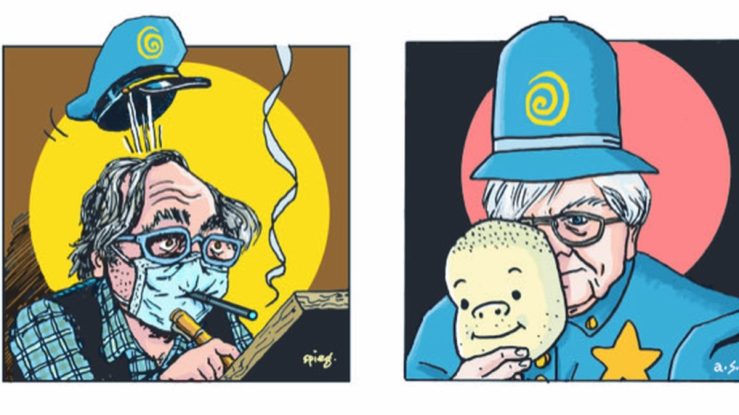
There’s a nice conversation between Art Spiegelman and Robert Coover at The Believer. The pair have collaborated on an illustrated “novelette” called Street Cop.
Their discussion begins with Street Cop but expands much further, touching on postmodernism, realism (“Our Zeitgeist has left us mostly with shards of media as our reality,” says Spiegelman; “When people ask me, I say that I learned my realism from Kafka,” replies Coover”), time and space, the desire for happy endings, and more. But like I said, it begins with Street Cop:
ART SPIEGELMAN: So first: why a street cop?
ROBERT COOVER:Well, I wrote Street Cop in 2019. It emerged, like everything I write, from anxieties about the present. I had written about private eyes, but the dumb street cop was something new. I liked the idea of a guy who would be technologically inept. It’s about a bumbler who began his career as a crook and drug dealer, before accidentally becoming a cop who stumbles his way through a techno-city where the landscape changes daily thanks to 3D printing—blurring past, present and future. His job is to convict suspects rather than solve crimes, but all he wants, really, is to return to the old part of town, a seamy noir-like zone where his urges, and their many flaws, are permissible.
AS:When I first read and signed on to illustrate your story early in 2020’s quarantine, I was grateful to dive into a Dystopia Next Door and escape the one that surrounded us even in the bucolic bunker in the woods we’d retreated to from NYC. Choking on an overdose of toxic news, and compulsively “doom-scrolling”—I really love that phrase—I found the Covid-free air of Street Cop breathable because at least it didn’t have the twin viruses of the Covid pandemic and Trump directly confronting me. Still, the very first picture I drew had Covids in it—it was inevitable that they found their way into the prescient present of the story.
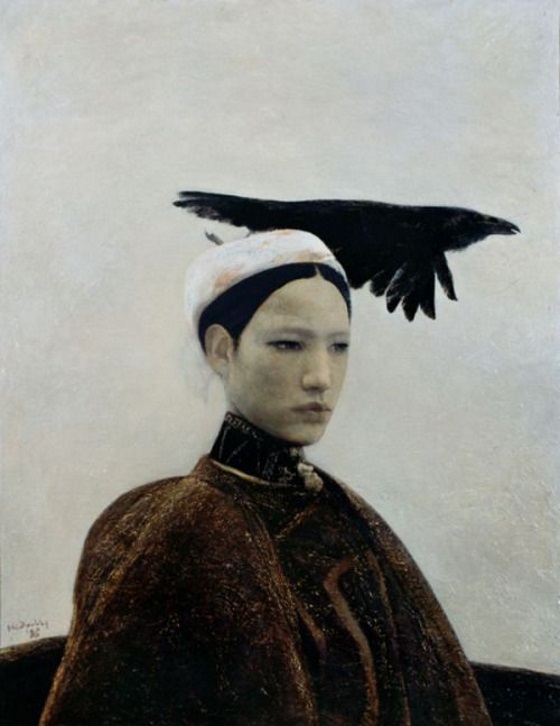
The Crow Is Beautiful, 1988 by He Duoling (b. 1948)
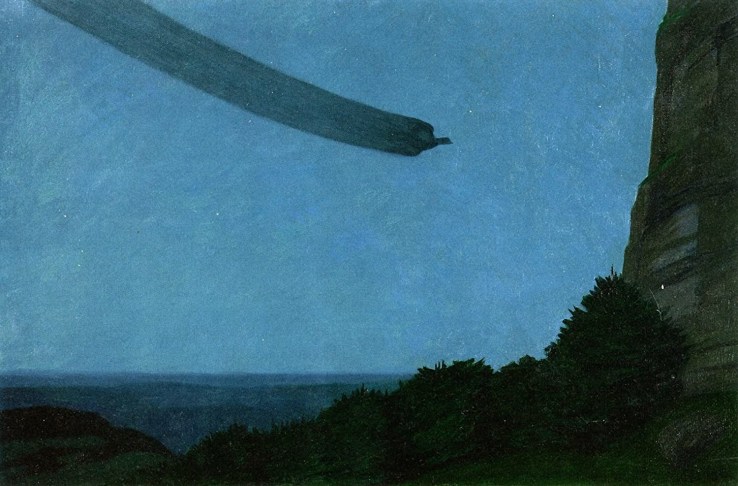
Black Grouse in Gliding Flight, 1915 by Hans Emmenegger (1886-1940)

Pastoral (Angel Hunters), 1950 by Leonora Carrington (1917–2011)

Buddhist Lama, 1875 by Vasily Vereshchagin (1842-1904)
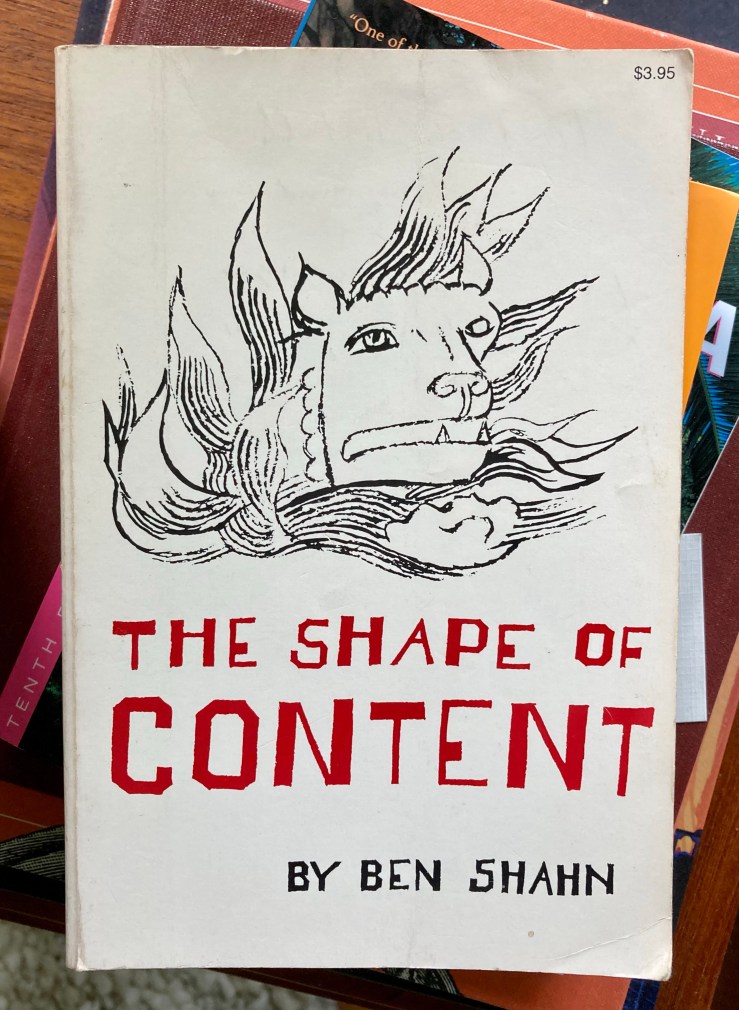
I went by my favorite used bookstore the other week to pick up the copy of Tatyana Tolstoya’s novel The Slynx last week. (I’m halfway through it, and it’s fantastic stuff—dirty, cruel, funny, unexpectedly moving—like a filthy generative loam that isn’t exactly poisonous, but will certainly yield side effects.) After seeing this diagram earlier in the week, I looked for a copy of Thomas C. Oden’s 1969 multidisciplinary
text Structure of Awareness. I was unsuccessful there, but I did spy something called The Shape of Content by the artist Ben Shahn. I’ve long been a fan of his work, so I picked it up and thumbed through. I ended up reading most of it this weekend.
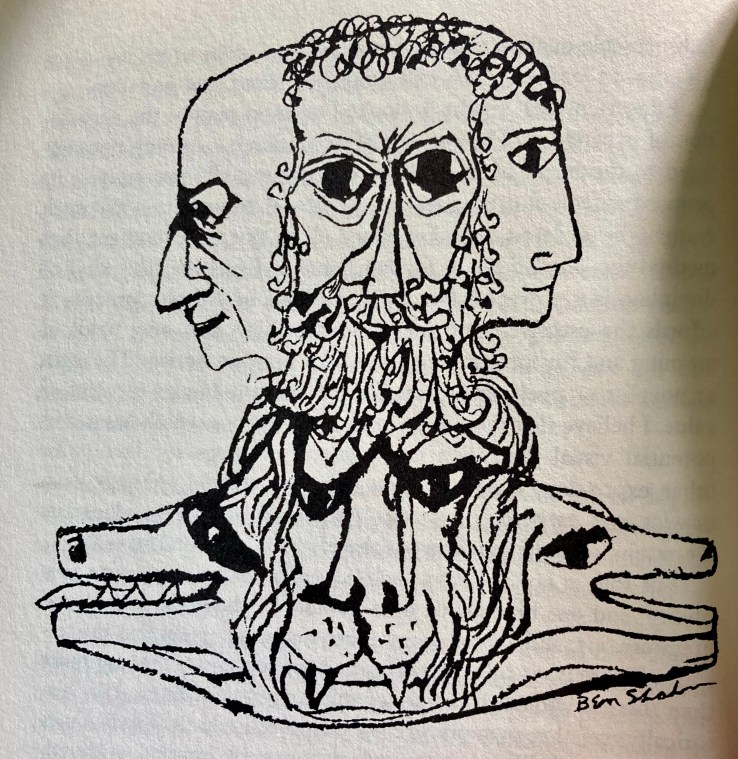
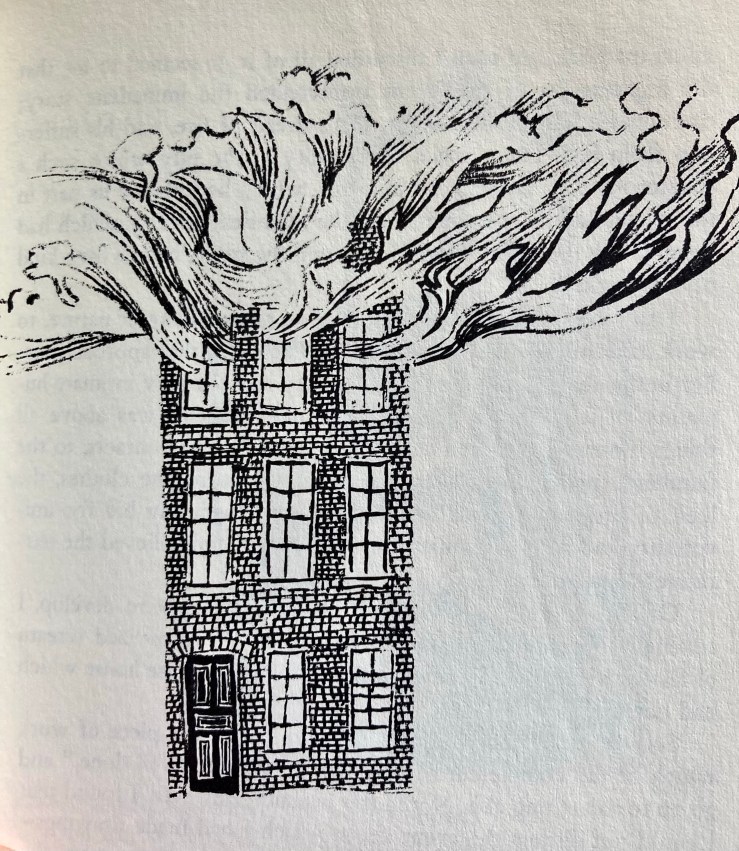
The Shape of Content (the title now is not exactly ironic, I guess) collects a series of lectures Shahn gave to Harvard students in the late 1950s. The first lecture is a somewhat boring apologia, a kind of What the hell am I doing here?, but the following material is good stuff, if not exactly fresh. There are plenty of illustrations too, mostly unrelated to the, uh, content of the words (although they are of course intimately related). Illustrations like the one above, and this one, below, make the 144 pager seem, well, kinda short.
Here’s Harvard UP’s blurb:
In his 1956–57 Charles Eliot Norton Lectures, the Russian-born American painter Ben Shahn sets down his personal views of the relationship of the artist―painter, writer, composer―to his material, his craft, and his society. He talks of the creation of the work of art, the importance of the community, the problem of communication, and the critical theories governing the artist and his audience.

Eve, 1927 by Dorothy Webster Hawksley (1884-1970)
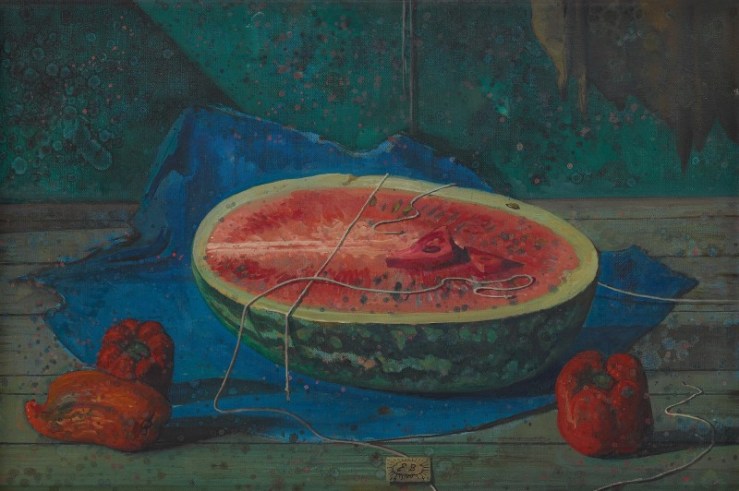
The Water-Melon and Three Red Peppers, 1949 by Eugène Berman (1899-1972)

Sailing Boats – Morning, 1926 by Hiroshi Yoshida (1876-1950)
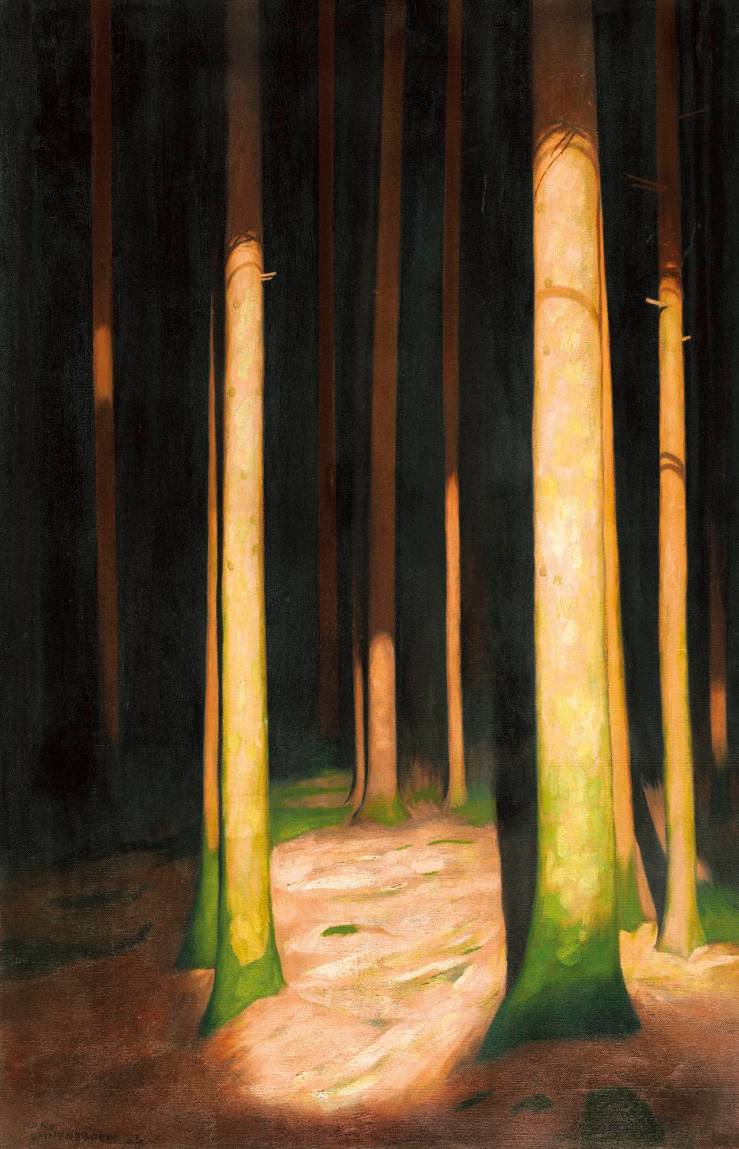
Forest Heart, 1933 by Hans Emmenegger (1886-1940)
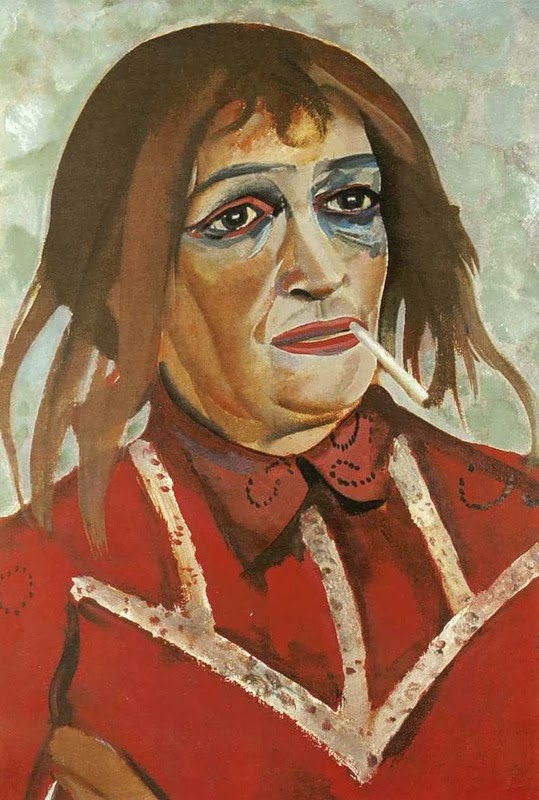
Olga Knipper-Chekhov as Nastasia, 1923 by Boris Grigoriev (1886-1939)
 Biblioklept