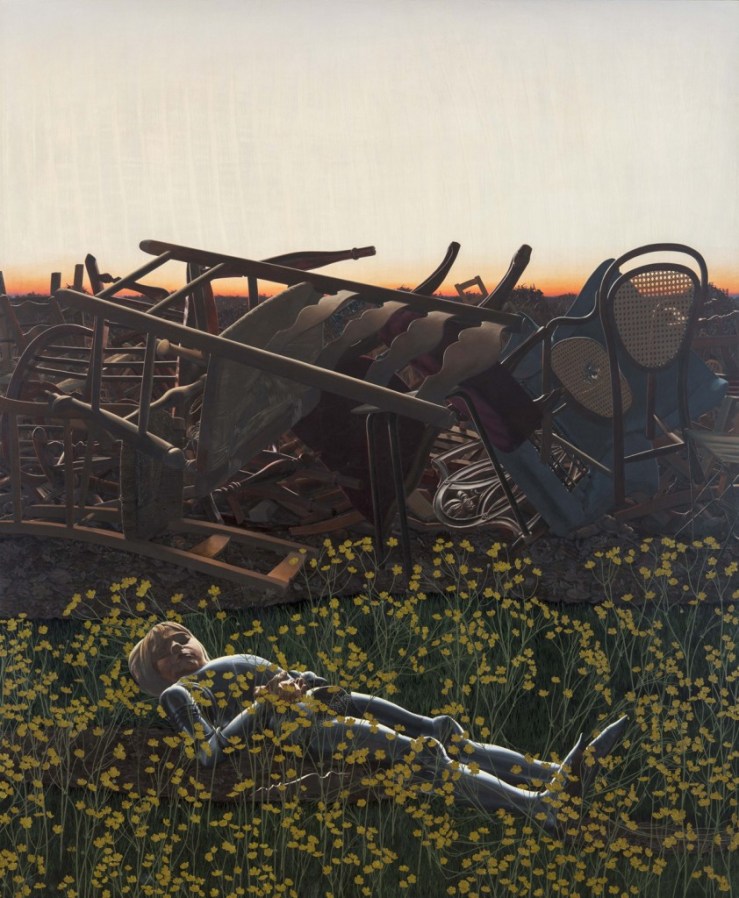
Corronach, 1999 by Jonathan Leaman (b. 1954)

Corronach, 1999 by Jonathan Leaman (b. 1954)

The Crab, 1940 by Oskar Kokoschka (1886-1980)

I’ve been a fan of Drew Lerman’s strip Snake Creek for a few years now. Reviewing Lerman’s first collection (simply titled Snake Creek) in The Comics Journal, Brian Nicholson wrote that,
Looking at these strips, you’re looking at something that recalls George Herriman, Harvey Kurtzman, Robert Crumb, Daniel Clowes, Matt Groening, but also thinking: What if Stanley Elkin drew a comic strip?
What if Elkin drew a comic strip indeed?
Like Elkin, Lerman plays with a variety of voices and rhythms in his work. There’s a zaniness to the Snake Creek world, but also an almost-melancholy seriousness to it as well. His main characters are Dav and Roy. Roy is something of a would-be tortured artist; Roy his familiar/foil, a spritely interlocutor to bounce ideas off of. Like the swamp-dwellers of Walt Kelly’s seminal strip Pogo, there’s a real affection between the two characters that anchors the surreal plasticity of Lerman’s work in genuine emotion.
I got three Snake Creek comix last week and tried not to read them too quickly on Sunday afternoon. I needed to get the bad taste of a Serious Contemporary Novel out of my brain, and Detective! Double Digest did the trick. There are two stories here: Lerman’s “Cryonic Pain: A Snake Creek Mystery” and on the literal flipside, Pete Faecke’s “The Big Love Triangle” (which has a scuzzy punk noir vibe).

Lerman’s detective story is an existentialist affair—a goofing riff on the myth of Sisyphus and the burden of a consciousness constrained by mortality and time. It’s also full of verbal slapstick and surreal shenanigans.


Schtick is a mini-comic in full color compromised of five vignettes, each one a riff or routine rooted in vaudevillian humor and composed in an original vernacular. The longest of the pieces, “Herbit and Sheiler,” is an extended play on linguistic misunderstandings—good stuff.

My favorite of the three comix is the most recent, “Head Trip,” the cover feature for the latest issue of the Miami-based comics journal Spiny Orb Weaver. (The issue also features an essay by comics critic Rob Clough, an autobiographical comic by Chris López, and a lengthy interview with Lerman, conducted by SOW editor Neil Brideau.)

“Head Trip” sees Dav and Roy trying to take Snake Creek’s most anguished character, Head on a Stone, on an adventure he can remember. Unable to move or communicate, but nevertheless burdened by consciousness, Head on a Stone is a tragic figure, a “pulsing node of dread,” as Dav puts it. Dav and Roy decide, in their wisely wisdom, to take the large rock seafaring. What follows is an ironic series of tragic-comic-tragic-etc. reversals of fortune (as well as some of Lerman’s most lyrical work to date with his strip). “Head Trip” is as linguistically loose and visually goofy as we might expect from anything set in the Snake Creek universe, and also achieves a level of poignancy we might not expect. Great stuff.

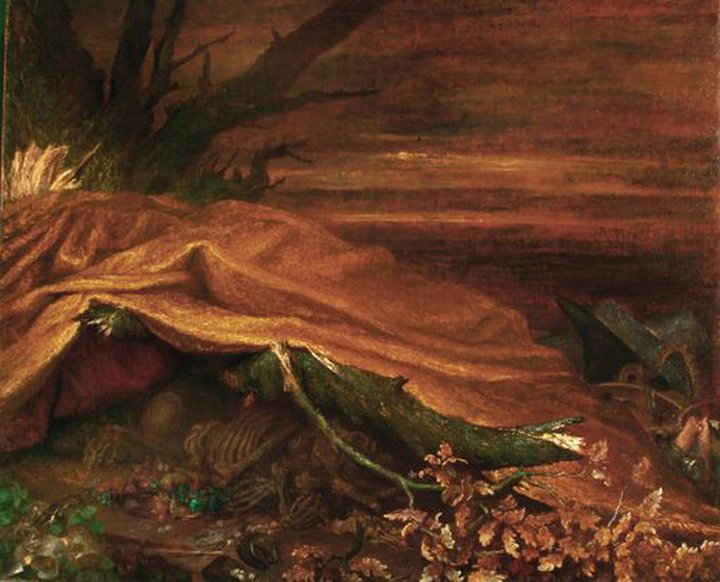
Can These Bones Live?, 1898 by George Frederic Watts (1817–1904)

Fierce Monster!, 1810s, by Francisco Goya (1746-1828). From The Disasters of War.

Wrist Action, 2010 by Lynette Yiadom-Boakye (b. 1977)

Watch, 2015 by Eric Fischl (b. 1948)

Nanny, Small Bears and Bogeyman, 1982 by Paula Rego (b. 1935)
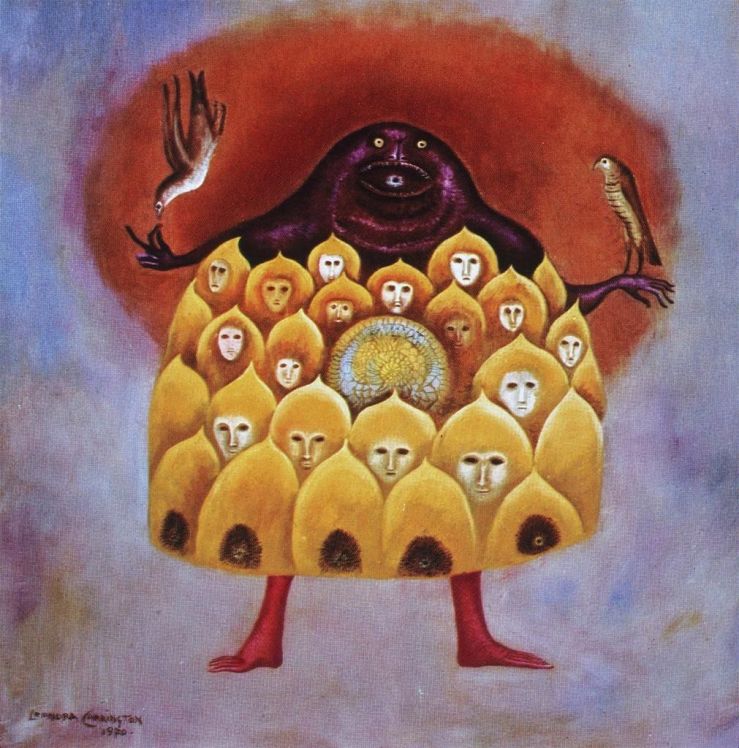
The God Mother, 1970 by Leonora Carrington (1917–2011)

Parsifal III, 1973 by Anselm Kiefer (b. 1945)

I am a huge fan of Paul Kirchner’s bold and witty comix. I fell in love with his cult strip The Bus some years back, and was thrilled when he revised the series with The Bus 2. Both volumes were published in handsome editions by the fine folks at Tanibis. The French publisher also released a retrospective collection of Kirchner’s work to date, the essential compendium Awaiting the Collapse. Tanibis also published the collected Hieronymus & Bosch, strip, another entry in the cartoonists explosive output in the twentyteens.

Now, Tanibis has published A Fistful of Delirium, the recent adventures of the resurrected hero Dope Rider. Kirchner’s Dope Rider is a mystical skeleton weedslinger, a philosophical wanderer prone to surreal transformation. Our cowboy rides again here via the full-page full-color strips Kirchner ran in High Times from 2015-2020. Here’s Tanibis’s blurb:
Dope Rider is back in town! After a 30-year hiatus, Paul Kirchner brought back to life the iconic bony stoner whose first adventures were a staple of the psychedelic counter-culture magazine High Times in the 1970s.
The stories collected in this book appeared in High Times between January 2015 and May 2020. Despite the years, Dope Rider has stayed essentially the same, still smoking his ever-present joint, getting high and chasing metaphysical dragons through whimsical realities in meticulously illustrated and colorful one-page adventures. Fans of the original Dope Rider comics will still find the bold graphical innovations, dubious puns and wild dreamscapes inspired by classical painting and western movies that were some of Dope Rider’s trademark.
This time though, Kirchner draws from a much larger panel of influences, including modern pop – and pot – culture (lines and characters from Star Wars as well as references to Denver as the US weed capital can be found here and there) and a wider range of artistic references, from Alice in Wonderland to 2001, A Space Odyssey to Ed Roth’s Kustom Kulture. Native American culture and mythology, only hinted at in the classic adventures, is also much more present in the form of Chief, one of Dope Rider’s new sidekicks. Kirchner’s playful, tongue-in-cheek humor binds together all these influences into stories that mock both the mundane and the nonsensical alike.

You can get a signed edition from Kirchner’s website. Full review down the line.
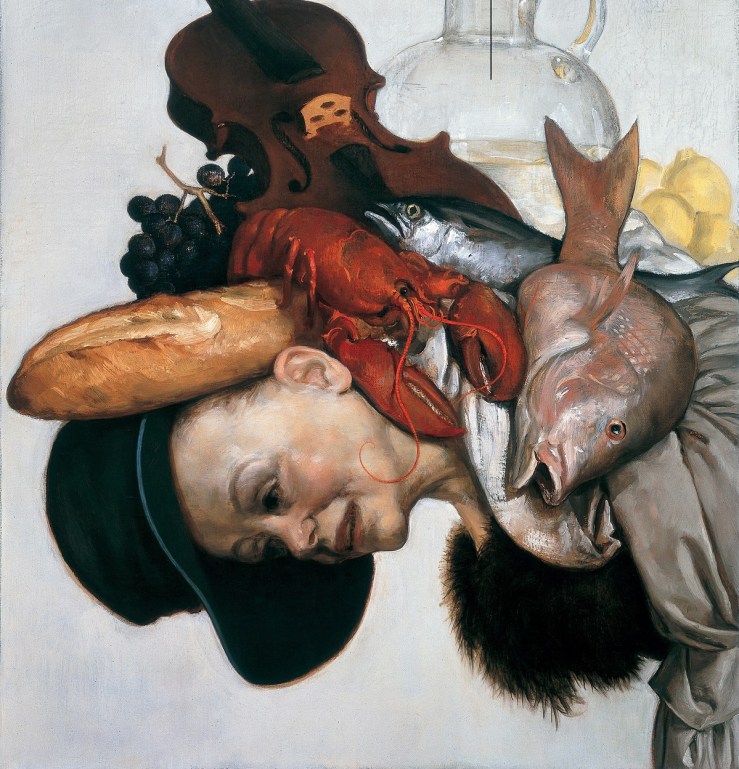
The Lobster, 2001 by John Currin (b. 1962)

Careful Pretty, 2005 by Helen Verhoeven (b. 1974)

Fun!, 2021 by Samplerman (Yvan Guillo)
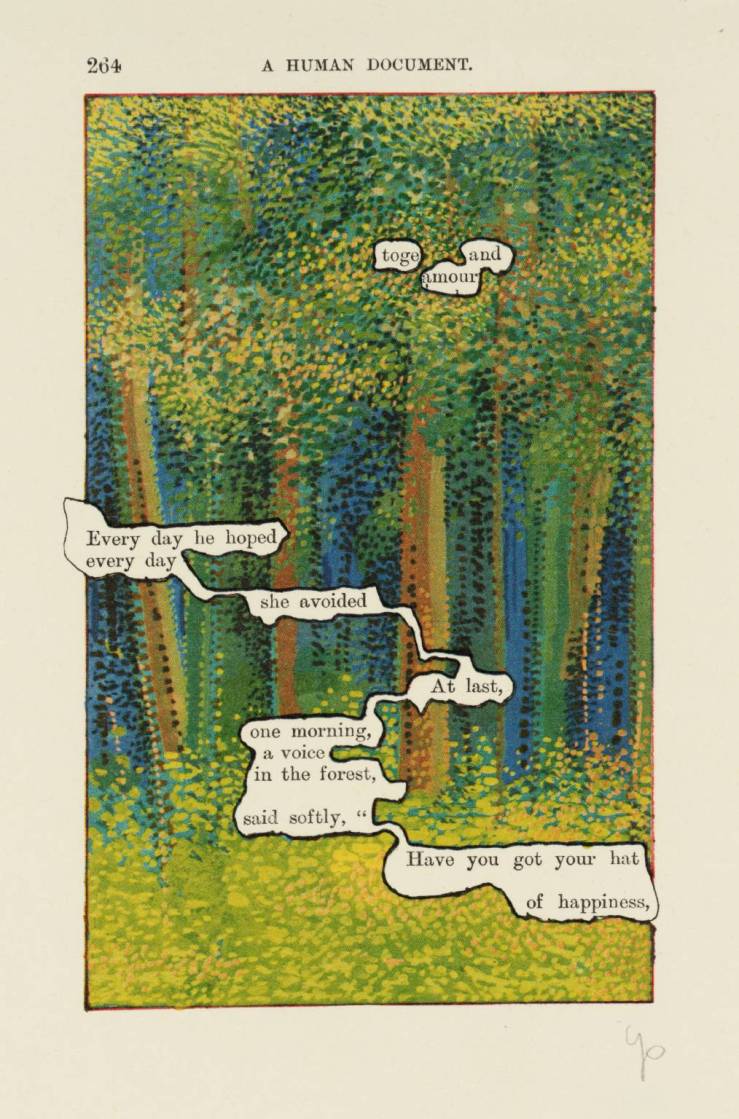
Untitled (From A Human Document, p. 264), 1970 by Tom Phillips (b. 1937)

Against the Day, 2014 by David Bailin

I Left My Heart in Tokyo, 2015 by Audun Grimstad (b. 1985)
 Biblioklept