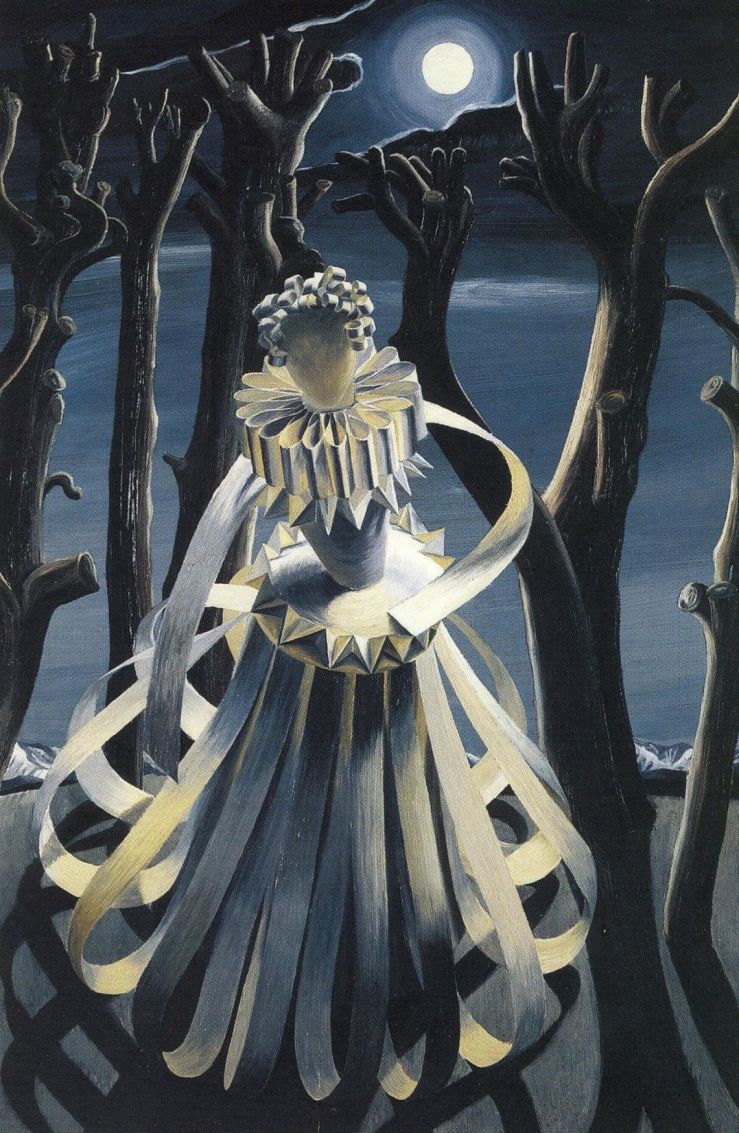
The Distraught Infanta — Marion Adnams

5fe62d851c58aee7a543bae249b10baf

The Distraught Infanta, 1944 by Marion Adnams (1898-1995)

What a great, broad-shouldered, elephantine personage I shall become by and by! | Nathaniel Hawthorne’s journal entry for April 22nd, 1841

April 22d.–. . . What an abominable hand do I scribble! but I have been chopping wood, and turning a grindstone all the forenoon; and such occupations are likely to disturb the equilibrium of the muscles and sinews. It is an endless surprise to me how much work there is to be done in the world; but, thank God, I am able to do my share of it,–and my ability increases daily. What a great, broad-shouldered, elephantine personage I shall become by and by!

Nathaniel Hawthorne’s journal entry for April 22nd, 1841. From Passages from the American Note-Books.

Hawthorne is hard at work on Brook Farm, a utopian project he eventually soured on. His time there informed his novel The Blithedale Romance.

The Resurrection — Otto Dix

trhumc-oppstandelsen-malt-av-tyskeren-otto-dix-1891-1969

The Resurrection, 1949 by Otto Dix (1891-1969)

Posted in Art

Mu Pan’s Garden of Earthly Delights (detail) — Mu Pan

mupan

Mu Pan’s Garden of Earthly Delights (detail), 2019 by Mu Pan (b. 1976)

Easter in Shakespeare

From Thomas Firminger Thiselton-Dyer’s indispensable volume Folk-lore in Shakespeare:

Easter. According to a popular superstition, it is considered unlucky to omit wearing new clothes on Easter Day, to which Shakespeare no doubt alludes in “Romeo and Juliet” (iii. 1), when he makes Mercutio ask Benvolio whether he did “not fall out with a tailor for wearing his new doublet before Easter.” In East Yorkshire, on Easter Eve, young folks go to the nearest market-town to buy some new article of dress or personal adornment to wear for the first time on Easter Day, as otherwise they believe that birds—notably rooks or “crakes”—will spoil their clothes. In “Poor Robin’s Almanac” we are told: “At Easter let your clothes be new, Or else be sure you will it rue.” Some think that the custom of “clacking” at Easter—which is not quite obsolete in some counties—is incidentally alluded to in “Measure for Measure” (iii. 2) by Lucio: “his use was, to put a ducat in her clack-dish.” [649] The clack or clap dish was a wooden dish with a movable cover, formerly carried by beggars, which they clacked and clattered to show that it was empty. In this they received the alms. Lepers and other paupers deemed infectious originally used it, that the sound might give warning not to approach too near, and alms be given without touching the person. A popular name for Easter Monday was Black Monday, so called, says Stow, because “in the 34th of Edward III. (1360), the 14th of April, and the morrow after Easter Day, King Edward, with his host, lay before the city of Paris; which day was full dark of mist and hail, and so bitter cold, that many men died on their horses’ backs with the cold. Wherefore unto this day it hath been call’d the Blacke Monday.” Thus, in the “Merchant of Venice” (ii. 5), Launcelot says, “it was not for nothing that my nose fell a-bleeding on Black Monday last at six o’clock i’ the morning.”

Are you okay, brother?

Cells tighter than shells, you spinning into spirals, quick-silver, thrashing the water, making stars scatter (Ann Quin)

Beyond these, illuminated by past summers, one summer remained that stayed the sun long into the night after you had watched the others; others with their fathers knee-deep, belly-button unconcerned, roly-poly mothers stretching out of the sea. Whiter than starch hands on bat and ball, you failed to catch. Tents, buckets, spades; others that went on digging barricades. You castle-bound, spying on princesses, honey-gold, singing against the blue, if touched surely their skin would ooze? Aware of own smell, skin-texture, sun in eyes, lips, toes, the softness underneath, in between, wondering what miracle made you, the sky, the sea. Conscious of sound, gulls hovering, crying, or silent at rarer intervals, their swift turns before being swallowed by the waves. Then no sound, all suddenly would be soundless, treading softly, dividing rocks with fins, and sword-fish fingers plucking away clothes, that were left with your anatomy, huddled like ruffled birds waiting. A chrysalis heart formed on the water’s surface, away from the hard-polished pebbles, sand-blowing and elongated shadows. Away, faster than air itself, dragon-whirled. Be given to, the sliding of water, to forget, be forgotten; premature thoughts—predetermined action. In a moment fixed between one wave and the next, the outline of what might be ahead. On your back, staring into space, becoming part of the sky, a speckled bird’s breast that opened up at the slightest notion on your part. But the hands, remember the hands that pulled your legs, that doubled you up, and dragged you down? Surprised at non-resistance. Voices that called, creating confusion. Cells tighter than shells, you spinning into spirals, quick-silver, thrashing the water, making stars scatter. Narcissus above, staring at a shadow-bat spreading out, finally disappearing into the very centre of the ocean. They were always there waiting by the edge, behind them the cliffs extended. Your head disembodied, bouncing above the separate force of arms and legs, rhythmical, the glorious sensation of weightlessness, moon-controlled, and far below your heart went on exploring, no matter how many years came between, nor how many people were thrust into focus. That had surely been the beginning, the separating of yourself from the world that no longer revolved round you, the awareness of becoming part of, merging into something else, no longer dependent upon anyone, a freedom that found its own reality, half of you the constant guardian, watching your actions, your responses, what you accepted, what you might reject.

From Ann Quin’s novel Berg.

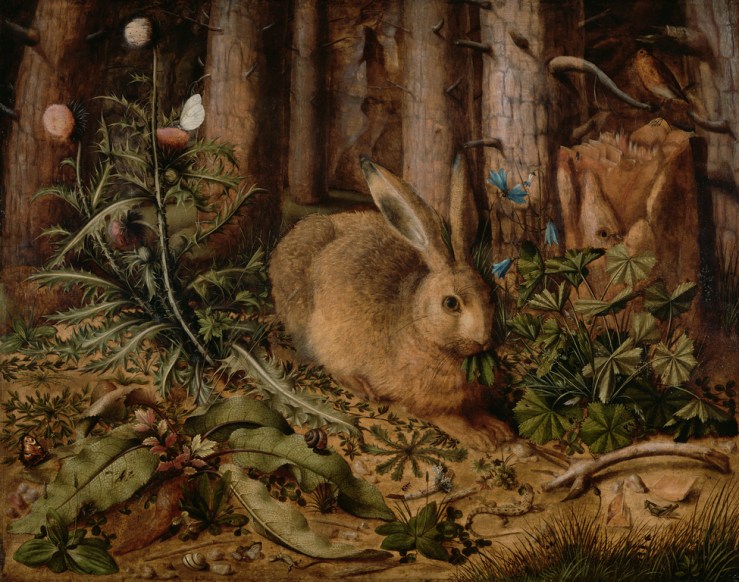
A Hare in the Forest — Hans Hoffmann 

A Hare in the Forest, c. 1585 by Hans Hoffmann (c. 1530-1592)


Mu Pan’s Garden of Earthly Delights (detail) — Mu Pan

mupan.PNG

Mu Pan’s Garden of Earthly Delights (detail), 2019 by Mu Pan (b. 1976)

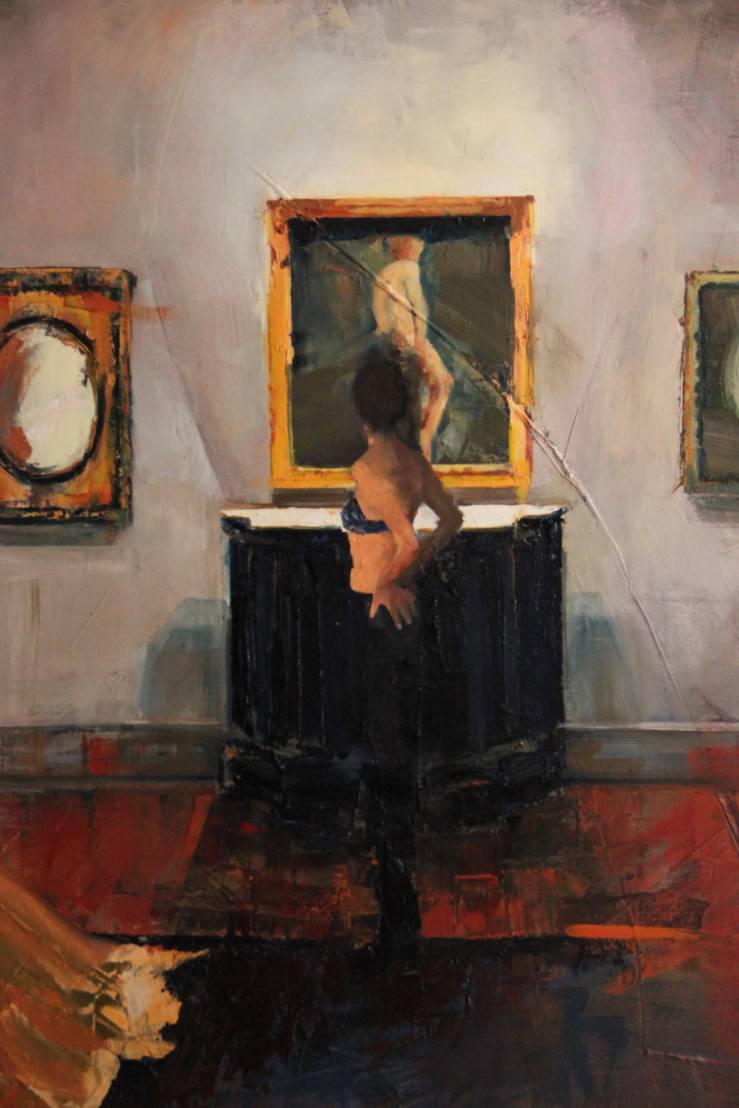
The Master — Fanny Nushka Moreaux

1003098-8

The Master by Fanny Nushka Moreaux (b. 1983)

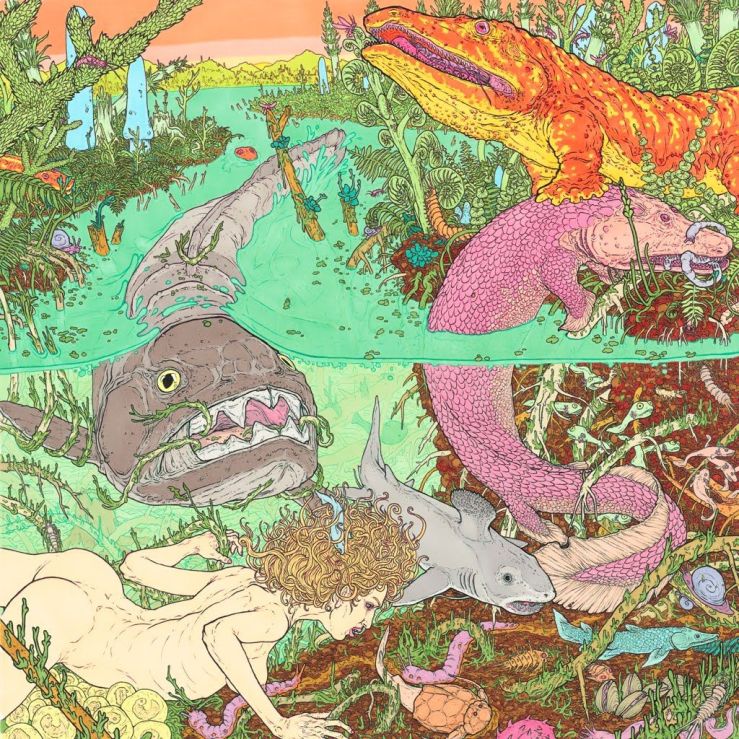
Devonian — Mat Brown 

e852d47cc9315dc1595eb08472c3ea02

Devonian by Mat Brown (b. 1980)

Posted in Art

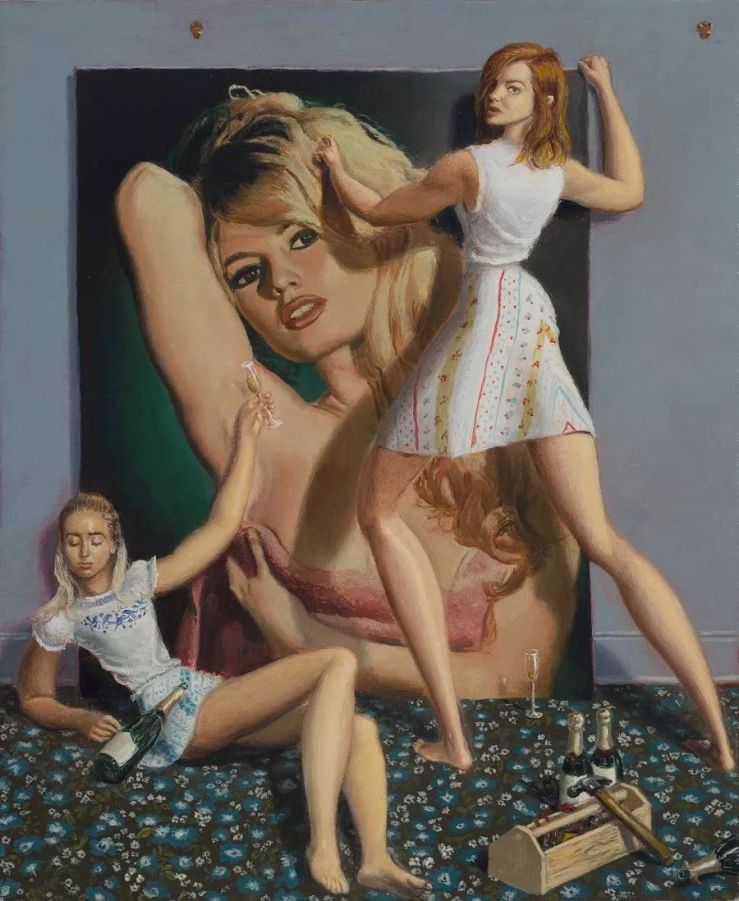
Bad Art Handling — Jansson Stegner

640

Bad Art Handling, 2016 by Jansson Stegner (b. 1972)

Mu Pan’s Garden of Earthly Delights (detail) — Mu Pan

mupan.PNG

Mu Pan’s Garden of Earthly Delights (detail), 2019 by Mu Pan (b. 1976)

I have milked a cow!!! | Nathaniel Hawthorne’s journal entry for April 16th, 1841

April 16th.–. . . Since I last wrote, there has been an addition to our community of four gentlemen in sables, who promise to be among our most useful and respectable members. They arrived yesterday about noon. Mr. Ripley had proposed to them to join us, no longer ago than that very morning. I had some conversation with them in the afternoon, and was glad to hear them express much satisfaction with their new abode and all the arrangements. They do not appear to be very communicative, however,–or perhaps it may be merely an external reserve, like my own, to shield their delicacy. Several of theirprominent characteristics, as well as their black attire, lead me to believe that they are members of the clerical profession; but I have not yet ascertained from their own lips what has been the nature of their past lives. I trust to have much pleasure in their society, and, sooner or later, that we shall all of us derive great strength from our intercourse with them. I cannot too highly applaud the readiness with which these four gentlemen in black have thrown aside all the fopperies and flummeries which have their origin in a false state of society. When I last saw them, they looked as heroically regardless of the stains and soils incident to our profession as I did when I emerged from the gold-mine, . . .

I have milked a cow!!! . . . The herd has rebelled against the usurpation of Miss Fuller’s heifer; and, whenever they are turned out of the barn, she is compelled to take refuge under our protection. So much did she impede my labors by keeping close to me, that I found it necessary to give her two or three gentle pats with a shovel; but still she preferred to trust herself to my tender mercies, rather than venture among the horns of the herd. She is not an amiable cow; but she has a very intelligent face, and seems to be of a reflective cast of character. I doubt not that she will soon perceive the expediency of being on good terms with the rest of the sisterhood.

I have not yet been twenty yards from our house and barn; but I begin to perceive that this is a beautiful place. The scenery is of a mild and placid character, with nothing bold in its aspect; but I think its beauties will grow upon us, and make us love it the more, the longer we live here. There is a brook, so near the house that we shall be able to hear its ripplein the summer evenings, . . . but, for agricultural purposes, it has been made to flow in a straight and rectangular fashion, which does it infinite damage as a picturesque object. . . .

It was a moment or two before I could think whom you meant by Mr. Dismal View. Why, he is one of the best of the brotherhood, so far as cheerfulness goes; for if he do not laugh himself, he makes the rest of us laugh continually. He is the quaintest and queerest personage you ever saw,–full of dry jokes, the humor of which is so incorporated with the strange twistifications of his physiognomy, that his sayings ought to be written down, accompanied with illustrations by Cruikshank. Then he keeps quoting innumerable scraps of Latin, and makes classical allusions, while we are turning over the gold-mine; and the contrast between the nature of his employment and the character of his thoughts is irresistibly ludicrous.

I have written this epistle in the parlor, while Farmer Ripley, and Farmer Farley, and Farmer Dismal View were talking about their agricultural concerns. So you will not wonder if it is not a classical piece of composition, either in point of thought or expression.

Nathaniel Hawthorne’s journal entry for April 16th, 1841. From Passages from the American Note-Books.

I riffed a little last year on Hawthorne’s time at Brook Farm.


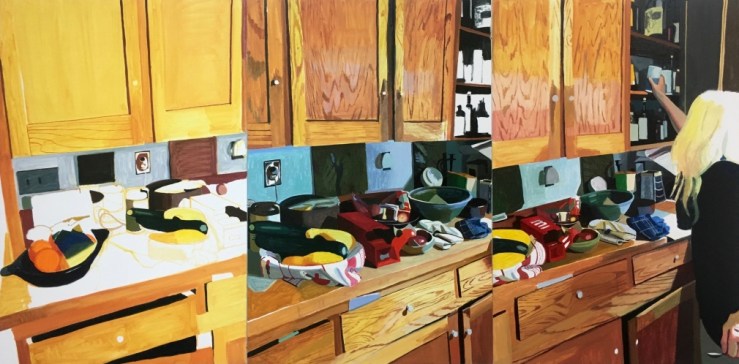
Grabbing the Salt — Chelsea Gibson

ca008682d728a2173f48e92da4c8d305

Grabbing the Salt, 2017 by Chelsea Gibson

RIP Gene Wolfe

genewolfebw

RIP Gene Wolfe, 1931-2019

Gene Wolfe died today. He was 87. Tor’s obit includes these details:

Gene Wolfe was born in New York on May 7, 1931. He studied at Texas A&M for a few years before dropping out and fighting in the Korean War. After his return to the US he finished his degree at the University of Houston. He was an engineer, and worked as the editor of the professional journal Plant Engineering. He was also instrumental in inventing the machine that cooks Pringles potato chips.

…Wolfe went on to write over 30 novels, with his best best-known work, The Book of The New Sun, spanning 1980-1983. The series is a tetralogy set in the Vancian Dying Earth subgenre, and follows the journey of Severian, a member of the Guild of Torturers, after he is exiled for the sin of mercy.

Last night, I fell asleep listening to Chapter 15 of the audiobook version of Gene Wolfe’s 1980 novel The Shadow of the Torturer, the first book in The Book of the New Sun.I have been falling asleep to Chapter 15 of this particular audiobook for about three nights now. Before that, I was falling asleep to Chapter 14. There is nothing particularly boring about the book. I put headphones in my ears take sleeping pills and fall asleep to an audiobook every night. There’s something about plugging into a narrative that’s not my own life that takes me out of all the anxieties that creep out at bedtime. I get through 15, maybe 20 minutes, and I’m out. I restart a few minutes before the last bit I remember. Anyway, I fell asleep to Chapter 15 — “Baldanders” — last night. I might’ve even made it a little bit into Chapter 16. I’ll find out tonight.

I first read The Shadow of the Torturer as a young teen. I was too young for the book—I don’t think I fully appreciated its scope. I read the next book in The Book of the New Sun series, but I don’t remember if I finished it out. In a year or two, I had abandoned fantasy, a mistake that I corrected years later. Youthful indiscretion. I reread a chunk of The Shadow of the Torturer again in my twenties and found it more complex than I remember. Then I mistakenly left the mass market paperback copy I was reading at a beach condo we had conned from someone’s friend’s grandmother for the weekend, and that was that—until this February, when a brief Twitter conversation prompted me to get the audiobook. I’ve been listening to it every night since, and at the rate I’m going through it I’ll probably be done by the end of the summer. I’m digging it.

Will Wolfe now gain a wider audience outside of the sci-fi/fantasy cult audience now that he has died? Maybe. I mean, that happens sometimes, right? His work is challenging though, employing strange diction and proffering only the smallest crumbs of exposition. Ultimately, it’s clear that Gene Wolfe was a writer’s writer, as evidenced by a 2015 profile of him in The New Yorker which proclaimed him “sci-fi’s difficult genius”—

Wolfe has published more than twenty-five novels and more than fifty stories, and has won some of science fiction and fantasy’s most prestigious awards. But he has rarely, if ever, been considered fully within the larger context of literature. His books contain all of the nasty genre tropes—space travel, robots, even dragons—and he hasn’t crossed into the mainstream on the strength of a TV or movie adaptation. Wolfe himself sees the trappings of science fiction and fantasy, the spaceships and so on, as simply “a sketchy outline of the things that can be done.” But even within fantasy fandom, Wolfe’s work presents difficulties. His science fiction is neither operatic nor scientifically accurate; his fantasy works are not full of clanging swords and wizardly knowledge. But ask science-fiction or fantasy authors about Gene Wolfe and they are likely to cite him as a giant in their field. Ursula K. Le Guin once called Wolfe “our Melville.”

Notre Dame de Paris — Edward Hopper

9435

Notre Dame de Paris, 1907 by Edward Hopper (1882-1967)