A Riff on the Kindle Fire

20120131-201536.jpg

1. I got a Kindle Fire for Christmas this year, and have been using it for about a month now. I’m not sure how to go about “reviewing” this product, so I’m going to riff a bit.

2. Let’s get the whole Amazon-as-Evil-Empire thing out of the way up front: Yes, Amazon’s business practices are unsavory; yes, attempting to decimate the publishing industry as it currently exists is Not Good; yes, their practices threaten brick-and-mortar stores (the kind that actually pay local and state taxes!); yes their practices work to undermine key figures in the publishing industry—y’know, people like editors.

3. Picking up on that last clause: self-publishing (and the self-publishing “revolution” that e-readers like the Kindle Fire entail) may seem fine and dandy cotton candy, but there’s a reason that editors (and publishers and publicists, etc.) exist. These people make books better. These people make books. (And no, by the way, I’m not interested in reading your self-published ebook, so quit sending me email blasts).

4. Seems like I’m riffing out a lot of context, so let’s keep going: Perhaps you read whinypants Jonathan Franzen decrying the impending moral failures/societal breakdown that will result from ebooks replacing print editions. Franzen’s position is, of course, reactionary and conservative, and deeply rooted in the fear that the perfect Platonic permanence of books will be subverted or decimated.

5. Franzen’s reaction is rooted in part against a (common, teleological, utopian) misconception about the longevity and stability of digital content. Simply put, many people are operating under a dramatic misunderstanding of just how unstable digital content is. Where will all these books be stored, and in what format? Who will be responsible for archiving these materials?

6. A simple thought experiment, germane to item 5 above: Think back on all the obsolete media that you have used in your lifetime. I am in my thirties; my list would include cassette tapes, VHS tapes, laser disks, floppy disks, minidiscs, CDRs . . . (I don’t include vinyl records in this list. I still own hundreds of them and play them regularly).

7. To recontextualize: Printed books are a far more stable format than ebooks.

8. To wit: Ursula LeGuin in her essay “Staying Awake” from a 2008 issue of Harper’s:

The book itself is a curious artifact, not showy in its technology but complex and extremely efficient: a really neat little device, compact, often very pleasant to look at and handle, that can last decades, even centuries. It doesn’t have to be plugged in, activated, or performed by a machine; all it needs is light, a human eye, and a human mind. It is not one of a kind, and it is not ephemeral. It lasts. It is reliable. If a book told you something when you were fifteen, it will tell it to you again when you are fifty, though you may understand it so differently that it seems you’re reading a whole new book.

9. Points 2-8 seem like so much hemming and hawing, so much reticence to discuss what I seemed to promise at the outset: Some sense of what reading on the Kindle Fire is like.

10. Some things I like very much about reading on the Kindle Fire:

It creates its own light for night reading.

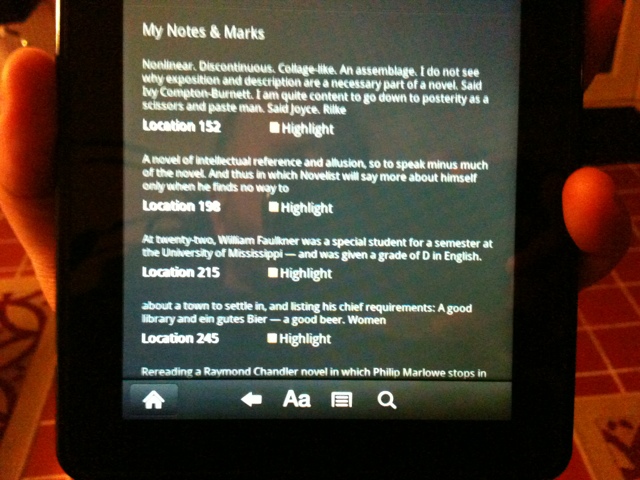
It’s easy to highlight and annotate passages (and then open up a new screen to look at just those highlights and annotations, isolated from the text proper).

It’s lightweight and ergonomic and, when I read with it over my head, my wrists don’t constrict and go tingly.

It holds a lot of books.
20120131-194740.jpg

11. Some things I like about the Kindle Fire that I would think I wouldn’t like about the Kindle Fire, were I to read such a list from another person:

I can determine how far I have read into a book as a percentage.

I can stop and browse the internet in the middle of reading.

I can look up words or even wikis as I go by simply hovering a finger over a word or phrase.

12. My daughter loves the thing. Loves loves loves it. She is probably the primary user. She is four and a half. I think the interactive books she adores are marvelous.

13. Some things I don’t like about the Kindle Fire:

No book smell.

One texture for all books: This is probably the biggest problem I can see with the Kindle Fire.

It requires a battery charge, so there’s a built in level of accessibility; a sense that one must needs “prepare” ahead of time to read, perhaps (unlike our old friend the print book, which only requires a light source).

No bath time reading.

I can’t read it around my daughter, because she will attempt to take it, or, at minimum, curl up in my lap.

It is not possible to have like three or four books open at once.

Can’t read .cbr files. Why? Why?

I had to buy a USB micro B cable to connect the Kindle to the computer that I use to store digital content. Why not include this cable, Amazon? (It’s almost as if the company wants consumers to be solely reliant on Amazon’s services as a content provider . . .)

14. I’ve found it nearly impossible to read an electronic book on the Kindle that I started as a print book. For example, I’m about half-way through Teju Cole’s novel Open City; the kind publicist who sent it to me also sent me an electronic version of the text. I began the print copy in earnest, but the other night, after reading a bit of Hawthorne on the Kindle, I found myself wanting to sink back into Cole’s Sebaldian orbit. When I found my place in the text though, I felt alienated, bleak even, as if I were not reading the definitive version of Cole’s book but instead its cheap ghost. There is no intellectual or objective justification for this feeling. Call it a vibe or a habit.

20120131-194747.jpg

15. Books that I enjoy reading on the Kindle Fire:

David Markson’s The Last Novel, which perhaps begs to be read on such a device.

Anything by Nietzsche, but his aphoristic works especially.

A .pdf version of Luigi Serafini’s rare and expensive book The Codex Seraphinianus (one of many verboten tomes on my Kindle, but remember the name of this site if you please . . .)

Anything by Whitman, especially letters and other non-essentials that I would not normally pursue.

Ditto Hawthorne.

Ditto Dickinson.

Ditto Melville.

Oh, and beyond the overlooked and underfamous works of certain American Renaissance faves: Moby-Dick too, which seems looser, freer, more aphoristic on the Kindle. (Why?)

Neal Stephenson’s novel Snow Crash, which seems simultaneously dated and futuristic. Like William Gibson with a strong streak of Pynchonian sillies.

And Gibson: Rereading Burning Chrome. Had forgotten how good some of these shorts are.

Houellebecq’s Whatever: its brevity, its succinctness gels with my nascent Kindle habits, or perhaps instructs my Kindle habits, or more likely creates my Kindle habits.

16. To return to a point in #13 above: The Kindle Fire necessarily imposes a uniform texture on every book that one reads on it; this would be true of any e-reader. Sure, you can change the background (white, black, or a sepia color, which is what I prefer), fonts, sizes, spacing, etc. — but there is no sense of physicality, of individual identity, of, dare I say it, specialness, to the texts. I am aware that these are terribly subjective and overtly Romantic terms, but hell, I like physical books. I like their covers and their smells and their discolorations. I like leaving bookmarks in every book that I finish or abandon—I almost always find a new bookmark for every book that I read (the autobookmark on the Kindle is useful, but how can it compare with a photograph of my son or drawing by my daughter or a postcard from a stranger or a scrap of poetry from a discontinued textbook or an old grocery list of my wife’s from years before we were married?).

17. I titled this post “A Riff on the Kindle Fire,” but that’s a bit ambiguous I suppose: I did not compose the post on the Kindle Fire, which I find awkward re: blogging/wordprocessing. I used a laptop (with some help from an iPhone). Maybe the preposition “about” would be more suitable.

18. By way of closing, after four weeks with the thing:

It’s light.

It’s convenient for night reading, but you probably shouldn’t take it in the bath.

No book smell.
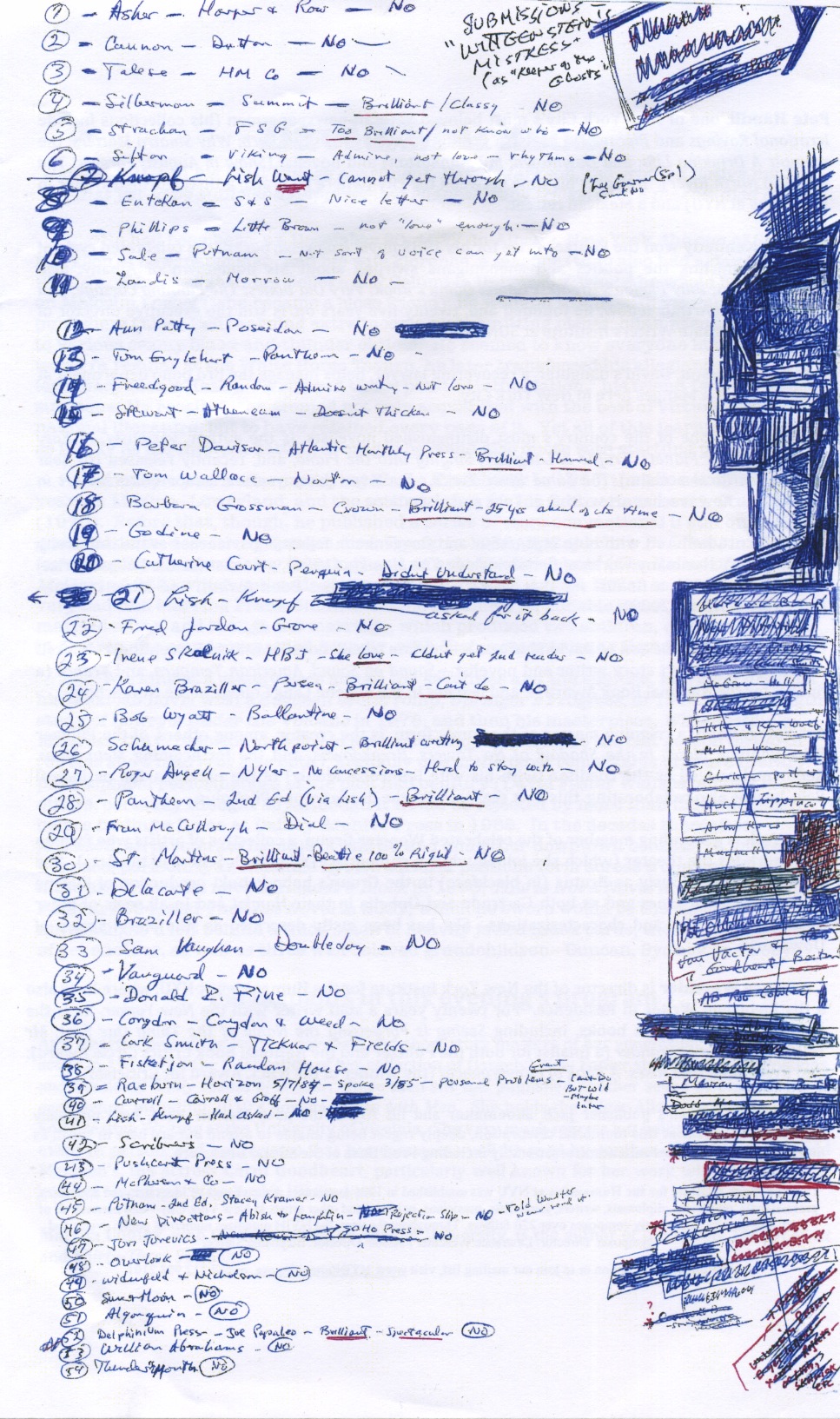
List of Rejections of Wittgenstein’s Mistress — David Markson

(Via/cheers).

David Markson Reads from The Last Novel at the 92nd Street Y, 2007

David Markson: “Originally I Was Calling It Wittgenstein’s Niece”

More from David Markson’s interview at the Dalkey Archive:

DM: Originally I was calling it “Wittgenstein’s Niece.” Never knowing, of course, that Thomas Bernhard would eventually publish something called “Wittgenstein’s Nephew.” But even before I submitted it I knew I’d have enough trouble finding a publisher as was—hardly the amount I did have, but some—and so not wanting to compound the difficulty I changed it to “Keeper of the Ghosts.” Which is something I swiped from Lowry, by the way, from a character named Ghostkeeper. But once the manuscript wound up in the hands of a small press that wasn’t going to be worried about recognition value in Downers Grove, Illinois, or among the knuckleheads at a sales conference, I went back to Wittgenstein. “Mistress” had been on the same scratch sheet with “Niece,” and I decided I liked it better by then.

JT: And meaning basically that your heroine is mistress to Wittgenstein’s thought?

DM: Well, along with several other people’s yes. But as I started to say a few minutes ago, the Wittgenstein is frequently most obvious in the very way she questions so many of her own “propositions,” as it were.

“I Suppose You Become Addicted to a Certain Kind of Writing” — David Markson on Lowry, Joyce, and Gaddis

David Markson talked with Joseph Tabbi about (among many other things) his friendship with Malcolm Lowry, his love for William Gaddis’s The Recognitions, and how James Joyce teaches us to read. Read the entire interview at the Dalkey Archive:

JT: You mention your critical study of “Volcano.” But you did a master’s thesis on it at Columbia much earlier?

DM: While we were in touch, but before I’d actually met him, yes. In 1951.

JT: Which means it was only four years after the novel had been published. Isn’t that rare, an academic paper on an entirely “new” writer with no body of criticism to verify his status?

DM: As a matter of fact I had to wander around the English department knocking on doors looking for someone to approve the project. I remember Lionel Trilling’s dismissal in particular: “What is all this drunkenness all about?” My whole object was to explain just that, obviously, but I decided to find less of a current to buck. Finally William York Tindall gave me a go-ahead.

JT: That brings up a question of a different sort, however. “Volcano” is scarcely your everyday traditional novel. What sort of training or background did you have that let you feel able to confront the challenge of interpreting something that difficult?

DM: To tell the truth, I’m not sure if I had any real idea what I was getting into, or if any of us do, the first time we’re seduced by a book of that sort. Though Joyce certainly teaches us, for starters. By which I mean that we all learn quickly with “Ulysses” that we cannot simply read the novel itself but have to lean on some of the critical crutches.

JT: But you had no crutches at all?

DM: Oh, well, but there are always clues in the text itself—this reference to that which leads to patterns you begin to trace out. On one level I impressed the hell out of myself, surprised at what I did know. And evidently I impressed a few other creatures as well, since I kept hearing that the thesis was being stolen from by students all over the place. The again when I sat down years later to turn that early stuff into a full length book I was almost embarrassed at how little I’d seen after all.

JT: Not long after that original Lowry thesis you were proselytizing fairly extensively for “The Recognitions” too?

DM: I suppose you become addicted to a certain kind of writing. There’s little enough of it extant, God knows. I’m not sure how much actual “proselytizing” I did for Gaddis, however. Except of course for practically button-holing friends on street corners.

JT: But I understand you were very directly responsible for the first reissue of the book, also?

DM: Evidently I was. It’s a funny story, actually. I was living in Mexico, and someone—well, old Aiken, in fact—gave my address to Aaron Asher, who was the editor of Meridian Books at the time. I picked him and his wife Linda up at their hotel and brought them out to where Elaine and I were living—outside Mexico City—for dinner and then spent approximately three solid hours talking nonstop about Gaddis. Finally Aaron threw up his hands in despair, telling me, “Please, please, I promise I’ll read the darned thing as soon as I get home! But now tell us something about where to go and what to see in Mexico, for heaven’s sake!”

JT: And then he did publish it. Did Gaddis himself know about the impetus?

DM: That’s fairly funny too, as it happens. “The Recognitions” came out in 1955. I’d read it twice when it did, and then wrote Gaddis a letter. It’s perhaps the only other letter I’ve written to an author I didn’t know, but it was completely different from the one I wrote to Lowry. In this case I’d just been infuriated by the rotten reviews and simply wanted to tell the man the hell with them all, that there were some few of us out there who did see what he’s accomplished. I didn’t get an answer, though I eventually heard secondhand that Gaddis had been too depressed at the time to send one. Or that he’d ultimately decided it was too late. But then sometime in 1961, not long after the Asher incident, I did hear. Six years after the fact, this was, a long letter beginning with something like, “Dear David Markson, if I can presume to answer yours of June whatever, 1955!” Which went on to say that Asher was in fact about to do a first reprint.

Eleven Encyclopedic Books, Overstuffed with References, That Compel Compulsive Reading

Eleven Encyclopedic Books, Overstuffed with References, That Compel Compulsive Reading

1. Moby-Dick, Herman Melville

2. Finnegans Wake, James Joyce

3. Expelled from Eden, A WilliamVollmann Reader

4. Species of Spaces and Other Pieces, Georges Perec

5. Wittgenstein’s Mistress, David Markson

6. The Silmarillion, J.R.R. Tolkien

7. Foucault’s Pendulum, Umberto Eco

8. The Rings of Saturn, W.G. Sebald

9. The Recognitions, William Gaddis

10. Between Parentheses, Roberto Bolaño

11.  The Architecture of the Arkansas Ozarks, Donald Harrington


Books Acquired, Sometime Last Week (I Don’t Know, Maybe on Thursday or Friday)

I picked up a bevy of books at my favorite bookstore sometime last week ; can’t remember the day, exactly. Anyway, some of these selections come from reader recommendations re: nonconventional lit.

20111103-155310.jpg

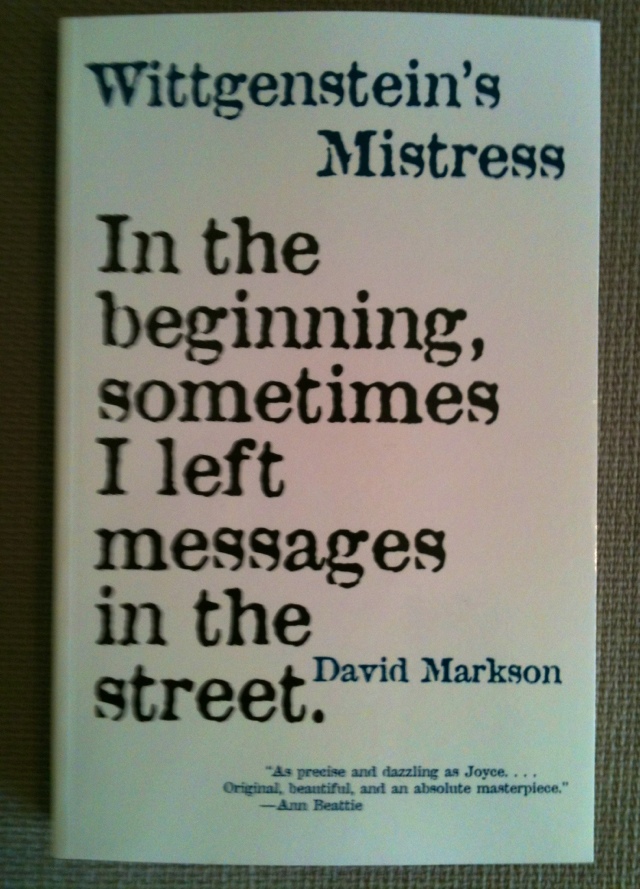
I ordered David Markson’s novel Wittgenstein’s Mistress, which I’ve been meaning to read for yonks but had never found used. Horrible, horrible cover

20111103-155319.jpg

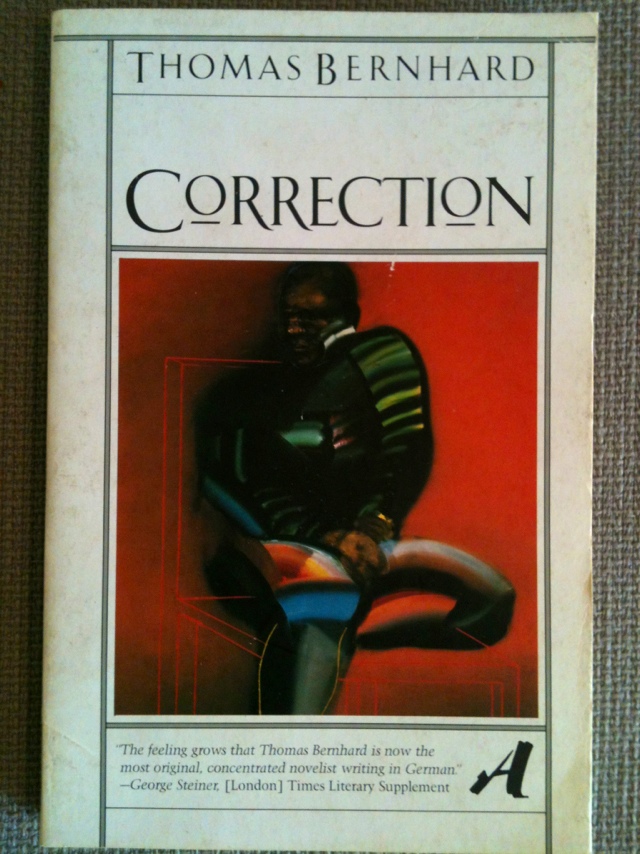
Bernhard’s Correction: Thomas Bernhard came recommended by a number of readers in the aforelinkedto post; dipping into Correction immediately recalled Sebald’s The Rings of Saturn for some reason.

20111103-155327.jpg

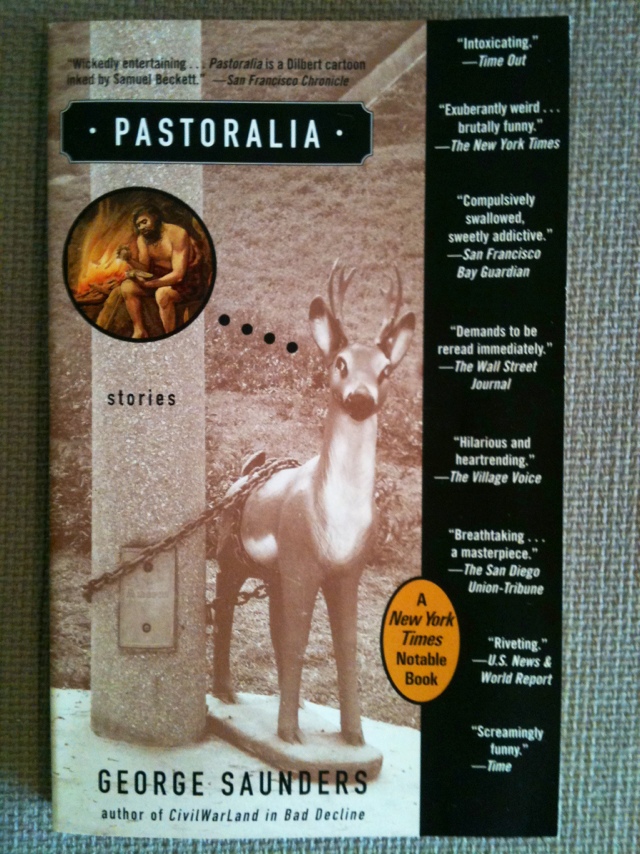
George Saunders: another reader recommendation. I actually read Pastoralia this week. I love short stories. Anyway, full review forthcoming. Short version: good stuff, but DFW casts a pretty big shadow.

20111103-155351.jpg

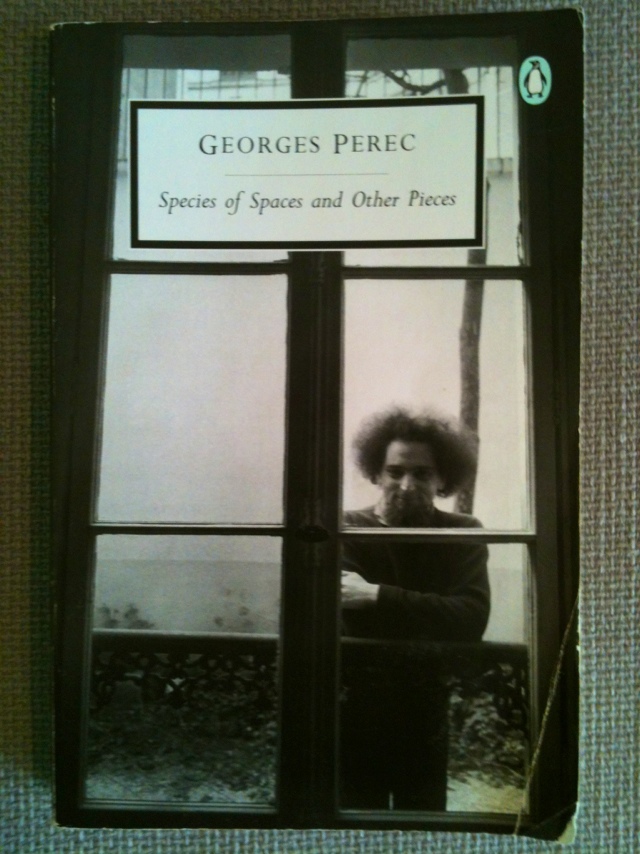
Georges Perec was another reader rec, but it was his novel Life: A User’s Manual that kept popping up. I found Species of Spaces and Other Pieces, his collection of essays and other stray bits, by sheer chance. I think I was looking for something by De Sade, actually. Anyway, I love, love, love this book—it kinda reminds me of Bolaño’s Between the Parentheses or even the Vollmann reader Expelled from Eden—the kind of book I see myself dipping into again and again, a little mini-labyrinth of ideas.

20111103-155359.jpg

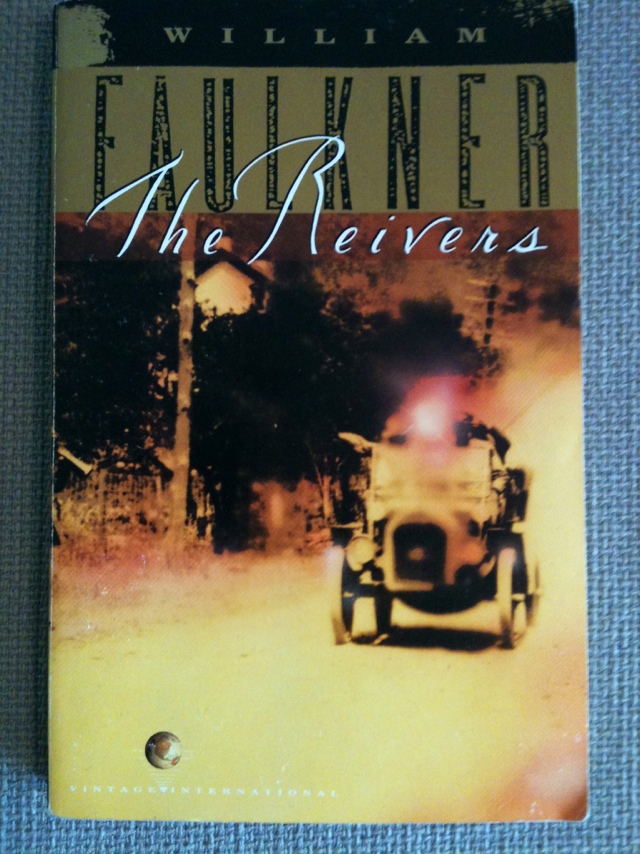
I also picked up Faulkner’s last novel, The Reivers; been wanting to read it for a long time now. I’ll try to get it in over the Christmas break.

David Markson on Drinking with Malcolm Lowry and Dylan Thomas

The Strange and Disorienting World of Authors’ Personal Libraries

Craig Fehrman’s new article “Lost Libraries” (at The Boston Globe) provides a fascinating overview of how author libraries — that is, the books, usually heavily annotated, that authors own — find their way into archives, and why those archives matter. Fehrman begins by detailing the strange case of recently-deceased novelist David Markson, whose personal library was kinda sorta reassembled by fans after a reader named Annecy Liddell bought Markson’s (cleverly-annotated) copy of Don DeLillo’s White Noise–

The news of Liddell’s discovery quickly spread through Facebook and Twitter’s literary districts, and Markson’s fans realized that his personal library, about 2,500 books in all, had been sold off and was now anonymously scattered throughout The Strand, the vast Manhattan bookstore where Liddell had bought her book. And that’s when something remarkable happened: Markson’s fans began trying to reassemble his books. They used the Internet to coordinate trips to The Strand, to compile a list of their purchases, to swap scanned images of his notes, and to share tips. (The easiest way to spot a Markson book, they found, was to look for the high-quality hardcovers.) Markson’s fans told stories about watching strangers buy his books without understanding their origin, even after Strand clerks pointed out Markson’s signature. They also started asking questions, each one a variation on this: How could the books of one of this generation’s most interesting novelists end up on a bookstore’s dollar clearance carts?

Fehrman g0es on to point out that–

David Markson can now take his place in a long and distinguished line of writers whose personal libraries were quickly, casually broken down. Herman Melville’s books? One bookstore bought an assortment for $120, then scrapped the theological titles for paper. Stephen Crane’s? His widow died a brothel madam, and her estate (and his books) were auctioned off on the steps of a Florida courthouse. Ernest Hemingway’s? To this day, all 9,000 titles remain trapped in his Cuban villa.

Why does this matter? As Fehrman notes, “authors’ libraries serve as a kind of intellectual biography.” And while universities do their best to archive these materials, as Fehrman’s article reveals, much of what gets saved is left to chance. For instance, how did David Foster Wallace’s personal library get to the Harry Ransom Archive?

When Wallace’s widow and his literary agent, Bonnie Nadell, sorted through his library, they sent only the books he had annotated to the Ransom Center. The others, more than 30 boxes’ worth, they donated to charity. There was no chance to make a list, Nadell says, because another professor needed to move into Wallace’s office. “We were just speed skimming for markings of any kind.”