
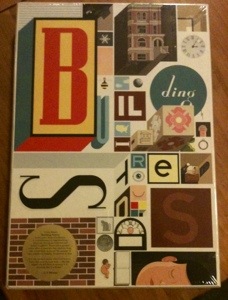
Thrilled today to get Building Stories, Chris Ware’s latest.
Thrilled here is no hyperbole—I can’t remember being so excited to open a book in quite some time.
But Building Stories isn’t really a book.
First, it comes in this big box—like a board game.
Here:
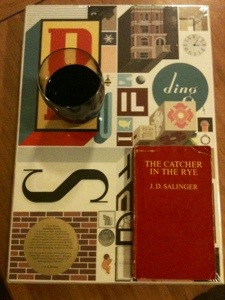
I show it set against The Catcher in the Rye in mass market paperback and a glass of red.
(The Catcher in the Rye + glass of red is the international standard for items used to show relative dimensions of size).
(Also, don’t worry about the wine ring—still shrinkwrapped at this point).
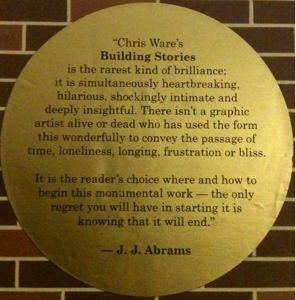
And on that shrinkwrap blazons a blurb by some guy named J.J. Abrams:
A description of the formal elements of Building Stories from the back of the box:
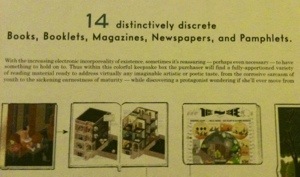
I open the box:
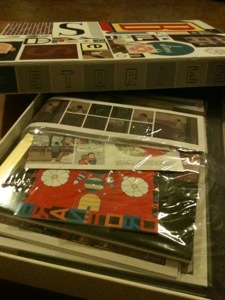
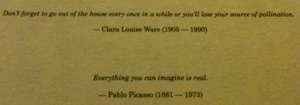
From the inside of the top of the box:
Not sure if that second quote shows here, but:
Pablo Picasso suggests that, Everything you can imagine is real.
The package:
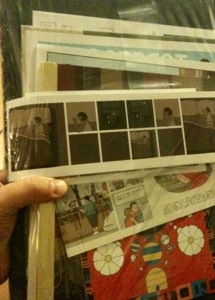
Strips and papers and books.
Shots as I go through it:
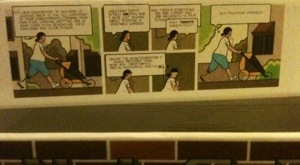
Stack: The shorter/smaller stuff is on top—a suggestion to read it first? / Probably not.
Probably more a packing issue.
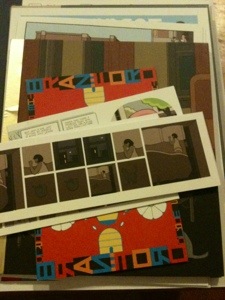
I remember a professor in grad school musing about where a book begins.
The title page?
The cover?
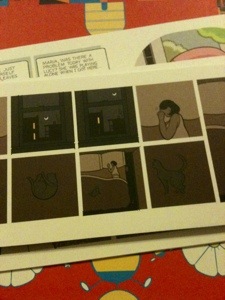
How and where does a book begin?
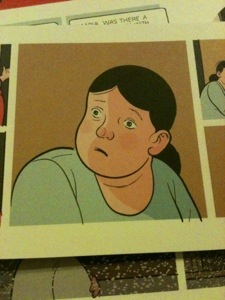
Chris Ware’s Building Stories: a kind of Möbius strip,
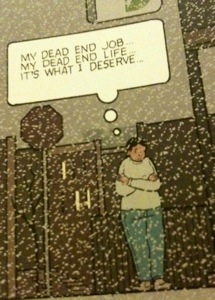
crammed with ideas,
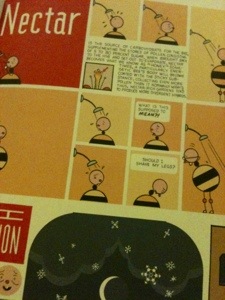
illustrations,
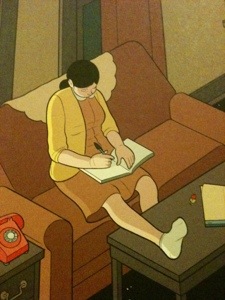
writing,
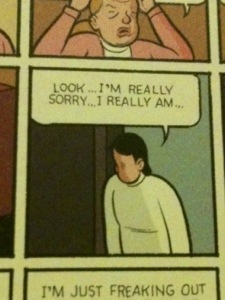
stories . . .
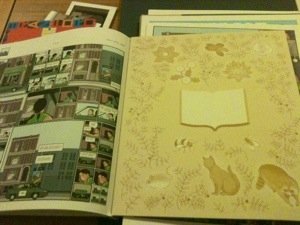
Little golden book
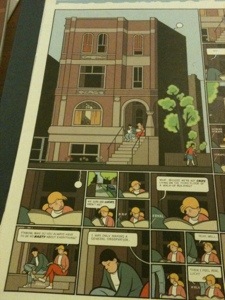
. . . and broadside.

. . . so many faces . . .
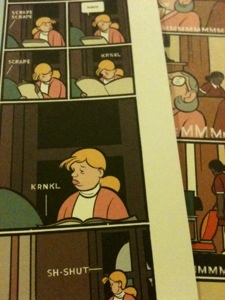
. . . layers . . .

. . . and layers . . .
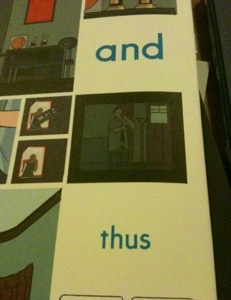
Ware’s transitions:
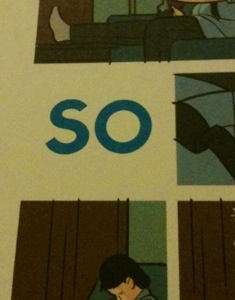
(They always remind me of David Foster Wallace, who I know Ware read).
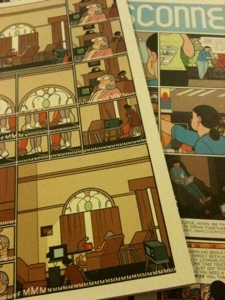
And thus so well . . .
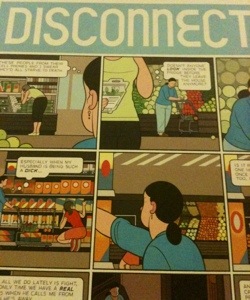
Disconnect?
Boom!
I should’ve busted out the wine glass or the Salinger here to show the scale of this marvelous painting, better than anything I’ve seen in contemporary art in ages. It tells all the story. (Wait, you (maybe) say, have you actually read the story yet?)
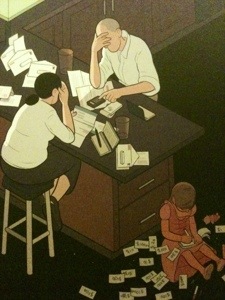
No.
But who hasn’t felt:

And
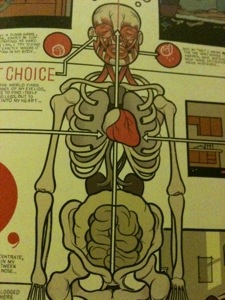
Thus
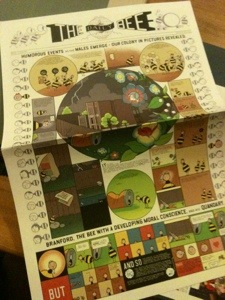
So

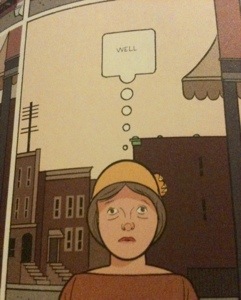
Well . . .

[Insert ideas about malleability of form, sequence, narrative, idea—riff on discursive-novel-as-future-novel, etc.]
End riff/now look, read, absorb.
 Biblioklept