Five ideas from Nathaniel Hawthorne’s Note-Books

Some man of powerful character to command a person, morally subjected to him, to perform some act. The commanding person suddenly to die; and, for all the rest of his life, the subjected one continues to perform that act.

“Solomon dies during the building of the temple, but his body remains leaning on a staff, and overlooking the workmen, as if it were alive.”

A tri-weekly paper, to be called the Tertian Ague.

Subject for a picture,–Satan’s reappearance in Pandemonium, shining out from a mist with “shape star-bright.”

Five points of Theology,–Five Points at New York.

From Passages from the American Note-Books. Stray notes of 1842.

Nathaniel Hawthorne’s journal entry for September 26th, 1841

Brook Farm, September 26th.–A walk this morning along the Needham road. A clear, breezy morning, after nearly a week of cloudy and showery weather. The grass is much more fresh and vivid than it was last month, and trees still retain much of their verdure, though here and there is a shrub or a bough arrayed in scarlet and gold. Along the road, in the midst of a beaten track, I saw mushrooms or toad-stools which had sprung up probably during the night.

The houses in this vicinity are, many of them, quite antique, with long, sloping roofs, commencing at a few feet from the ground, and ending in a lofty peak. Some of them have huge old elms overshadowing the yard. One may see the family sleigh near the door, it having stood there all through the summer sunshine, and perhaps with weeds sprouting through the crevices of its bottom, the growth of the months since snow departed. Old barns, patched and supportedby timbers leaning against the sides, and stained with the excrement of past ages.

In the forenoon I walked along the edge of the meadow towards Cow Island. Large trees, almost a wood, principally of pine with the green pasture-glades intermixed, and cattle feeding. They cease grazing when an intruder appears, and look at him with long and wary observation, then bend their heads to the pasture again. Where the firm ground of the pasture ceases, the meadow begins,–loose, spongy, yielding to the tread, sometimes permitting the foot to sink into black mud, or perhaps over ankles in water. Cattle-paths, somewhat firmer than the general surface, traverse the dense shrubbery which has overgrown the meadow. This shrubbery consists of small birch, elders, maples, and other trees, with here and there white-pines of larger growth. The whole is tangled and wild and thick-set, so that it is necessary to part the nestling stems and branches, and go crashing through. There are creeping plants of various sorts which clamber up the trees; and some of them have changed color in the slight frosts which already have befallen these low grounds, so that one sees a spiral wreath of scarlet leaves twining up to the top of a green tree, intermingling its bright hues with their verdure, as if all were of one piece. Sometimes, instead of scarlet, the spiral wreath is of a golden yellow.

Within the verge of the meadow, mostly near the firm shore of pasture ground, I found several grapevines, hung with an abundance of large purple grapes. The vines had caught hold of maples and alders, and climbed to the summit, curling round about and interwreathing their twisted folds in so intimate amanner that it was not easy to tell the parasite from the supporting tree or shrub. Sometimes the same vine had enveloped several shrubs, and caused a strange, tangled confusion, converting all these poor plants to the purpose of its own support, and hindering their growing to their own benefit and convenience. The broad vine-leaves, some of them yellow or yellowish-tinged, were seen apparently growing on the same stems with the silver-mapled leaves, and those of the other shrubs, thus married against their will by the conjugal twine; and the purple clusters of grapes hung down from above and in the midst, so that one might “gather grapes,” if not “of thorns,” yet of as alien bushes.

One vine had ascended almost to the tip of a large white-pine, spreading its leaves and hanging its purple clusters among all its boughs,–still climbing and clambering, as if it would not be content till it had crowned the very summit with a wreath of its own foliage and bunches of grapes. I mounted high into the tree, and ate the fruit there, while the vine wreathed still higher into the depths above my head. The grapes were sour, being not yet fully ripe. Some of them, however, were sweet and pleasant.

Nathaniel Hawthorne’s journal entry for September 26th, 1841. From Passages from the American Note-Books.

Nathaniel Hawthorne’s journal entry of September 18th, 1842

September 18th.–How the summer-time flits away, even while it seems to be loitering onward, arm in arm with autumn! Of late I have walked but little over the hills and through the woods, my leisure being chiefly occupied with my boat, which I have now learned to manage with tolerable skill. Yesterday afternoon I made a voyage alone up the North Branch of Concord River. There was a strong west-wind blowing dead against me, which, together with the current, increased by the height of the water, made the first part of the passage pretty toilsome. The black river was all dimpled over with little eddies and whirlpools; and the breeze, moreover, caused the billows to beat against the bow of the boat, with a sound like the flapping of a bird’s wing. The water-weeds,where they were discernible through the tawny water, were straight outstretched by the force of the current, looking as if they were forced to hold on to their roots with all their might. If for a moment I desisted from paddling, the head of the boat was swept round by the combined might of wind and tide. However, I toiled onward stoutly, and, entering the North Branch, soon found myself floating quietly along a tranquil stream, sheltered from the breeze by the woods and a lofty hill. The current, likewise, lingered along so gently that it was merely a pleasure to propel the boat against it. I never could have conceived that there was so beautiful a river-scene in Concord as this of the North Branch. The stream flows through the midmost privacy and deepest heart of a wood, which, as if but half satisfied with its presence, calm, gentle, and unobtrusive as it is, seems to crowd upon it, and barely to allow it passage; for the trees are rooted on the very verge of the water, and dip their pendent branches into it. On one side there is a high bank, forming the side of a hill, the Indian name of which I have forgotten, though Mr. Thoreau told it to me; and here, in some instances, the trees stand leaning over the river, stretching out their arms as if about to plunge in headlong. On the other side, the bank is almost on a level with the water; and there the quiet congregation of trees stood with feet in the flood, and fringed with foliage down to its very surface. Vines here and there twine themselves about bushes or aspens or alder-trees, and hang their clusters (though scanty and infrequent this season) so that I can reach them from my boat. I scarcely remember a scene of more complete and lovely seclusion than the passage of the river through this wood. Even an Indian canoe, in oldentimes, could not have floated onward in deeper solitude than my boat. I have never elsewhere had such an opportunity to observe how much more beautiful reflection is than what we call reality. The sky, and the clustering foliage on either hand, and the effect of sunlight as it found its way through the shade, giving lightsome hues in contrast with the quiet depth of the prevailing tints,–all these seemed unsurpassably beautiful when beheld in upper air. But on gazing downward, there they were, the same even to the minutest particular, yet arrayed in ideal beauty, which satisfied the spirit incomparably more than the actual scene. I am half convinced that the reflection is indeed the reality, the real thing which Nature imperfectly images to our grosser sense. At any rate, the disembodied shadow is nearest to the soul.

There were many tokens of autumn in this beautiful picture. Two or three of the trees were actually dressed in their coats of many colors,–the real scarlet and gold which they wear before they put on mourning. These stood on low, marshy spots, where a frost has probably touched them already. Others were of a light, fresh green, resembling the hues of spring, though this, likewise, is a token of decay. The great mass of the foliage, however, appears unchanged; but ever and anon down came a yellow leaf, half flitting upon the air, half falling through it, and finally settling upon the water. A multitude of these were floating here and there along the river, many of them curling upward, so as to form little boats, fit for fairies to voyage in. They looked strangely pretty, with yet a melancholy prettiness, as they floated along. The general aspect of the river, however, differed but little from that of summer,–at least the differencedefies expression. It is more in the character of the rich yellow sunlight than in aught else. The water of the stream has now a thrill of autumnal coolness; yet whenever a broad gleam fell across it, through an interstice of the foliage, multitudes of insects were darting to and fro upon its surface. The sunshine, thus falling across the dark river, has a most beautiful effect. It burnishes it, as it were, and yet leaves it as dark as ever.

On my return, I suffered the boat to float almost of its own will down the stream, and caught fish enough for this morning’s breakfast. But, partly from a qualm of conscience, I finally put them all into the water again, and saw them swim away as if nothing had happened.
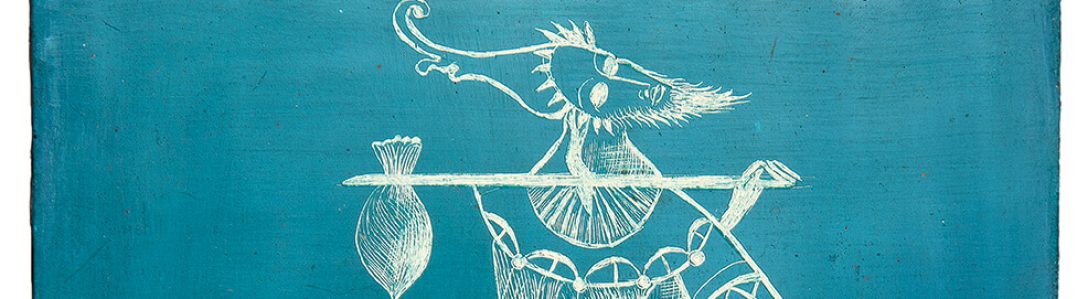
Nathaniel Hawthorne’s journal entry of September 18th, 1842

Nathaniel Hawthorne’s journal entry for September 5th, 1838

September 5th.–I took a walk of three miles from the village, which brought me into Vermont. The line runs athwart a bridge,–a rude bridge, which crosses a mountain stream. The stream runs deep at the bottom of a gorge, plashing downward, with rapids and pools, and bestrewn with large rocks, deep and shady, not to be reached by the sun except in its meridian, as well on account of the depth of the gorgeas of the arch of wilderness trees above it. There was a stumpy clearing beyond the bridge, where some men were building a house. I went to them, and inquired if I were in Massachusetts or Vermont, and asked for some water. Whereupon they showed great hospitality, and the master-workman went to the spring, and brought delicious water in a tin basin, and produced another jug containing “new rum, and very good; and rum does nobody any harm if they make a good use of it,” quoth he. I invited them to call on me at the hotel, if they should come to the village within two or three days. Then I took my way back through the forest, for this is a by-road, and is, much of its course, a sequestrated and wild one, with an unseen torrent roaring at an unseen depth, along the roadside.

My walk forth had been an almost continued ascent, and, returning, I had an excellent view of Graylock and the adjacent mountains, at such a distance that they were all brought into one group, and comprehended at one view, as belonging to the same company,–all mighty, with a mightier chief. As I drew nearer home, they separated, and the unity of effect was lost. The more distant then disappeared behind the nearer ones, and finally Graylock itself was lost behind the hill which immediately shuts in the village. There was a warm, autumnal haze, which, I think, seemed to throw the mountains farther off, and both to enlarge and soften them.

To imagine the gorges and deep hollows in among the group of mountains,–their huge shoulders and protrusions.

“They were just beginning to pitch over the mountains, as I came along,”–stage-driver’s expression about the caravan.

A fantastic figure of a village coxcomb, striding through the bar-room, and standing with folded arms to survey the caravan men. There is much exaggeration and rattle-brain about this fellow.

A mad girl leaped from the top of a tremendous precipice in Pownall, hundreds of feet high, if the tale be true, and, being buoyed up by her clothes, came safely to the bottom.

Inquiries about the coming of the caravan, and whether the elephant had got to town, and reports that he had.

A smart, plump, crimson-faced gentleman, with a travelling-portmanteau of peculiar neatness and convenience. He criticises the road over the mountain, having come in the Greenfleld stage; perhaps an engineer.

Bears still inhabit Saddleback and the neighboring mountains and forests. Six were taken in Pownall last year, and two hundred foxes. Sometimes they appear on the hills, in close proximity to this village.

Nathaniel Hawthorne’s journal entry of September 5th, 1838.

Nathaniel Hawthorne’s journal entry for September 1st, 1838

September 1st.–Last evening, during a walk, Graylock and the whole of Saddleback were at first imbued with a mild, half-sunshiny tinge, then grew almost black,–a huge, dark mass lying on the back of the earth and encumbering it. Stretching up from behind the black mountain, over a third or more of the sky, there was a heavy, sombre blue heap or ledge of clouds, looking almost as solid as rocks. The volumes of which it was composed were perceptible by translucent lines and fissures; but the mass, as a whole, seemed as solid, bulky, and ponderous in the cloud-world as the mountain was on earth. The mountain and cloud together had an indescribably stern and majestic aspect. Beneath this heavy cloud, there was a fleet or flock of light, vapory mists, flitting in middle air; and these were tinted, from the vanished sun, with the most gorgeous and living purple that can be conceived,–a fringe upon the stern blue. In the opposite quarter of the heavens, a rose-light was reflected, whence I know not, which colored the clouds around the moon, then well above the horizon, so that the nearly round and silver moon appeared strangely among roseate clouds,–sometimes half obscured by them.

A man with a smart horse, upon which the landlord makes laudatory remarks. He replies that he has “a better at home.” Dressed in a brown, bright-buttoned coat, smartly cut. He immediately becomes familiar, and begins to talk of the license law, and other similar topics, making himself at home, as one who, being much of his time upon the road, finds himself at ease at any tavern. He inquired after a stage agent, named Brigham, who formerly resided here, but nowhas gone to the West. He himself was probably a horse-jockey.

An old lady, stopping here over the Sabbath, waiting for to-morrow’s stage for Greenfield, having been deceived by the idea that she could proceed on her journey without delay. Quiet, making herself comfortable, taken into the society of the women of the house.

Nathaniel Hawthorne’s journal entry for September 1st, 1838. From Passages from the American Note-Books.

Note on pigs (From Nathaniel Hawthorne’s August 31, 1838 journal entry)

Screenshot 2015-08-31 at 3

The ocean is to lose its saltness (Nathaniel Hawthorne’s journal entry for August 7, 1851)

Screenshot 2015-08-04 at 10

Sunday, 19 July, slept, awoke, slept, awoke, miserable life (Kafka)

Sunday, 19 July, slept, awoke, slept, awoke, miserable life. When I think about it, I must say that my education has done me great harm in some respects. I was not, as a matter of fact, educated in any out-of-the-way place, in a ruin, say, in the mountains – something against which in fact I could not have brought myself to say a word of reproach. In spite of the risk of all my former teachers not understanding this, I should prefer most of all to have been such a little dweller in the ruins, burnt by the sun which would have shone for me there on the tepid ivy between the remains on every side; even though I might have been weak at first under the pressure of my good qualities, which would have grown tall in me with the might of weeds.

From Franz Kafka’s July 19th, 1920 diary entry. From The Diaries of Franz Kafka. Translated from the German by Joseph Kresh.

Nathaniel Hawthorne’s journal entry, July 13th, 1838

July 13th.–A show of wax-figures, consisting almost wholly of murderers and their victims,–Gibbs and Hansley, the pirates, and the Dutch girl whom Gibbs murdered. Gibbs and Hansley were admirably done, as natural as life; and many people who had known Gibbs would not, according to the showman, be convinced that this wax-figure was not his skin stuffed. The two pirates were represented with halters round their necks, just ready to be turned off; and the sheriff stood behind them, with his watch, waiting for the moment. The clothes, halter, and Gibbs’s hair were authentic. E. K. Avery and Cornell,–the former a figure in black, leaning on the back of a chair, in the attitude of a clergyman about to pray; an ugly devil, said to be a good likeness. Ellen Jewett and R. P. Robinson, she dressed richly, in extreme fashion, and very pretty; he awkward and stiff, it being difficult to stuff a figure to look like a gentleman. The showman seemed very proud of Ellen Jewett, and spoke of her somewhat as if this wax-figure were a real creation. Strong and Mrs. Whipple, who together murdered the husband of the latter. Lastly the Siamese twins. The showman is careful to call his exhibition the “Statuary.” He walks to and fro before the figures, talking of the history of the persons, the moral lessons to be drawn therefrom, and especially of the excellence of the wax-work. He has for sale printed histories of the personages. He is a friendly, easy-mannered sort of a half-genteel character, whose talk has been moulded by the persons who most frequent such a show; an air of superiority of information, a moral instructor, with a great deal of real knowledge of the world. He invites his departing guests to call again and bring their friends, desiring to know whether they are pleased; telling that he had a thousand people on the 4th of July, and that they were all perfectly satisfied. He talks with the female visitors, remarking on Ellen Jewett’s person and dress to them, he having “spared no expense in dressing her; and all the ladies say that a dress never set better, and he thinks he never knew a handsomer female.” He goes to and fro, snuffing the candles, and now and then holding one to the face of a favorite figure. Ever and anon, hearing steps upon the staircase, he goes to admit a new visitor. The visitors,–a half-bumpkin, half country-squire-like man, who has something of a knowing air, and yet looks and listens with a good deal of simplicity and faith, smiling between whiles; a mechanic of the town; several decent-looking girls and women, who eye Ellen herself with more interest than the other figures,–women having much curiosity about such ladies; a gentlemanly sort of person, who looks somewhat ashamed of himself for being there, and glances at me knowingly, as if to intimate that he was conscious of being out of place; a boy or two, and myself, who examine wax faces and faces of flesh with equal interest. A political or other satire might be made by describing a show of wax-figures of the prominent public men; and by the remarks of the showman and the spectators, their characters and public standing might be expressed. And the incident of Judge Tyler as related by E—- might be introduced.

A series of strange, mysterious, dreadful events to occur, wholly destructive of a person’s happiness. He to impute them to various persons and causes, but ultimately finds that he is himself the sole agent. Moral, that our welfare depends on ourselves.

The strange incident in the court of Charles IX. of France: he and five other maskers being attired in coats of linen covered with pitch and bestuck with flax to represent hairy savages. They entered the hall dancing, the five being fastened together, and the king in front. By accident the five were set on fire with a torch. Two were burned to death on the spot, two afterwards died; one fled to the buttery, and jumped into a vessel of water. It might be represented as the fate of a squad of dissolute men.

A perception, for a moment, of one’s eventual and moral self, as if it were another person,–the observant faculty being separated, and looking intently at the qualities of the character. There is a surprise when this happens,–this getting out of one’s self,–and then the observer sees how queer a fellow he is.

From Nathaniel Hawthorne’s American Note-Books.

If it is not known how and when a man dies, it makes a ghost of him for many years thereafter (Nathaniel Hawthorne)

June 30th.–If it is not known how and when a man dies, it makes a ghost of him for many years thereafter, perhaps for centuries. King Arthur is an example; also the Emperor Frederick, and other famous men, who were thought to be alive ages after their disappearance. So with private individuals. I had an uncle John, who went a voyage to sea about the beginning of the War of 1812, and has never returned to this hour. But as long as his mother lived, as many as twenty years, she never gave up the hope of his return, and was constantly hearing stories of persons whose description answered to his. Some people actually affirmed that they had seen him in various parts of the world. Thus, so far as her belief was concerned, he still walked the earth. And even to this day I never see his name, which is no very uncommon one, without thinking that this may be the lost uncle.

Thus, too, the French Dauphin still exists, or a kind of ghost of him; the three Tells, too, in the cavern of Uri.

—Nathaniel Hawthorne’s journal entry of June 30th, 1854; collected in Passages from the English Note-Books.

On further inquiry, the snake is described as plaided with brown and black (Hawthorne’s diary, June 9, 1853)

June 9th.–Cleaning the attic to-day, here at the Wayside, the woman found an immense snake, flat and outrageously fierce, thrusting out its tongue. Ellen, the cook, killed it. She called it an adder, but it appears to have been a striped snake. It seems a fiend, haunting the house. On further inquiry, the snake is described as plaided with brown and black.

From Nathaniel Hawthorne’s American Note-Books.

Nathaniel Hawthorne’s journal entry, June 6th, 1844

Concord, June 6th.–. . . Mr. F—- arrived yesterday, and appeared to be in most excellent health, and as happy as the sunshine. About the first thing he did was to wash the dishes; and he is really indefatigable in the kitchen, so that I am quite a gentleman of leisure. Previous to his arrival, I had kindled no fire for four entire days, and had lived all that time on the corned beef, except one day, when Ellery and I went down the river on a fishing excursion. Yesterday, we boiled some lamb, which we shall have cold for dinner to-day. This morning, Mr. F—- fried a sumptuous dish of eels for breakfast. Mrs. P. —- continues to be the instrument of Providence, and yesterday sent us a very nice plum-pudding.

I have told Mr. F—- that I shall be engaged in the forenoons, and he is to manage his own occupations and amusements during that time, . . .

Leo, I regret to say, has fallen under suspicion of a very great crime,–nothing less than murder,–a fowl crime it may well be called, for it is the slaughter of one of Mr. Hayward’s hens. He has been seen to chase the hens, several times, and the other day one of them was found dead. Possibly he may be innocent, and, as there is nothing but circumstantial evidence, it must be left with his own conscience.

Meantime, Mr. Hayward, or somebody else, seems to have given him such a whipping that he is absolutely stiff, and walks about like a rheumatic old gentleman. I am afraid, too, that he is an incorrigible thief. Ellery says he has seen him coming up the avenue with a calf’s whole head in his mouth. How he came by it is best known to Leo himself. If he were a dog of fair character, it would be no more than charity to conclude that he had either bought it, or had it given to him; but with the other charges against him, it inclines me to great distrust of his moral principles. Be that as it may, he managed his stock of provisions very thriftily, burying it in the earth, and eating a portion of it whenever he felt an appetite. If he insists upon living by highway robbery, it would be well to make him share his booty with us. . . .

From Nathaniel Hawthorne’s American Note-Books.

The face of nature can never look more beautiful than now (May 23, 1851 entry from Nathaniel Hawthorne’s Note-Books)

May 23d.–I think the face of nature can never look more beautiful than now, with this so fresh and youthful green,–the trees not being fully in leaf, yet enough so to give airy shade to the woods. The sunshine fills them with green light. Monument Mountain and its brethren are green, and the lightness of the tint takes away something from their massiveness and ponderosity, and they respond with livelier effect to the shine and shade of the sky. Each tree now within sight stands out in its own individuality of hue. This is a very windy day, and the light shifts with magical alternation. In a walk to the lake just now with the children, we found abundance of flowers,–wild geranium, violets of all families, red columbines, and many others known and unknown, besides innumerable blossoms of the wild strawberry, which has been in bloom for the past fortnight. The Houstonias seem quite to overspread some pastures, when viewed from a distance. Not merely the flowers, but the various shrubs which one sees,–seated, for instance, on the decayed trunk of a tree,–are well worth looking at, such a variety and such enjoyment they have of their new growth. Amid these fresh creations, we see others that have already run their course, and have done with warmth and sunshine,–the hoary periwigs, I mean, of dandelions gone to seed.

From Nathaniel Hawthorne’s American Note-Books.

May 11, 1838 entry from Nathaniel Hawthorne’s Note-Books

May 11, 1838.–At Boston last week. Items:–A young man, with a small mustache, dyed brown, reddish from its original light color. He walks with an affected gait, his arms crooked outwards, treading much on his toes. His conversation is about the theatre, where he has a season ticket,–about an amateur who lately appeared there, and about actresses, with other theatrical scandal.–In the smoking-room, two checker and backgammon boards; the landlord a great player, seemingly a stupid man, but with considerable shrewdness and knowledge of the world.– F—-, the comedian, a stout, heavy-looking Englishman, of grave deportment, with no signs of wit or humor, yet aiming at both in conversation, in order to support his character. Very steady and regular in his life, and parsimonious in his disposition,–worth $50,000, made by his profession.–A clergyman, elderly, with a white neck-cloth, very unbecoming, an unworldly manner, unacquaintance with the customs of the house, and learning them in a childlike way. A ruffle to his shirt, crimped.–A gentleman, young, handsome, and sea-flushed, belonging to Oswego, New York, but just arrived in port from the Mediterranean: he inquires of me about the troubles in Canada, which were first beginning to make a noise when he left the country,–whether they are all over. I tell him all is finished, except the hanging of the prisoners. Then we talk over the matter, and I tell him the fates of the principal men,–some banished to New South Wales, one hanged, others in prison, others, conspicuous at first, now almost forgotten.–Apartments of private families in the hotel,–what sort of domesticity there may be in them; eating in public, with no board of their own. The gas that lights the rest of the house lights them also, in the chandelier from the ceiling.–A shabby-looking man, quiet, with spectacles, at first wearing an old, coarse brown frock, then appearing in a suit of elderly black, saying nothing unless spoken to, but talking intelligently when addressed. He is an editor, and I suppose printer, of a country paper. Among the guests, he holds intercourse with gentlemen of much more respectable appearance than himself, from the same part of the country.–Bill of fare; wines printed on the back, but nobody calls for a bottle. Chairs turned down for expected guests. Three-pronged steel forks. Cold supper from nine to eleven P.M. Great, round, mahogany table, in the sitting-room, covered with papers. In the morning, before and soon after breakfast, gentlemen reading the morning papers, while others wait for their chance, or try to pick out something from the papers of yesterday or longer ago. In the forenoon, the Southern papers are brought in, and thrown damp and folded on the table. The eagerness with which those who happen to be in the room start up and make prize of them. Play-bills, printed on yellow paper, laid upon the table. Towards evening comes the “Transcript.”

From Nathaniel Hawthorne’s American Note-Books.

Cupid, caresses, fire and death (Three notes from Nathaniel Hawthorne’s Note-Books)

Caresses, expressions of one sort or another, are necessary to the life of the affections, as leaves are to the life of a tree. If they are wholly restrained, love will die at the roots.

Cupid in these latter times has probably laid aside his bow and arrows, and uses fire-arms,–a pistol,–perhaps a revolver.

I burned great heaps of old letters, and other papers, a little while ago, preparatory to going to England. Among them were hundreds of letters. The world has no more such, and now they are all dust and ashes. What a trustful guardian of secret matters is fire! What should we do without fire and death?

From Nathaniel Hawthorne’s American Note-Books.


Always eat grapes downwards (Samuel Butler)

Always eat grapes downwards—that is, always eat the best grape first; in this way there will be none better left on the bunch, and each grape will seem good down to the last.  If you eat the other way, you will not have a good grape in the lot.  Besides, you will be tempting Providence to kill you before you come to the best.  This is why autumn seems better than spring: in the autumn we are eating our days downwards, in the spring each day still seems “Very bad.”  People should live on this principle more than they do, but they do live on it a good deal; from the age of, say, fifty we eat our days downwards.

In New Zealand for a long time I had to do the washing-up after each meal.  I used to do the knives first, for it might please God to take me before I came to the forks, and then what a sell it would have been to have done the forks rather than the knives!

From Samuel Butler’s Note-Books

Even more beautiful emotions (Kafka’s diary entry, 27 March 1912)

27. March. Monday, on the street. The boy who with several others, threw a large ball at a servant girl walking defencelessly in front of them; just as the ball was flying at the girls’ behind I grabbed him by the throat, choked him in a fury, thrust him aside, and swore. Then walked on and didn’t even look at the girl. One quite forgets one’s earthly existence because one is so entirely full of fury is permitted to believe that, given the opportunity, one would in the same way fill oneself with even more beautiful emotions.

Franz Kafka’s diary entry, 27 March 1912. Translation by Joseph Kresh.
