Happy Bissextile Day

From the OED:

“bissextile, a. and n.

Containing the bissextus or extra day which the Julian calendar inserts in leap-year. bissextile day (= L. bissextus dies; see above).

[1398 The yere Bisextilis: see prec..] 1594 BLUNDEVIL Exerc. III. I. xli. (ed. 7) 355 The Bissextile or leape yeere, containing 366 daies. 1696 WHISTON Th. Earth II. (1722) 158 The Julian Calendar..intercalates the Bissextile Day immediately after the Terminalia. 1768 BLACKSTONE Comm. II. 140 In bissextile or leap-years. 1854 TOMLINSON Arago’s Astron. 189 Thus 1600 was bissextile, 1700 and 1800 were not so.

B. n. Leap-year.

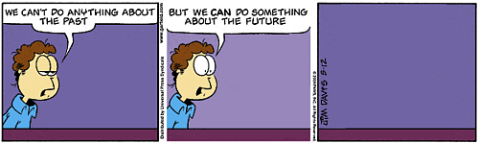
1581 LAMBARDE Eiren. IV. v. (1588) 491 The Bissextile (or Leepe yeere) which hapneth once in every foure yeeres. 1601 HOLLAND Pliny I. 586. 1834 M. SOMERVILLE Connex. Pys. Sc. xii. 95 If in addition to this, a bissextile be suppressed every 4000 years, the length of the year will be nearly equal to that given by observation.”I want to give a special shout-out to all of those who count leap day as their birthday, including contemporary music recording artist and performer, Ja Rule, who turns 8 today. Also, Nicky Longlunch sent me this cool link that I thought I’d share. Garfield Minus Garfield is a hilarious tumblog that, as the name suggests, removes Garfield from his own strip to reveal the “empty desperation of modern life.” Observe–

garf.gif
Speaking of doing something about the future, I suggest that we all vote for Ralph Nader this year. Now, please all go nuts at me, tell me I’m wrong, blame me for everything Bush has done (yes, I voted for Nader–in Florida–in 2000). But, before all of that, one last Leap Day sentiment from Diamond Dave:

Open to All: Monumentalizing Cultural Spaces

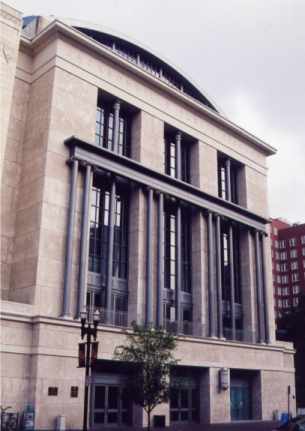
Witold Rybczynski’s “Borrowed Time,” an interesting photo-essay published at Slate today, considers the architecture, purpose, and meaning of libraries in the “”digital world” of Google, Wikipedia, and Kindle.” Rybczynski’s essay is typical Slate writing–it picks at its topic a little bit, rifles through a few examples, and ends with an empty platitude.

The article cites Jacksonville’s own new downtown branch among several examples of a new direction in library building, arguing that the “library building boom of the last two decades is closely tied to efforts to rejuvenate downtowns. Cities can’t re-create the department stores, movie palaces, and manufacturing lofts that once made downtowns the vital centers of American metropolitan life, so they build convention centers, ballparks, museums, and concert halls instead.” Rybczynski concedes that “Retro ballparks have enjoyed success with the public,” but insists that the days of “library-as-monument” are over. Instead, he sees the library of the future as more of a social meeting place, a community center with internet access, coffee shops, and magazines–with less and less room for books.

publiclibrary.jpg
Jacksonville’s new Main Library (Downtown)

Although the trend that Rybczynski points out does evince a change in both the architecture and organization of the library–a trend that does reflect (relatively) recent changes in technology–I just don’t see the library losing its monumental status. Rather, I think that 21st-century notions, concepts, and constructions of what exactly a society should monumentalize, and how that culture should monumentalize whatever it decides it should monumentalize (whether it’s a sports arena, a church, a library, or a shopping mall) are changing. The purpose of a library–extending all the way back to the Library at Alexandria–is akin to (and yet, of course, different from) the purposes of churches and art and science museums: libraries serve as a nexus of a culture’s collected knowledge, and as a point of access to that knowledge. This is why the concept of a public library is extremely important, indeed vital, to a free and democratic society. Just because greater access to technology holds the possibility of displacing books does not mean that books will disappear forever and that museums will have to suddenly become glorified Starbucks. Change is normal, and a library that fails to reflect the zeitgeist of its age would cease to become a library (it would be a history museum). And yet the core mission of public libraries will (and should) remain as long as people endeavor to enter the epochs-old conversation that is human culture.

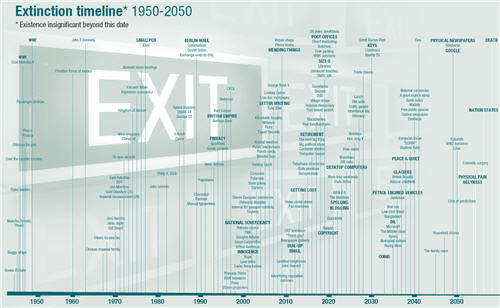
extinction_timeline.jpg

Improbably, Rybczynski cites the “Extinction Timeline” created last year by What’s Next and Future Exploration Network as evidence that the library will certainly disappear (in 2019). While this type of thinking is fun–and I certainly get a kick out of the “Extinction Timeline”–it belongs to the realm of science fiction, not cultural criticism. Although much of what the Extinction Timeline predicts will almost certainly come about (how much longer can printed telephone directories last?) I suspect that more than half of it is tongue-in-cheek. Will “Childhood” really disappear in 2030? Will “Sit down breakfasts” become insignificant? Can “Natural Childbirth” really go away by 2038? If these guys are serious, this is teleological thinking at its worst. But perhaps I’m ludicrously old fashioned. After all, I still think that “Mending Things” (“Existence insignificant” as of 2009) is both important and worthwhile, and, in a more abstract sense, both healthy and good for people. And I’ll be mending things in 2009.

If our libraries need to be mended, or amended, rather, let’s change them in ways that suitably monumentalize and grant access to our culture. I think that the Jacksonville library alluded to in Rybczynski’s article monumentalizes the best aspects of human culture and technology, and is more than just, as Rybczynski suggests, an “urban hangout” or mere “arbiter of information.” And even if, like the Seattle Public Library, the Jacksonville Public Library is full of “street people” (Rybczynski’s contemptuous term), significantly, it is, as its stairwell mural proudly declares, “OPEN TO ALL”–a monument to democratic and egalitarian access to information.

c-documentsandsettings-cat-desktop-12707-pict0043-1.jpg

Azar Nafisi to Speak at UNF

nafisi-cropjpg.jpg

Readers in Northeast Florida may be interested in catching Azar Nafisi speak at the University Center of the University of North Florida at 7:30PM on Monday, March 3rd. Nafisi’s bestselling memoir Reading Lolita in Tehran recounts the Western literature course that Nafisi taught in secret to a small group of Iranian women in her house in the late 90s, and engages the events of the Islamic Revolution, the Iran-Iraq war, and the conservative cultural revolution that led to the necessity of keeping such a course on the down-low. My wife didn’t finish the book; I didn’t start it. My wife said it was good though; she told me she can’t remember why she quit reading it. How’s that for a book review? (I highly recommend Hamid Dabashi’s highly-critical and thoroughly engrossing critique of the book, “Native informers and the making of the American empire,” in which he refers to Reading Lolita in Tehran as “the locus classicus of the ideological foregrounding of the US imperial domination at home and abroad” — read the whole essay here.)

lolita.jpg

Nafisi’s lecture, “The Republic of the Imagination,” is part of UNF’s ongoing “Distinguished Voices” series (great name, by the way, guys. Lot of thought and creativity put into that one). The next speaker in the series is pretty-boy news analyst and frequent Daily Show guest Fareed Zakaria. Get free tickets for any of the lectures in the series here.

Profanity/Hogs Mating

mating-pigs-thumb2869398.jpg

I work as a teacher for Duval County Public Schools. Last week, a 15 page document titled “Alphabetical Listing of Multimedia Material Reevaluated in Duval County” was dropped off in my mailbox; I’m not sure exactly why. The document lists well over 250 books, magazines, videos, and albums that were “reevaluated” due to complaints. Some of these books are frequent guests on the censorship block (The Adventures of Huckleberry Finn, “Racial,” Catcher in the Rye, “Offensive Language,” Are You There God? It’s Me, Margeret, “Religious, Sex, Introduction to Pornography,” As I Lay Dying “Profanity/Racial Slur”) and some are destined to be under scrutiny for a long time (Harry Potter, entire series, “Witchcraft, Occult, Spellcasting”). As you might expect, the dominant complaints revolve around profanity, sex, and a general sense that the book doesn’t fit in to the complainant’s worldview. Here are a few favorites of mine:

Goosebumps Series, R.L Stine — “Scary” (Yes. Correct. They’re supposed to be scary, jackass).Guns, Germs, and Steel, Jared Diamond — “Bestiality/Darwinian evolution” (Natch–bestiality and Darwinian evolution go together like PB & J).

Halloween, Joyce K. Kessell — “Evil, Full of Lies” (Ach! Oh no! A fiction book that doesn’t tell the truth!)

The Butter Battle Book, Dr. Seuss — “Violence” (Admittedly, The Butter Battle Book was the peak of Seuss’s “Tarantino phase”)

Four Good Friends, Margaret Hillert — “Negative, Nonproducive tone” (What the fuck is a “Nonproducive tone”? What does that even mean?)

In the Night Kitchen, Maurice Sendak — “Nudity” (This charming kid’s book repeatedly lands on the Most Frequently Challenged Books List)

Learning to Swim, Ann Turner — “Erotic and Sexual Nature” (Erotic and sexual? Intriguing…)

A Light in the Attic, Shel Silverstein — “Illustrations” (Huh? “Illustrations”? Huh? This book is actually right by me, my childhood copy, proudly shelved on the mantle…let’s review these nefarious illustrations…let’s see, let’s see…An Icarian hippo, perhaps? An unscratchable itch?Rhino pen? Nah…Is it perhaps, the “Union for Children’s Rights” picture (pgs 140-141 in my 1981 Harper & Row edition)? Gotta be…unionized kids…scary!)

Kid in the Red Jacket, Barbara Park — “”Stupid” and “God”” (Again, I ask “Huh?”)

Little Red Riding Hood, Paul Galdone — “Violence/Wine” (Two of my favorite things!)

Marijuana, Martin Godfrey — “Drugs” (Really? Who knew Marijuana would contain “drugs”)

Matilda, Roald Dahl — “Vulgar, Unethical” (This is one of my favorite books. Attempting to suppress it and keep kids from reading it is both vulgar and unethical)

Our Country Spain, David Cumming — “Mediterranean Beach Picture” (Good lord no!)

The Picture of Dorian Gray, Oscar Wilde — “Morality” (What is the problematic “morality” of Dorian Gray? Or did the offended parent have a problem with Oscar’s proclivities for the lovely youths?)

Santa Claus Mystery, John Godman — “Conflict w/ Santa Myth” (I wish they’d be more specific–what’s the conflict? Is there a “set” Santa myth? What is it?)

Tar Baby, Toni Morrison — “Sex, Violence, Myth” (Myth? Really? Myth is offensive?)

The Visitors Who Came to Stay, A. McAffee and A. Browne — “Pictures” (Again, please, be specific when you want to ban a book. “Pictures” simply won’t cut it)

Where is Gah-Ning, Robert Munsch — “Blatant disregard for moral standard” (Okay, that’s a little more specific, I guess–but still asinine).

Which Witch, Eva Ibboston; The Witches, Roald Dahl; Witches, Witches, Witches, Helen Hoke; Witches, Rhoda Blumberg; The Witches of Worm, Z. Keatley Snyder; The Witch’s Handbook, Malcolm Bird — “Witchcraft, Occult” (Duh)

Worry Worts, Morris Gleitzman — “Sexual Context” (I wonder if this book is about STDs…)

A Day No Pigs Would Die, Robert Newton — “Profanity/Hogs Mating” (Sounds like a party to me!)

Steve Fossett Fan Fiction Contest

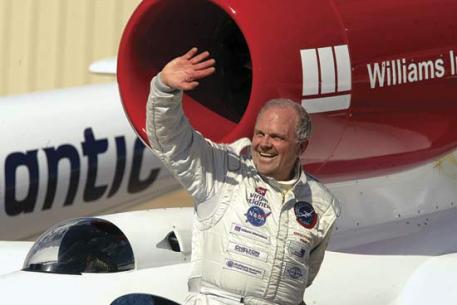
Last week, millionaire adventurer Steve Fossett was declared legally dead after having been missing since fall of last year when his single-engine plane disappeared in Nevada. Neither Fossett’s body or his plane were found, but nevertheless, on November 26, 2007 his wife petitioned to have him declared legally dead.

fossett.jpg

Fossett set 116 records over his lifetime, including feats in ballooning, aviation, and sailing that still stand. His career as an adventurer is so storied and fascinating that we at Biblioklept refuse to believe that Fossett died; in fact, we propose that he’s still alive, in the midst of some new adventure, perhaps of the time-traveling or extra-dimensional exploration variety, no doubt as secret as it is mind-shattering.

So–

What do you think? Take part in Biblioklept’s Steve Fossett Fan Fiction Contest. Where is Fossett now, and what marvelous adventuring is he up to? Entries should be mailed (no attachments, please!) to biblioklept.ed@gmail.com, or, alternately (preferably) posted in the comments section below. All entries will be considered the owned intellectual property of the original author. The contest is open until a year from today. The winner of the contest, chosen by the Biblioklept and His Esteemed Council, will receive their choice of a dirty postcard or a stolen book, chosen by the Biblioklept.

Essential Short Story Collections: Brief Interviews with Hideous Men

brief-interviews-wit_79fe25.jpg

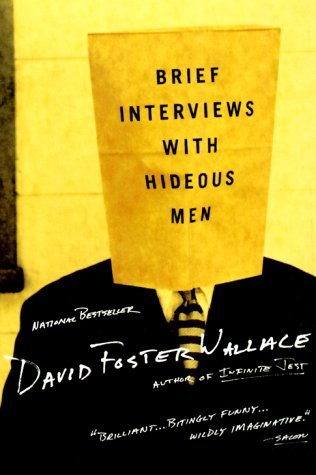
Properly describing David Foster Wallace’s Brief Interviews with Hideous Men involves using all of those words that I hate to see in any book review: “radiates,” “pathos,” “poignancy,” “gut-busting laughs,” “existential crises of identity in the post-modern world,” and so on. Now that I have them out of the way, let me tell you why you should read this book: it will make you laugh, it will make you cry. Out loud. After you read it, you will want to press it on other people, who will say, “Yeah, sure, okay”; only their eyes’ will be slightly-slanted, their mouths just a bit crooked, even their nose will appear askew at your demand. They will hurriedly change the subject–you’ve already foisted so many unwanted books on them, and who even has time to read now?–but you will persevere! “Here,” you’ll say, “Read “A Radically Condensed History of Postindustrial Life”–it’s only two paragraphs! You can read the whole thing in under a minute!”:

When they were introduced, he made a witticism, hoping to be liked. She laughed extremely hard, hoping to be liked. Then each drove home alone, staring straight ahead, with the very same twist to their faces.

The man who’d introduced them didn’t much like either of them, though he acted as if did, anxious as he was to preserve good relations at all times. One never knew, after all, now did one now did one now did one.

And, as they finish reading, you’ll beam at them and nod your head knowingly. They’ll look a little confused, perhaps bored. “It’s like an overture, see? It’s like, about loss, the inability to connect, the masks we wear to hide our hideousnessnesses.” Your victim will nod politely and begin to bring up an interesting thing he saw on the local news concerning pet ownership, but you’ll cut him off before he can get out of this. “Check out the “Brief Interviews with Hideous Men” sections that permeate the book–they’re like little vignettes, interviews where you only get the interviewee’s responses. They’re funny, shocking sad–they’re really good! Also, check out my favorites– “Adult World (I)” and “Adult World (II)”–these stories are about a wife who it turns out doesn’t really know her husband at all. Just read the beginning– ”

For the first three years, the young wife worried that their lovemaking together was somehow hard on his thingie. The rawness and tenderness and spanked pink of the head of his thingie. The slight wince when he’d enter her down there. The vague hot-penny taste of rawness when she took his thingie in her mouth–she seldom took him in her mouth, however; there was something about it that she felt he did not quite like.

“See?” you’ll demand uncaringly of your now-obviously exasperated detainee, “See? Sex! It’s got sex in it! Everyone loves to read about sex, especially weird awkward sex!” Your victim will now stand up, feigning the need to visit the restroom. But you won’t let him go that easily! “There’s another series of running vignettes that unify the book’s structure, making its sum more than just a collection of previously-published stories–check out a selection from one of the “Yet Another Example of the Porousness of Certain Borders” series”–

“Don’t love you no more.”

“Right back at you.”

“Divorce your ass.”

“Suits me.”

“Except now what about the doublewide.”

“I get the truck is all I know.”

“You’re saying I get the doublewide you get the truck.”

“All I’m saying is that truck out there’s mine.”

“Then what about the boy.”

“For the truck you mean?”

Your poor visitor is now literally walking away from you, ignoring the book in your hands, yet still somehow politely smiling–though only with his mouth–his hard eyes show how much he hates you right now. As he retreats to the toilet, your feelings hurt, you comfort yourself by declaring that he doesn’t read anyway; besides, he wouldn’t be able to figure out that “Tri-Stan: I Sold Sissee Nar to Ecko” was a retelling of both the Tristan and Isolde and Narcissus and Echo stories, set in Hollywood; he wouldn’t appreciate the book’s themes of child-abuse, repressed (false?) memories, and lost love. Philistine.

When he comes out of the bathroom you chit-chat a little more and then he’s ready to go. He holds his hand out toward the book. He wants to borrow the book. He wants to take your book. Oh shit. What have you done?

_____________________________________________________________________

Believe it or not, that dude who plays “Jim” from The Office is directing a movie version of Brief Interviews with Hideous Men, scheduled to come out later this year.

You can read the first part of this series here.

A Few Thoughts on (Not Teaching) The Canon

Today I attended the first day of a two-day College Board workshop meant to provide additional training to teachers of Advanced Placement English Language and Composition. I’ve been to a number of these over the years, and College Board’s trainers tend to be better than the average presenters we get in education. The workshops also provide an opportunity to see what teachers at other schools are doing with their students.

Anyway, the only reason I bother to write about this is because of an interesting conversation/confrontation that happened almost immediately at the beginning of the session. As per usual with these things, we were to introduce ourselves–how long we’d been teaching, where we teach, the grade levels we teach, etc. The presenter also asked us to identify the book we most enjoyed “teaching.” That was the verb used–“teaching.” We were in a circle; I was one of the last people to have to introduce myself, and I heard repeatedly “I like to teach Gatsby” or “I like to teach Night” or “I like to teach To Kill a Mockingbird” or “I teach Faulkner.” I was getting a little antsy. Here’s why: 1) I don’t teach books–I don’t even know what it means to teach a book, 2) I rarely have my students read a complete book as part of their curriculum–I abridge almost everything, and 3) I’d been in this same situation more than once, and I knew that saying this was going to rub some of these English teachers the wrong way. And of course it did rub wrong, in particular two musty hags of the old school, one of whom cut me off condescendingly in mid-sentence: “So you’re saying that your kids never read a whole book?”

As pleasantly as possible, I tried to explain that I aim to expose my students to a multiplicity of voices and themes and rhetorical styles and methods, and that I didn’t see my primary job as fostering a love of literature; rather, I believe that the main duty of the English teacher is to facilitate the development of reading, composition, and thinking. I tried to explain that, even in my AP classes, most of my students are not avid readers and most of my students do not read at their grade level, and therefore struggling through 4 or 5 novels or plays over the course of one year didn’t seem as valuable to me as working through over a hundred different writers writing in a variety of styles for a variety of purposes. I tried to explain that reading a selection on slavery from 1789 by Olaudah Equiano in conjunction with a 2005 UN report on human trafficking, and then responding to these text was a far more valuable skill than wading through a dusty “classic” hunting down “universal” themes (whatever those are…).

The response, predictably was: “You mean, your 11th graders don’t read The Scarlet Letter? They don’t read Gatsby? That’s terrible!”

Why? Why should The Scarlett Letter or The Great Gatsby be so reverently “taught” to sixteen and seventeen year olds in this country? I like both of these books–I really do (although I think Gatsby is possibly the most overrated and over-read book ever published, and I’d take Hawthorne’s fabulous short stories any day over dreary Dimsdale and Hester Prynne)–but what purpose is there in making kids read them? Are they truly that relevant, or important?

I should be clear here that I am in no way at all against students reading these books; I wish that they would read these books, in fact. Only, I wish that they would love reading so much that they would be inspired to read books that they’ve heard are great or classic. But here’s the thing: I don’t think that telling a student they must read a book and that that book is a great work of literature and that they should enjoy or be inspired by that book is in any way a fair proposition. It leads only to anxiety, frustration, boredom, and then defeat.

Instead, English teachers should recognize that literature is just one part of reading and writing, and that most of our students are not going to go on to be English teachers or fiction writers. We should focus on a heteroglossic range of voices, styles, and purposes in introducing texts into the classroom. Students should be taught to respond to a variety of texts across a variety of disciplines, not to a few canonical authors. What happens more often than not in English classrooms is something like this: students are forced to read a work too complex for them to comprehend; they rely on the teacher’s interpretation to guide them through the novel (never having been taught a close-reading method that might give them access to the text); the student then writes a meaningless recapitulation of the teacher’s own “universalist” interpretation of the literary work, to the egotistical delight of the teacher who is enthralled that the student has “got it.” What’s lost is the opportunity to engage in relevant, “real-life” writing, writing that enters into an ongoing conversation in a meaningful way.

This is has been a straight-up rant–I’m sorry. I think that the following scene from Freaks and Geeks says it all better than I just did. Kim Kelly (Busy Phillips) critiques On the Road:

In Defense of Pressed Vegetation

Our pal Bobby Tomorrowland recently posted a blog that lamented the passing of a time “when brainy little monographs flew off the shelves at independent bookstores, when information was shared and consumed en masse via organic materials, pressed vegetation, before we turned our economy over to the pixel and set fire to the past.” I know that Bob is a bibliophile: we’ve swapped (and stolen) books from each other for years (Bob lately moved north with my unread copy of The Wind-up Bird Chronicles, exchanging a book of anthropo-mythological film criticism in its place). Still, I was nonetheless a little perturbed by Tomorrowguy’s use of the past-tense verb “was.” Bob clarified his point in the comments thread, writing that “there’s a bittersweet realization that the ledgers, tracts and statements of the future will likely emerge in virtual — not vegetable — form.” Now, sure, “will likely” is still conditional, but it also translates to “probably.” Does Bob really believe that paper books are to be consumed by the “fire of the past”? And where does he locate the sweetness ratio of of this “bittersweet realization”?

Websites and blogs give people the ability to communicate a message to a wide audience without the annoying mediation of an editor or the complications of distributing a physical product. Just as 7″ records, once the currency of underground music, have been displaced by mp3s, zines and “little magazines” are giving way to blogs. American newspapers, in competition with both TV and the internet, increasingly find themselves in economic trouble. Writers of every stripe scramble to praise Amazon’s new e-book reader, the Kindle. Clearly, a new type of literacy based on interfacing with screen media, will certainly be a necessary skill for those seeking “professional” or “white collar” jobs in the West, in the now, and in the future (Greg Ulmer, one of my former professors at the University of Florida has dubbed this skill “electracy“). I will grant Tom Orrowland this much. But his line of logic is specifically teleological, presuming a technologically progressive future, a future shared by everyone. What are the limits of this kind of tomorrowland? Does its horizon extend indefinitely into a promised land, where everyone–that is to say, all members of all cultures, of any imposed tier or hierarchy–share access to this future? Is it not possible to imagine a future of social and technological collapse, where hand-cranked presses must serve where pixels have failed? Or, to be less dramatically eschatological–and to return to Bobby’s original vegetation metaphor –are not handbills and fliers and pamphlets the vital stuff of grassroots movements? To be sure, the internet exists as a profoundly important coeval to the print medium, but is access and exposure to such movements to be only available to those with screen media?Is it so inconceivable people without access to machines could exist fifty or a hundred or two hundred years from now? A thousand? Is electracy in fact an evolutionary threat to literacy? Will hypertext cannibalize pressed vegetation?

Maybe I react this way because I truly love books–not just their contents, but the physical objects themselves, and the thought of a future without books is ugly to me. I love my local independent book store, and I visit it at least twice a month. I love the dizzying smell of a library, the sweet slow-rot of millions of pages. I also have a fondness for several independent presses out there today, publishers who understand that their audiences are genuine bibliophiles. Earlier this month, I gave props to Ursula LeGuin for her insightful recent essay “Staying Awake” in Harper’s. She wrote, and I quoted, and here requote:

The book itself is a curious artifact, not showy in its technology but complex and extremely efficient: a really neat little device, compact, often very pleasant to look at and handle, that can last decades, even centuries. It doesn’t have to be plugged in, activated, or performed by a machine; all it needs is light, a human eye, and a human mind. It is not one of a kind, and it is not ephemeral. It lasts. It is reliable. If a book told you something when you were fifteen, it will tell it to you again when you are fifty, though you may understand it so differently that it seems you’re reading a whole new book.

I couldn’t agree more. Her argument is both simple and profound. To underscore its simplicity, would you be willing to take your laptop or Kindle into the bath with you? How about a sandy beach? Could you imagine poring over a digital version of your favorite Eric Carle book with your young child? What about all the brilliant annotations and ephemeral marginalia doodlers such as myself impose on the text? Again, I’m not presuming that there won’t be water-resistant, beach-friendly, child-friendly, doodler-savvy media interfaces in the future. I can conceive of such a thing. Only I’m dubious. With any number of futuristic fibers available, people still wear organic materials like cotton and leather. We still frame our homes with wood. Many of us prefer to eat real food instead of the edible food-like substances that abound in grocery stores and convenience marts. In short, I think that humans have an affinity and comfort with “naturalistic” products, and I’m not sure if an e-book reader or computer screen will ever be able to replicate the feeling of curling up the couch with a well-loved book stolen from a friend.

Maybe I’m just a Luddite (for the record, I still think my Sony Walkman sounds ten times better than my portable mp3 player). Maybe I’ll be proven wrong, maybe even in just a few short months. Who knows? But I’d rather be cranky and old-fashioned than accept a future without books.