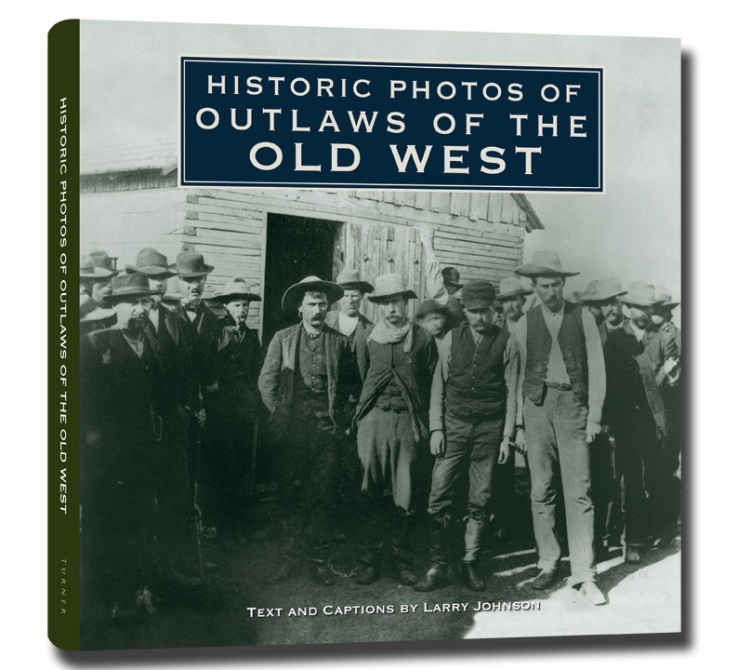
 The romantic myth of the Western outlaw still remains central to American identity. If we are part Puritan, we also like to think of ourselves as the kind of anti-social cowboys who go out and manifest our own destiny. It’s no wonder that we have a tradition of valorizing outlaws like Billy the Kid, the Dalton gang, and Frank and Jesse James, transfiguring their bullying and theft into a kind of partisan resistance to hegemony. These men did not steal from the rich to give to the poor, yet we like to pretend that they were Robin Hoods. Turner Publishing’s new collection Historic Photos of Outlaws of the Old West presents 200 archival images of infamous (and not so famous) robbers, road agents, and rascals in the kind of gruesome detail that outlines just how awful these people really were. The Old West isn’t so romantic after all.
The book moves from the beginning of photography in the early 1850s to the unlikely end of an era, the 193os when the West Coast finally settled down and civilized (at least a little bit). Larry Johnson provides informative and unobtrusive text, letting the stark and often grisly photos convey the tone and emotion of the book. Simply put, this isn’t for kids. There are plenty of dead bodies, many hanging from nooses or laid out in a row, like this charmer of the Dalton gang–
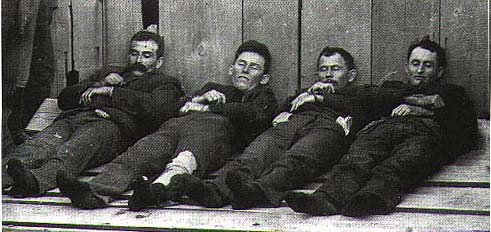
Or how about Ned Christie, unfairly framed for the murder of Deputy Marshal David Maples in 1887, Oklahoma? This picture of Christie reveals that the emerging art/science of photography allowed for a certain fetishizing of the dead body–that the corpse, via mechanical reproduction, might somehow live on. Grisly.

We can see the same fascination with death in this famous image of Jesse James, who was shot in the back by Robert Ford while adjusting a picture. (Their complicated story is told in the brilliant revisionist film The Assassination of Jesse James by the Coward Robert Ford, by the way).

There are less famous but equally intriguing figures as well, like Benjamin Hodges, a black Mexican cowboy who made his living as a con artist in Dodge City. Here is the confident confidence man–

The images in Outlaws of the Old West are both fun and unsettling, and Johnson never glosses over or sugar coats the ugly truths behind these images (he even points out that, though we see the shootout at the OK Corral as a kind of archetypal battle between good vs. evil, the Earps and their pal Doc Holliday were hardly angels). The pictures in this book gel more with the imagery we find in revisionist Westerns like Cormac McCarthy’s Blood Meridian or Sam Peckinpah’s bloody films, which is another way of saying that they aren’t for the faint of heart–and I enjoy that about the volume. Check it out.


 Biblioklept