W.H. Auden Reading at the 92nd St. Y in 1972

Audio of W.H. Auden reading at the 92nd St. Y in 1972.

Ezra Pound’s Composition Exercises for Young Writers

From Ezra Pound’s literary study, ABC of Reading

1. Let the pupil write the description of a tree.

2. Of a tree without mentioning the name of the tree (larch, pine, etc.) so that the reader will not mistake it for the description of some other kind of tree.

3. Try some object in the classroom.

4. Describe the light and shadow on the school-room clock or some other object.

5. If it can be done without breach of the peace, the pupil could write descriptions of some other pupil. The author suggests that the pupil should not describe the instructor, otherwise the description might become a vehicle of emotion, and subject to more complicated rules of composition than the class is ready to cope with.

In all these descriptions the test would be accuracy and vividness, the pupil receiving the other’s paper would be the gauge. He would recognize or not recognize the object or person described.

Rodolfo Agricola in an edition dating from fifteen hundred and something says one writes: ut doceat, ut moveat, ut delectet, to teach, to move or to delight.

A great deal of bad criticism is due to men not seeing which of these three motives underlies a given composition.

The converse processes, not considered by the pious teachers of antiquity, would be to obscure, to bamboozle or mislead, and to bore.

The reader or auditor is at liberty to remain passive and submit to these operations if he so choose.

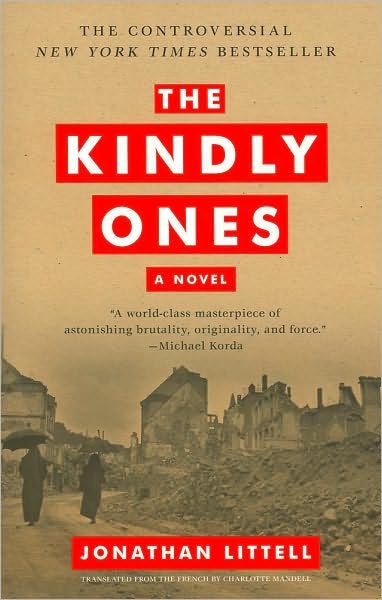
Jonathan Littell’s The Kindly Ones Is Lurid Abject Art

Yesterday, I finished listening to the unabridged audiobook version of Jonathan Littell’s 900+ page novel The Kindly Ones, the plot of which is too long and complex and detailed (and frankly, often boring) to unpack here. To make a very long story short (after which I’ll talk about the book’s scandalous and (deservedly) tawdry reputation), Maximilien Aue is an SS officer of mixed Franco-Germanic parentage, who, amazingly, seems to be present at an unlikely number of key events during WWII. These events include time at the eastern front, orchestrating mass killings in Ukraine and holing up during the battle of Stalingrad, where he gets shot through the head yet miraculously survives. After this, Aue convalesces in Berlin, and later visits his mother and stepfather in Antibes. He soon takes up the project of improving conditions for concentration camp prisoners, visiting camps like Auschwitz, all the while meeting and working with Nazi bigwigs like Albert Speer, Adolf Eichmann, and Heinrich Himmler. After an intense illness (the book is full of illness–more on that in a moment), Aue seeks his twin sister (uh, yeah, more on her shortly) at her husband’s house in Pomerania, where, finding her absent, he indulges in a psychotic wine-fueled masturbation binge (yes, more presently). The end of the novel ups the psycho-ante, detailing the last days of the Third Reich in Berlin, a period Littell depicts as dripping in decadent nastiness. Aue survives via murder murder murder.

This is a very brief outline of a very long book, the kind of book that dares to be important, and Littell surely knows his history. In fact, the book is often incredibly dry, dusty even, constipated by historical facts that Aue and other characters frequently reveal in long, clunky passages of exposition. Indeed, one of the great weaknesses of The Kindly Ones is Littell’s tendency to use his characters as mouthpieces, little pawns who will discourse on politics or linguistics or music or whatever for a few pages. At the same time, it’s clear that Littell wants certain passages to bore the reader. A lengthy episode in the Ukraine concerns the fate of a group of Caucus mountain people of whom the SS wish to determine a “racial origin.” Littell presents the process of deciding whether or not these people should be exterminated or not in excruciatingly bureaucratic (bureaucratically excruciating?) detail. One of the novel’s core points is an observation of the Nazi Reich as a lurching machine, a sick machine whose various limbs were often at bureaucratic war with each other.

If The Kindly Ones is often dry, its wetness is all the more foul. This is a novel that might as well take place in the asshole, or at least the colon. Our hero (?!) Aue spends much of his time describing his alternate diarrhea and vomiting; indeed, emetic purging seems to be his only form of absolution from the constant sin he’s wallowing in. It’s as if the entire Nazi project—its racial purging, its mass murder, its bureaucratic domination, its lies that were obvious to any person with eyes—is a constant stream of shit and vomit that Aue is forced to (yet unable to) process. The Nazis worked to elevate their unnatural sins to a kind of weltanschauung, yet Aue is unable to reconcile this world view with the visceral reality of the organized mass murder he daily helps orchestrate. This hardly absolves him; indeed, Aue seems to engage in every perversion and sin imaginable as a means to release the metaphysical pressure valve that’s pushing down on him all the time.

And this is the core of The Kindly Ones, and certainly why the novel is so infamous. The Nazis were an abject regime, a force that sought to “cleanse” Europe and the world of a perceived filth, and set about doing so in the most paradoxical way imaginable—by engaging in genocide, the worst kind of moral filth. Littell’s novel explores the bureaucratic nature of these abject sins in detail, but Aue is the very (tortured) soul of abjection. He is a paradoxical figure, a “true” SS party member who nevertheless idealizes Greek culture—an ironic twist, given the book’s title, a not-so-subtle nod to Aeschylus’ Oresteia. Quick warning: spoilers ahead—although, given Littell’s potboileresque structure, you’d have to be a blind Oedipus to miss these twists.

Yes, young Max Aue is a thoroughly Greek figure. He’s a homosexual who longs to be a woman so he can feel the “pleasure” that only women can feel, yet he’s obsessively in love with his twin sister, whom he buggered regularly in their pre-teen days (and perhaps a few times afterwards). He fights Nazi bureaucracy to improve the living conditions of doomed concentration camp victims, yet he periodically murders the people around him, for no discernible reason. He delights in his own illnesses, his own filth and shit. He facilitates child murder. He fantasizes about coprophagiac feasts, sticks bottles up his ass while wet-daydreaming about Edgar Rice Burroughs novels, and pays starving boys a few marks for a dirty fuck. And, like Orestes, pursued by the Furies, he kills his mother and step-father. The novel’s greatest concession to Greekness is its reveling in horror, horror, horror.

The Kindly Ones is a bizarre book, one that asks its readers to sympathize with the lowest of low-lifes, and yet somehow nevertheless succeeds, at least in a marginal sense. Littell requires tremendous patience from his readers—and strong stomachs as well, perhaps. In short, I don’t know who The Kindly Ones is for. It’s a bit of a potboiler, yet hardly a genre novel, and certainly not the kind of thing most people would want to read on the beach. I’m not sure if most folks who read historical WWII fiction want theirs served up with so much psycho sickness. To call The Kindly Ones an oddity is an understatement. There are stunning (and I don’t use that word loosely here) passages in the book, moments of overwhelming psychosis, dream sequences that might match the verity of war, including its utter spiritual despair. There’s also a fine tawdriness to The Kindly Ones, an overwhelming sense of the lurid and grotesque, overcompensated, as I mentioned earlier, with the dry crust of historical detail. The result is messy and brutal and uneven, but nonetheless compelling, like a foul, open wound that attracts even as it repels.

Book Xylophone

[Via Ebert].

The Third Reich: Part I — Roberto Bolaño

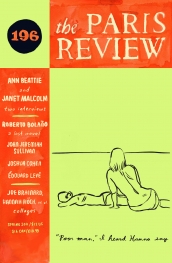
Two years ago, a typed manuscript for Roberto Bolaño’s unpublished novel The Third Reich The Third Reich was discovered. The Paris Review is serializing the novel, publishing it in full over four issues in a translation by Natasha Wimmer. I finished the first part of The Third Reich last night, reading the 63 pages in one engrossing session.

Udo Berger, a German from Stuttgart with a passion for war games, narrates the story in the form of a journal he keeps, detailing the daily events of a vacation he is taking in a Spanish resort town with his girlfriend Ingeborg. The couple checks in to the Del Mar, a seaside hotel where Udo spent a few teenage summers with his family. He seems driven to return to this particular hotel, at least in part, by memories of the enigmatic Frau Else, an alluring German woman who married the hotel’s Spanish owner. Frau Else barely remembers Udo, a fact that disappoints him, yet he nevertheless pursues strange awkward conversations with her; it’s unclear to both Udo and the reader what, exactly, he hopes to gain from talking to her.

Indeed, Udo’s intentions and motivations are strange and murky in general. He’s the classic unreliable narrator. In particular, Udo’s perceptions (and descriptions of those perceptions) seem to be clouded by a radical fear of otherness, and an underlying contempt for almost everyone. He’s also a little paranoid, perhaps, in part anyway, because we get the sense that Ingeborg might be just a bit out of his league. Consider the following scene—

Ingeborg was at her most radiant, and when we walked into the club we were greeted with covert admiring glances. Admiring of Ingeborg and envious of me. Envy is something I always pick up on right away. Anyways, we didn’t plan to spend much time there. And yet as fate would have it, before long a German couple sat down at our table.

That German couple is Hanna and Charly, and Udo quickly comes to detest them, although he repeatedly points out that he covers his disgust at all times (and, by the end of Part I, it’s clear that he has an unvoiced sexual attraction to Hanna). Charly is boorish, foolhardy, and quick to make friends with the locals. Through him, the Germans become acquainted with two locals Udo dubs the Wolf and the Lamb. The Wolf and the Lamb take the four tourists to the kind of working class haunts that only locals go to; Charly and the girls find adventure in this, but Udo is contemptuous and disgusted of these clubs, bars, and restaurants. His depictions of the local spots veer into classic Bolaño territory, that mix of unnerving dread and surreal energy, a kind of Lynchian anxiety that suggests abyssal darkness looms under the veneer of every “normal” surface.

Udo would rather stay in the hotel and work on his war game; he’s devoted the summer to playing out a new strategy and writing an essay about it for one of the various magazines devoted to the hobby. Ingeborg is embarrassed and ashamed of Udo’s passion for games, and when Hanna shows interest in the large hexagonal board set up in their room, Ingeborg quickly rushes her out to the beach. Udo, for the first time realizes this division in his relationship with Ingeborg, who spends her time on various daytrips (perhaps, although Udo doesn’t seem to recognize this, with the Wolf and the Lamb)—yet he fecklessly makes amends by buying cheap gift store jewelery, and avers that losing Ingeborg would destroy him. A dark set up.

The only person apart from Frau Else who Udo takes any interest in is El Quemado (“the Burned One”), a horribly burn-scarred, well-muscled man who makes a living renting paddle boats to tourists. Udo becomes obsessed with El Quemado when he realizes that the man seems to build a shelter out of the paddle boats each night; over time, he strikes up a strange friendship, leading to the revelation that they share a trait: both consider themselves writers.

The Third Reich, composed at the beginning of Bolaño’s career as a novelist, doesn’t feature the labyrinthine syntax or heteroglossia of later works, but it does showcase the particularly Bolañonian sense of dread that seethes under so many of his works. The novel feels like a slow burn, with plenty of sinister elements in play—but there’s also the possibility that this nervous dread stems from Udo’s internal paranoia. In any case, Bolaño is beginning to play with the tropes of the detective novels and crime fiction he loved so much. As I argued in my review of Amulet last month, the more one reads Bolaño, the more difficult it is to parse his fictions from each other. Instead, they seem part of the Bolañoverse, a dark visceral inversion of our own world. Thus The Third Reich strongly recalls the title story in the collection Last Evenings on Earth, where the narrator B and his father take a bizarre, sinister vacation in Acapulco. The Third Reich also obviously recalls Nazi Literature in the Americas, which featured an entire chapter on neo-Nazi boardgames.

Of course, my observations are only drawn from the first fourth of the novel, but as a Bolaño fan I was not disappointed. I just wanted more—but I guess I’ll have to wait for the summer issue.

“How to Recognize a Piece of Art” — Roberto Bolaño on the Power of Translation

A sample of Roberto Bolaño’s short essay “Translation Is an Anvil” (from New Directions’ forthcoming Between Parentheses, a collection of Bolaño’s essays, newspaper columns, and other ephemera)——

How to recognize a work of art? How to separate it, even if just for a moment, from its critical apparatus, its exegetes, its tireless plagiarizers, its belittlers, its final lonely fate? Easy. Let it be translated. Let its translator be far from brilliant. Rip pages from it at random. Leave it lying in an attic. If after all of this a kid comes along and reads it, and after reading makes it his own, and is faithful to it (or unfaithful, whichever) and reinterprets it and accompanies it on its  voyage to the edge, and both are enriched and the kid adds an ounce of value to its original value, then we have something before us, a machine or a book, capable of speaking to all human beings; not a plowed field but a mountain, not the image of a dark forest but the dark forest, not a flock of birds but the Nightingale.

Hunter S. Thompson for Sheriff — HST’s 1970 Campaign Ad

George Washington’s Death Mask