1984’s Dune is unquestionably the worst movie of Lynch’s career, and it’s pretty darn bad. In some ways it seems that Lynch was miscast as its director: Eraserhead had been one of those sell-your-own-plasma-to-buy-the-film-stock masterpieces, with a tiny and largely unpaid cast and crew. Dune, on the other hand, had one of the biggest budgets in Hollywood history, and its production staff was the size of a small Caribbean nation, and the movie involved lavish and cutting-edge special effects (half the fourteen-month shooting schedule was given over to miniatures and stop-action). Plus Herbert’s novel itself is incredibly long and complex, and so besides all the headaches of a major commercial production financed by men in Ray-Bans Lynch also had trouble making cinematic sense of the plot, which even in the novel is convoluted to the point of pain. In short, Dune’s direction called for a combination technician and administrator, and Lynch, though as good a technician as anyone in film, is more like the type of bright child you sometimes see who’s ingenious at structuring fantasies and gets totally immersed in them but will let other kids take part in them only if he retains complete imaginative control over the game and its rules and appurtenances—in short very definitely not an administrator.
Watching Dune again on video you can see that some of its defects are clearly Lynch’s responsibility, e.g. casting the nerdy and potato-faced Kyle MacLachlan as an epic hero and the Police’s resoundingly unthespian Sting as a psycho villain, or—worse—trying to provide plot exposition by having characters’ thoughts audibilized (w/ that slight thinking-out-loud reverb) on the soundtrack while the camera zooms in on the character making a thinking-face, a cheesy old device that Saturday Night Live had already been parodying for years when Dune came out. The overall result is a movie that’s funny while it’s trying to be deadly serious, which is as good a definition of a flop as there is, and Dune was indeed a huge, pretentious, incoherent flop. But a good part of the incoherence is the responsibility of De Laurentiis’s producers, who cut thousands of feet of film out of Lynch’s final print right before the movie’s release, apparently already smelling disaster and wanting to get the movie down to more like a normal theatrical running-time. Even on video, it’s not hard to see where a lot of these cuts were made; the movie looks gutted, unintentionally surreal.
In a strange way, though, Dune actually ended up being Lynch’s “big break” as a filmmaker. The version of Dune that finally appeared in the theaters was by all reliable reports heartbreaking for him, the kind of debacle that in myths about Innocent, Idealistic Artists In The Maw Of The Hollywood Process signals the violent end of the artist’s Innocence—seduced, overwhelmed, fucked over, left to take the public heat and the mogul’s wrath. The experience could easily have turned Lynch into an embittered hack (though probably a rich hack), doing f/x-intensive gorefests for commercial studios. Or it could have sent him scurrying to the safety of academe, making obscure plotless l6mm.’s for the pipe-and-beret crowd. The experience did neither. Lynch both hung in and, on some level, gave up. Dune convinced him of something that all the really interesting independent filmmakers—Campion, the Coens, Jarmusch, Jaglom—seem to steer by. “The experience taught me a valuable lesson,” he told an interviewer years later. “I learned I would rather not make a film than make one where I don’t have final cut.”


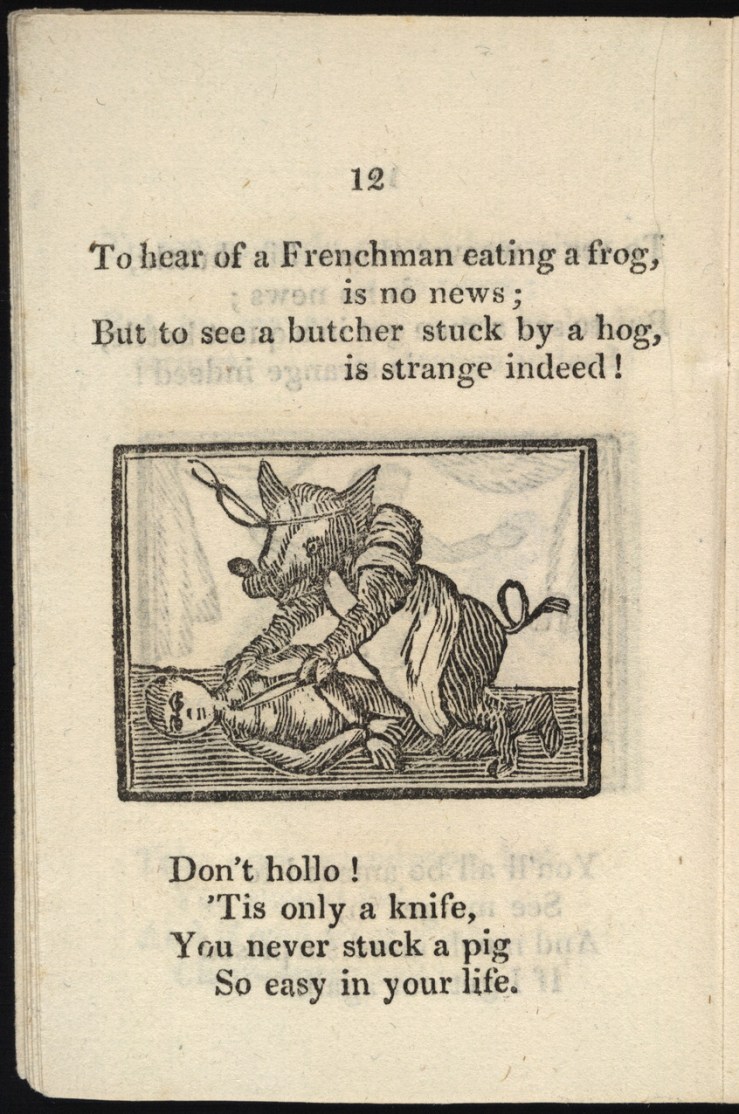 (From The World turned upside down, or, No news, and strange news (1820) by J. Kendrew.

 Biblioklept