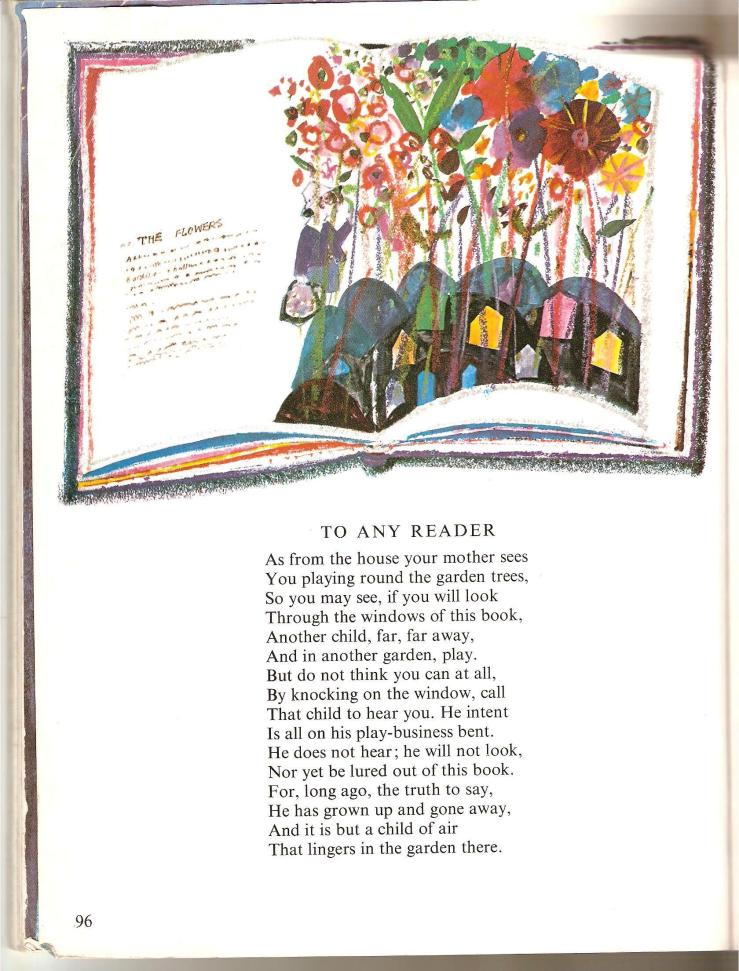
“To Any Reader” — Robert Louis Stevenson

wildsmith

Portrait of the Artist’s Mother

Portrait of the Artist’s Mother — Vincent van Gogh
The Artist’s Mother — Pierre-Auguste Renoir
Portrait of the Artist’s Mother — Camille Pissarro

Continue reading “Portrait of the Artist’s Mother”

“A Mother” — James Joyce

“A Mother”

by

James Joyce

MR HOLOHAN, assistant secretary of the Eire Abu Society, had been walking up and down Dublin for nearly a month, with his hands and pockets full of dirty pieces of paper, arranging about the series of concerts. He had a game leg and for this his friends called him Hoppy Holohan. He walked up and down constantly, stood by the hour at street corners arguing the point and made notes; but in the end it was Mrs. Kearney who arranged everything.

Miss Devlin had become Mrs. Kearney out of spite. She had been educated in a high-class convent, where she had learned French and music. As she was naturally pale and unbending in manner she made few friends at school. When she came to the age of marriage she was sent out to many houses where her playing and ivory manners were much admired. She sat amid the chilly circle of her accomplishments, waiting for some suitor to brave it and offer her a brilliant life. But the young men whom she met were ordinary and she gave them no encouragement, trying to console her romantic desires by eating a great deal of Turkish Delight in secret. However, when she drew near the limit and her friends began to loosen their tongues about her, she silenced them by marrying Mr. Kearney, who was a bootmaker on Ormond Quay.

He was much older than she. His conversation, which was serious, took place at intervals in his great brown beard. After the first year of married life, Mrs. Kearney perceived that such a man would wear better than a romantic person, but she never put her own romantic ideas away. He was sober, thrifty and pious; he went to the altar every first Friday, sometimes with her, oftener by himself. But she never weakened in her religion and was a good wife to him. At some party in a strange house when she lifted her eyebrow ever so slightly he stood up to take his leave and, when his cough troubled him, she put the eider-down quilt over his feet and made a strong rum punch. For his part, he was a model father. By paying a small sum every week into a society, he ensured for both his daughters a dowry of one hundred pounds each when they came to the age of twenty-four. He sent the older daughter, Kathleen, to a good convent, where she learned French and music, and afterward paid her fees at the Academy. Every year in the month of July Mrs. Kearney found occasion to say to some friend:

“My good man is packing us off to Skerries for a few weeks.”

If it was not Skerries it was Howth or Greystones. Continue reading ““A Mother” — James Joyce”

Portrait of a Mother and Daughter Reading a Book — Edwin Harris

Porcile — Pier Paolo Pasolini (Full Film)

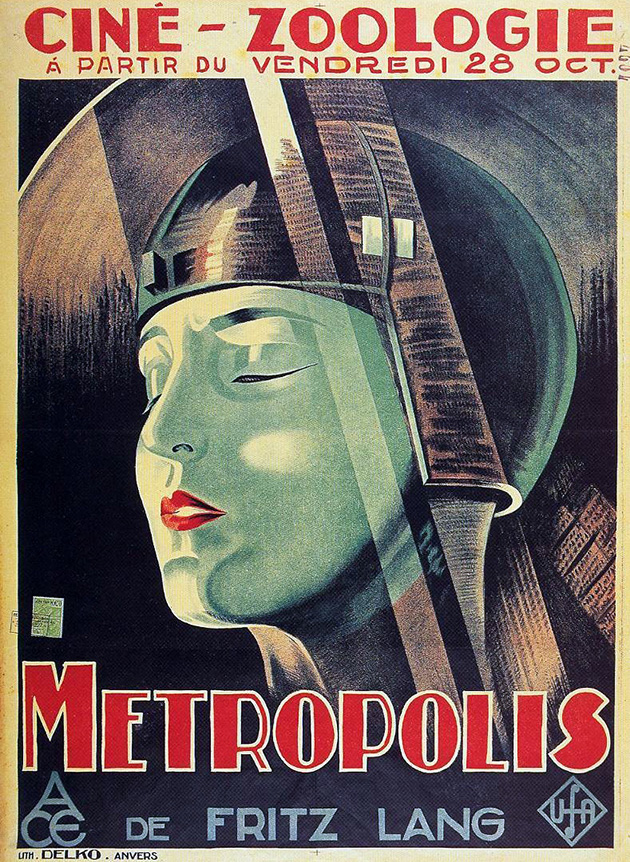
Metropolis Film Poster — Werner Graul

metropolis

Lovers with Cat — Oskar Kokoschka

Sensational Future Pleasures — Ryan Heshka

20140510-171353.jpg

In the heart of every man there lies a wild beast (Schopenhauer)

It is a fact, then, that in the heart of every man there lies a wild beast which only waits for an opportunity to storm and rage, in its desire to inflict pain on others, or, if they stand in his way, to kill them. It is this which is the source of all the lust of war and battle. In trying to tame and to some extent hold it in check, the intelligence, its appointed keeper, has always enough to do. People may, if they please, call it the radical evil of human nature—a name which will at least serve those with whom a word stands for an explanation. I say, however, that it is the will to live, which, more and more embittered by the constant sufferings of existence, seeks to alleviate its own torment by causing torment in others. But in this way a man gradually develops in himself real cruelty and malice. The observation may also be added that as, according to Kant, matter subsists only through the antagonism of the powers of expansion and contraction, so human society subsists only by the antagonism of hatred, or anger, and fear. For there is a moment in the life of all of us when the malignity of our nature might perhaps make us murderers, if it were not accompanied by a due admixture of fear to keep it within bounds; and this fear, again, would make a man the sport and laughing stock of every boy, if anger were not lying ready in him, and keeping watch.

From Arthur Schopenhauer’s “On Human Nature.” Translated by T. Bailey Saunders.

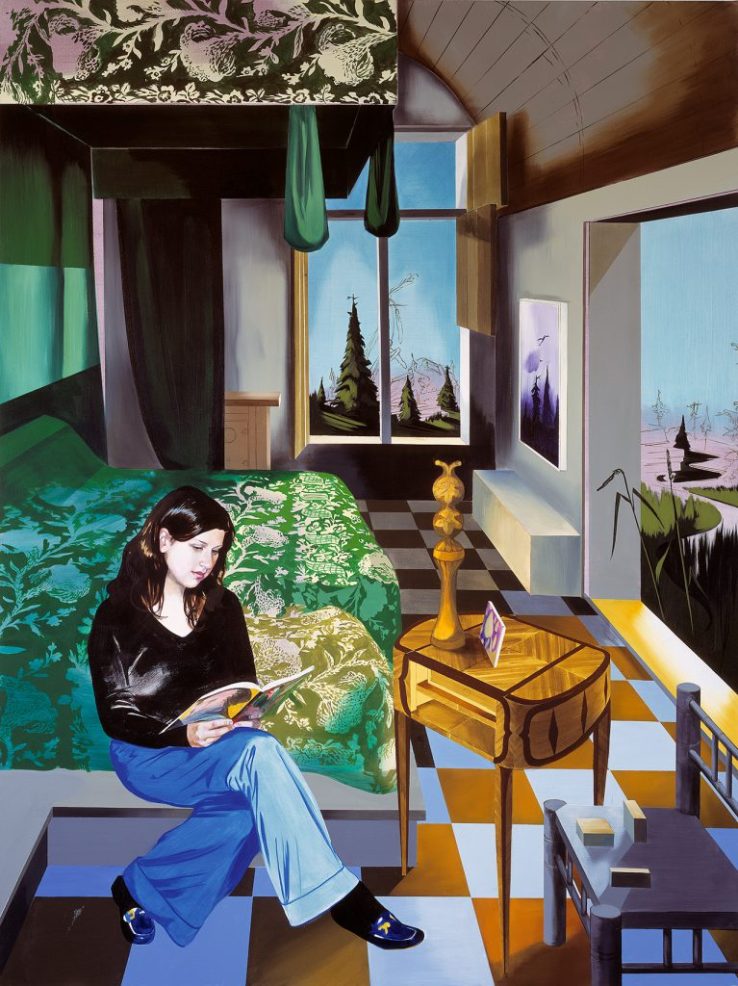
Regina Reads — Susanne Kühn

reginaliest-kopie-767x1024-1

Regina Reads, 2008 by Susanne Kühn (b. 1969)

Group of Nude Figures in a Forest — Paul Delvaux

“The Poor” — William Carlos Williams

Capture

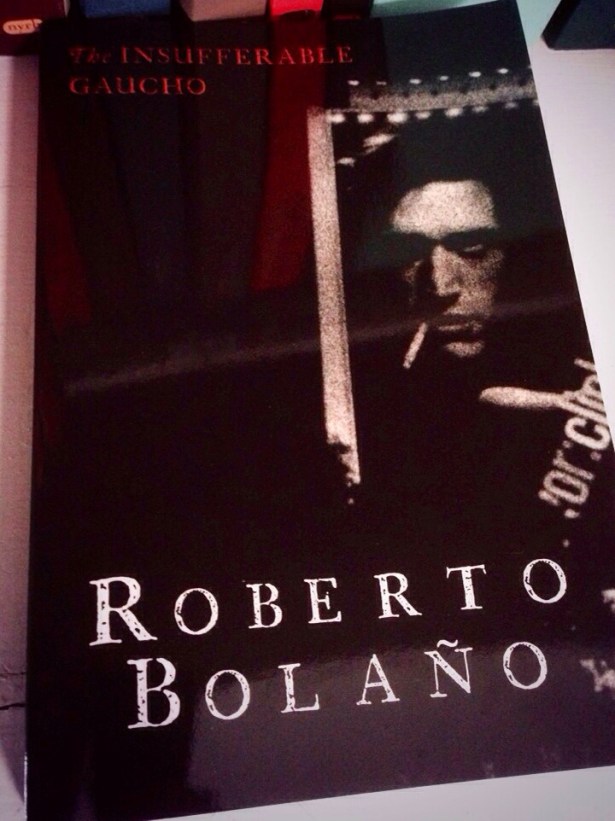
Roberto Bolaño’s The Insufferable Gaucho (Book Acquired, 05.05.2014)

20140509-130407.jpg

Roberto Bolaño’s The Insufferable Gaucho, which I’ve sort of saved for a few years—put off isn’t the right phrase, but sort of, knowing it as companion to Last Evenings on Earth, y’know, saved it for later—Roberto Bolaño’s The Insufferable Gaucho is very difficult to photograph. Very shiny.

Untitled — Martha Colburn

The will to live (Schopenhauer)

The will to live, which forms the inmost core of every living being, exhibits itself most conspicuously in the higher order of animals, that is, the cleverer ones; and so in them the nature of the will may be seen and examined most clearly. For in the lower orders its activity is not so evident; it has a lower degree of objectivation; whereas, in the class which stands above the higher order of animals, that is, in men, reason enters in; and with reason comes discretion, and with discretion, the capacity of dissimulation, which throws a veil over the operations of the will. And in mankind, consequently, the will appears without its mask only in the affections and the passions. And this is the reason why passion, when it speaks, always wins credence, no matter what the passion may be; and rightly so. For the same reason the passions are the main theme of poets and the stalking horse of actors. The conspicuousness of the will in the lower order of animals explains the delight we take in dogs, apes, cats, etc.; it is the entirely naive way in which they express themselves that gives us so much pleasure.

The sight of any free animal going about its business undisturbed, seeking its food, or looking after its young, or mixing in the company of its kind, all the time being exactly what it ought to be and can be,—what a strange pleasure it gives us! Even if it is only a bird, I can watch it for a long time with delight; or a water rat or a hedgehog; or better still, a weasel, a deer, or a stag. The main reason why we take so much pleasure in looking at animals is that we like to see our own nature in such a simplified form. There is only one mendacious being in the world, and that is man. Every other is true and sincere, and makes no attempt to conceal what it is, expressing its feelings just as they are.

From Arthur Schopenhauer’s “Psychological Observations.” Translated by T. Bailey Saunders.

Lolita, Reading — Stanley Kubrick

Ugetsu — Kenji Mizoguchi (Full Film)