Illustration for Eugene Onegin — Anna and Elena Balbusso

Eugene Onegin by Anna and Elena Balbusso

Girl at the Bedside — Edvard Munch

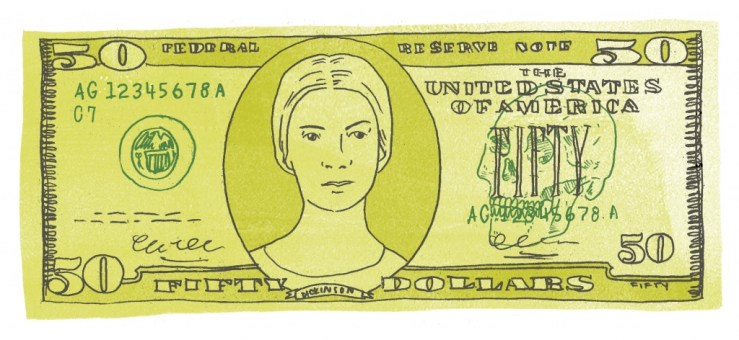
The Emily Dickinson Fifty-Dollar Bill

dickinson_dollar

See more American literary icons on American money by Shannon May.

And, by the bye—

In his last novel The Last Novel, David Markson lamented a lack of—

America’s Emily Dickinson dime?

—this preceded by:

Before the Euro, the portrait of Yeats on Ireland’s twenty-pound note.

America’s Whitman twenty-dollar bill, when?

The Melville ten?

Gallery of Views of Modern Rome — Giovanni Paolo Panini

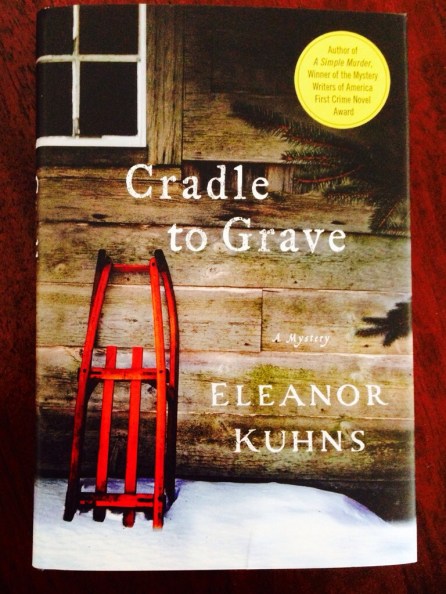
Cradle to Grave (Book Acquired, 5.27.2014)

20140528-143449-52489544.jpg

Cradle to Grave by Eleanor Kuhns. Publisher’s blurb:

Will Rees is adjusting to life on his Maine farm in 1797, but he’s already hungering for the freedom of the road, and his chance to travel comes sooner than he expects. Lydia has just received a letter from her old friend Mouse, a soft-spoken and gentle woman who now lives in the Shaker community in Mount Unity, New York. To Lydia and Rees’s astonishment, she’s in trouble with the law. She’s kidnapped five children, claiming that their mother, Maggie Whitney, is unfit to care for them.

Despite the wintry weather and icy roads, Rees and Lydia set out for New York, where they sadly conclude that Mouse is probably right and the children would be better off with her. There’s nothing they can do for Mouse legally, though, and they reluctantly set out for home. But before they’ve travelled very far, they receive more startling news: Maggie Whitney has been found murdered, and Mouse is the prime suspect.

In Cradle to Grave, Eleanor Kuhns returns with the clever plotting, atmospheric historical detail, and complexly drawn characters that have delighted fans and critics in her previous books.

Forest Exploration — Mehdi Farhadian

“Books in the West” — Morely Roberts

“Books in the West”

from

Morely Roberts’s A Tramp’s Notebook

Since taking to writing as a profession I have lost most of the interest I had in literature as literature pure and simple. That interest gradually faded and “Art for Art’s sake,” in the sense the simple in studios are wont to dilate upon, touches me no more, or very, very rarely. The books I love now are those which teach me something actual about the living world; and it troubles me not at all if any of them betray no sense of beauty and lack immortal words. Their artistry is nothing, what they say is everything. So on the shelf to which I mostly resort is a book on the Himalayas; a Lloyd’s Shipping Register; a little work on seamanship that every would-be second mate knows; Brown’s Nautical Almanacs; a Channel Pilot; a Continental Bradshaw; many Baedekers; a Directory to the Indian Ocean and the China Seas; a big folding map of the United States; some books dealing with strategy, and some touching on medical knowledge, but principally pathology, and especially the pathology of the mind.

Yet in spite of this utilitarian bent of my thoughts there are very many books I know and love and sometimes look into because of their associations. As I cannot understand (through some mental kink which my friends are wont to jeer at) how anyone can return again and again to a book for its own sake, I do not read what I know. As soon would I go back when it is my purpose to go forward. A book should serve its turn, do its work, and become a memory. To love books for their own sake is to be crystallised before old age comes on. Only the old are entitled to love the past. The work of the young lies in the present and the future. Continue reading ““Books in the West” — Morely Roberts”

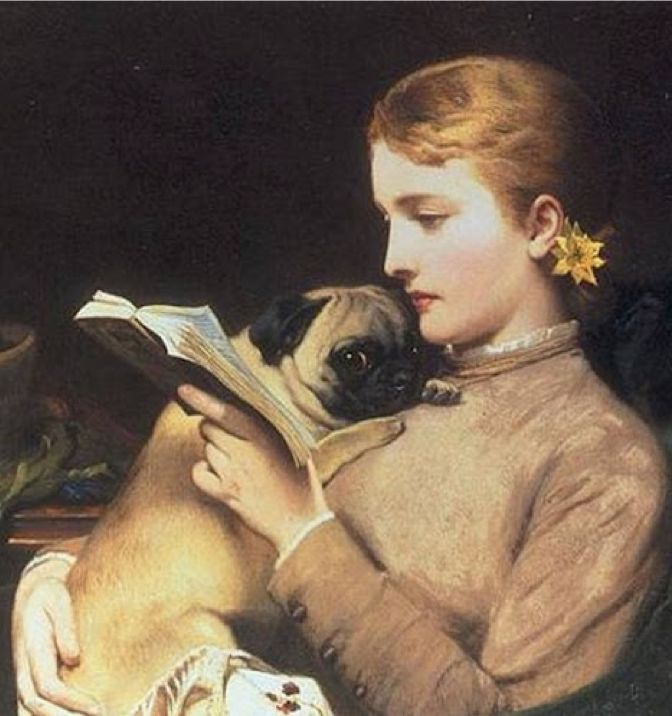
Girl Reading and a Pug — Charles Burton Barber

Charles Burton Barber

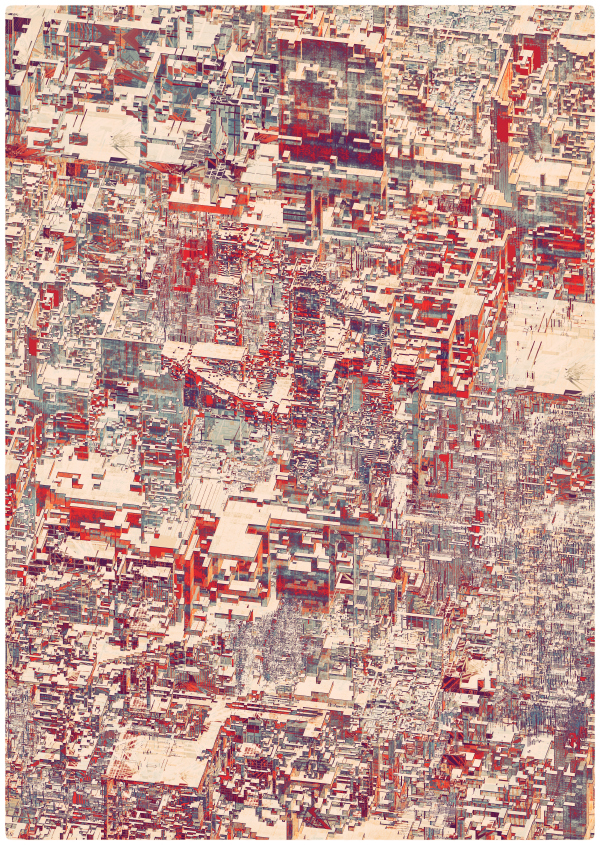
Pixel City II 03 — Atelier Olschinsky

pixl

Forty-two Kids — George Bellows

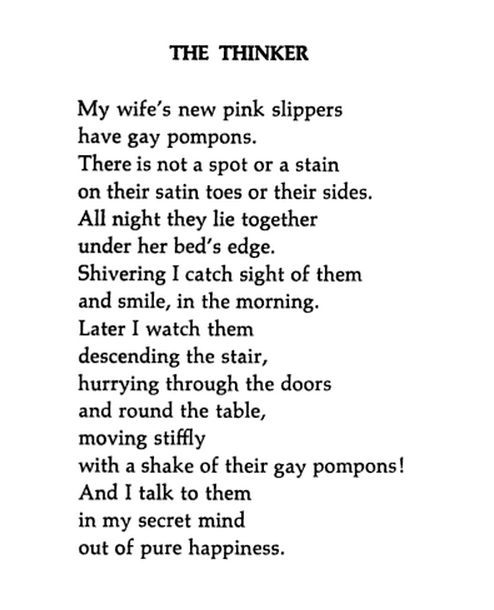
“The Thinker” — William Carlos Williams

Capture

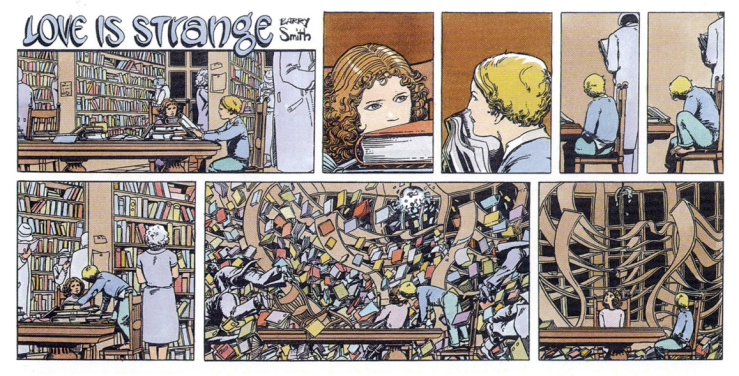
Love Is Strange — Barry Windsor-Smith

love