Irish Woman on a Bed — Lucian Freud

Swing You Sinners!

Five Story Ideas from Nathaniel Hawthorne’s Note-Books

  1. All the dead that had ever been drowned in a certain lake to arise.
  2. Character of a man who, in himself and his external circumstances, shall be equally and totally false: his fortune resting on baseless credit,–his patriotism assumed,–his domestic affections, his honor and honesty, all a sham. His own misery in the midst of it,–it making the whole universe, heaven and earth alike, an unsubstantial mockery to him.
  3. Dr. Johnson’s penance in Uttoxeter Market. A man who does penance in what might appear to lookers-on the most glorious and triumphal circumstance of his life. Each circumstance of the career of an apparently successful man to be a penance and torture to him on account of some fundamental error in early life.
  4. A person to catch fire-flies, and try to kindle his household fire with them. It would be symbolical of something.
  5. Thanksgiving at the Worcester Lunatic Asylum. A ball and dance of the inmates in the evening,–a furious lunatic dancing with the principal’s wife. Thanksgiving in an almshouse might make a better sketch.

From Nathaniel Hawthorne’s American Note-Books.

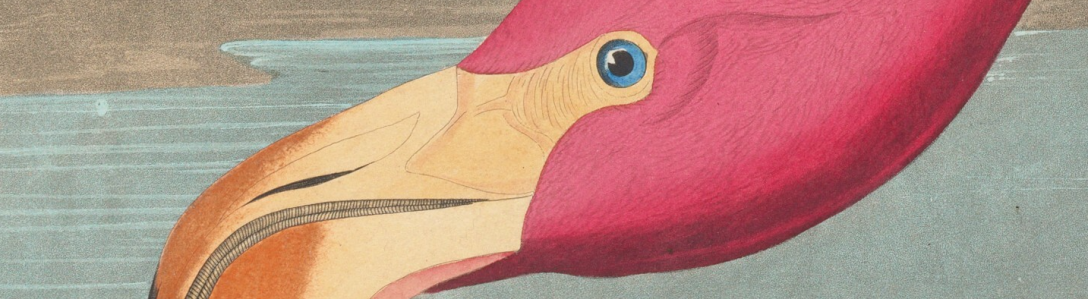
Beak, Claw, Hand, Brush #1 — Clive Smith

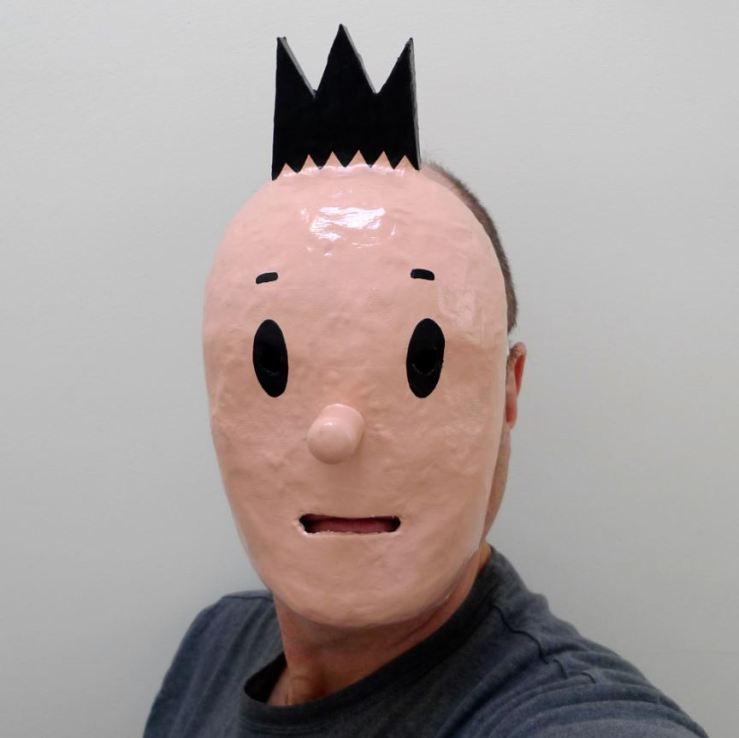
Portrait of Charles Burns in the Style of Nitnit

burns

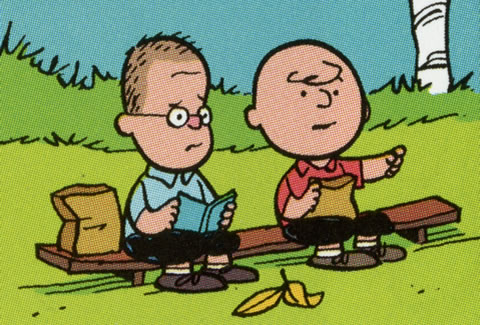
Charles Schulz is the only writer I’ve continually been reading since I was a kid (Chris Ware)

It was the Peanuts collections in my grandfather’s basement office that really stayed with me through childhood and into college. Charlie Brown, Linus, Snoopy, and Lucy all felt like real people to me. I even felt so sorry for Charlie Brown at one point that I wrote him a valentine and sent it to the newspaper, hoping he’d get it. I’ve said it many times before, but Charles Schulz is the only writer I’ve continually been reading since I was a kid. And I know I’m not alone. He touched millions of people and introduced empathy to comics, an important step in their transition from a mass medium to an artistic and literary one.

From Chris Ware’s new interview with The Paris Review.
My Father Fallen — Vincent Desiderio