Blog about some recent reading

img_4404

Bottom and then top:

I’ve been enjoying reading the imperative surreal poems in Jiří Kolář’s’s A User’s Manual (translated by Ryan Scott). I’ve been reading them slowly, one or two every other day.

I got Anna Kavan’s Machines in the Head a few weeks ago and have read the first few stories. These are unsettling little parables. The work Kafkaesque is much overused, but it applies here: Kavan’s stories are cryptic, often pulsing with vague menace and surreal flourishes, much like her masterpiece Ice.

Middle: Anne Boyer’s The Undying will likely end up one of the best books published in 2019 that I actually read in 2019 (I don’t read a lot of contemporary fiction, but I’ve read more this year than in the past few years). An aphoristic memoir-essay, The Undying is a discursive dive into Boyer’s diagnosis of, treatment of, and recovery from breast cancer. It’s an angry, smart book, with little bursts of mean humor, and it rips apart the ways that neoliberal late capitalism have made health care inhuman and inhumane.

I also really dug Carl Shuker’s slim novel A Mistake. Set in Wellington, New Zealand, A Mistake is the story of Elizabeth Taylor, the only female surgeon at her hospital. Like The Undying, Shuker’s novel is in some ways a critique of neoliberalism’s attempt to quantify every aspect of medical care. The novel is set against “the minister’s mistake,” a plan to publicize each surgeon’s results. And at the beginning of the novel, well, there’s a mistake, one which Elizabeth is involved with. Although the blurb describes A Mistake as a “procedural thriller,” I found it closer to a character study of an outsider who finds herself increasingly alienated by her peers and friends alike. Shuker conveys his hero edging into paranoia and depression in sharp, precise prose which occasionally recalls Don DeLillo.

I absolutely love love love Paul Beatty’s novel The Sellout so far. I recall its being hyped quite a bit a few years ago, after it won the Man Booker Prize (I think it was the first US book to do so), and hype often puts me off, but a short story I read a few months ago by Beatty at Granta made me seek out The Sellout. Beatty’s playful prose and zany plotting readily recalls the work of Thomas Pynchon and Ishmael Reed. The story focuses on a farmer who grows watermelons and weed in the strange farm town of Dickens, which is ensconced in urban Los Angeles. Dickens is erased, but the narrator seeks to bring it back. He somehow ends up keeping a slave, a former Little Rascals star named Hominy. I’m doing a bad job describing the plot. The book is energetic and very, very funny, and Beatty’s satirical take on race in America is scathing.

I’d love to get proper reviews of these books out over the winter break, but for now, I’ll simply say they’re all Good Stuff.

“To a Chameleon” — Marianne Moore

chameleon

Red Rabbit — Jean-Michel Basquiat

2018_nyr_15968_0033b_000jean-michel_basquiat_red_rabbit

Red Rabbit, 1982 by Jean-Michel Basquiat (1960-1988)

Knowing has two poles (William H. Gass)

Knowing has two poles, and they are always poles apart: carnal knowing, the laying on of hands, the hanging of the fact by head or heels, the measurement of mass and motion, the calibration of brutal blows, the counting of supplies; and spiritual knowing, invisibly felt by the inside self, who is but a fought-over field of distraction, a stage where we recite the monotonous monologue that is our life, a knowing governed by internal tides, by intimations, motives, resolutions, by temptations, secrecy, shame, and pride.

From “The Art of Self” by William H. Gass.

The Kiss — Danica Lundy

thekissScreenshot 2019-12-03 at 6.56.58 PMScreenshot 2019-12-03 at 6.56.40 PMScreenshot 2019-12-03 at 6.56.18 PM

The Kiss, 2019 by Danica Lundy (b. 1991)

Consume — Linsey Levendall

ll1

Consume, 2019 by Linsey Levendall

Posted in Art

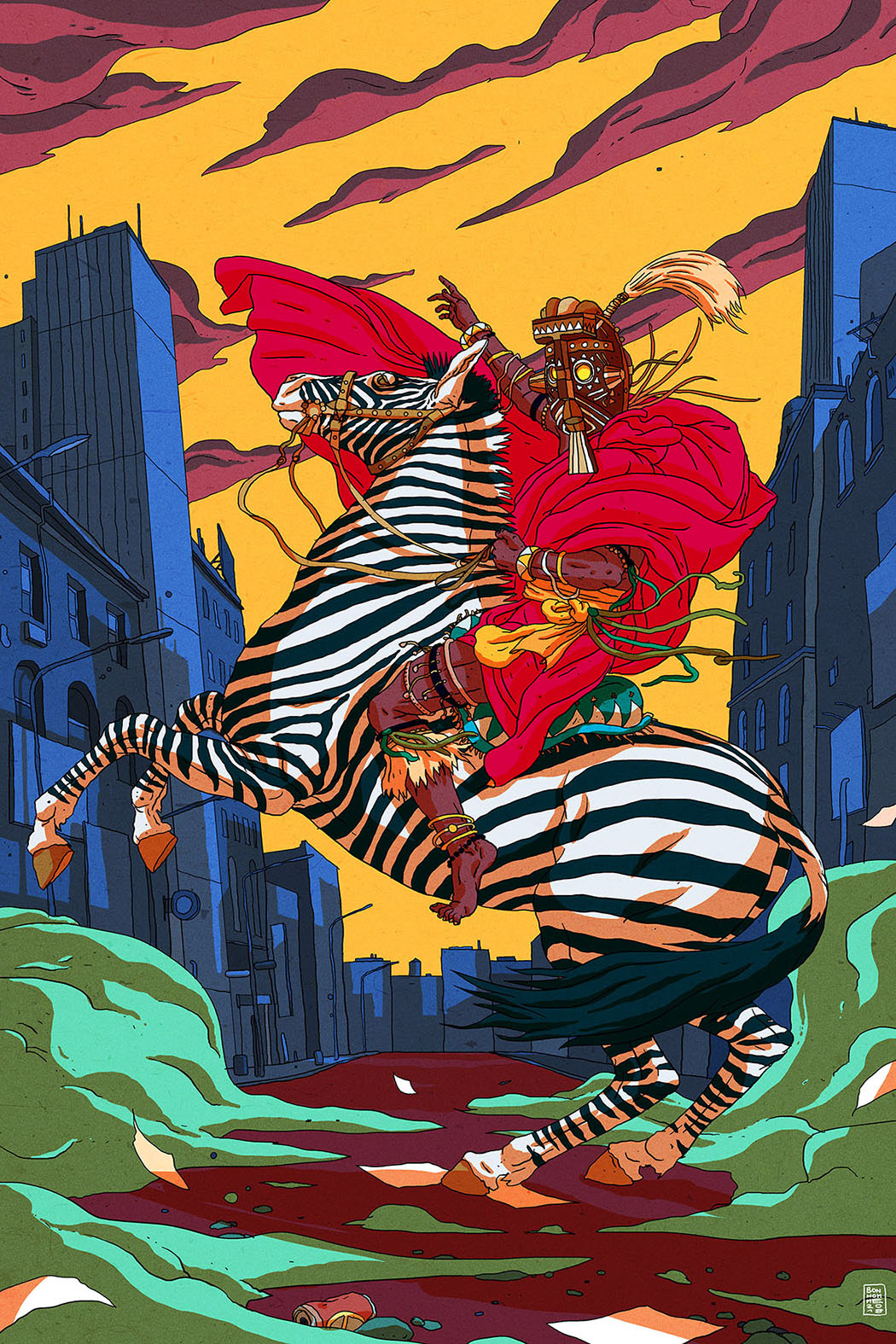
Freedom — Olivier Bonhomme

38640872306441.5be2f0ebdd680

Freedom, 2018 by Olivier Bonhomme (b. 1986)

Posted in Art

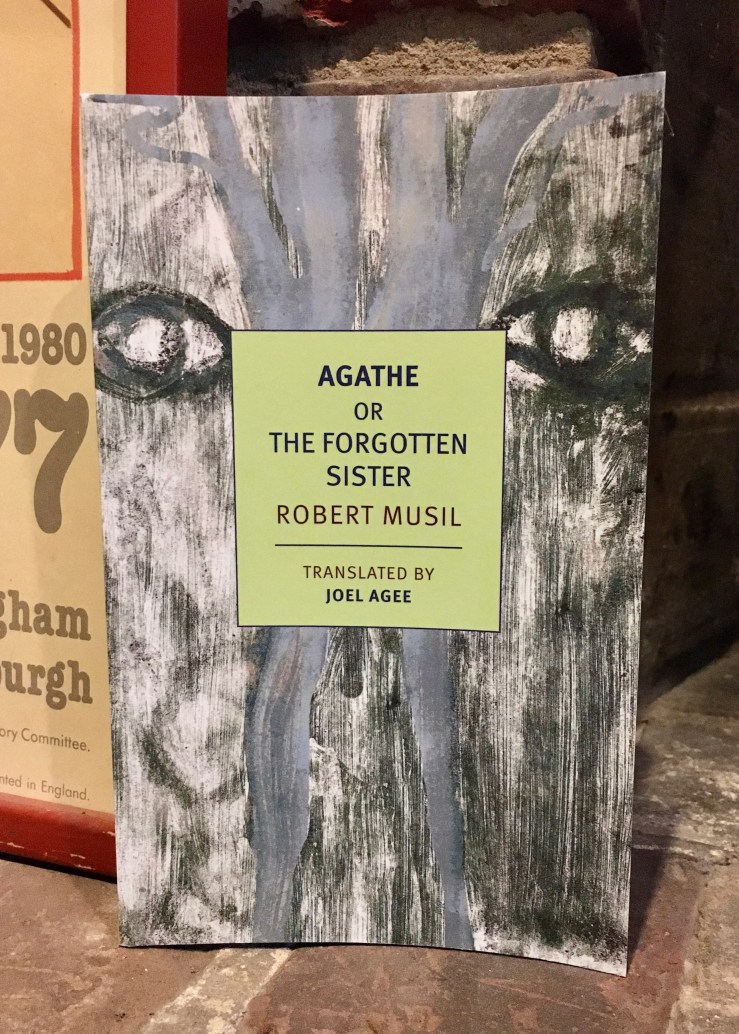
Robert Musil’s Agathe, or The Forgotten Sister (Book acquired like probably the last week of November 2019)

img_4474

In his introduction to Robert Musil’s Agathe, or The Forgotten Sister, NYRB editor Edwin Frank writes that,

Essay, in this quintessentially essayistic novel, is the mode for depicting a mind so active that it nearly constitutes a character independent of the man whose mind it is. That man is a thirty-two-year-old Austrian mathematician known to the reader only by his first name, Ulrich, who, disillusioned in his quest for intellectual glory after reading a newspaper about a racehorse of genius, decides to take a year-long ‘vacation from life,’ which he conceives of as an experiment in pure philosophic contemplation — ‘living essayistically,’ he calls it — in the hope of perhaps, by that pathless route, discovering an occupation better suited to his abilities. If he does not find it within a year, he will put an end to his life, because, to his fanatically logical and consequent mind, an unjustified life is not worth living.

I’ll confess I’ve never read Musil, despite two lukewarm milquetoast attempts, but I liked Frank’s introduction. Seems like I need to read The Man without Qualities before this. Here’s the NYRB blurb:

Agathe is the sister of Ulrich, the restless and elusive “man without qualities” at the center of Robert Musil’s great, unfinished novel of the same name. For years Agathe and Ulrich have ignored each other, but when brother and sister find themselves reunited over the bier of their dead father, they are electrified. Each is the other’s spitting image, and Agathe, who has just separated from her husband, is even more defiant and inquiring than Ulrich. Beginning with a series of increasingly intense “holy conversations,” the two gradually enlarge the boundaries of sexuality, sensuality, identity, and understanding in pursuit of a new, true form of being that they are seeking to discover.

Robert Musil’s The Man Without Qualities is perhaps the most profoundly exploratory and unsettling masterpiece of twentieth-century fiction. Agathe; or, The Forgotten Sister reveals with new clarity a particular dimension of this multidimensional book—the dimension that meant the most to Musil himself and that inspired some of his most searching writing. The outstanding translator Joel Agee captures the acuity, audacity, and unsettling poetry of a book that is meant to be nothing short of life-changing.

Agathe’s English translation is by Joel Agee.

St. Francis and the Birds — Stanley Spencer

St Francis and the Birds 1935 by Sir Stanley Spencer 1891-1959

St. Francis and the Birds, 1935 by Stanley Spencer (1891–1959)

What did Nathaniel Hawthorne see near the lake on the first day of December, 1850?

December 1st.–I saw a dandelion in bloom near the lake.

Nathaniel Hawthorne’s journal entry for December 1st, 1850. From Passages from the American Note-Books.