Behind the Soundtrack: Uncut Gems with Daniel Lopatin

Linking Revelations and Beekeeping — Bram Demunter

BDM-P0002

Linking Revelations and Beekeeping, 2019 by Bram Demunter

Judith and Holofernes — Koloman Moser

judith-and-holofernes-1916

Judith and Holofernes, 1916 by Koloman Moser (1868-1918)

The Complete Gary Lutz (Book acquired, 6 Jan. 2020)

img_4705

My dad slipped me a Barnes & Noble giftcard on Christmas Day; his sister had given it to him. “Never happen,” he said. “You’ll use it.” I’m pretty sure I used it that very night, after some drinks. I got a cookbook my wife had been wanting that was pretty expensive, a Joy Williams novel I still haven’t done a book acquired post on, and The Complete Gary Lutz.

New from indie TyrantThe Complete Gary Lutz collects all five of Lutz’s story collections to date, including Partial List of People to Bleach, the only one I’ve read. How long will the title of the book remain true? Will Lutz bow out? How long until this is The Incomplete Gary Lutz?

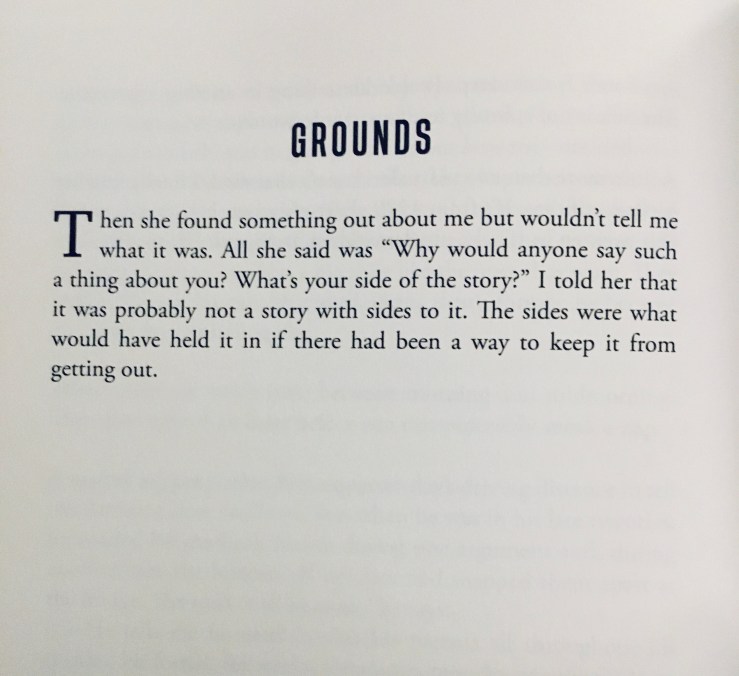
The collection is about 500 pages, and I’ve been dipping into randomly, reading one or two of the shorter stories a day, like “Grounds”:

img_4732

Tyrant’s blurb:

For nearly three decades, Gary Lutz has been writing quietly influential, virtuosic short fictions of antic despair. In barbed sentences of startling originality, Lutz gives voice to outcasts from conventional genders and monogamies—and even from the ruckus of their own bodies. Making their rounds of daily humiliations, Lutz’s self-unnerving narrators find themselves helplessly trespassing on their own lives.

This omnibus volume, with an introduction by Brian Evenson, gathers all five of Lutz’s sometimes hard-to-find collections and features sixty pages of previously uncollected stories—including his two longest.

Another shorty:

img_4833

Stephen Malkmus and Bob Nastanovich playing Silver Jews songs

This video was shot by Craig Giffen on January 4, 2020 (David Berman’s 53rd birthday).

Tracks:

“Secret Knowledge of Back Roads”

“Buckingham Rabbit”

“Advice to the Graduate”

“Random Rules”

“Welcome To The House of the Bats”

“Trains Across the Sea”

Radical revolution of values

I am convinced that if we are to get on the right side of the world revolution, we as a nation must undergo a radical revolution of values. We must rapidly begin—we must rapidly begin the shift from a thing-oriented society to a person-oriented society. When machines and computers, profit motives and property rights are considered more important than people, the giant triplets of racism, extreme materialism and militarism are incapable of being conquered.

A true revolution of values will soon cause us to question the fairness and justice of many of our past and present policies. On the one hand, we are called to play the Good Samaritan on life’s roadside, but that will be only an initial act. One day we must come to see that the whole Jericho road must be transformed so that men and women will not be constantly beaten and robbed as they make their journey on life’s highway. True compassion is more than flinging a coin to a beggar. It comes to see that an edifice which produces beggars needs restructuring.

A true revolution of values will soon look uneasily on the glaring contrast of poverty and wealth with righteous indignation. It will look across the seas and see individual capitalists of the West investing huge sums of money in Asia, Africa and South America, only to take the profits out with no concern for the social betterment of the countries, and say, “This is not just.” It will look at our alliance with the landed gentry of South America and say, “This is not just.” The Western arrogance of feeling that it has everything to teach others and nothing to learn from them is not just.

A true revolution of values will lay a hand on the world order and say of war, “This way of settling differences is not just.” This business of burning human beings with napalm, of filling our nation’s homes with orphans and widows, of injecting poisonous drugs of hate into the veins of peoples normally humane, of sending men home from dark and bloody battlefields physically handicapped and psychologically deranged, cannot be reconciled with wisdom, justice and love. A nation that continues year after year to spend more money on military defense than on programs of social uplift is approaching spiritual death.

America, the richest and most powerful nation in the world, can well lead the way in this revolution of values. There is nothing, except a tragic death wish, to prevent us from reordering our priorities, so that the pursuit of peace will take precedence over the pursuit of war.

From Dr. Martin Luther King Jr’s “Beyond Vietnam” speech at Riverside Church, New York City, 4 April 1967.
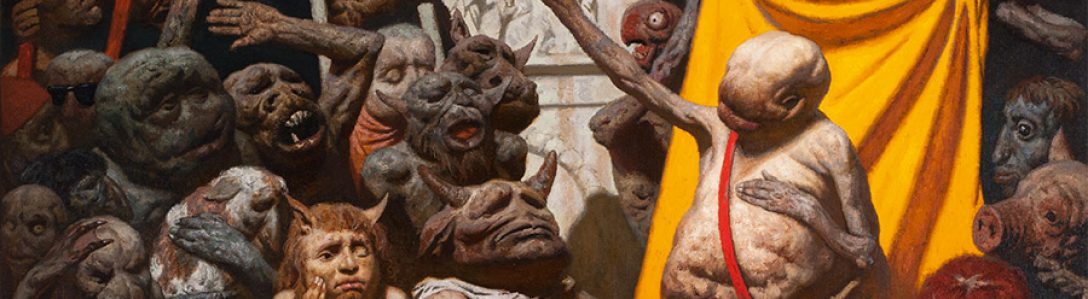
I, Mary — Ivan Albright

default

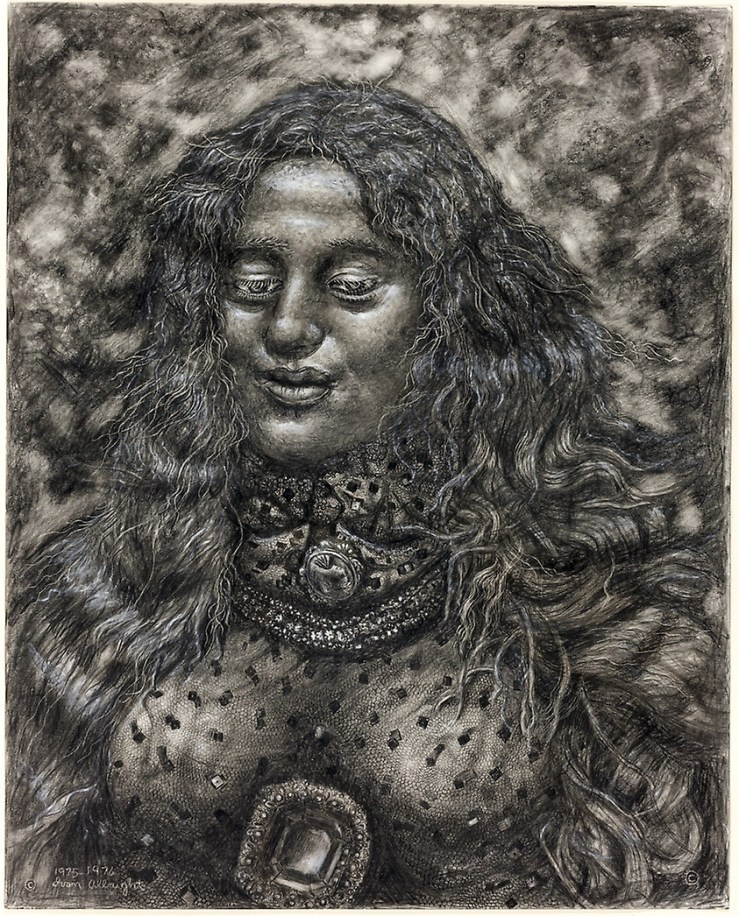
I, Mary, 1976 by Ivan Albright (1897-1983)

Asclepius’ Dream — Agostino Arrivabene

il-sogno-di-asclepio

Asclepius’ Dream, 2016 by Agostino Arrivabene (b. 1967)

Slither — Dana Holst

holst_slither_2018-1024x679-1

Slither, 2018 by Dana Holst (b. 1972)

The Room No. VI — Eldzier Cortor

default-1

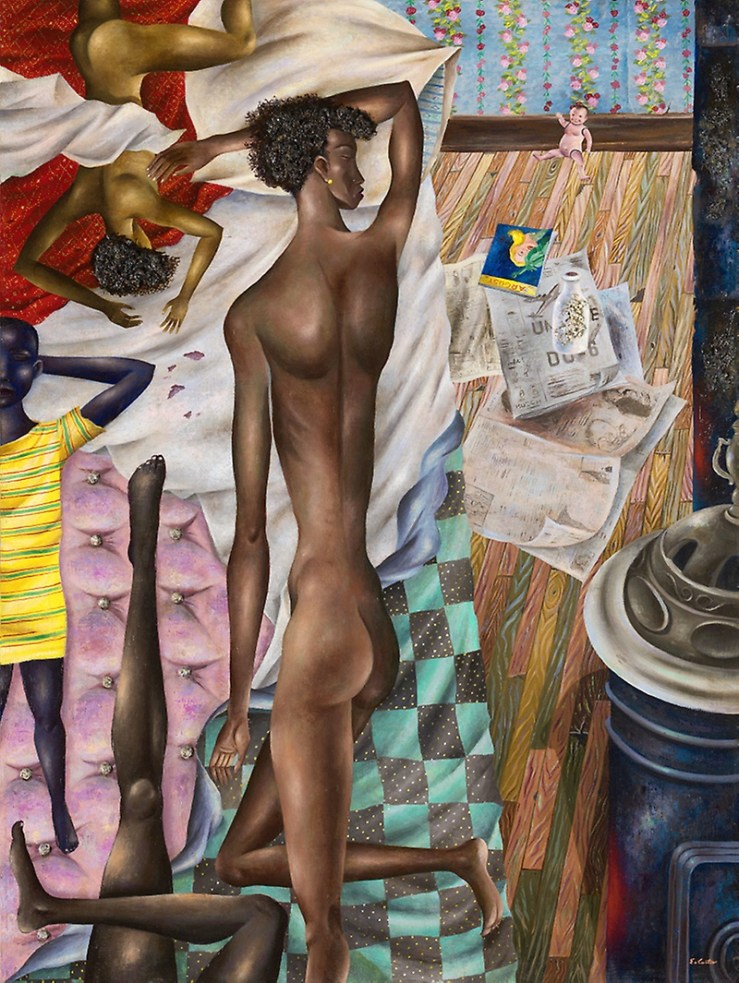
The Room No. VI, 1948 by Eldzier Cortor (1916–2015)

Mineral Colloquium — Lenor Fini

colloque-minerale-med

Mineral Colloquium, 1960 by Leonor Fini (1908-1996)

Posted in Art

Source of the Blue Loue — Mark Tansey

819N09858_5RKSX_install_web

Source of the Blue Loue, 1982 by Mark Tansey (b. 1949)

Tuesday — Peter Blake

Tuesday 1961 by Peter Blake born 1932

Tuesday, 1961 by Peter Blake (b. 1932)

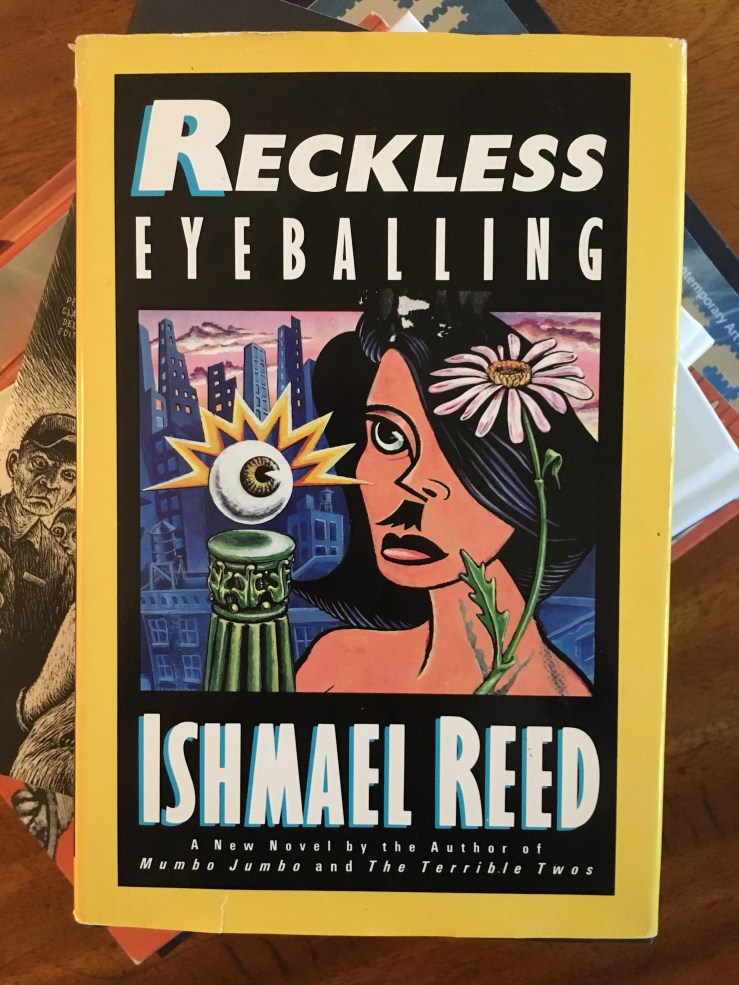
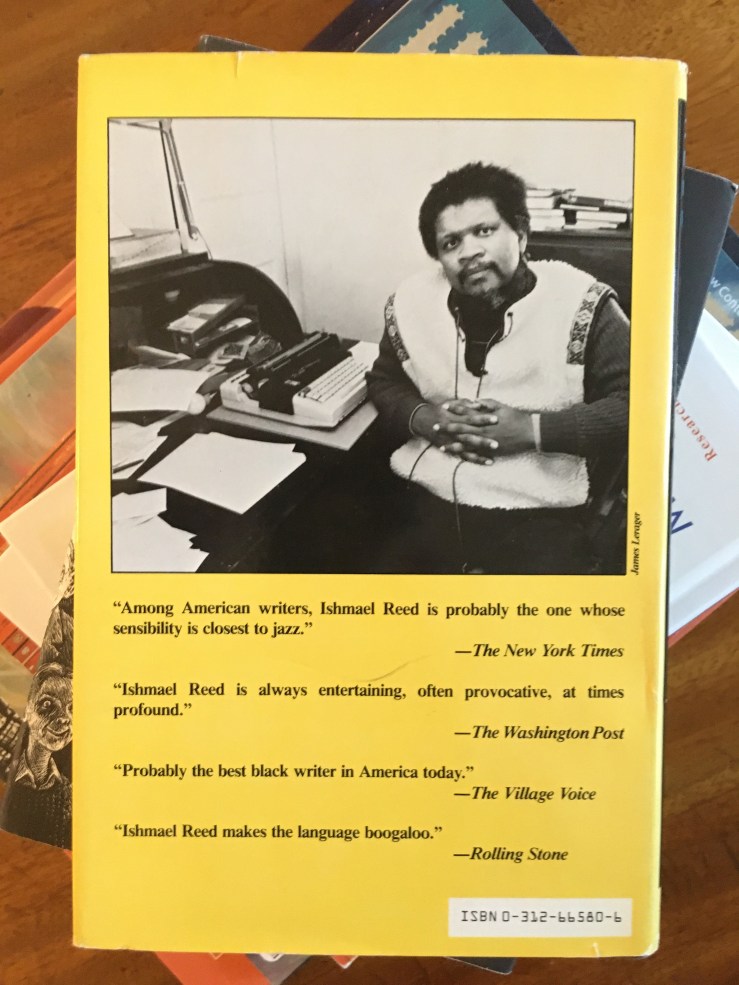
Ishmael Reed’s Reckless Eyeballing (Book acquired 13 Jan. 2020)

img_4728

I got an email from an independent bookseller a few days ago confirming that I bought a copy of  Ishamel Reed’s 1986 novel Reckless Eyeballing. I had no recollection of purchasing the novel online, although this kind of thing has happened more than once. It was a Saturday night; I may or may not have had a few tumblers of scotch, and was probably jonesing for more Reed after having finished Flight to Canada. Anyway, it showed up today. Here is the back cover:

img_4730

And here is the first paragraph of Larry McCaffery’s contemporary review of the novel in The Los Angeles Times:

Early on in “Reckless Eyeballing,” one of the book’s many beleaguered black men observes that “throughout history when the brothers feel that they’re being pushed against the wall, they strike back and when they do strike back it’s like a tornado, uprooting, flinging about, and dashing to pieces everything in its path.” This passage provides a perfect entryway into Ishmael Reed’s latest novel, for like many other black men, Reed obviously feels that “the brothers” are catching it from all sides–and not just from the usual sources of racial bigotry, but from ‘60s liberals now turned neo-conservatives, from white feminists who propagate the specter of the black men as phallic oppressor, from other racial minorities anxious to wrest various monkeys off their own backs.

Painter’s Deathbed — Nigel Cooke

COOKN-00422 001

Painter’s Deathbed, 2008 by Nigel Cooke (b. 1973)

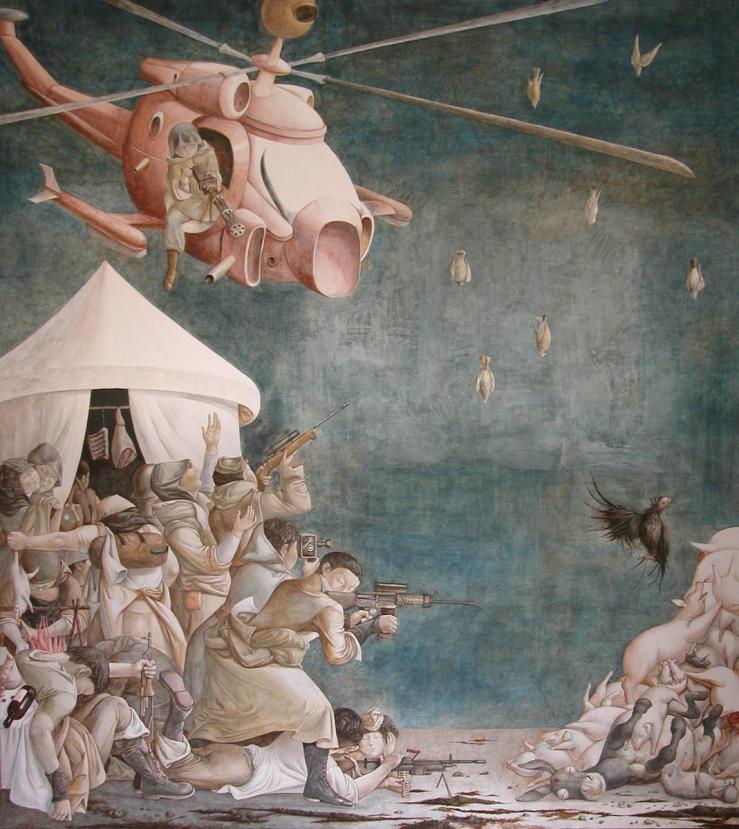
Hunting — Xiao Guo Hui

hunting-1520941117-picture

Hunting, 2017 by Xiao Guo Hui (b. 1969)

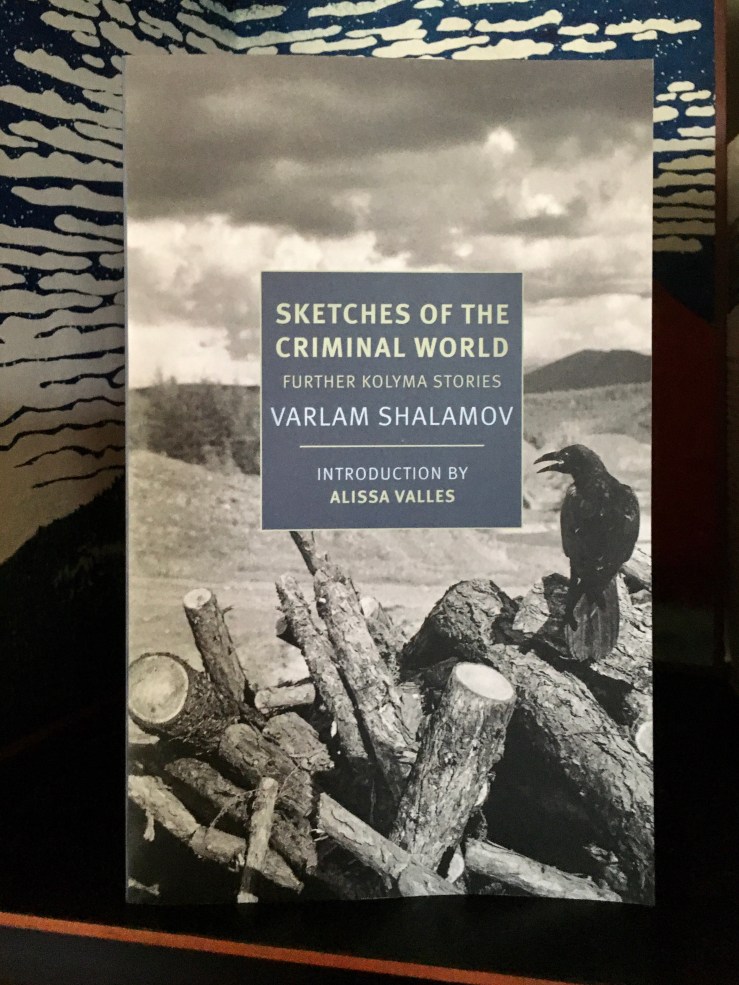
Varlam Shalamov’s Sketches of the Criminal World (Book acquired sometime in Dec. 2019)

img_4720

A collection of Varlam Shalamov’s work, called Sketches of the Criminal World, is new from NYRB this week (translated by Donald Rayfield). I finally had a chance to dip into some of Shalamov’s Gulag tales this afternoon, and it’s probably not the right comparison at all, but something about what I read reminded me of Roberto Bolaño’s fiction, or some of his fiction. NYRB’s blurb:

n 1936, Varlam Shalamov, a journalist and writer, was arrested for counterrevolutionary activities and sent to the Soviet Gulag. He survived fifteen years in the prison camps and returned from the Far North to write one of the masterpieces of twentieth-century literature, an epic array of short fictional tales reflecting the years he spent in the Gulag. Sketches of the Criminal World is the second of two volumes (the first, Kolyma Stories, was published by NYRB Classics in 2018) that together constitute the first complete English translation of Shalamov’s stories and the only one to be based on the authorized Russian text.

In this second volume, Shalamov sets out to answer the fundamental moral questions that plagued him in the camps where he encountered firsthand the criminal world as a real place, far more evil than Dostoyevsky’s underground: “How does someone stop being human?” and “How are criminals made?” By 1972, when he was writing his last stories, the camps were being demolished, the guard towers and barracks razed. “Did we exist?” Shalamov asks, then answers without hesitation, “I reply, ‘We did.’”