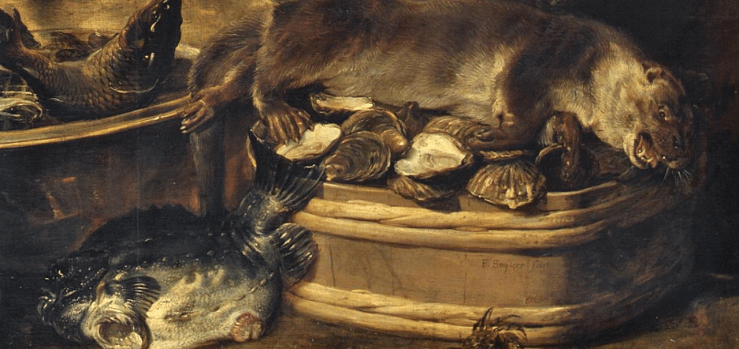
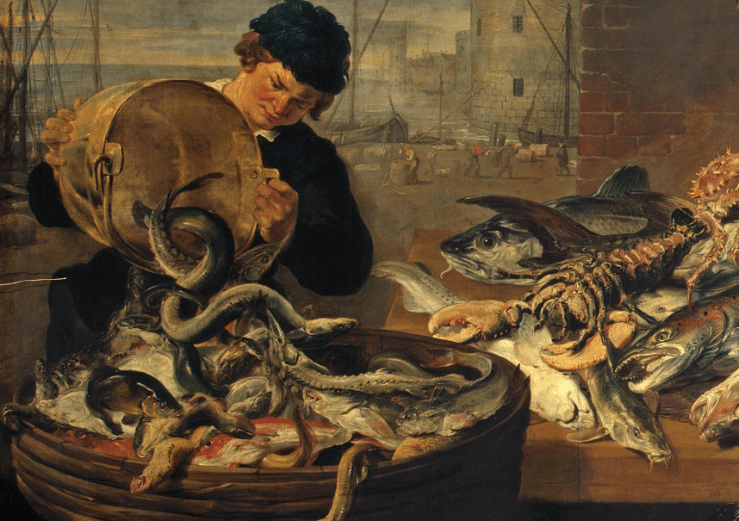
Fish Stall (Detail) — Frans Snyders

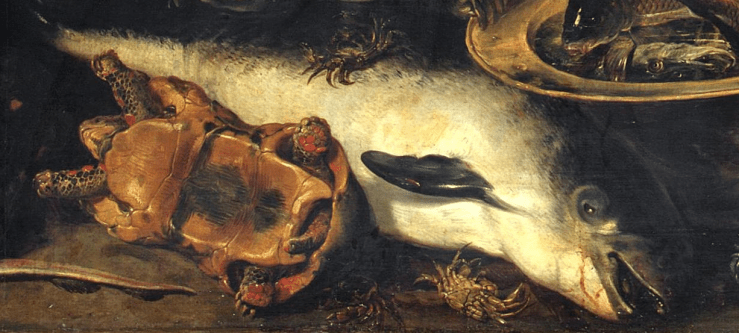
Fish Stall (Detail), c. 1620  by Frans Snyders (1579–1657)

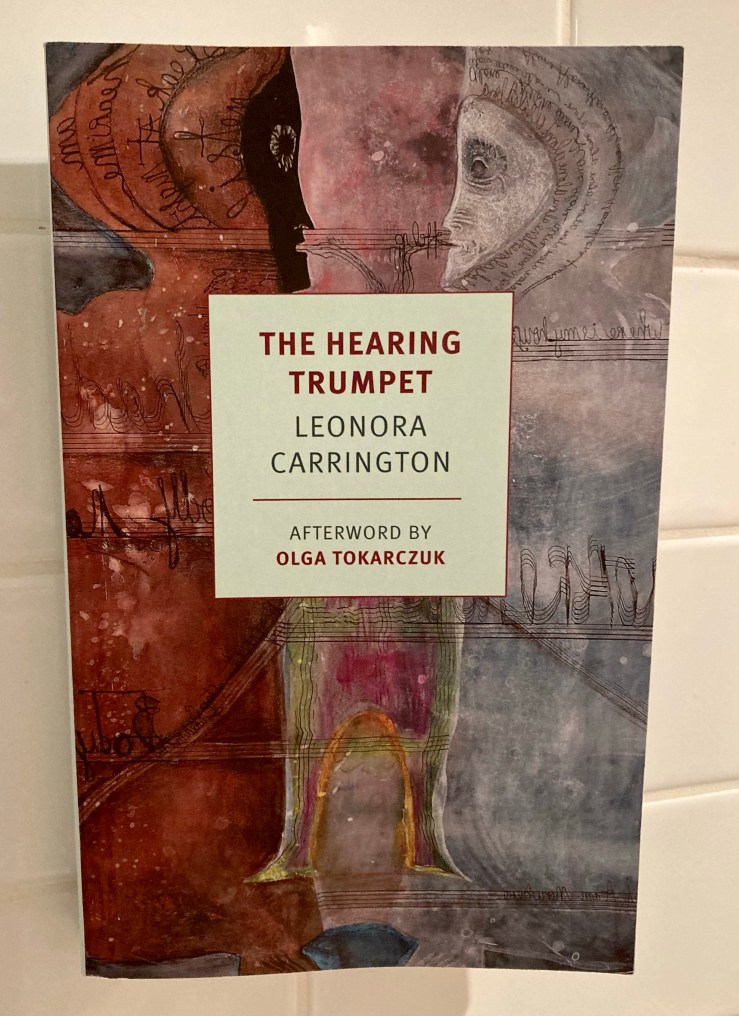
Leonora Carrington’s The Hearing Trumpet (Book acquired, 1 Dec. 2020)

NYRB will have a new edition of surrealist painter Leonora Carrington’s 1976 novel The Hearing Trumpet out in early January of 2021. I started it this afternoon, and the first 20 or so pages seem to divert in style from the short stories I’ve read by her—definitely chock full of quirky imagery, but also relatively straightforward in their execution. At around the 20 page mark, though, the narrative dips into demented dreamland. Ali Smith’s blurb promises there’s more under the surface:

The Hearing Trumpet . . . reads on its parodic surface like an Agatha Christie domestic mystery, but one melted, dissolved by extreme heat into something unthinkably other, and reconstructed as the casebook of an alchemist. . . . It asks its readers to allow the dark, allow the wild and rethink how power works. It is a work of massive optimism. . . . One of the most original, joyful, satisfying, and quietly visionary novels of the twentieth century.

I also love the blurb from Luis Buñuel:

Reading The Hearing Trumpet liberates us from the miserable reality of our days.

Here’s NYRB’s blurb:

Leonora Carrington, painter, playwright, and novelist, was a surrealist trickster par excellence, and The Hearing Trumpet is the witty, celebratory key to her anarchic and allusive body of work. The novel begins in the bourgeois comfort of a residential corner of a Mexican city and ends with a man-made apocalypse that promises to usher in the earth’s rebirth. In between we are swept off to a most curious old-age home run by a self-improvement cult and drawn several centuries back in time with a cross-dressing Abbess who is on a quest to restore the Holy Grail to its rightful owner, the Goddess Venus. Guiding us is one of the most unexpected heroines in twentieth-century literature, a nonagenarian vegetarian named Marian Leatherby, who, as Olga Tokarczuk writes in her afterword, is “hard of hearing” but “full of life.”

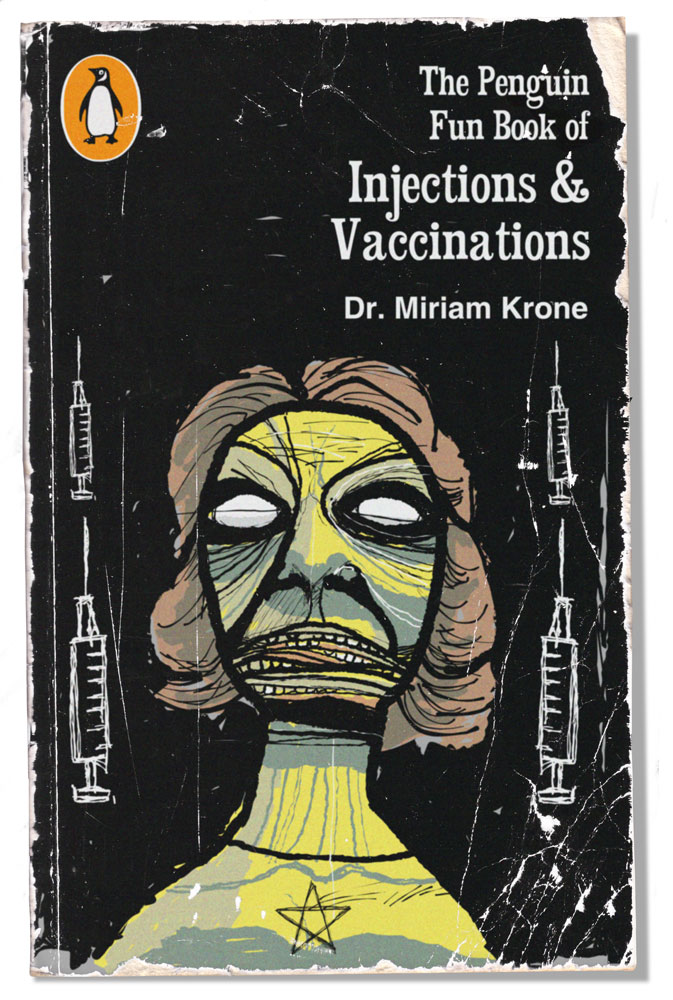
The Penguin Fun Book of Injections & Vaccinations

Via; more Scarfolk.

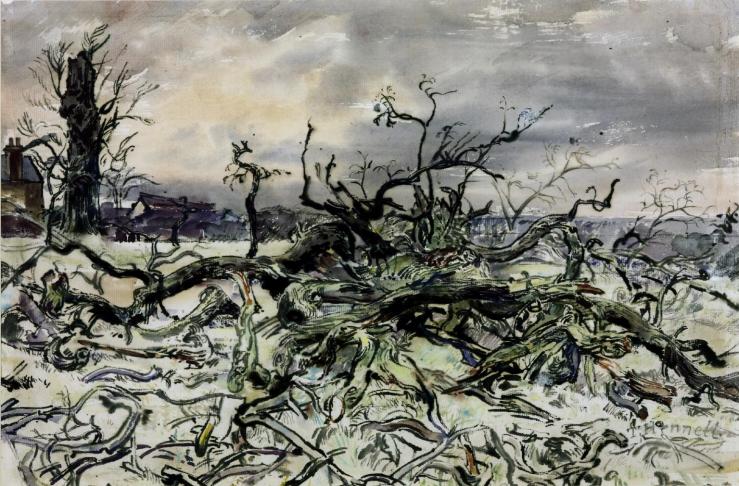
The Tree — Thomas Hennell

The Tree, c.1938-40 by Thomas Hennell (1903-1945)

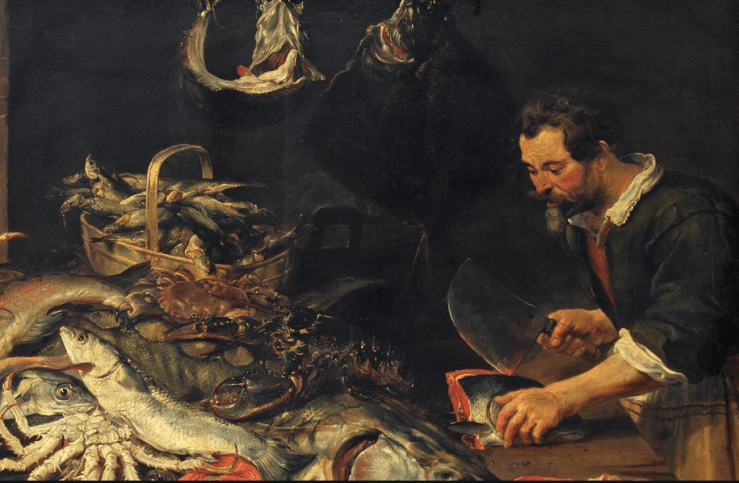
Fish Stall (Detail) — Frans Snyders

Fish Stall (Detail), c. 1620  by Frans Snyders (1579–1657)

It wasn’t so bad really, the commercial Christmas (Walker Percy)

…it all comes back, the old pleasant month-long Santy-Claus-store-window Christmas. It wasn’t so bad really, the commercial Christmas, a month of Christmas Eves, stores open every night, everyone feeling good and generous and spending money freely, handsome happy Americans making the cash registers jingle, the nice commercial carols, Holy Night, the soft-eyed pretty girls everywhere—

From Walker Percy’s 1971 dystopian speculative fiction novel Love in the Ruins. The narrator, Dr. Thomas More, a bit drunk, reflects back to the pre-revolutionary days of a commercial Christmas.

Do Electric Sheep Dream of Transgenic Flowers? — Clive Smith

Do Electric Sheep Dream of Transgenic Flowers?, 2019 by Clive Smith (b. 1967)

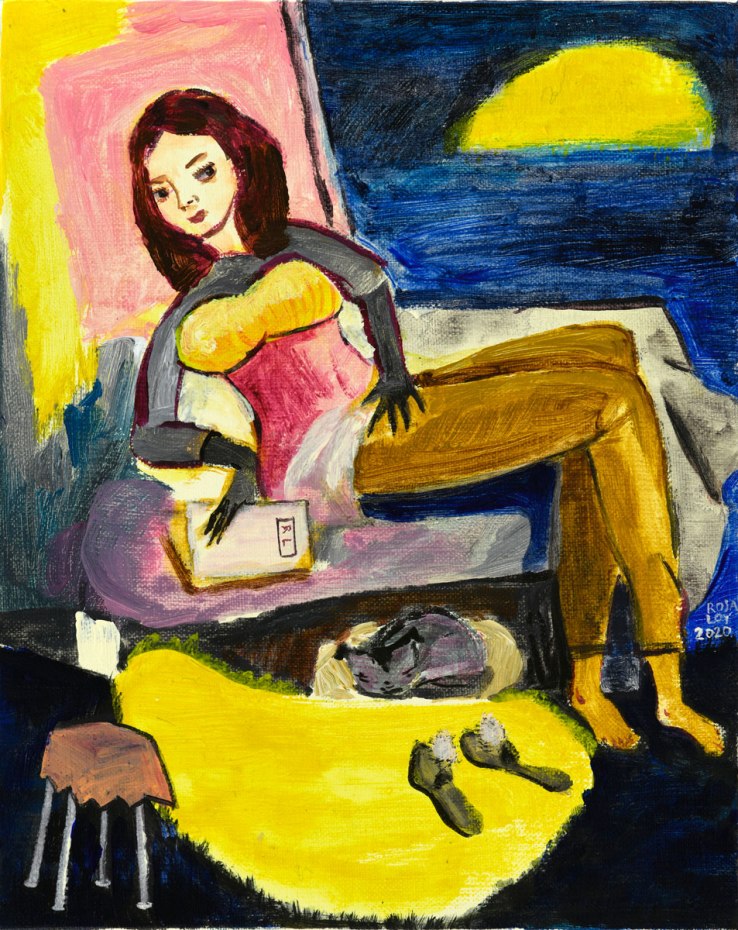
Rough Nights — Rosa Loy

Rauhnächte (Rough Nights), 2020 by Rosa Loy (b. 1958)

Fish Stall (Detail) — Frans Snyders

Fish Stall (Detail), c. 1620  by Frans Snyders (1579–1657)

December — Paul Jacoulet

December, 1953 by Paul Jacoulet (1896-1960)

Theory of Catastrophe — Malcolm Morley

Theory of Catastrophe, 2004 by Malcolm Morley (1931-2018)

“House: Some Instructions” — Grace Paley

“House: Some Instructions”

by

Grace Paley


If you have a house
you must think about it all the time
as you reside in the house so
it must be a home in your mind

you must ask yourself (wherever you are)
have I closed the front door

and the back door is often forgotten
not against thieves necessarily

but the wind oh if it blows
either door open then the heat

the heat you’ve carefully nurtured
with layers of dry hardwood

and a couple of opposing green
brought in to slow the fire

as well as the little pilot light
in the convenient gas backup

all of that care will be mocked because
you have not kept the house on your mind

but these may actually be among
the smallest concerns for instance

the house could be settling you may
notice the thin slanting line of light

above the doors you have to think about that
luckily you have been paying attention

the house’s dryness can be humidified
with vaporizers in each room and pots

of water on the woodstove should you leave
for the movies after dinner ask yourself

have I turned down the thermometer
and moved all wood paper away from the stove

the fiery result of excited distraction
could be too horrible to describe

now we should talk especially to Northerners
of the freezing of the pipe this can often

be prevented by pumping water continuously
through the baseboard heating system

allowing the faucet to drip drip continuously
day and night you must think about the drains

separately in fact you should have established
their essential contribution to the ordinary

kitchen and toilet life of the house
digging these drains deep into warm earth

if it hasn’t snowed by mid-December you
must cover them with hay sometimes rugs

and blankets have been used do not be
troubled by their monetary value

as this is a regionally appreciated emergency
you may tell your friends to consider

your house as their own that is
if they do not wear outdoor shoes

when thumping across the gleam of their poly-
urethaned floors they must bring socks or slippers

to your house as well you must think
of your house when you’re in it and

when you’re visiting the superior cabinets
and closets of others when you approach

your house in the late afternoon
in any weather green or white you will catch

sight first of its new aluminum snow-resistant
roof and the reflections in the cracked windows

its need in the last twenty-five years for paint
which has created a lovely design

in russet pink and brown the colors of un-
intentioned neglect you must admire the way it does not

(because of someone’s excellent decision
sixty years ago) stand on the high ridge deforming

the green profile of the hill but rests in the modesty
of late middle age under the brow of the hill with

its back to the dark hemlock forest looking steadily
out for miles toward the cloud refiguring meadows and

mountains of the next state coming up the road
by foot or auto the house can be addressed personally

House! in the excitement of work and travel to
other people’s houses with their interesting improvements

we thought of you often and spoke of your coziness
in winter your courage in wind and fire your small

airy rooms in humid summer how you nestle in spring
into the leaves and flowers of the hawthorn and the sage green

leaves of the Russian olive tree House! you were not forgotten

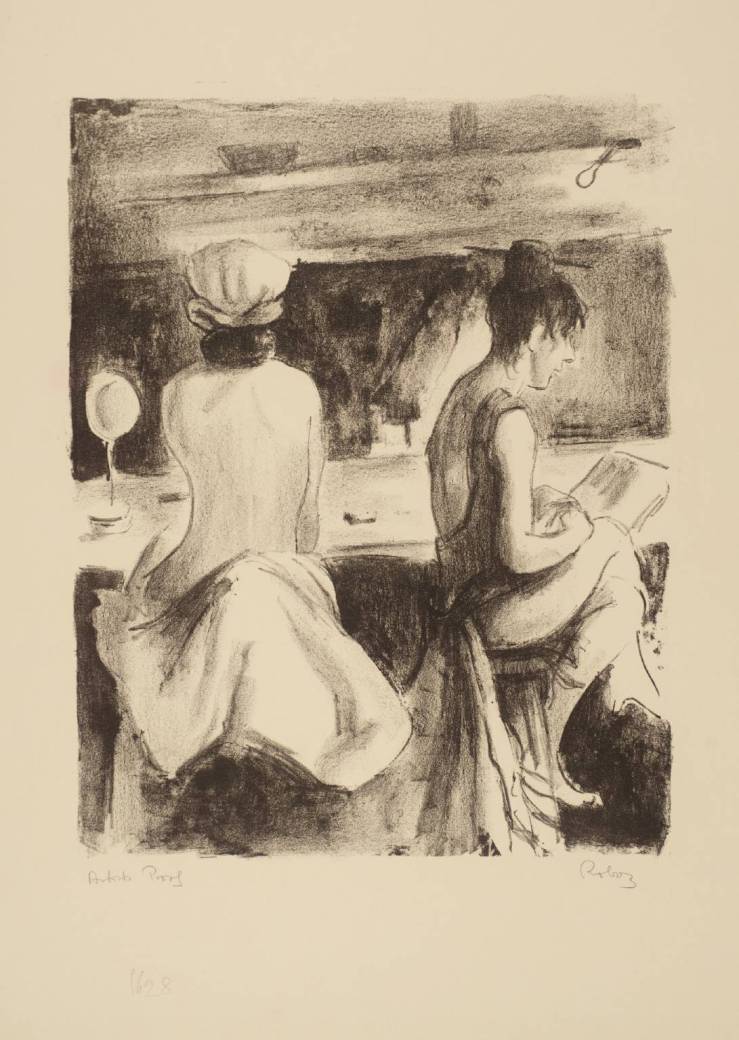
Interval — Zsuzsi Roboz

Interval, 1975 by Zsuzsi Roboz (1939–2012)

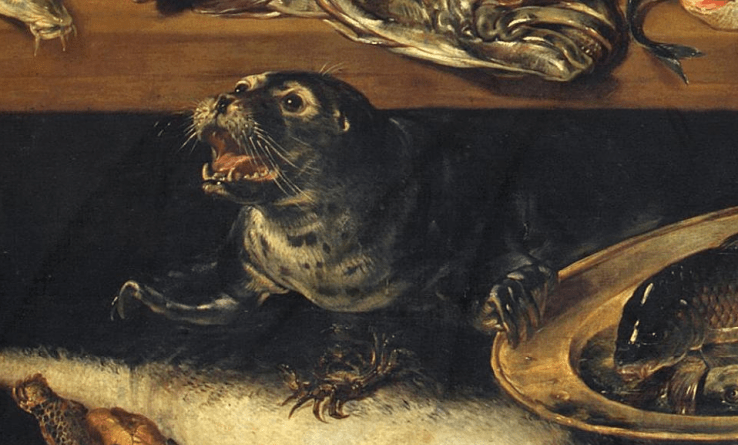
Fish Stall (Detail) — Frans Snyders

Fish Stall (Detail), c. 1620  by Frans Snyders (1579–1657)

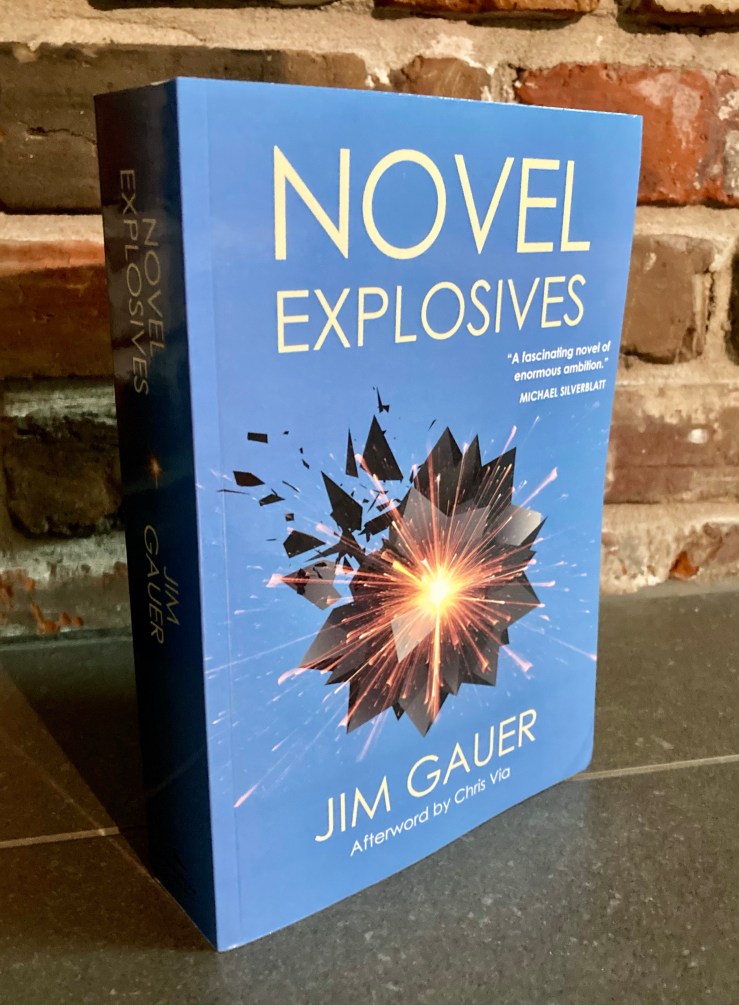
Jim Gauer’s Novel Explosives (Book acquired, 30 Nov. 2020)

Oof she’s a big boy. Jim Gauer’s 2016 novel Novel Explosives showed up at Biblioklept World Headquarters on Sunday (a rare day for acquisitions). The novel has been praised by folks like Michael Silverblatt, Steven Moore, and Matt Bucher, and has been compared to the work of Pynchon, Bolaño, and Gaddis. It’s also pretty damn long. Anyway, Novel Explosives is being reprinted by indie Zerogram; their blurb:

IT’S THE WEEK AFTER EASTER, APRIL 13-20, AN OTHERWISE ORDINARY WEEK IN 2009… LATE in the week, a man wakes up in Guanajuato, Mexico, with his knowledge intact, but with no sense of who he is, or how he came to Guanajuato. EARLY in the week, a venture capital investor sits at his desk in Santa Monica, California, attempting to complete his business memoirs, but troubled by the fact that a recent deal appears to be some sort of money-laundering scheme. IN THE MIDDLE of the week, two gunmen for the Juárez Drug Cartel arrive at a small motel in El Paso, assigned to retrieve a suitcase full of currency, and eliminate the man who brought it to El Paso. THUS BEGINS the three-stranded narrative of Novel Explosives, a search for identity that travels through the worlds of venture capital finance, high-tech money-laundering methods, and the Juárez drug wars, a joyride of a novel with only one catch: the deeper into the book you go, the more dangerous it gets.

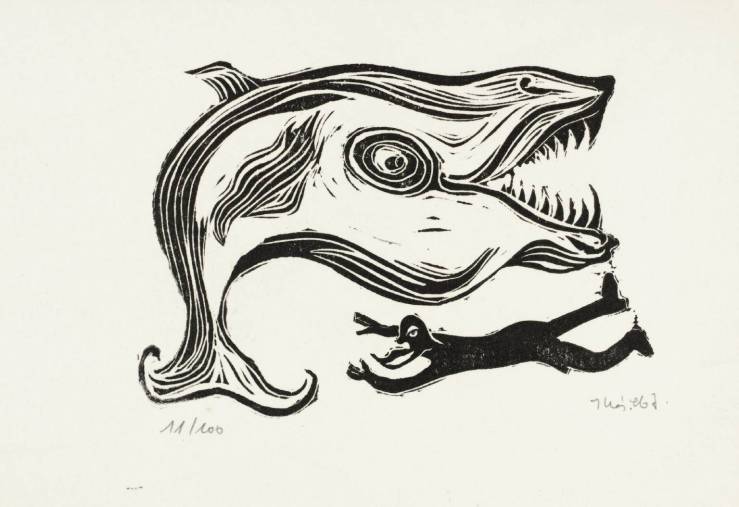
Jonah and the Whale — Arpad Illes

Jonah and the Whale, 1967 by Arpad Illes (1908–1980)

Shipmates, this book, containing only four chapters—four yarns—is one of the smallest strands in the mighty cable of the Scriptures. Yet what depths of the soul does Jonah’s deep sealine sound! what a pregnant lesson to us is this prophet! What a noble thing is that canticle in the fish’s belly! How billow-like and boisterously grand! We feel the floods surging over us; we sound with him to the kelpy bottom of the waters; sea-weed and all the slime of the sea is about us! But what is this lesson that the book of Jonah teaches? Shipmates, it is a two-stranded lesson; a lesson to us all as sinful men, and a lesson to me as a pilot of the living God. As sinful men, it is a lesson to us all, because it is a story of the sin, hard-heartedness, suddenly awakened fears, the swift punishment, repentance, prayers, and finally the deliverance and joy of Jonah. As with all sinners among men, the sin of this son of Amittai was in his wilful disobedience of the command of God—never mind now what that command was, or how conveyed—which he found a hard command. But all the things that God would have us do are hard for us to do—remember that—and hence, he oftener commands us than endeavors to persuade. And if we obey God, we must disobey ourselves; and it is in this disobeying ourselves, wherein the hardness of obeying God consists.

From “The Sermon,” Ch. 9 of Herman Melville’s Moby-Dick.

Fish Stall (Detail) — Frans Snyders

Fish Stall (Detail), c. 1620  by Frans Snyders (1579–1657)