“The Best Reader Is One Who Is Most Open to Human Possibility” — Don DeLillo

From a 1982  NYT profile of Don DeLillo. DeLillo talks Pynchon, Gaddis, and reader responsibility.

THE writer to whom Mr. DeLillo has most often been likened and for whom he has great respect is Thomas Pynchon. ”Somebody quoted Norman Mailer as saying that he wasn’t a better writer because his contemporaries weren’t better,” he says. ”I don’t know whether he really said that or not, but the point I want to make is that no one in Pynchon’s generation can make that statement. If we’re not as good as we should be it’s not because there isn’t a standard. And I think Pynchon, more than any other writer, has set the standard. He’s raised the stakes.”

Mr. DeLillo also praises William Gaddis for extending the possibilities of the novel by taking huge risks and making great demands on his readers. Yet many readers complain about the abstruseness of much contemporary writing.

”A lot of characters,” Mr. DeLillo says, ”have become pure act. The whole point in certain kinds of modern writing is that characters simply do what they do. There isn’t a great deal of thought or sentiment or literary history tied up in the actions of characters. Randomness is always hard to absorb.”

Mr. DeLillo believes that it is vital that readers make the effort. ”The best reader,” he says, ”is one who is most open to human possibility, to understanding the great range of plausibility in human actions. It’s not true that modern life is too fantastic to be written about successfully. It’s that the most successful work is so demanding.” It is, he adds, as though our better writers ”feel that the novel’s vitality requires risks not only by them but by readers as well. Maybe it’s not writers alone who keep the novel alive but a more serious kind of reader.”

I’m Here — Spike Jonze

(A Very Beautiful) Book Acquired, 9.27.2011

20111004-142338.jpg

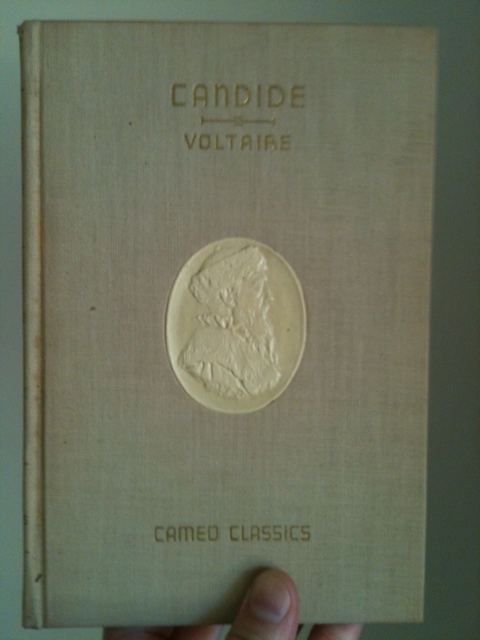
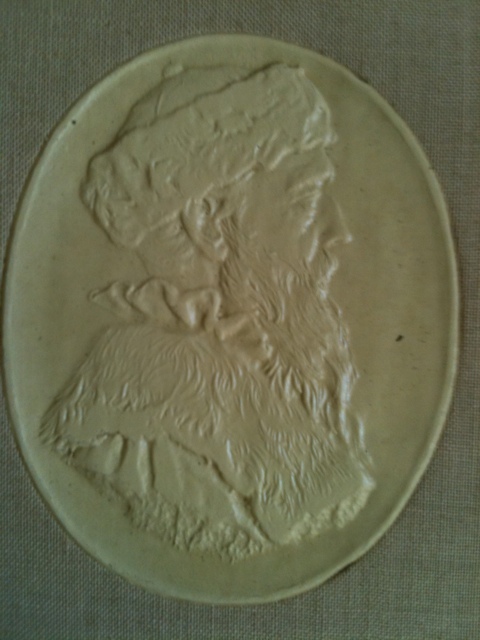
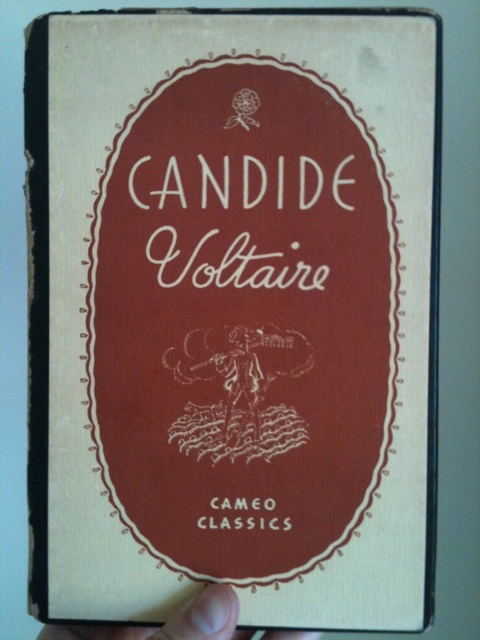
What a wonderful present: a 1930 Grosset & Dunlap edition Candide (read our review of Candide). Received it last week, but I’ve been to busy to photograph it. Has a nice slipcase (above), and the cover sports a tactile cameo of Gutenberg in profile—

20111004-142346.jpg

20111004-142354.jpg

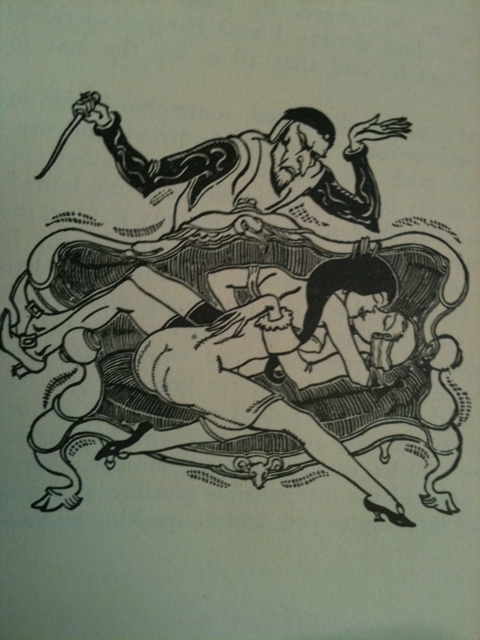
Illustrations are by Mahlon Blaine, and inevitably involve sex and/or violence—like this one below—

20111004-143419.jpg

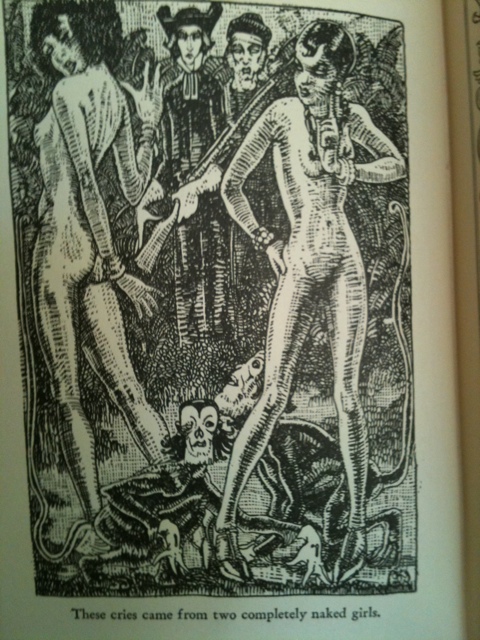
There a number of handsome full page illustrations as well. Just lovely.

20111004-143428.jpg

Nobel Lit Odds, 10.04.2011

Via The New Yorker’s Book Bench blog, current odds (and yeah, we know, they change) from Ladbrokes for the 2011 Nobel Prize in Literature (the oddsmaker’s name is Magnus Puke, by the by).

Adonis (Syria): 4/1
Tomas Tranströmer (Sweden): 7/1
Haruki Murakami (Japan): 8/1
Bob Dylan (U.S.): 10/1
Assia Djebar (Algeria): 12/1
Peter Nadas (Hungary): 12/1
Ko Un (South Korea): 14/1
Les Murray (Australia): 16/1
Thomas Pynchon (U.S.): 20/1
Philip Roth (U.S.): 20/1
Nuruddin Farah (Somalia): 20/1

While it’s easy to dismiss literary competitions as trifling or even crass, they do much—particularly high profile ones like the Nobel or the Pulitzer—to augment the readership of these authors, cement the winner’s canonical place, and expose the winner to a larger audience. They also help writers get paid better, which is a good thing.

The odds don’t really mean that much of course—this time last year, Cormac McCarthy was the favorite with an 8:1 lead.

“We Are the Origin of Evil” — Carl Jung on Death, Nihilism, and Humanity

“Religion Would Thus Be the Universal Obsessional Neurosis of Humanity” — Sigmund Freud

From Freud’s The Future of an Illusion, which should be required reading for any thinking person—

We know that a human child cannot successfully complete its development to the civilized stage without passing through a phase of neurosis sometimes of greater and sometimes of less distinctness. This is because so many instinctual demands which will later be unserviceable cannot be suppressed by the rational operation of the child‘s intellect but have to be tamed by acts of repression, behind which, as a rule, lies the motive of anxiety. Most of these infantile neuroses are overcome spontaneously in the cause of growing up, and this is especially true of the obsessional neuroses of childhood. The remainder can be cleared up later still by psycho-analytic treatment. In just the same way, one might assume, humanity as a whole, in its development through the ages, fell into states analogous to the neuroses,‘ and for the same reasons – namely because in the times of its ignorance and intellectual weakness the instinctual renuncia­tions indispensable for man‘s communal existence had only been achieved by it by means of purely affective forces. The precipitates of these processes resembling repression which took place in prehistoric times still remained attached to civilization for long periods. Religion would thus be the universal obsessional neurosis of humanity; like the obsessional neurosis of children, it arose out of the Oedipus complex, out of the relation to the father. If this view is right, it is to be supposed that a turning-away from religion is bound to occur with the fatal inevitability of a process of growth, and that we find our­selves at this very juncture in the middle of that phase of development.

John Kricfalusi’s Simpsons Couch Gag

Sigmund Freud — Salvador Dali

Sunday Reading, 10.02.2011

20111002-140847.jpg

Nostalgia of Cannibal — Salvador Dali

“When the Whole World Doesn’t Believe in God, It’ll Be a Great Place” — Philip Roth

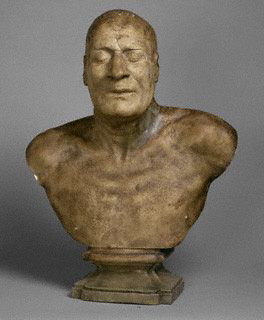
Samuel Johnson’s Death Mask

Cannibalism in Autumn — Salvador Dali

Lydia Davis Reads Dream Stories

“I Write Stories About a Submerged Population” — Raymond Carver on Fiction, Class, and Political Writing

Raymond Carver talks about the political scope (or lack thereof) in his writing in a 1987 interview

A writer ought to speak about things that are important to him. As you know, I’ve taught in universities, in fact for some fifteen years. I had time there for other work, and I never wrote a single story about university life because it’s an experience that left no mark on my emotional life. I tend to go back to the time and the people I knew well when I was younger and who made a very strong impression on me . . . Some of my recent stories deal with executives. (For example, that one in The New Yorker, “Whoever Was Using This Bed,” where the people discuss things the characters in my earlier stories would never discuss). He’s a businessman, and so on. But most of the people in my stories are poor and bewildered, that’s true. The economy, that’s important . . . I don’t feel I’m a political writer and yet I’ve been attacked by right-wing critics in the U.S.A. who blame me for not painting a more smiling picture of America, for not being optimistic enough, for writing stories about the people who don’t succeed. But these lives are as valid as those of the go-getters. Yes, I take unemployment, money problems, and marital problems as givens in life. People worry about their rent, their children, their home life. That’s basic. That’s how 80-90 percent, or God knows how many people live. I write stories about a submerged population, people who don’t always have someone to speak for them. I’m sort of a witness, and, besides, that’s the life I myself lived for a long time. I don’t see myself as a spokesman but as a witness to these lives. I’m a writer.