
The Last Judgment (detail) by Alart du Hameel (c. 1478-c. 1506)

The Last Judgment (detail) by Alart du Hameel (c. 1478-c. 1506)
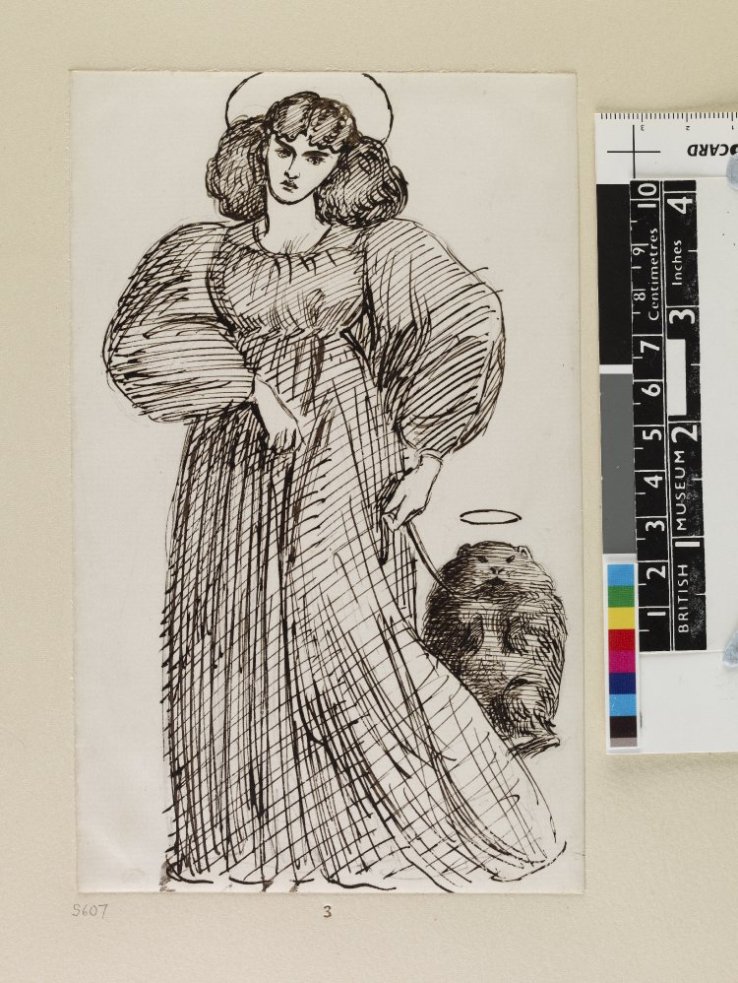
From Angus Trumble’s lecture “Rossetti’s Wombat: A Pre-Raphaelite Obsession in Victorian England”:
Rossetti finally arranged to buy a wombat, again through Jamrach, when at length a suitable specimen became available. This wombat arrived in September 1869, when he was away in Scotland. Rossetti was recovering from a kind of breakdown, largely precipitated by failing eyesight, insomnia, drugs and above all his growing infatuation with Jane Morris, the wife of his old friend and protégé [William Morris] from the Oxford Union days.
A remarkable drawing of Jane Morris and the wombat in the British Museum illustrates the degree to which lover and pet merged in Rossetti’s mind as objects of sanctification. Each of them wears a halo. But Jane has the wombat on a leash, and it seems clear that Rossetti also used his pet wombat as a cruelly comical emblem for Jane’s long-suffering, cuckolded husband. Since university days Morris was known to his friends as ‘Topsy’; the name Rossetti chose for his Wombat was ‘Top’.
Still shaky, Rossetti could not wait to get back to Chelsea from freezing Scotland. He wrote to Janethe following mock-heroic lines:
Oh! How the family affections combat
Within this heart; and each hour flings a bomb at
My burning soul; neither from owl nor from bat
Can peace be gained, until I clasp my wombat!

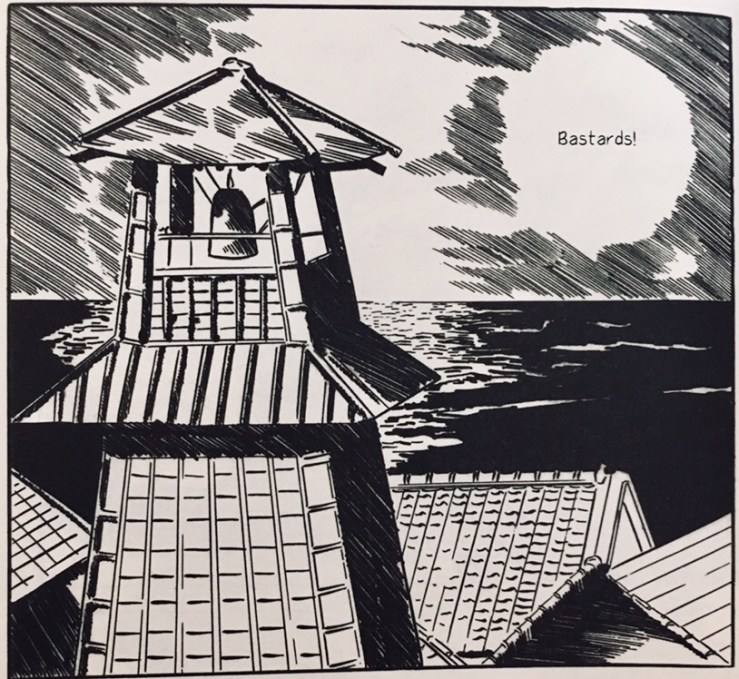
The New York Review of Books’ NYRC imprint has put together Slum Wolf, a collection of Tadao Tsuge’s stories new in English translation by Ryan Holmberg (who provides a long afterword to the volume).
Tadao Tsuge is one of the pioneers of alternative manga, and one of the world’s great artists of the down-and-out. Slum Wolf is a new selection of his stories from the late Sixties and Seventies, never before available in English: a vision of Japan as a world of bleary bars and rundown flophouses, vicious street fights and strange late-night visions. In assured, elegantly gritty art, Tsuge depicts a legendary, aging brawler, a slowly unraveling businessman, a group of damaged veterans uniting to form a shantytown, and an array of punks, pimps, and drunks, all struggling for freedom, meaning, or just survival.
I read “Bum Mutt” this afternoon and it was pretty weird and dark.
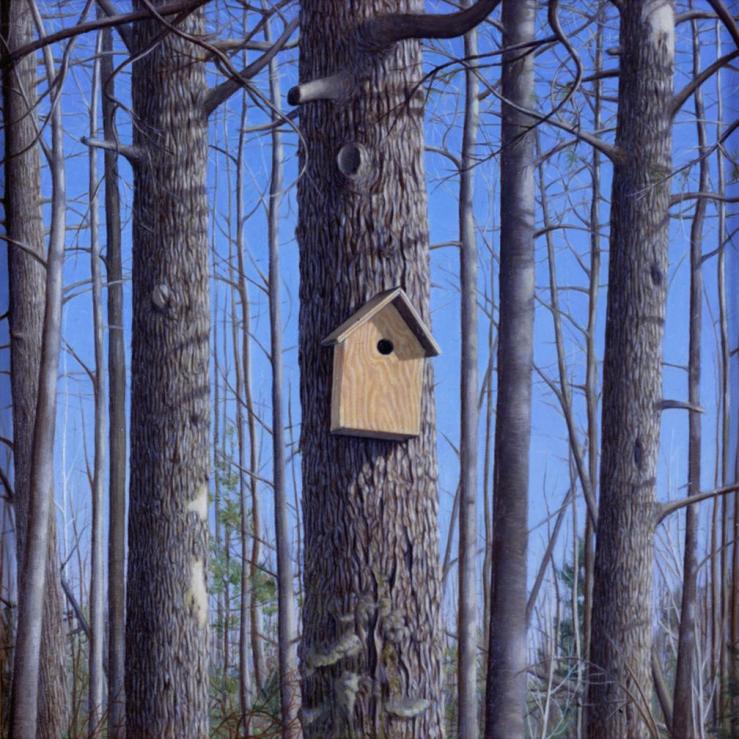
HOME, 1989 by Joe Houston (b. 1962)
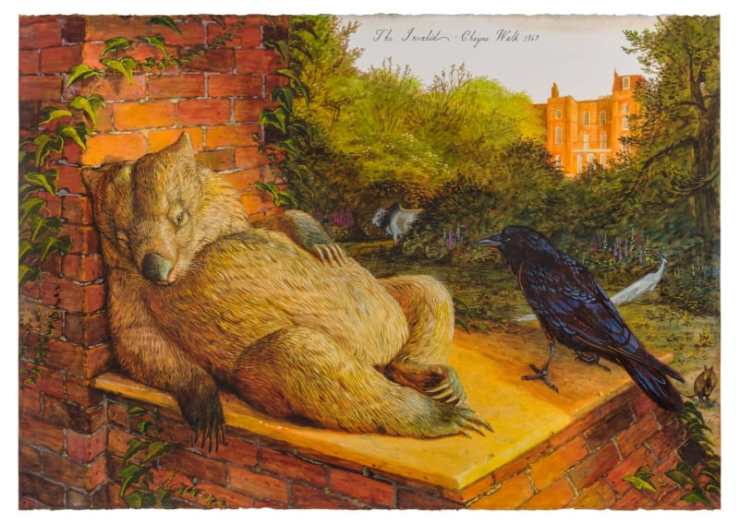
The Invalid – Cheyne Walk 1869, 2017 by Walton Ford (b. 1960)
The painting refers to the pet wombat of the Pre-Raphaelite painter Dante Gabriel Rossetti’s pet wombat Top, who died not long after Rossetti acquired the poor marsupial. From Angus Trumble’s fantastic lecture “Rossetti’s Wombat: A Pre-Raphaelite Obsession in Victorian England”:
In September 1869, Dante Gabriel Rossetti bought the first of two pet wombats….In the 1860s, Rossetti often took his friends to visit the wombats at the zoo, sometimes for hours on end. On one occasion Rossetti wrote to Ford Madox Brown: ‘Dear Brown: Lizzie and I propose to meet Georgie and Ned [the Burne-Jones] at 2 pm tomorrow at the Zoological Gardens—place of meeting, the Wombat’s Lair.’ In this period a number of new wombats arrived at the Regent’s Park Zoo: a rare, hairy-nosed wombat on 24 July 1862, and two common wombats despatched from the Melbourne Zoo on 18 March 1863. As well, Rossetti made regular visits with his brother, William Michael, to the Acclimatisation Society in London and its counterpart in Paris, to keep an eye on the hairy-nosed wombats residing in both places. This was no passing fancy.
Earlier, in 1862, Rossetti had moved to Tudor House, at 16 Cheyne Walk, Chelsea. Spacious, with plenty of room for family and friends including George Meredith and the deeply unattractive poet and semi-professional sadomasochist Algernon Charles Swinburne—who liked to slide naked down the banisters—the house had four-fifths of an acre of garden, with lime trees and a big mulberry. As soon as he arrived, Rossetti began to fill the garden with exotic birds and animals. There were owls, including a barn owl called Jessie, two or more armadillos, rabbits, dormice and a racoon that hibernated in a chest of drawers. There were peacocks, parakeets, and kangaroos and wallabies, about which we know frustratingly little. There was a Canadian marmot or woodchuck, a Pomeranian puppy called Punch, an Irish deerhound called Wolf, a Japanese salamander and two laughing jackasses. We know the neighbours were tolerant up to a point but Thomas Carlyle, for one, was driven mad by the noise. At length there was a small Brahmin bull that had to go when it chased Rossetti around the garden, and, in September 1869, a long-awaited wombat.
Shortly before this date there had been a number of animal deaths at Cheyne Walk, so Rossetti raised the animal-collecting stakes considerably. …His object was to purchase a young African elephant, but he balked at the price of £400. Rossetti’s income for 1865 was £2000.
…Soon, however, Top the wombat was ailing. William Michael wrote: ‘The wombat shows symptoms of some malady of the mange-kind, and he is attended by a dog doctor.’ The next day: ‘Saw the wombat again at Chelsea. I much fear he shows already decided symptoms of loss of sight which effects so many wombats.’ At length, on 6 November, the wombat died. Rossetti had him stuffed and afterwards displayed in the front hall.
Rossetti’s famous self-portrait with Top, the deceased wombat, is satirical but was apparently prompted by genuine grief. The accompanying verses are bleak indeed:
I never reared a young wombat
To glad me with his pin-hole eye,
But when he most was sweet and fat
And tailless, he was sure to die!
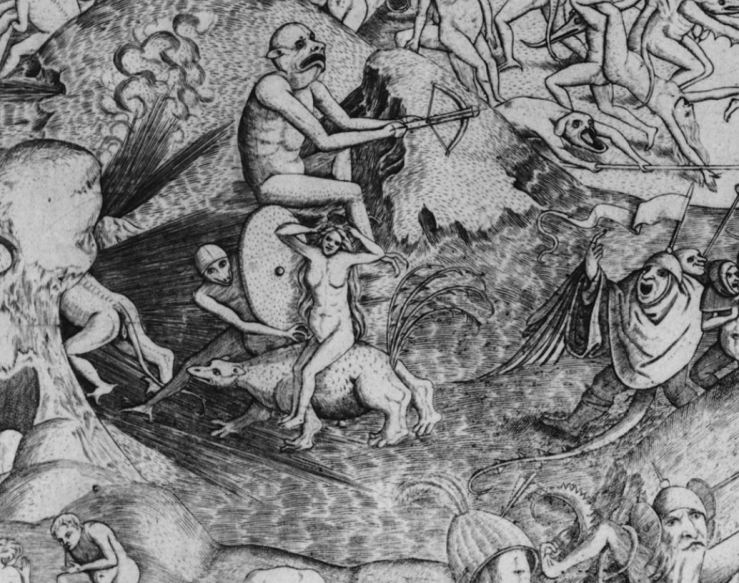
The Last Judgment (detail) by Alart du Hameel (c. 1478-c. 1506)
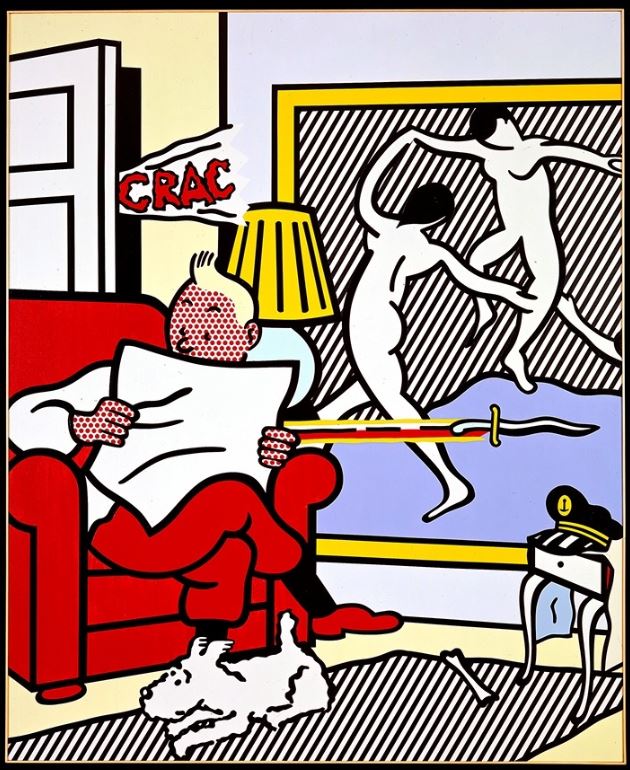
Tintin Reading, 1993 by Roy Lichtenstien (1923-1997)
As among Chaucer’s Canterbury pilgrims, or those oriental ones crossing the Red Sea towards Mecca in the festival month, there was no lack of variety. Natives of all sorts, and foreigners; men of business and men of pleasure; parlor men and backwoodsmen; farm-hunters and fame-hunters; heiress-hunters, gold-hunters, buffalo-hunters, bee-hunters, happiness-hunters, truth-hunters, and still keener hunters after all these hunters. Fine ladies in slippers, and moccasined squaws; Northern speculators and Eastern philosophers; English, Irish, German, Scotch, Danes; Santa Fé traders in striped blankets, and Broadway bucks in cravats of cloth of gold; fine-looking Kentucky boatmen, and Japanese-looking Mississippi cotton-planters; Quakers in full drab, and United States soldiers in full regimentals; slaves, black, mulatto, quadroon; modish young Spanish Creoles, and old-fashioned French Jews; Mormons and Papists Dives and Lazarus; jesters and mourners, teetotalers and convivialists, deacons and blacklegs; hard-shell Baptists and clay-eaters; grinning negroes, and Sioux chiefs solemn as high-priests. In short, a piebald parliament, an Anacharsis Cloots congress of all kinds of that multiform pilgrim species, man.
As pine, beech, birch, ash, hackmatack, hemlock, spruce, bass-wood, maple, interweave their foliage in the natural wood, so these mortals blended their varieties of visage and garb. A Tartar-like picturesqueness; a sort of pagan abandonment and assurance. Here reigned the dashing and all-fusing spirit of the West, whose type is the Mississippi itself, which, uniting the streams of the most distant and opposite zones, pours them along, helter-skelter, in one cosmopolitan and confident tide.
From Herman Melville’s novel The Confidence-Man: His Masquerade.
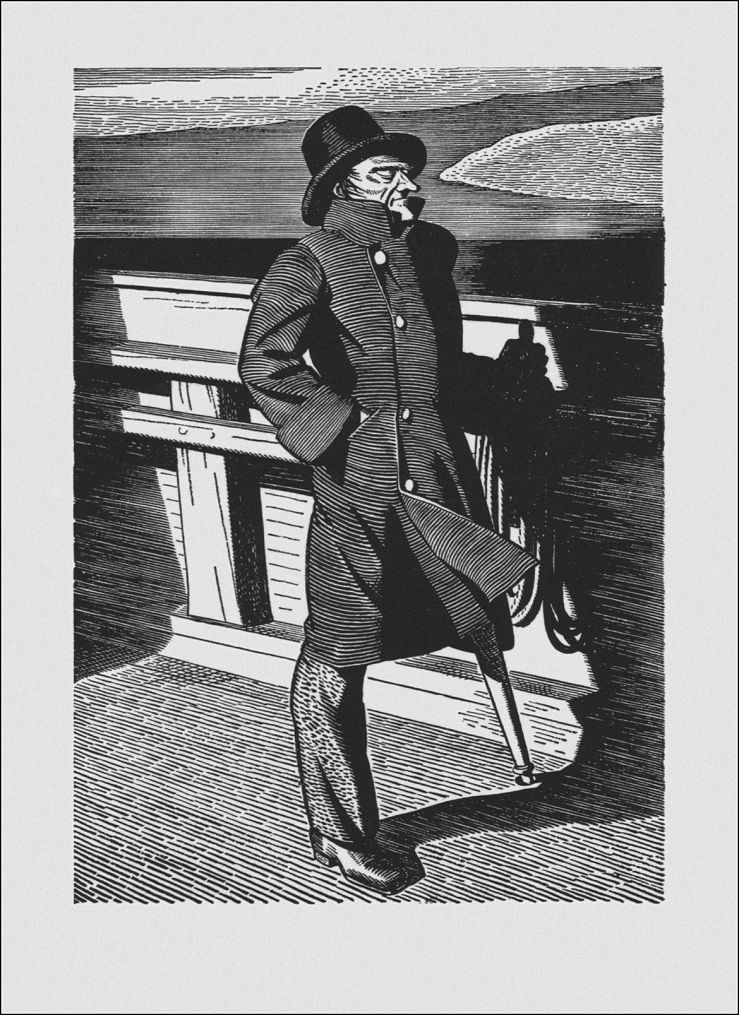
Captain Ahab, 1930 by Rockwell Kent (1882-1971)
What is it, what nameless, inscrutable, unearthly thing is it; what cozening, hidden lord and master, and cruel, remorseless emperor commands me; that against all natural lovings and longings, I so keep pushing, and crowding, and jamming myself on all the time; recklessly making me ready to do what in my own proper, natural heart, I durst not so much as dare? Is Ahab, Ahab? Is it I, God, or who, that lifts this arm? But if the great sun move not of himself; but is as an errand-boy in heaven; nor one single star can revolve, but by some invisible power; how then can this one small heart beat; this one small brain think thoughts; unless God does that beating, does that thinking, does that living, and not I. By heaven, man, we are turned round and round in this world, like yonder windlass, and Fate is the handspike.
From Chapter 132 of Herman Melville’s novel Moby-Dick.

The Last Judgment (detail) by Alart du Hameel (c. 1478-c. 1506)
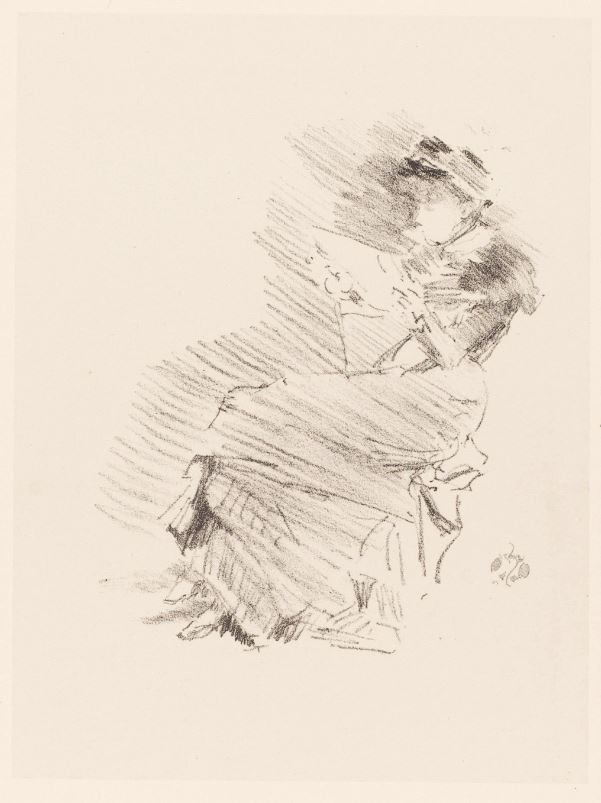
Reading, 1879 by James McNeill Whistler (1834-1903)
August 11th.–This morning, it being cloudy and boding of rain, the clouds had settled upon the mountains, both on the summits and ridges, all round the town, so that there seemed to be no way of gaining access to the rest of the world, unless by climbing above the clouds. By and by they partially dispersed, giving glimpses of the mountain ramparts through their obscurity, the separate clouds lying heavily upon the mountain’s breast. In warm mornings, after rain, the mist breaks forth from the forests on the ascent of the mountains, like smoke,–the smoke of a volcano; then it soars up, and becomes a cloud in heaven. But these clouds to-day were real rain-clouds. Sometimes, it is said, while laboring up the mountain-side, they suddenly burst, and pour down their moisture in a cataract, sweeping all before it.
Every new aspect of the mountains, or view from a different position, creates a surprise in the mind.
Scenes and characters–A young country fellow, twenty or thereabouts, decently dressed, pained with the toothache. A doctor, passing on horseback, with his black leather saddle-bags behind him, a thin, frosty-haired man. Being asked to operate, he looks at the tooth, lances the gum, and the fellow being content to be dealt with on the spot, he seats himself in a chair on the stoop with great heroism. The doctor produces a rusty pair of iron forceps; a man holds the patient’s head; the doctor perceives that, it being a difficult tooth to get at, wedged between the two largest in his jaws, he must pull very hard; and the instrument is introduced. A turn of the doctor’s hand; the patient begins to utter a cry, but the tooth comes out first, with four prongs . The patient gets up, half amazed, pays the doctor ninepence, pockets the tooth, and the spectators are in glee and admiration.
There was a fat woman, a stage-passenger to-day,–a wonder how she could possibly get through the door, which seemed not so wide as she. When she put her foot on the step, the stage gave a great lurch, she joking all the while. A great, coarse, red-faced dame. Other passengers,–three or four slender Williamstown students, a young girl, and a man with one leg and two crutches.
One of the most sensible men in this village is a plain, tall, elderly person, who is overseeing the mending of a road,–humorous, intelligent, with much thought about matters and things; and while at work he has a sort of dignity in handling the hoe or crowbar, which shows him to be the chief. In the evening he sits under the stoop, silent and observant from under the brim of his hat; but, occasion calling, he holds an argument about the benefit or otherwise of manufactories or other things. A simplicity characterizes him more than appertains to most Yankees.
A man in a pea-green frock-coat, with velvet collar. Another in a flowered chintz frock-coat. There is a great diversity of hues in garments. A doctor, a stout, tall, round-paunched, red-faced, brutal-looking old fellow, who gets drunk daily. He sat down on the step of our stoop, looking surly, and speaking to nobody; then got up and walked homeward, with a morose swagger and a slight unevenness of gait, attended by a fine Newfoundland dog.
A barouche with driver returned from beyond Greenfield or Troy empty, the passengers being left at the former place. The driver stops here for the night, and, while washing, enters into talk with an old man about the different roads over the mountain.
People washing themselves at a common basin in the bar-room! and using the common hair-brushes! perhaps with a consciousness of praiseworthy neatness!
A man with a cradle on his shoulder, having been cradling oats. I attended a child’s funeral yesterday afternoon. There was an assemblage of people in a plain, homely apartment. Most of the men were dressed in their ordinary clothes, and one or two were in shirtsleeves. The coffin was placed in the midst of us, covered with a velvet pall. A bepaid clergyman prayed (the audience remaining seated, while he stood up at the head of the coffin), read a passage of Scripture and commented upon it. While he read and prayed and expounded there was a heavy thunderstorm rumbling among the surrounding hills, and the lightning flashed fiercely through the gloomy room; and the preacher alluded to GOD’S voice of thunder.
It is the custom in this part of the country–and perhaps extensively in the interior of New England–to bury the dead first in a charnel-house, or common tomb, where they remain till decay has so far progressed as to secure them from the resurrectionists. They are then reburied, with certain ceremonies, in their own peculiar graves.
O. E. S—-, a widower of forty or upwards, with a son of twelve and a pair of infant twins. He is a sharp, shrewd Yankee, with a Yankee’s license of honesty. He drinks sometimes more than enough, and is guilty of peccadilloes with the fair sex; yet speaks most affectionately of his wife, and is a fond and careful father. He is a tall, thin, hard-featured man, with a sly expression of almost hidden grave humor, as if there were some deviltry pretty constantly in his mind,–which is probably the case. His brother tells me that he was driven almost crazy by the loss of his wife. It appears to me that men are more affected by the deaths of their wives than wives by the deaths of their husbands. Orrin S—- smokes a pipe, as do many of the guests.
A walk this forenoon up the mountain ridge that walls in the town towards the east. The road is cut zigzag, the mountain being generally as steep as the roof of a house; yet the stage to Greenfield passes over this road two or three times a week. Graylock rose up behind me, appearing, with its two summits and a long ridge between, like a huge monster crouching down slumbering, with its head slightly elevated. Graylock is properly the name for the highest elevation. It appeared to better advantage the higher the point from which I viewed it. There were houses scattered here and there up the mountain-side, growing poorer as I ascended; the last that I passed was a mean log-hut, rough, rude, and dilapidated, with the smoke issuing from a chimney of small stones, plastered with clay; around it a garden of beans, with some attempt at flowers, and a green creeper running over the side of the cottage. Above this point there were various excellent views of mountain scenery, far off and near, and one village lying below in the hollow vale.
Having climbed so far that the road seemed now to go downward, I retraced my steps. There was a wagon descending behind me; and as it followed the zigzag of the road I could hear the voices of the men high over my head, and sometimes I caught a glimpse of the wagon almost perpendicularly above me, while I was looking almost perpendicularly down to the log-hut aforementioned. Trees were thick on either hand,–oaks, pines, and others; and marble occasionally peeped up in the road; and there was a lime-kiln by the wayside, ready for burning.
Graylock had a cloud on his head this morning, the base of a heavy white cloud. The distribution of the sunshine amid mountain scenery is very striking; one does not see exactly why one spot should be in deep obscurity while others are all bright. The clouds throw their shadows upon the hill-sides as they move slowly along,–a transitory blackness.
I passed a doctor high up the road in a sulky, with his black leather saddle-bags.
Hudson’s Cave is formed by Hudson’s Brook. There is a natural arch of marble still in one part of it. The cliffs are partly made verdant with green moss, chiefly gray with oxidation; on some parts the white of the marble is seen; in interstices grow brake and other shrubs, so that there is naked sublimity seen through a good deal of clustering beauty. Above, the birch, poplars, and pines grow on the utmost verge of the cliffs, which jut far over, so that they are suspended in air; and whenever the sunshine finds its way into the depths of the chasm, the branches wave across it. There is a lightness, however, about their foliage, which greatly relieves what would otherwise be a gloomy scene. After the passage of the stream through the cliffs of marble, the cliffs separate on either side, and leave it to flow onward; intercepting its passage, however, by fragments of marble, some of them huge ones, which the cliffs have flung down, thundering into the bed of the stream through numberless ages. Doubtless some of these immense fragments had trees growing on them, which have now mouldered away. Decaying trunks are heaped in various parts of the gorge. The pieces of marble that are washed by the water are of a snow-white, and partially covered with a bright green water-moss, making a beautiful contrast.
Among the cliffs, strips of earth-beach extend downward, and trees and large shrubs root themselves in that earth, thus further contrasting the nakedness of the stone with their green foliage. But the immediate part where the stream forces its winding passage through the rock is stern, dark, and mysterious.
Along the road, where it runs beneath a steep, there are high ridges, covered with trees,–the dew of midnight damping the earth, far towards midnoon. I observed the shadows of water-insects, as they swam in the pools of a stream. Looking down a streamlet, I saw a trunk of a tree, which has been overthrown by the wind, so as to form a bridge, yet sticking up all its branches, as if it were unwilling to assist anybody over.
Green leaves, following the eddies of the rivulet, were now borne deep under water, and now emerged. Great uprooted trees, adhering midway down a precipice of earth, hung with their tops downward.
There is an old man, selling the meats of butternuts under the stoop of the hotel. He makes that his station during a part of the season. He was dressed in a dark thin coat, ribbed velvet pantaloons, and a sort of moccasons, or shoes, appended to the legs of woollen stockings. He had on a straw hat, and his hair was gray, with a long, thin visage. His nuts were contained in a square tin box, having two compartments, one for the nuts, and another for maple sugar, which he sells in small cakes. He had three small tin measures for nuts,–one at one cent, others at two, four, and six cents; and as fast as they were emptied, he filled them again, and put them on the top of his box. He smoked a pipe, and talked with one man about whether it would be worth while to grow young again, and the duty of being contented with old age; about predestination and freewill and other metaphysics. I asked him what his sales amounted to in the course of a day. He said that butternuts did not sell so well as walnuts, which are not yet in season; that he might to-day have sold fifty cents’ worth; of walnuts, never less than a dollar’s worth, often more; and when he went round with a caravan, he had sold fifteen dollars’ worth per day, and once as much as twenty dollars’ worth. This promises to be an excellent year for walnuts. Chestnuts have been scarce for two or three years. He had one hundred chestnut-trees on his own land, and last year he offered a man twenty-five cents if he would find him a quart of good chestnuts on them. A bushel of walnuts would cost about ten dollars. He wears a pair of silver-rimmed spectacles.
A drunken fellow sat down by him, and bought a cent’s worth of his butternuts, and inquired what he would sell out to him for. The old man made an estimate, though evidently in jest, and then reckoned his box, measures, meats, and what little maple sugar he had, at four dollars. He had a very quiet manner, and expressed an intention of going to the Commencement at Williamstown to-morrow; His name, I believe, is Captain Gavett.
From Nathaniel Hawthorne’s journal entry for August 11th, 1838. From Passages from the American Note-Books.

A Prize Fighter and His Manager, 1930 by James Chapin (1887–1975)
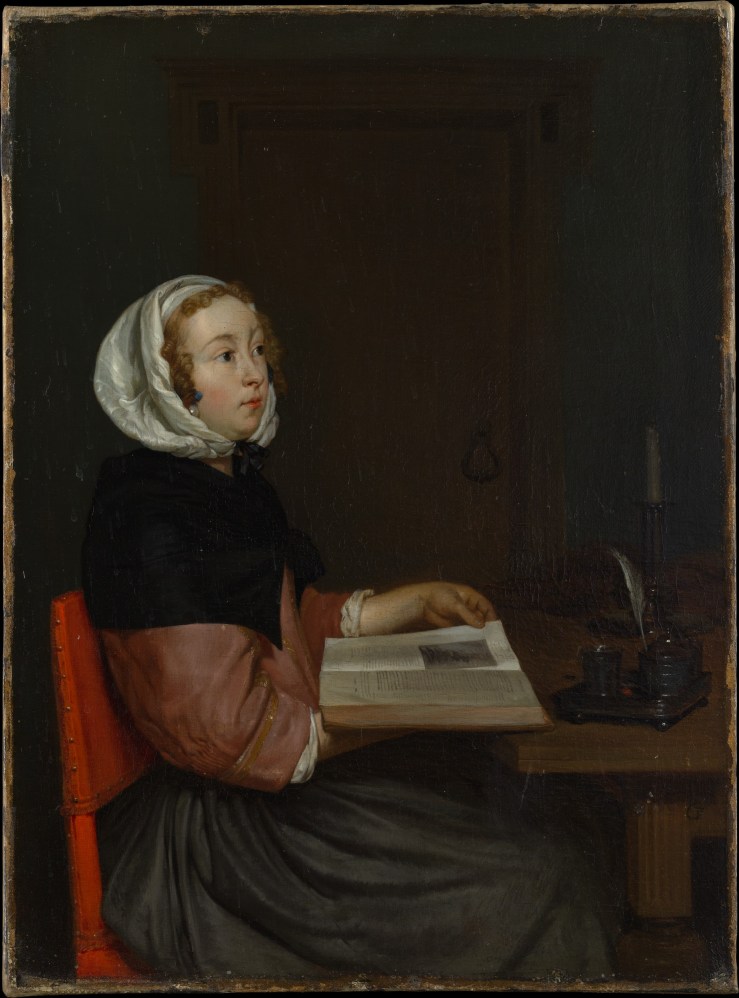

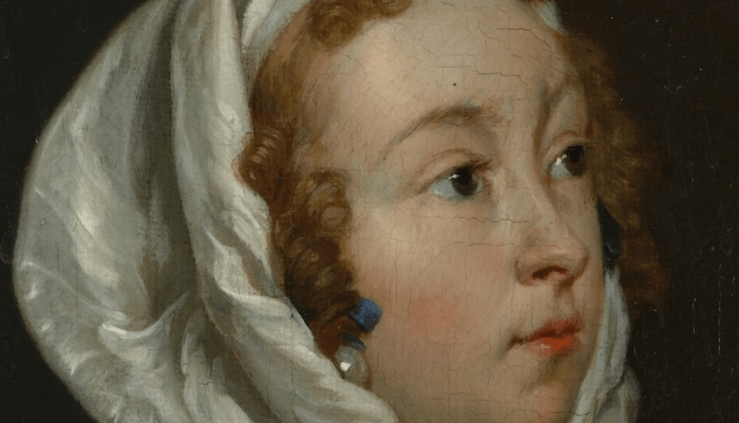
The Reader, c. 1660s by Eglon van der Neer (1635/36-1703)
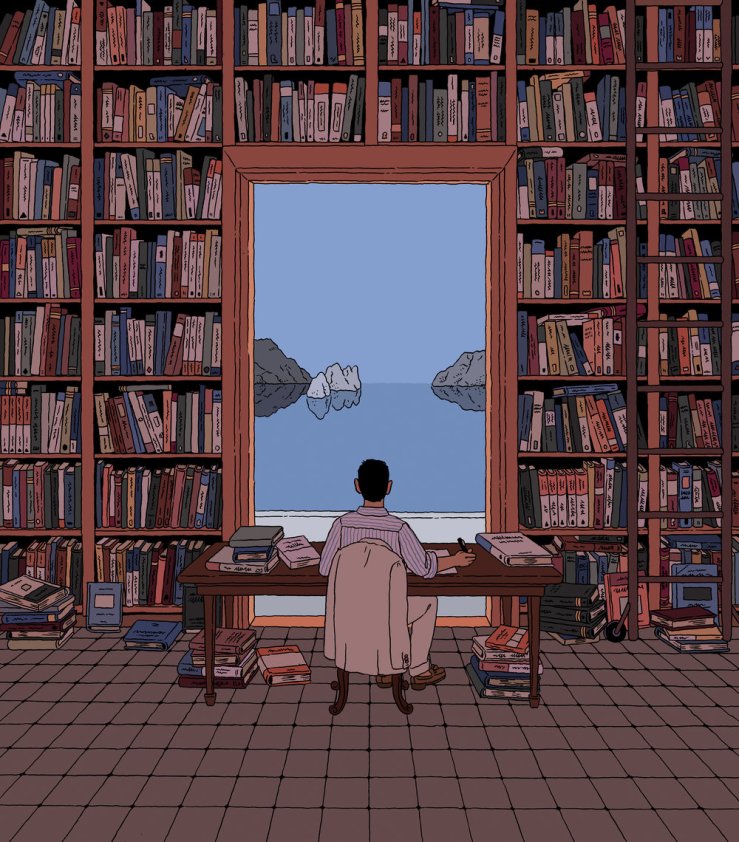
A Library by the Tyrrhenian Sea, 2018 by Ilya Milstein
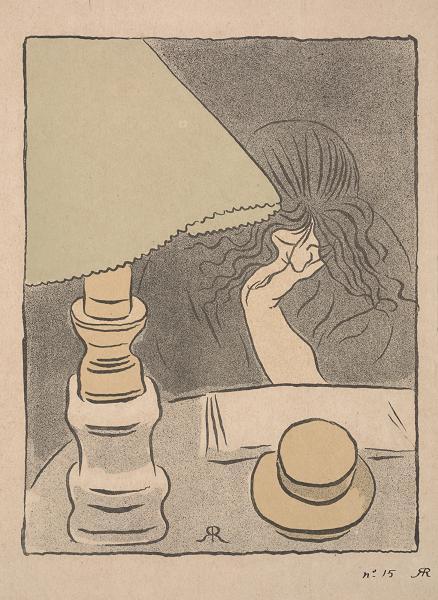
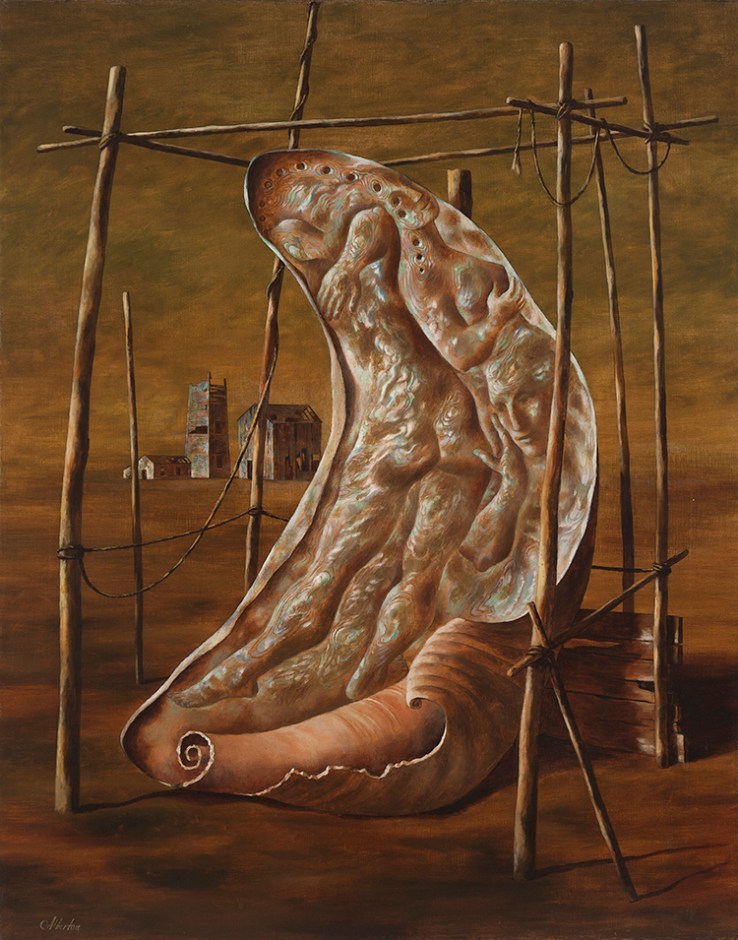
Shell (Surrealist Landscape), c. 1942 by John Atherton (1900-1952)
 Biblioklept