He Wants (Book acquired, some time in February 2016)

img_1651

British author Alison Moore’s novel He Wants is getting a release on this side of the Atlantic from Canadian publisher Biblioasis.

From novelist Rachel Cusk’s review of He Wants two years ago in The Guardian:

Following her Booker-shortlisted The Lighthouse, Alison Moore’s artistically pleasing second novel is a sort of Midlands Death in Venice, a story of ageing and thwarted desire in which a man drifts away from his moorings into Dionysian impulses, after a lifetime spent serving the values of the humdrum contemporary community in which he lives.

He Wants evokes a world that is purposefully pedestrian – the Dionysian impulses pertain to halves of shandy and the desire to taste a Swiss liqueur called Goldschläger – but its themes of self-realisation, identity and mortality are grand enough. Moore’s protagonist, a widower RE teacher who is approaching retirement, is intimately captured in the midst of a disintegration brought about by the loss of the structures that have thus far formed and maintained his personality: work, marriage and certain relationships that have created or reinforced his sense of existence.

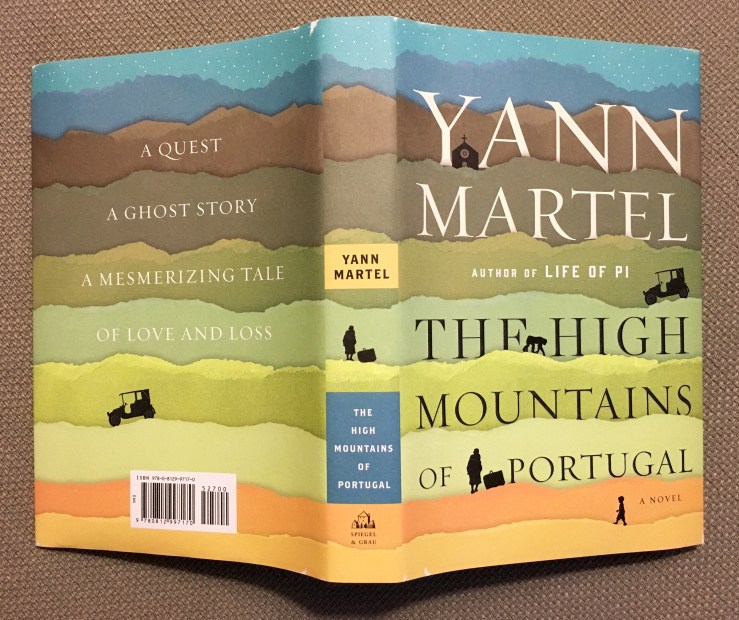
Yann Martel’s The High Mountains of Portugal (Book acquired, 1.28.2016)

img_1401

Yann Martel’s novel The High Mountains of Portugal is new in hardback in the U.S. from Speigel & Grau.

Here’s the first two paragraphs of Urusla K. Le Guin’s review of the novel in The Guardian:

The High Mountains of Portugal, in Yann Martel’s novel of that name, turn out to be grassy uplands rather than high mountains; and the book turns out to be three stories rather than a novel. The stories, connected ingeniously, vary greatly in tone and quality. The first two display so little of the author’s narrative skill that they may offer more temptation to stop reading than to go on. Liking the last part of the book much better, I could wish that it stood alone.

In Martel’s Booker-winning Life of Pi, the author within the story tells us that he went to India with the intention of writing a novel set in Portugal. Then he met the Indian who told him the tale of Pi, and Portugal was forgotten. It’s recollected in the first part of this book in great detail: “He heads off down Rue São Miguel on to Largo São Miguel and then Rua de São João da Praça before turning on to Arco de Jesus.” This sort of street-rosary may delight Lisbon initiates but to others is made interesting only by the fact that the protagonist, Tomas, is walking backwards, and that he always does so. After some elaborate rationales for walking backwards, and a farcical encounter with a lamppost, we learn that he walks with “his back to the world, his back to God”, not because he is grieving for the sudden, recent death of his wife, his child, and his father, but because “he is objecting”.

Read the rest of Le Guin’s review.

Frankie Styne and the Silver Man (Book acquired, 12.09.2015)

img_1013

Kathy Page’s 1992 novel Frankie Styne and the Silver Man is getting a North American debut thanks to publisher Biblioasis. Blurb from the author’s website:

Frankie Styne, the successful author of a series of gruesome killer novels,  has lived  at 125 Onley Street for many years. Meticulous and obsessive, he lives a life of isolation, managing to keep both future and past at bay.

Next door, live Liz Meredith and her new baby, Jim. Liz has been told by her social worker Mrs Purvis that Jim has a rare disorder, and will never be like other children. But Mrs Purvis can’t see, as Liz can, that Jim already knows things no ordinary person could. Besides, Liz doesn’t want any help from the social services or from Tom and Alice, the couple at number 129. She wants to be left in peace so that she can imagine her way out of how things are.

When Frank’s solitary anonymity is threatened, he hatches a real-life plot which, as he begins to enact it, unexpectedly changes not only his own life, but also those of Liz and Jim. Sifting through our collective nightmares, Kathy Page has written a novel that is powerful, humorous, tragic and thoroughly surprising.

Li Ang’s The Lost Garden (Book acquired, 11.20.2015)

IMG_0669

Li Ang’s novel The Lost Garden is new in English translation by Sylvia Li-chun Lin with Howard Goldblatt. Publisher Columbia University Press’s blurb:

In this eloquent and atmospheric novel, Li Ang further cements her reputation as one of our most sophisticated contemporary Chinese-language writers. The Lost Garden moves along two parallel lines. In one, we relive the family saga of Zhu Yinghong, whose father, Zhu Zuyan, was a gentry intellectual imprisoned for dissent in the early days of Chiang Kai-shek’s rule. After his release, Zhu Zuyan literally walled himself in his Lotus Garden, which he rebuilt according to his own desires.

Forever under suspicion, Zhu Zuyan indulged as much as he could in circumscribed pleasures, though they drained the family fortune. Eventually everything belonging to the household had to be sold, including the Lotus Garden. The second storyline picks up in modern-day Taipei as Zhu Yinghong meets Lin Xigeng, a real estate tycoon and playboy. Their cat-and-mouse courtship builds against the extravagant banquets and decadent entertainments of Taipei’s wealthy businessmen. Though the two ultimately marry, their high-styled romance dulls over time, forcing them on a quest to rediscover enchantment in the Lotus Garden. An expansive narrative rich with intimate detail, The Lost Garden is a moving portrait of the losses incurred as we struggle to hold on to our passions.

Ian Svenonius’s Censorship Now!! (Book acquired, 9.29.2015)

This is the blurb for Ian Svenonius’s book Censorship Now!!:

image

The non-blurb is of course a blurb.

If you think that that move is brilliant, or even funny, you might dig Censorship Now!!

Publisher Akashic Books has the good sense to offer a description of the book:

In this outrageous and hilarious new essay collection, underground music icon Ian F. Svenonius tackles such diverse subjects as IKEA, Apple, the weather, the gentrification of punk by indie rock, Marion Barry, the film Heathers, Christian pornography, vampires, hoarding, the role of sugar in empire-building, how to properly tip at restaurants, the return of the hat in men’s fashion, and other highly topical matters. No one is left unscathed, and more than a few will be left scratching their heads even as they laugh.

In high school, I dug Svenonius’s first band Nation of Ulysses—more as a concept than for the music, really (I much preferred Dischord label mates Fugazi). The goofy-seriousiousness of Nation of Ulysses was entertaining and confusing, but like later musical projects The Make-Up and Weird War, Svenonius’s band never struck me as quite as dangerous as they wanted to be.

My best friend was always a bigger fan of Svenonius than I was—enough to have read the dude’s first book, The Psychic Soviet. I texted him when I first started reading Censorship Now!!, complaining that I couldn’t tell if Svenonius was serious or if the book was all a schtick, an ageing scenester’s put-on. My pal replied that Svenonius was “a professional sloganeer,” and that every sentence of The Psychic Soviet was a “pull quote.”

Every line a pull quote, every sentence a slogan is how Censorship Now!! reads (if those two exclamation marks didn’t tip you off). The book’s essays read like the rants of someone’s older brother trying to hip you to the truth, man. But after you grow up you wonder why the brother’s still living in his parents’ basement. Okay. That sounds a bit too, I don’t know, rude of me (?) — but I can’t find anything particularly profound in Svenonius’s raging against Apple and Wikipedia and the bourgeoisie. (His riff on Ikea (“Ikea wants couples to break up”) reeks of a bad comedy routine).

Censorship Now!! (which always reads like a talk book, and never as prose) is simultaneously reactionary and nostalgic. Svenonius hates all the things you’d expect him to (NPR, Urban Outfitters, Arcade Fire, gentrification) and even some things you might not expect (tipping). Loose opinion and easy reference are employed instead of facts (sample slogan:  “Destroy All Facts” How revolutionary!).

Does it matter? It doesn’t matter. The fourteen year-old me would’ve loved this shit. There’s a fourteen year-old out there that would love it now.

Bret Easton Ellis and the Other Dogs (Book acquired, 11.02.2015)

IMG_0537

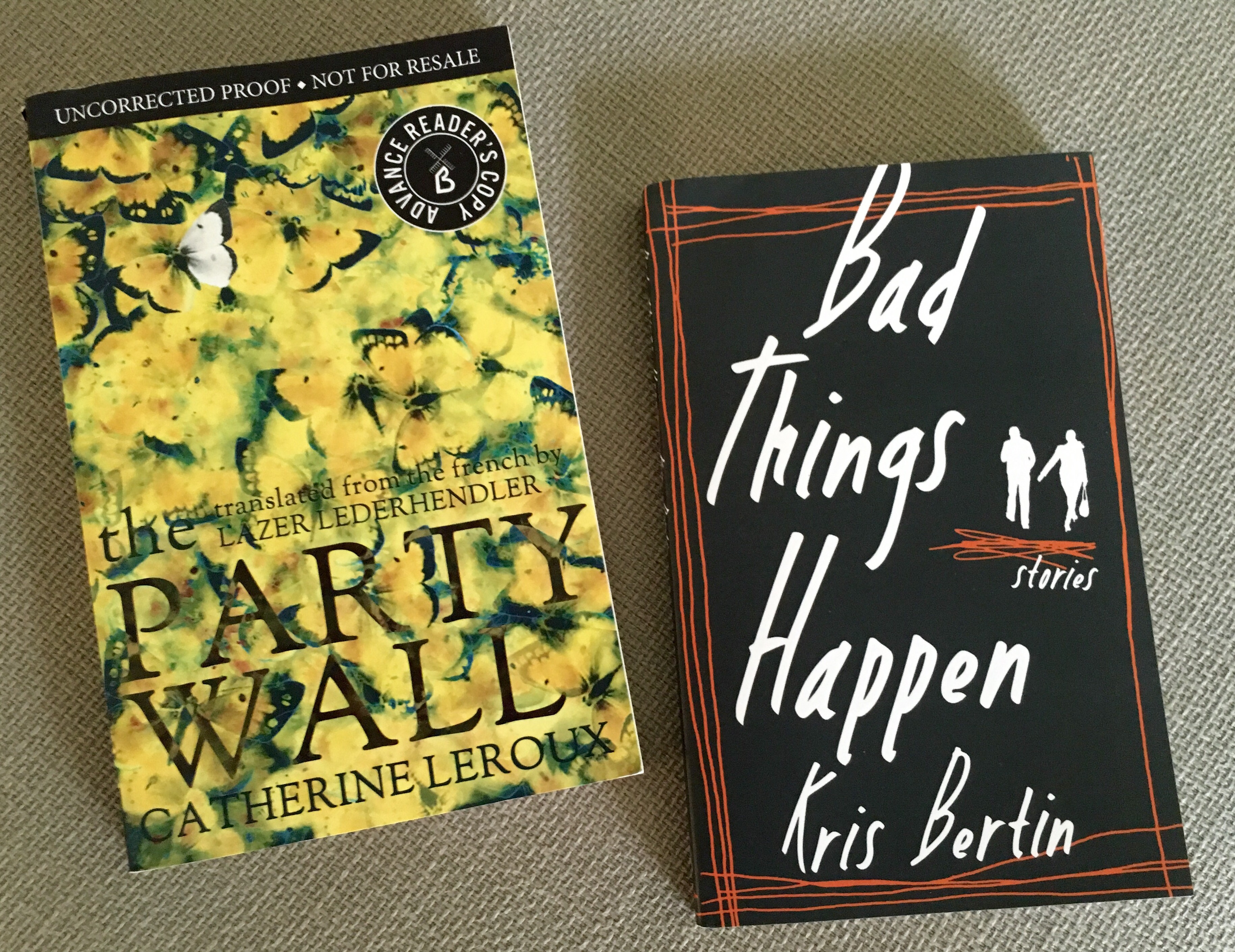
Lina Wolff’s novel Bret Easton Ellis and the Other Dogs is coming out early next year from And Other Stories. Their blurb:

At a run-down brothel in Caudal, Spain, the prostitutes are collecting stray dogs. Each is named after a famous male writer: Dante, Chaucer, Bret Easton Ellis. When a john is cruel, the dogs are fed rotten meat. To the east, in Barcelona, an unflappable teenage girl is endeavouring to trace the peculiarities of her life back to one woman: Alba Cambó, writer of violent short stories, who left Caudal as a girl and never went back.

Mordantly funny, dryly sensual, written with a staggering lightness of touch, the debut novel in English by Swedish sensation Lina Wolff is a black and Bolaño-esque take on the limitations of love in a dog-eat-dog world.

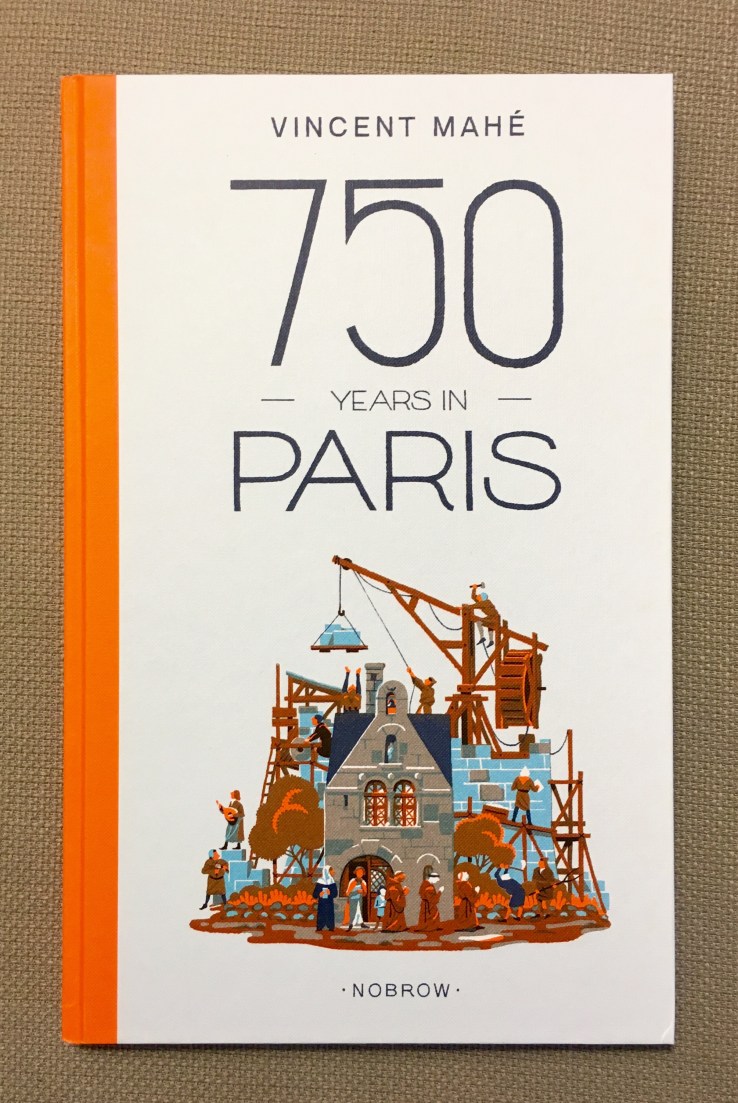
Vincent Mahé’s 750 Years in Paris (Beautiful book acquired, 10.28.2015)

IMG_0534

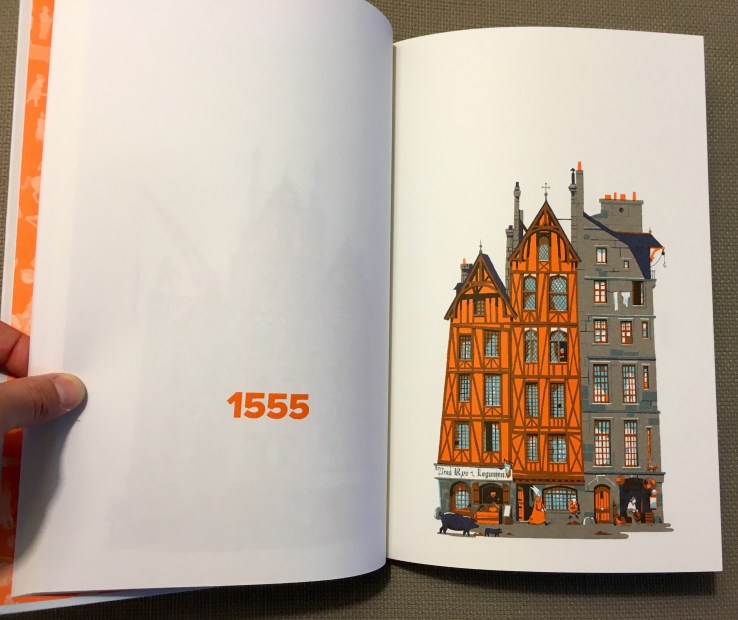
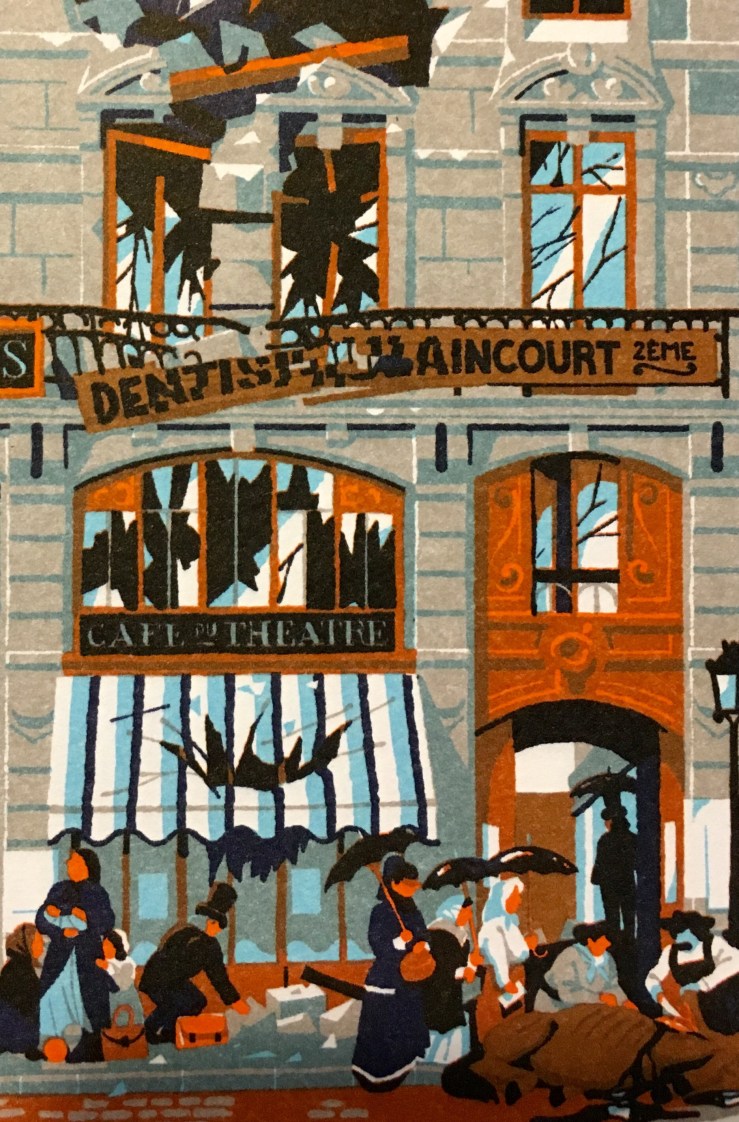
I’ve said it before, but the good people at Nobrow are making some of the best literary objects I’ve seen in years—the graphic novels they publish are smart, beautiful, strange, and witty. The last time I wrote about a Nobrow title, it was Jon McNaught’s Birchwood Close, which I read after a weekend of (very) primitive island camping. In a little coincidence (or not), Nobrow’s new title, Vincent Mahé’s 750 Years in Paris showed up as I was packing my Subaru for a camping trip with my family. I couldn’t help but fly too-quickly through the pages, before relinquishing it to my daughter, who tried to take it camping with us. “I need something to read on the beach,” she claimed, but I told her it was too big to take along (it’s about the height of a wine bottle). In truth, I just didn’t want to risk the book’s getting damaged. We read it again a few times when we got home—first very quickly, then more slowly. Fun.
IMG_0535

I owe the thing a proper review, but for now here’s Nobrow’s blurb:

If you could stand still for 750 years, what could you learn about the world? It’s time to find out.

A literary graphic novel unlike anything else on the racks, 750 Years tells the story of our time, focusing on one single building in France as it sees its way through the upheavals of history. Beginning in the 13th Century and making its way towards today, this historically accurate story is the eagerly anticipated debut from Vincent Mahé.

IMG_0536

Dragonfish (Book acquired, 6.20.2015)

IMG_7132

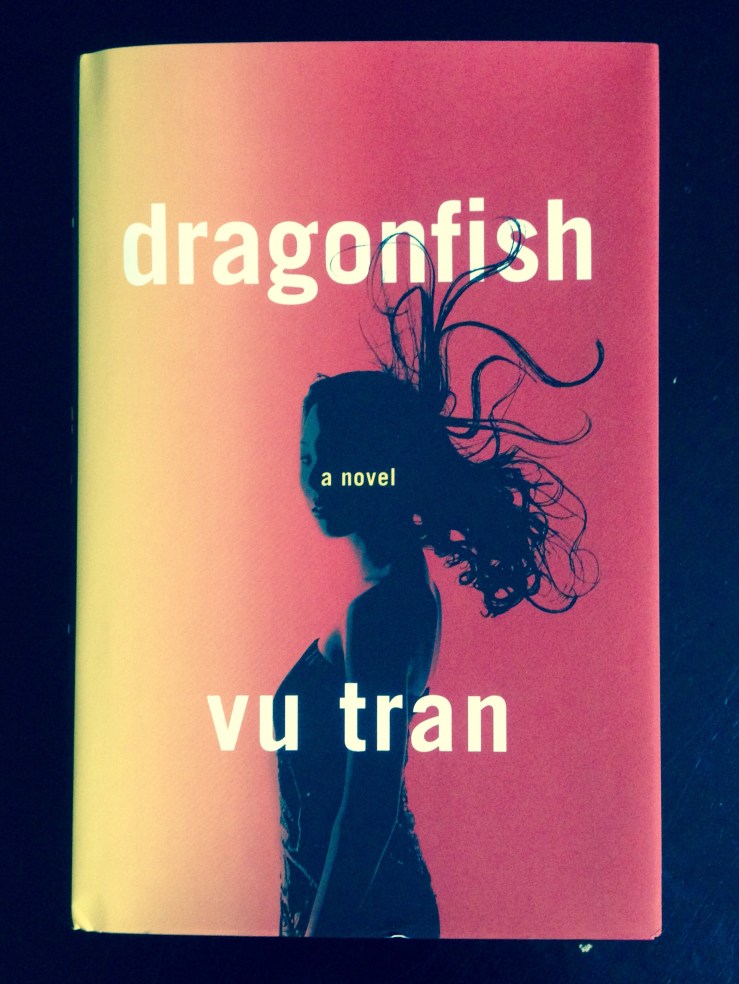
Vu Tran’s novel Dragonfish is forthcoming in hardback from W.W. Norton. Their blurb:

Robert, an Oakland cop, still can’t let go of Suzy, the enigmatic Vietnamese wife who left him two years ago. Now she’s disappeared from her new husband, Sonny, a violent Vietnamese smuggler and gambler who’s blackmailing Robert into finding her for him. As he pursues her through the sleek and seamy gambling dens of Las Vegas, shadowed by Sonny’s sadistic son, “Junior,” and assisted by unexpected and reluctant allies, Robert learns more about his ex-wife than he ever did during their marriage. He finds himself chasing the ghosts of her past, one that reaches back to a refugee camp in Malaysia after the fall of Saigon, as his investigation soon uncovers the existence of an elusive packet of her secret letters to someone she left behind long ago. Although Robert starts illuminating the dark corners of Suzy’s life, the legacy of her sins threatens to immolate them all.

Vu Tran has written a thrilling and cinematic work of sophisticated suspense and haunting lyricism, set in motion by characters who can neither trust each other nor trust themselves. This remarkable debut is a noir page-turner resonant with the lasting reverberations of lives lost and lives remade a generation ago.