The Tree of Life — Terrence Malick

Terrence Malick’s beautiful, moving new film The Tree of Life explores humanity’s need to find metaphysical, spiritual, or psychological solace in a physical, natural, phenomenal world whose God remains silent, if not absent. The film begins by quoting the Book of Job: “Where were you when I laid the earth’s foundation . . . while the morning stars sang together and all the sons of God shouted for joy?” The line is God’s rejoinder to Job’s despair, a non-answer that recalls God’s response to Moses in Exodus when Moses asks his name and he replies: “I am that I am.” God is tautological; there is no analogy, no metaphoricity for God. Similarly, as in Job, it is not for us to understand God’s creation; rather, we are part of its mystery, and part of that mystery is to find meaning against a Darwinian backdrop. Malick’s project in The Tree of Life is to find meaning—but not explanation—through the beauty, grace, and the glory of nature, even as the film acknowledges the violence, injustice, and inconstancy of the natural world, a world that will never directly answer existential questioning.

The film begins with the O’Briens learning that one of their three sons has died. He is only nineteen years old, and the grief of his early death overwhelms his parents; it also casts an ever-present existential gloom over his brother Jack, who will become the ersatz protagonist of the film. Jack (portrayed as an adult by Sean Penn) is an architect in a big city. On a day that seems particularly freighted with significance—perhaps his brother’s birthday or deathday—he is unable to communicate with his wife or colleagues. Through Malick’s trademark interior-monologue whispers, Jack questions God again and again, trying to find meaning in his brother’s death.

In what may or may not be a daydream of Jack’s, the film then undertakes representing the creation of the universe, the expansion of galaxies, the formation of our own planet, and the subsequent life that evolves there. The segment is breathtaking, overwhelming, and worth the price of admission alone. In one shot, a giant dinosaur lies beached; the camera pans to reveal his side bloodied and bitten. The film then cuts to a shot of hammerhead sharks swarming in the deep. This Darwinian depiction is echoed and then contrasted in another shot, as one dinosaur finds another, of a different species, dying on a riverbed. The first dinosaur places his foot over the second’s neck, but then chooses not to kill the dying dinosaur, who struggles for life. There are perhaps two attitudes here toward life, one which is essentially a Nietzschean will-to-power, and the other Jesusian, an impulse born of empathy, identification, and ultimately radical love.

These contrasting ideals are embodied in Mr. and Mrs. O’Brien, and showcased in the next segment of the film, which is likely part of Jack’s memory, or maybe more accurately the idea of Jack’s memory. In a rushing flow of images and music, Malick captures the deep beauty, excitement, and confusion of early life. The episode might find a literary analogy in the early chapters of Joyce’s A Portrait of the Artist as a Young Man, which also attempts to show what early consciousness might be like. Malick’s syntax is typically Malickian, yet it fits its subject better here than it did in The New World or The Thin Red Line. The life of the young family is overwhelming in its natural beauty; however, the context of one of the boy’s impending death begins to throw shadows over the beauty. Thus we have the central apparent philosophical problem of the phenomenal world—what does it mean to die? This question in turn entails another—what does it mean to live?

For Mr. O’Brien, life is a Darwinian contest: “You can’t be too good,” he admonishes his boys. He keeps an ever-present stern hand around the back of Jack’s neck. The gesture is deeply ambiguous: it is at once a loving father’s guiding hand and at the same time a choking, killing noose. Mr. O’Brien dreams of becoming a big man, a successful man, a wealthy man. He is strict with the children, and instructs them toward a philosophy of self-reliance that is more Nietzsche than Thoreau. In contrast, Mrs. O’Brien takes a loving, playful, relaxed approach to her children (and life in general). She evokes something of a nature spirit, an earth mother able to recognize the beauty and glory in each transient moment. Where Mr. O’Brien grieves the could-have-been and pines for the will-be, Mrs. O’Brien finds meaning in the evanescent inconstancy of life.

These contrasting views come to a head as Jack approaches puberty. The film slides into an understated Oedipal drama. After a friend of the boys drowns, Jack wonders why he should be good if God isn’t. The Oedipal drama is thus capitulated not just at Jack’s parents, but at Jack’s internalization of a God-figure, which he dallies with rejecting, or at least defying. He becomes cruel at times to his brothers. He assaults an animal. He breaks windows. He sneaks into a neighbor’s house and (implicitly) masturbates over a piece of lingerie, after which shame and anger drives him to flee. In a painful, short scene, he acknowledges that he’s changed, that he can no longer talk to his mother. Jack pines for his lost innocence (“Why can’t I be like them again?” he asks God, presumably referring to his younger brothers), realizing that his isolation and loneliness is part of a larger existential dilemma.

Malick here complicates the earlier innocent joy of his film, acknowledging and dramatizing the deeply ambiguous, confusing, and painful realities of growing up. At the same time, The Tree of Life does not exactly grow dark during these scenes: Malick works to show the beauty of the natural world, of each moment in life, even as those moments are profoundly complicated by morality and personal perspective. Malick’s portrayal of the O’Brien family’s life in Waco, Texas in the late ’50s is rich, detailed, and intricately nuanced. It is real, and much of the credit must be given to the naturalistic performances of the boys (which elide all surfaces of “performance” as such), as well as outstanding turns by Jessica Chastain as Mrs. O’Brien and Brad Pitt as Mr. O’Brien. The real star of the film though might be the cinematographer, Emmanuel Lubezki, who deserves great praise for bringing vibrant life to Malick’s vision.

I have already over-summarized here, when what I really mean to say is: Go see The Tree of Life. Go see it in a theater. It’s beautiful. I will summarize no further, and only add that the film concludes with a metaphysical vision that testifies memory’s ability to give meaning to both life and death. The Tree of Life ultimately suggests that we should love our lives, love our families, and do our best to love existence despite life’s difficulty and inconstancy, despite an apparently indifferent God who will never respond directly to our questions. The film does not attempt then to deflect the grief or explain it away or even to understand it, but rather  to show us that suffering is part of grace and glory, and that there could be  no grace and glory without suffering. Like Frank Capra’s masterpiece It’s a Wonderful Life, which it strongly recalls, The Tree of Life is able to deliver such an apparently simple—and potentially facile—message in a way that genuinely communicates the underlying complexity of such a message. Our lot in life is always Job’s lot; we are always on the path to or from grief—and yet this grief is deserved and appropriate precisely because life is glorious in the first place. Very highly recommended.
Jessica Chastain Talks About The Tree of Life Script and Working with Terrence Malick

This is pretty cool (and you get to see scenes from the movie again!)—

Interviews with Hideous Men — Jessica Yu’s Documentary Protagonist

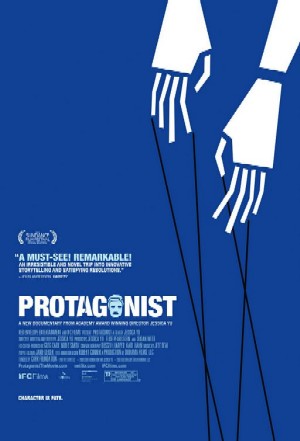
Jessica Yu’s 2007 documentary Protagonist chronicles the lives of four men to reveal how absolute certainty is a form of psychological blindness that can entail devastating consequences. In a spare, Errol Morriseque approach, Yu sticks mostly to upper-body shots of the men, who tell their stories directly to the camera, beginning with childhood and extending into their formative traumas and the consequent fallout of these traumas. Yu uses film or video of the men from outside sources at times (news reports, surveillance video, home video, cable access shows, etc.), but the major conceit for dramatizing or reenacting the men’s stories comes from her use of wooden puppets. These wooden puppets are dressed in ancient Greek theater garb, including two-faced masks; the puppet segments are set in a miniature Greek theater. In addition to the puppets who play act parts of the interviewee’s stories, there is a Greek chorus which introduces each chapter of the film by reciting lines from Greek tragedies that correlate directly to the men’s lives. While these lives never directly intersect, Yu deftly crafts her film to show how each person, as the protagonist of his own life, must course a trajectory against the curse/blessing of family, history, and social conditioning. While the men share certain phenomena in their pasts—abusive parents, strict religious upbringings, early childhood traumas—it’s their search for ultimate, authoritative certainty that most unites them. Each man quests for identity, and along the way is challenged, experiences epiphany, dreams of apotheosis, and achieves eventual catharsis. The search for certitude eventually blinds each man; as the film concludes, each subject recounts how absolute certainty—the absence of doubt—is precisely what leads to unthinking, inhumane actions. The film ends with one interviewee paraphrasing Socrates’ famous dictum: I only know that I know nothing.

I’ve omitted so far exactly what specific details make these men’s lives so hideous, so odious, so fascinating, so redemptive—so worth watching. Namely: What did these four dudes actually, like, do in their lives that is worth 90 minutes of your time? I was lucky enough not to know such details going in to the film, and I think that there couldn’t be a better way to see it. Each man tells his life story, beginning in youth; the stories become increasingly shocking as they progress. With this in mind, I strongly recommend you see Protagonist and skip the rest of the review, which contains SPOILERS.

Continue reading “Interviews with Hideous Men — Jessica Yu’s Documentary Protagonist”

Ghosts Before Breakfast — Hans Richter

“This Kind of Contemporary Art Hates You Too” — John Waters on Cy Twombly

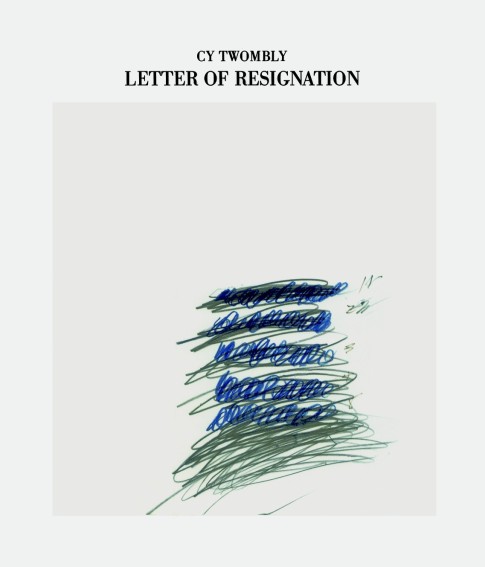
Thanks to Biblioklept reader Jescie for sending in this 2009 piece from Eye Level, which recounts film director John Waters narrating Cy Twombly’s  collection Letter of Resignation. From the write-up—-

Baltimore-native Waters, best known for his films Hairspray and Pink Flamingos, spoke, if not performed, at the McEvoy Auditorium, as the inaugural speaker in the second annual American Pictures Distinguished Lecture Series. For one hour on Saturday afternoon, Waters shared his interpretation of Cy Twombly’s Letter of Resignation. From the word go, Waters had the SRO audience captivated as he “narrated” the thirty-eight separate drawings that make up this work. At times, Waters had us in stitches, relating slightly off-color stories, and using words not found in museum labels. Often in strong language, he created a persona, or voice for the letter writer: a disgruntled worker who is drafting (and re-drafting) his letter of resignation. By the thirty-eighth draft, he’s just about there. . . .

Waters, who keeps the Letters of Resignation catalogue by his bed, says that Twombly created “such confident work it makes people mad.” To detractors not fond of the work, Waters offered this retort, “This kind of contemporary art hates you too, and you deserve it.”

David Fincher and Christopher Nolan Talk About Terrence Malick

See the Trailer for Arrietty, the New Film from Studio Ghibli

“We Are Challenging Nature Itself . . . And It Hits Back” — Werner Herzog on Nature’s Violent Obscenity

(More).

Eat the Document — Bob Dylan’s Rambling 1966 Tour Film

“I’m a Writer You Monsters!”

John Turturro on Miller’s Crossing and Barton Fink

Great interview with John Turturro at the AV Club today—it’s part of their Random Roles feature, where an actor (usually a character actor) discusses his or her films. Here’s Turturro talking about some of the films he’s made with the Coen brothers

JT: I’ve known [the Coens] a long time. I’ve known them from the mid-’80s, because I’m friends with Fran [McDormand]. That’s how I know them. I’ve worked with them on four movies, and they were my executive producers for and really helped me edit Romance And Cigarettes. They’re really good friends—and so is someone like Spike [Lee]. It’s a pleasure in this business when you work with someone more than once. It’s nice, because everybody knows each other.

The Coens are like a mom-and-pop operation. They write it, they edit it, they do the whole thing. They’re involved in everything. It’s very low stress, working with them. There’s almost no stress. If I could make a movie with them every couple of years I would, just because of the pleasure of it.

AVC: How did you finally come to work with them on Miller’s Crossing?

JT: They’d seen me do a lot of plays, and so they said they were going to write a part for me. Then they wrote two parts for me in a row! [Laughs.] Those are big things. When someone writes something for you, you really want to return the favor. So I put a lot of work into it, and tried to give them a little surprise back. Actually I’m going to be directing these three one-act plays on Broadway soon, and Ethan is one of the writers. Woody Allen is one and Elaine May is one and Ethan is one. So I’m working with him again. This is, I guess, the sixth time we’ve worked together.

AVC: The big “look into your heart” scene in the woods. How many takes was that?

JT: I don’t remember how many takes. I just know it was 13 degrees, that’s all. It was really cold. You know, it was a long time ago. It was a hard scene. Sometimes you think about movies, and you say, “Well, I want to try to do something that’s not exactly in a movie.” If you’ve ever been in a very dangerous situation, you know that people will do all kinds of things to keep themselves alive. It was very well-written, but you want to imagine what it’s really like to be in that kind of situation. It depends on what you’re willing to do, and in real life you would do a lot of different things. I tried to capture a little bit of that. I had a couple close encounters throughout my life before that, and you store that stuff in the back of your mind. It’s how you do it, but it’s what they choose and how they put it together too. But that was my goal when I did that, was to do something that was almost a little difficult to watch, because people aren’t trying to be heroic at those moments.

AVC: When you first came across that scene in the screenplay, was it obvious to you that it would be so central and important to the movie? They even used it for the poster.

JT: I guess maybe, but not completely. I kind of knew it was important, and they kept telling me it was. But you don’t want to put too much pressure on yourself, because then it’s like going to bed with somebody the first time or something. You’re like, “Oh God, I got to be great.” [Laughs.] You just don’t want to put too much pressure on yourself. I just thought about it in the context of the story, that’s it. Because you can overthink something, too. It all felt really good when they did it, but it was hard to do.

Barton Fink (1991)—“Barton Fink”
AVC: Since the Coens were writing Barton Fink while they were still struggling through Miller’s Crossing, were you guys discussing that during the shoot?

JT: No. They said at the end—the guy, [executive producer] Ben Barenholtz, said there was this other movie. The way he talked, it sounded like Bart And Fink. I thought it was Bart And Fink. I was like, Bart And Fink? I don’t know about that.” And I didn’t completely get it when I first read it. Their scripts you have to read a bunch of times. And now I guess people can read them easier—someof their scripts—because they know their sensibility. But their sensibility can be quite different, depending on the movie that they’re linked to.

AVC: Did you really go to secretarial school just to study typing for Barton Fink?

JT: Yeah, I did. It was in Brooklyn Heights. It was with electric typewriters; they didn’t have computers. But then I had to use the old manual typewriter, which I loved. They get stuck, but I really love the sound of it, and the whole visceral experience. I wrote a lot of things on that typewriter during the shoot, a lot of ideas for other things.

AVC: Didn’t you write Romance And Cigarettes on it?

JT: I wrote the title of it and some ideas. A couple of scenes. But then I kind of sat on it. I put it in this box for 10 years. So yeah, it was “A Film by Barton Fink.” [Laughs.]

AVC: Your character talks a lot about creating “a new living theater of, about, and for the common man,” which is relevant to the sort of stories you seem to tell in a lot of your own work. But in the film, it seems like that whole idea is being mocked as pretentious. 

JT: [Laughs.] Yeah. Well, there’s guys who are outside of that and who talk about it, and there are guys who are inside of it. I did Mac right after that, which was really, for me, inside. And Fink is more from the outside. Plenty of writers have taken those stances—especially in the ’30s, because people came out of immigration, and there was a lot of Socialism. People were really liberal. There were anarchists. There was a Communist Party in this country. There was also a Nazi party that people don’t really talk about. So there were a lot of these things going on, and you kind of have to go back years to understand this thing. It was in the Group Theatre, and people like Arthur Miller obviously had that in his plays. Sometimes it could become a little bit pretentious, and other times not. But everything’s connected in different ways.

AVC: My favorite scene—honestly, maybe my favorite scene in a movie ever—is just a simple dialogue between you and Tony Shalhoub.

JT: Which one?

AVC: “Throw it hard.”

JT: “Throw it hard, Fink!” [Laughs.] Yeah, there were some great actors in that movie, and I got to work with all of them. It was just a treat. There was just wonderful writing in it too. Even though it was a strange movie and stuff like that, when I see the movie now, I really appreciate it. I’m like, “Wow, that was really good.” When I first saw it, it’s hard, because you’re in it. But it’s a good movie, so thank you. It’s a really well-crafted film. It was a treat to make that film, and to work with every one of those actors. Judy Davis is just fabulous.

Ten Thousand Years Older — Werner Herzog

The Goodbye Place — Richard Kelly

RIP Peter Falk

See the Trailer for A Dangerous Method: David Cronenberg Does Freud and Jung

Int. Trailer. Night — Jim Jarmusch

Alejandro Jodorowsky Documentary (BBC, For One Week Only)