“Me & My Arrow” — Harry Nilsson (from The Point)

Nilsson and Ringo Do Lame Comedy at the 1973 Grammys

“Medley” — Nilsson

I hate it when blogs just post music vids, but jeeze, this is better than any art film, and Harry Nilsson is my favorite, so get over it already!

I Watch The Decemberists’ David Foster Wallace Video

I’ll be upfront: I don’t care for the music of The Decemberists. I’ve tried, after being told repeatedly how “deep” or “clever” or “literate” the lyrics are, and how good the music is—but it all strikes me as awfully bland stuff, like someone’s shitty take on R.E.M.

Anyway, I do very much like David Foster Wallace’s novel Infinite Jest, the “inspiration” (yes, I’ll put the word in suspicious quotation marks) behind The Decemberists’ new music video for “Calamity Song.” Here’s their singer/songwriter Colin Meloy (via NPR)—

I wrote “Calamity Song” shortly after I’d finished reading David Foster Wallace’s epic Infinite Jest. The book didn’t so much inspire the song itself, but Wallace’s irreverent and brilliant humor definitely wound its way into the thing. And I had this funny idea that a good video for the song would be a re-creation of the Enfield Tennis Academy’s round of Eschaton — basically, a global thermonuclear crisis re-created on a tennis court — that’s played about a third of the way into the book. Thankfully, after having a good many people balk at the idea, I found a kindred spirit in Michael Schur, a man with an even greater enthusiasm for Wallace’s work than my own. With much adoration and respect to this seminal, genius book, this is what we’ve come up with. I can only hope DFW would be proud.

I’m not going to conjecture whether Wallace would be proud or not. That seems like total asshole move. But, I am interested in seeing a filmed version of Eschaton, and I do like Michael Schur’s show Parks and Recreation. So I’m going to watch the video now—unmuted and everything—and then post a reaction. Here’s the vid—

Okay. Nice production values, I guess. I think that’s the band, right? I like it when bands are in their own videos and “act.” I guess they’re playing the older ETA kids who are watching the game this Interdependence Day. The singer is Pemulis, that seems clear. It snows in the Escahton episode, but it looks like only some rain here. I like the Otis P. Lord kid, but I don’t know if the other kids look right. This is weak criticism, I know. Hmmm. The song . . . well, I’m not into this song, but I guess it’s pleasant enough. It’s terribly competent. Bits of it sound like a sped up version of R.E.M.’s “Talk About the Passion.” Some of the lyrics seem to reference or play off of Infinite Jest maybe—like “Year of the Something Something”  or something.

I don’t know. What can I say here? I hope no one tries to make a movie out of Infinite Jest. It was all I could do to fast forward through most of Jim from The Office’s movie of Hideous Men.

Alice Coltrane Harp Solo

Jonathan Franzen Talks About The Mekons

I don’t really care for Franzen either as writer or public figure (but as an object of derision, sure), but I do  Mekons.

David Lynch’s Inland Empire Has the Best Closing Credits in the History of Film

I feel like Inland Empire is probably David Lynch’s most overlooked film—it amazes how many genuine Lynch fans, who love stuff like Blue Velvet and Mullholand Drive, have put off seeing the film, usually because of its length, it seems, or the fact that it didn’t get a big Hollywood push, or that Lynch shot it himself on digital video. Anyway, I loved the film (my review), and the cathartic dance sequence at the end (set to one of my all-time favorite jams, Nina Simone’s “Sinner Man”) hopefully might entice one or two readers to give the film a fair shot (although the scene stands on its own, of course).

Eat the Document — Bob Dylan’s Rambling 1966 Tour Film

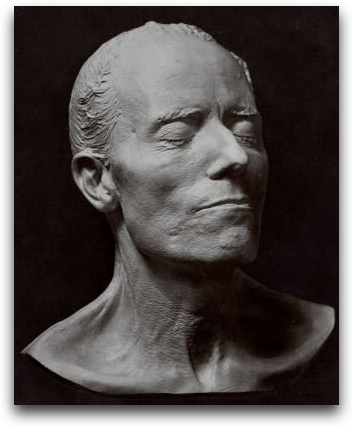
Beethoven’s Death Mask

The Old, Weird America — Greil Marcus on The World of Bob Dylan’s Basement Tapes

This month, to celebrate Bob Dylan’s 70th birthday (which is, um, today), Picador is reissuing Greil Marcus’s Invisible Republic under the name The Old, Weird America. Marcus uses Dylan and The Band’s recording sessions at Big Pink in 1967 as the ultimate synthesis of “the old, weird America.” From these legendary sessions Marcus unpacks Moby-Dick and William Burroughs, Ralph Waldo Emerson and Jerry Lee Lewis, Puritans and cowboys, utopias and ranches, Harry Smith and Dock Boggs, the Reverend J.M. Gates and Jonathan Edwards’s “Sinners in the Hands of Angry God,” murder ballads and the Beats, Clint Eastwood and Frank Hutchison, and more, more, more.

While Bob Dylan and the guys in the Band–Levon Helm, Robbie Robertson, Rick Danko, Richard Manuel, and Garth Hudson–are the protagonists of Marcus’s pop history, Harry Smith is perhaps its signal hero. Marcus finds in Smith’s seminal work Anthology of American Folk Music a history of democracy and America “made by willful, ornery, displaced, unsatisfied, ambitious individuals.” Marcus figures Anthology as the direct antecedent for The Basement Tapes. And yet as he moves backward in time he also moves forward, tracing the spirit of the old, weird America through to Bruce Springsteen and Nirvana.

Marcus’s mission isn’t so much a to tell Dylan’s history (yet again) as it is to contextualize Dylan and The Band’s project against the backdrop of the American folk past. As such, Dylanphiles won’t exactly find a new version here of the narrative that they’re undoubtedly so familiar with (cantankerous Dylan goes electric and “betrays” the folkies). Instead, what we find in The Old, Weird America is a verbal attempt to match the discursive, rambling, reference-hopping spirit of those sessions in ’67, and if Marcus at times rumbles and tumbles all over the place, we can forgive him—his weirdness is merely an attempt to match the verve, audacity, and strangeness of The Basement Tapes.

Wagner’s Death Mask

Three Nilssons Are Better Than One

“All I Think About Is You” — Harry Nilsson

“I Loves You Porgy” — Nina Simone

Mahler’s Death Mask

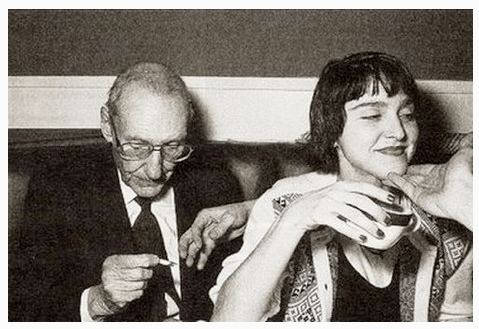
William Burroughs (and Madonna)

Wesley Stace and Rosanne Cash Discuss Bob Dylan’s Chronicles

Wesley Stace (aka John Wesley Harding), author of Charles Jessold, Considered as a Murderer (which I’m reading and enjoying) talks to Rosanne Cash about Bob Dylan’s Chronicles Volume One–