
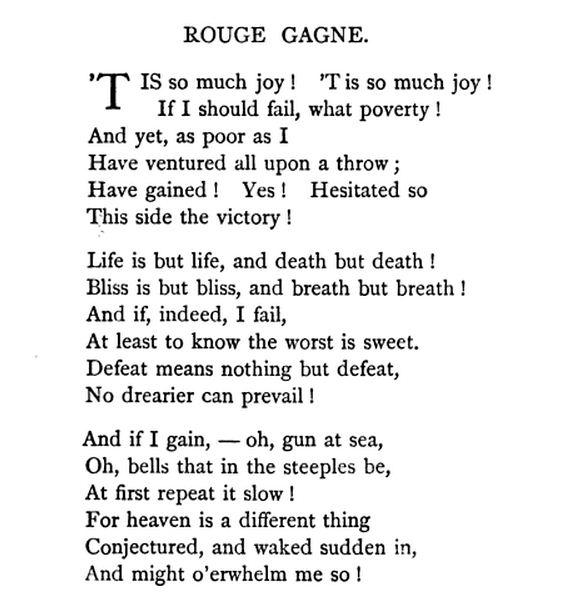
Category: Poetry
“History and Theory of Art” — David Markson
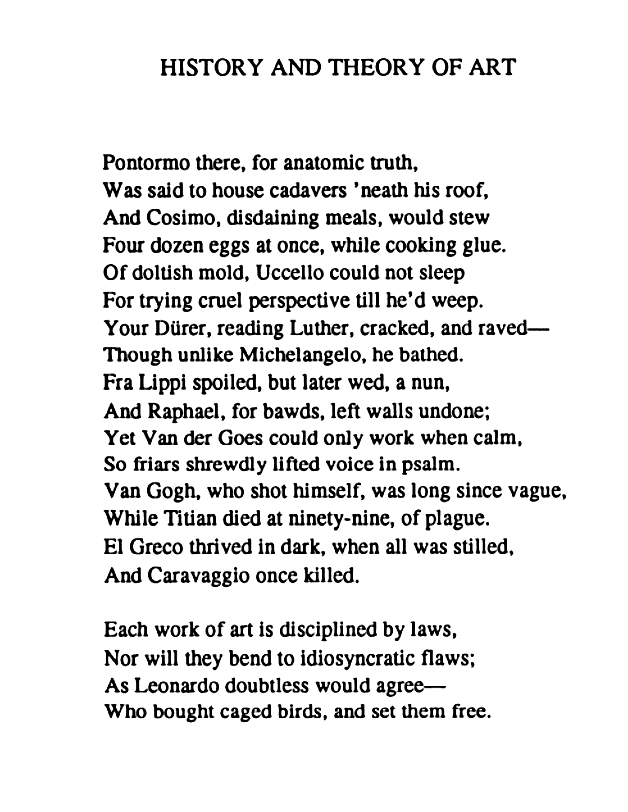
(Via).
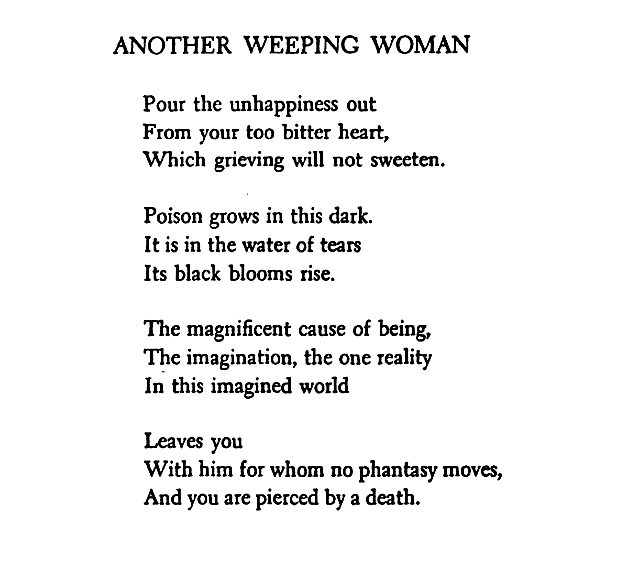
“Another Weeping Woman” — Wallace Stevens
“Herman Melville” — Conrad Aiken
“Herman Melville” by Conrad Aiken:
‘My towers at last!’—
What meant the word
from what acknowledged circuit sprung
and in the heart and on the tongue
at sight of few familiar birds
when seaward his last sail unfurled
to leeward from the wheel once more
bloomed the pale crags of haunted shore
that once-more-visited notch of world:
and straight he knew as known before
the Logos in Leviathan’s roar
he deepest sounding with his lead
who all had fathomed all had said.Much-loving hero—towers indeed
were those that overhung your log
with entries of typhoon and fog
and thunderstone for Adam’s breed:
man’s warm Sargasso Sea of faith
dislimned in light by luck or fate
you for mankind set sail by hate
and weathered it, and with it death.
And now at world’s end coasting late
in dolphined calms beyond the gate
which Hercules flung down, you come
to the grim rocks that nod you home.
Depth below depth this love of man:
among unnumbered and unknown
to mark and make his cryptic own
one landfall of all time began:
of all life’s hurts to treasure one
and hug it to the wounded breast,
in this to dedicate the rest,
all injuries received or done.
Your towers again but towers now blest
your haven in a shoreless west
o mariner of the human soul
who in the landmark notched the Pole
and in the Item loved the Whole.
Christina Rossetti’s Manuscript for “Sirs, Ye Are Brethren”
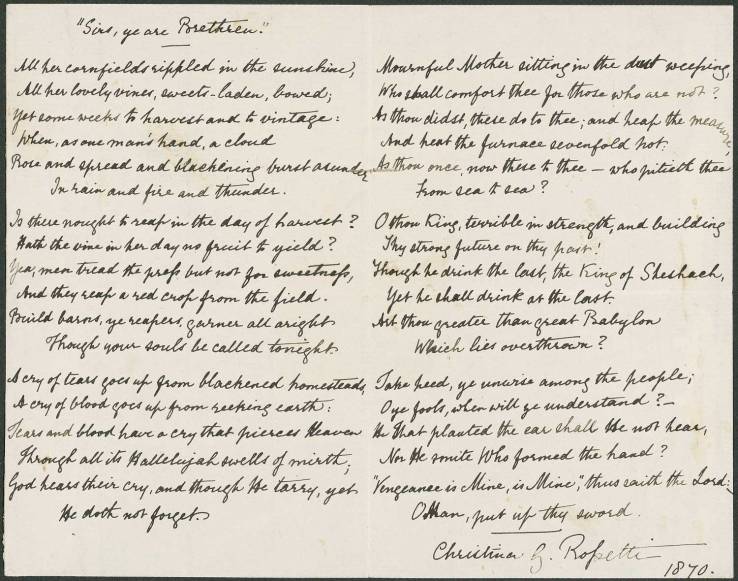
(Via/about).
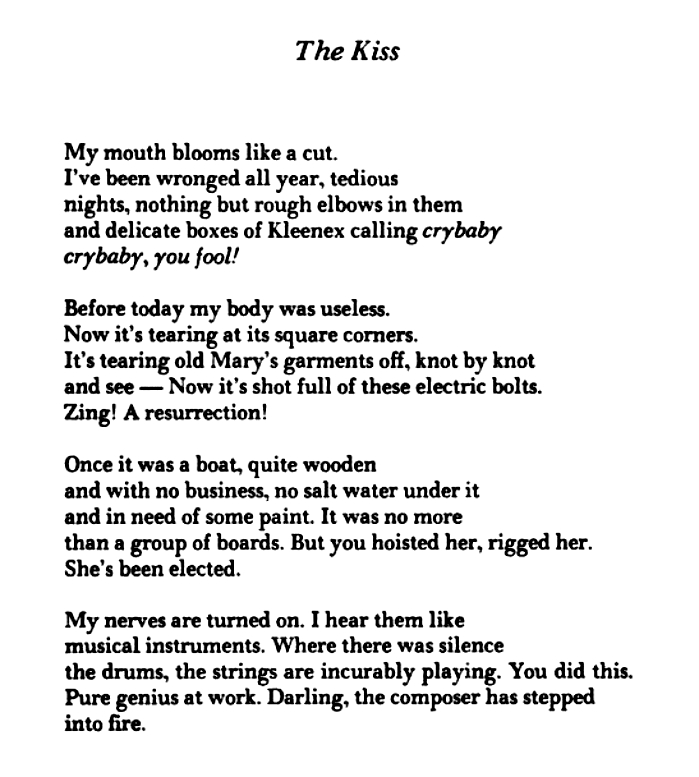
“The Kiss” — Anne Sexton
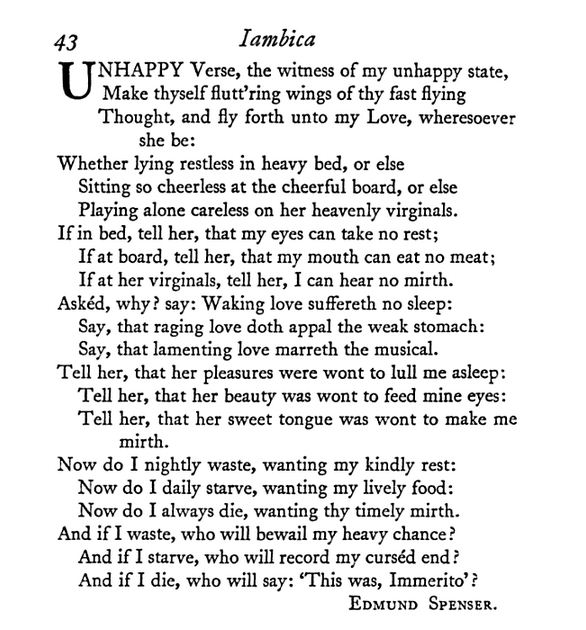
“Iambica” — Edmund Spenser
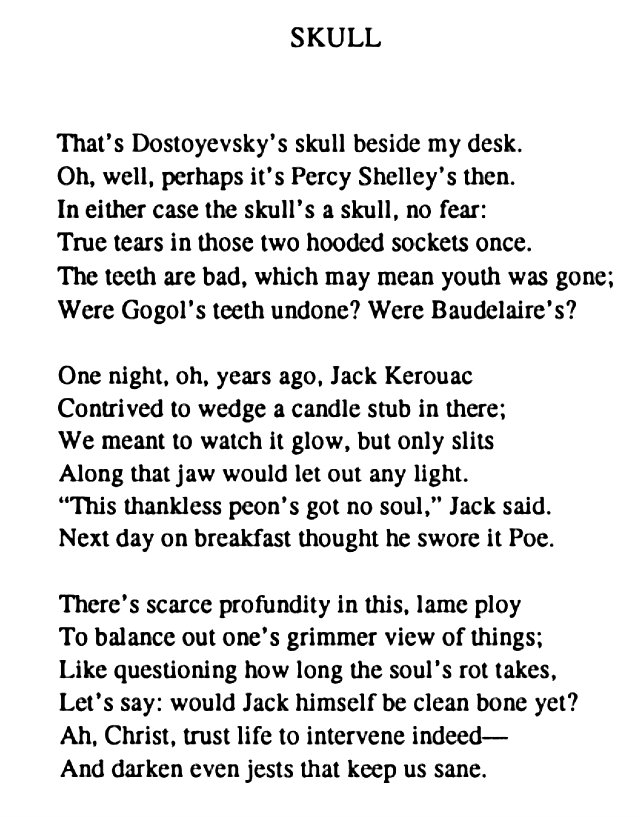
“Skull” — David Markson
(Via).
“Elegy with Surrealist Proverbs as Refrain” — Dana Gioia
“Elegy with Surrealist Proverbs as Refrain” by Dana Gioia—
“Poetry must lead somewhere,” declared Breton.
He carried a rose inside his coat each day
to give a beautiful stranger—“Better to die of love
than love without regret.” And those who loved him
soon learned regret. “The simplest surreal act
is running through the street with a revolver
firing at random.” Old and famous, he seemed démodé.
There is always a skeleton on the buffet.Wounded Apollinaire wore a small steel plate
inserted in his skull. “I so loved art,” he smiled,
“I joined the artillery.” His friends were asked to wait
while his widow laid a crucifix across his chest.
Picasso hated death. The funeral left him so distressed
he painted a self-portrait. “It’s always other people,”
remarked Duchamp, “who do the dying.”
I came. I sat down. I went away.Dali dreamed of Hitler as a white-skinned girl—
impossibly pale, luminous and lifeless as the moon.
Wealthy Roussel taught his poodle to smoke a pipe.
“When I write, I am surrounded by radiance.
My glory is like a great bomb waiting to explode.”
When his valet refused to slash his wrists,
the bankrupt writer took an overdose of pills.
There is always a skeleton on the buffet.Breton considered suicide the truest art,
though life seemed hardly worth the trouble to discard.
The German colonels strolled the Île de la Cité—
some to the Louvre, some to the Place Pigalle.
“The loneliness of poets has been erased,” cried Éluard,
in praise of Stalin. “Burn all the books,” said dying Hugo Ball.
There is always a skeleton on the buffet.
I came. I sat down. I went away.
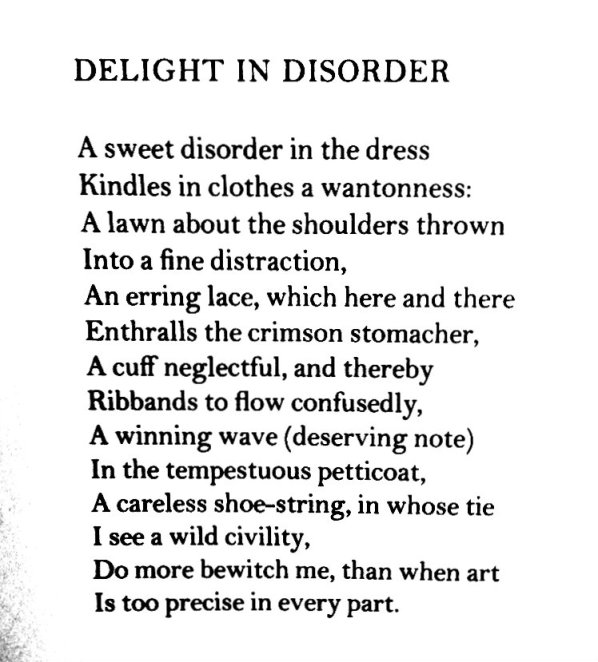
“Delight in Disorder” — Robert Herrick
“Openin’ Night” — Shel Silverstein
“Openin’ Night” by Shel Silverstein—
She had the jittersShe had the fluShe showed up lateShe missed her cueShe kicked the directorShe screamed at the crewAnd tripped on a propAnd fell in some gooAnd ripped her costumeA place or twoThen she forgotA line she knewAnd went “Meow”Instead of “Moo”She heard ‘em giggleShe heard ‘em booThe programs sailedThe popcorn flewAs she stomped offstageWith a boo-hoo-hooThe fringe of the curtainGot caught in her shoeThe set crashed downThe lights did tooMaybe that’s why she didn’t want to doAn interview.
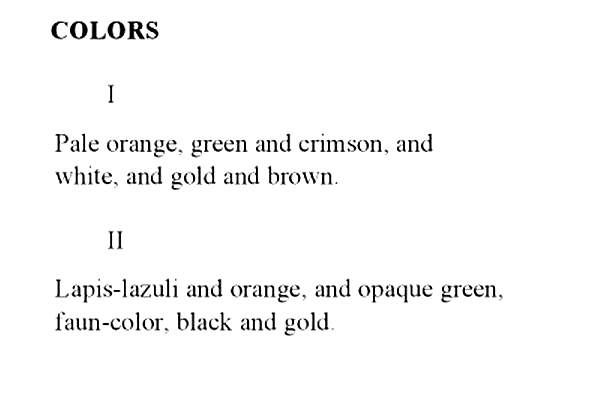
“Colors” — Wallace Stevens
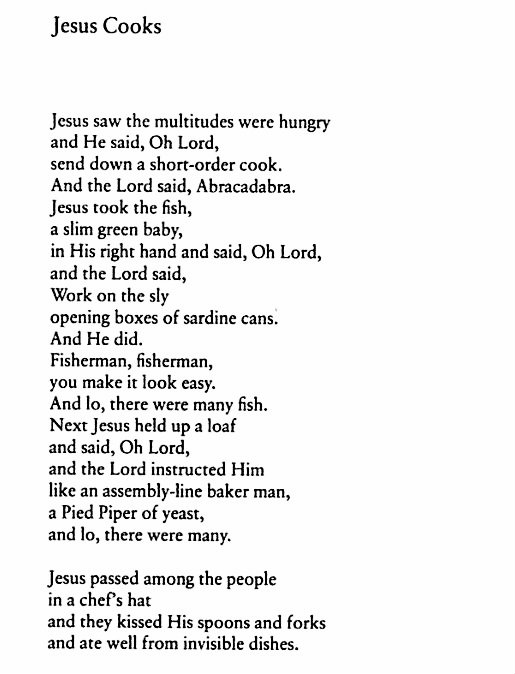
“Jesus Cooks” — Anne Sexton
“I Hear America Singing” — Walt Whitman

Walt Whitman’s Handwritten Drafts of “Come, said my Soul”
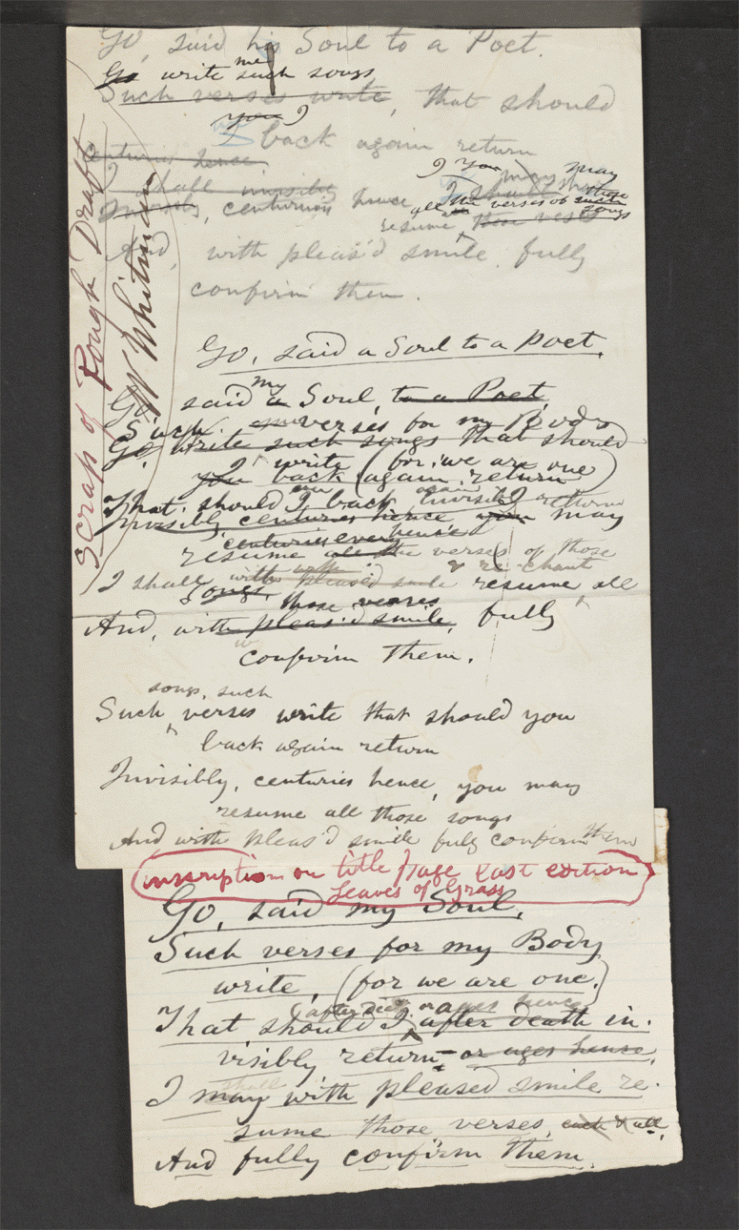
(Via/about).
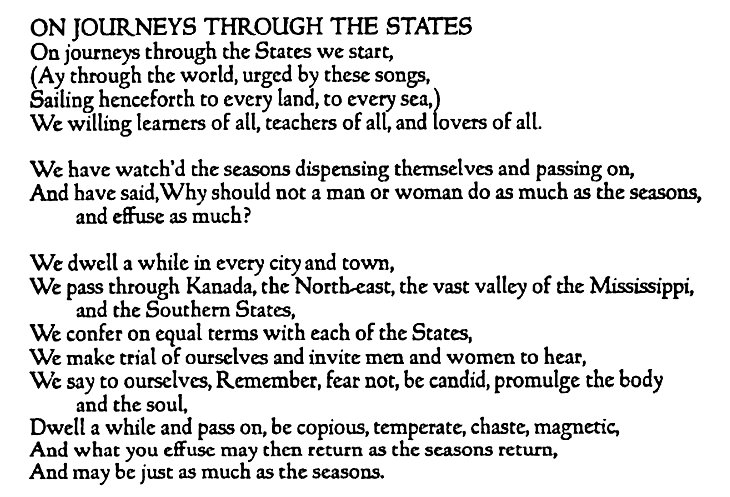
“On Journeys Through the States” — Walt Whitman
“Sometimes With One I Love” — Walt Whitman

 Biblioklept