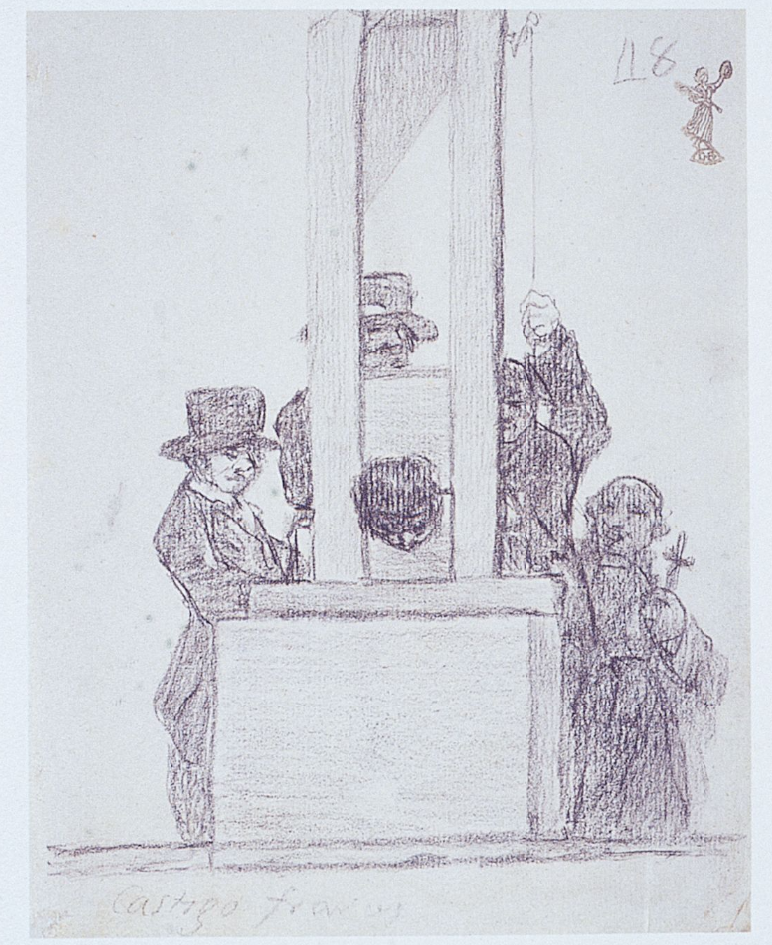
Castigo francés (French punishment), Notebook G.48 (c. 1824-1828) by Francisco Goya (1746-1828)

Castigo francés (French punishment), Notebook G.48 (c. 1824-1828) by Francisco Goya (1746-1828)
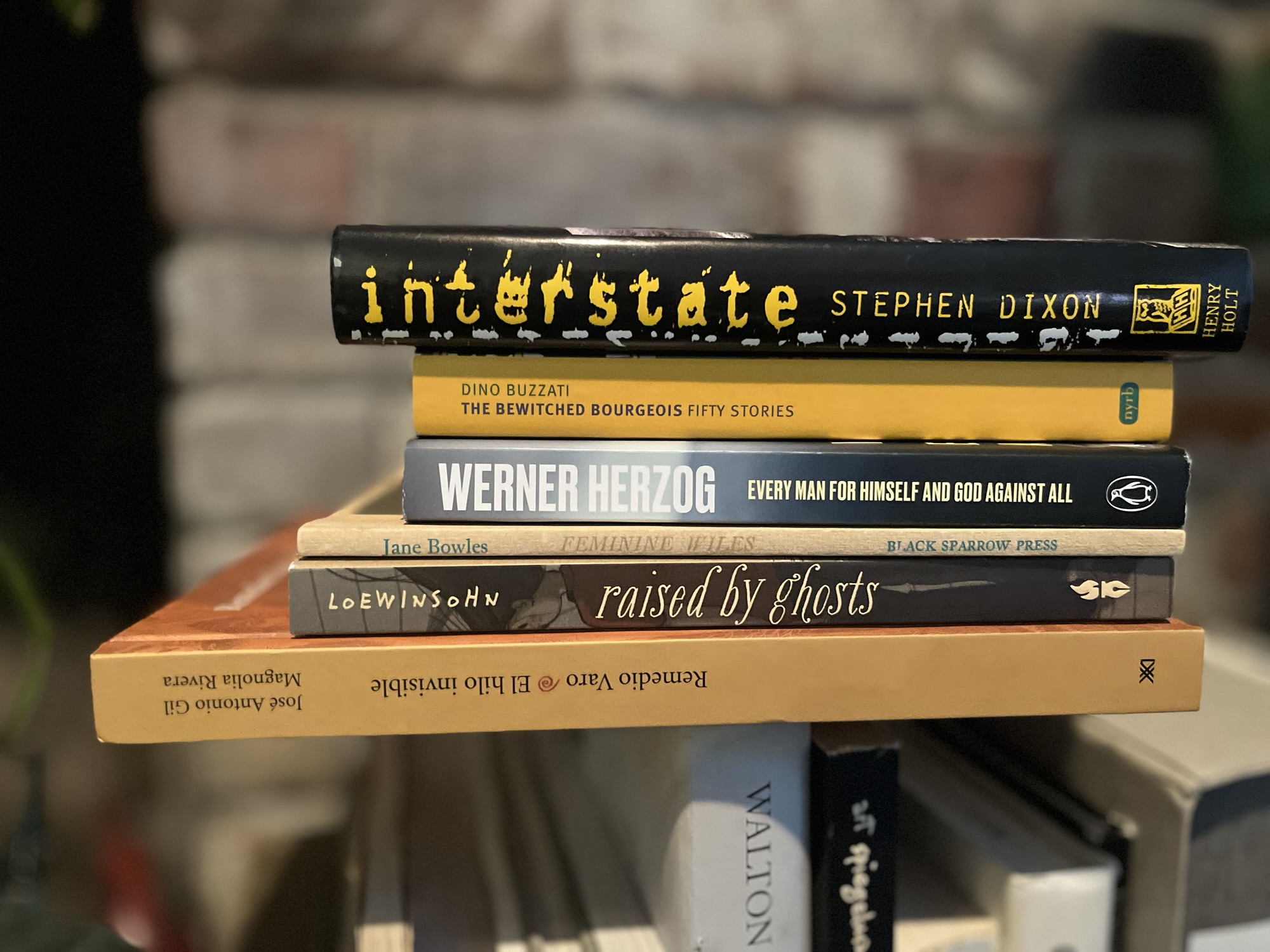
What an interesting few weeks it’s been! Here’s (some of) what I’ve been reading so far this year:
I’m in the middle of Stephen Dixon’s novel Interstate. It is a devastating, ugly, addictive, beautiful novel; I have no idea if it is “good” or not but I love it. I can’t really think of a single person I know (in real life) I could recommend it to. We played cards with some friends and one of them asked about what I was reading, and I said a novel called Interstate by this guy Stephen Dixon, and she asked of course What’s it about? and I said something, Well, this guy’s driving on the interstate with his daughters and two guys in a van pull up along side him and start shooting at them, killing his younger daughter–this happens in like, the first few paragraphs–and then we see how this event destroys his life–but then Dixon repeats the initial scenario like seven more times with different (but all really tragic so far) outcomes–and it’s written in this addictive vocal style that might be really off-putting to many readers, and it also makes really fascinating use of the coordinating conjunction for, which may just be a verbal tic –and it’s also really funny at times? I am not trying to sell this novel to anyone but I love it.
My reading experience of Briana Loewinsohn’s graphic novel Raised by Ghosts was kinda sorta the opposite of Dixon’s Interstate in that after I finished it I immediately pressed it on my wife and then my kids and then texted some of my oldest friends about it (oldest in the previous clause should be understood to modify the friendship, not the actual friend’s years–although we’re all getting older). We’re all getting older, all the time, and Raised by Ghosts provoked an aged nostalgia in me. I’m about half a year older than Loewinsohn and so much of her semi-autobiographical novel resonated with me. She gets everything right about what it was like to be a little bit of a weirdo at school in the nineties. There’s this wonderful passage on how important it was to get a handwritten note from a friend; there’s a page that’s nothing but a notebook page filled with band names; there’s a marvelous scene where our hero loses her shit watching You’re a Good Man, Charlie Brown. I should have a proper review this week or next, but great stuff. (The whole family loved it, by the way.)
I’ve been reading a collection of Dino Buzzati short stories translated by Lawrence Venuti; my technique is to read one of the shorter stories when I feel a bit of dread or anxiety from, like, reading something else. (The collection is called The Bewitched Bourgeois by the way.) I’ve enjoyed reading them, and have especially enjoyed allowing myself to read them at random instead of following the collection’s chronological trajectory. Very Kafka, very Borges, but also very original.
Not in the picture above, but I’ve also been working my way through a digital copy of Vladimir Sorokin’s short story collection Dispatches from the District Committee, in translation by Max Lawton (and illustrated by Gregory Klassen). Great gross stuff.
I picked up a collection of Jane Bowles’ sketches, letters, and other ephemera a few weeks ago–I love her stuff, but really it was that these were contained in the somewhat-rare Black Sparrow Press edition Feminine Wiles. I’m pretty sure all of the stuff here is collected in My Sister’s Hand in Mine, but I’ve enjoyed dipping into this one more. It’s slim, not bulky, but that bulky boy’s around her (My Sister’s) if I need him.
My uncle sent me a copy of Werner Herzog’s 2022 memoir Every Man for Himself and God Against All for Christmas (in translation by Michael Hofmann). I devoured the first few chapters and then a colleague hipped me to the fact that there’s an audiobook of Herzog reading his memoir (available on Spotify and other platforms) — so on my commute I’ve been listening to him read his own memoir, which is just amazing. Like fucking amazing. Hearing him say phrases like “the escapades of Christopher Robin, Winnie-the-Pooh, Piglet, and Eeyore” or that “chipmunks…have something consoling about them” is surreal. There are like fifty insane things that happen in every chapter, and if Dwight Garner of the failing New York Times attested that he didn’t “believe a word” of the memoir, I take the opposite tack. Everything is true, everything is permitted.
Finally, I can’t really say I’ve been “reading” Remedios Varo: El hilo invisible by Jose Antonio Gil and Magnolia Rivera. My grasp of Spanish cannot graspingly grasp too much of the Spanish (although my iPhone’s picture-text-translate thing works fine when I’m really curious), but the book is a lovely visual catalog of not just one of my favorite artist’s works (including many pieces I haven’t seen before), but also documents her visual influences. I picked it up at the Museo de Arte Moderno in Mexico City back in January, still floating on the high of seeing many of Varo’s lovely paintings there that afternoon.

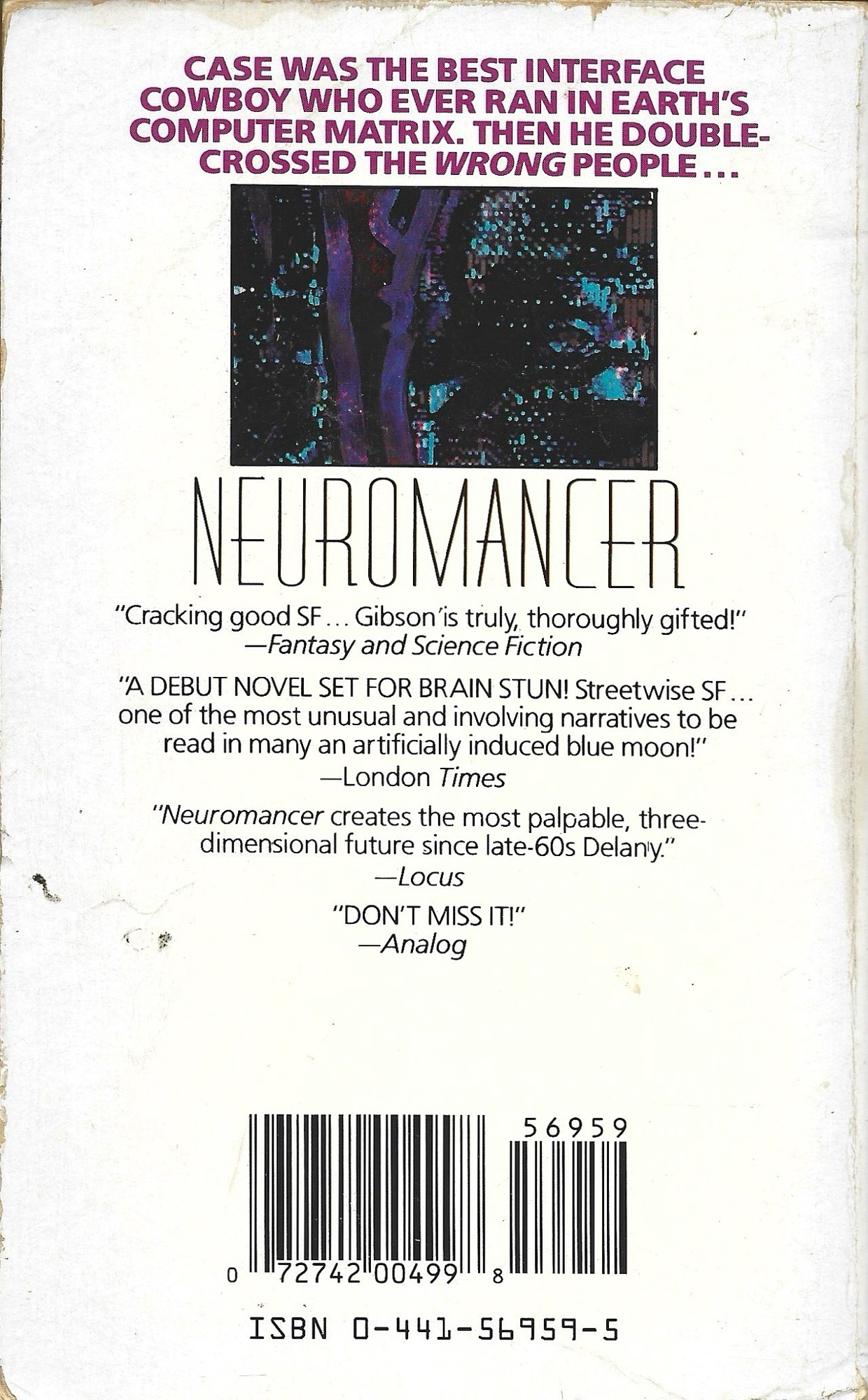
Neuromancer, William Gibson. Ace Books (1984 imprint; 29th printing). No cover designer or artist credited. 271 pages.
ISFDB gives the cover artist as Rick Berry.
I borrowed and never returned Neuromancer from one of my best friends. We were best friends in middle school, but I stole this book like senior year of high school or maybe the year after. 1997ish, when the world seemed fairly settled.
According to a blog I wrote in 2006 (JFC), I lost my friend’s copy to one of my students, who took it and never returned it. Did I buy this 29th printing to replace the copy that I’d sorta-kinda-stolen years ago? I can’t recall. I vaguely recall doing so, but it’s also possible I’ve fabricated the past, creating memories like a man wielding large shears and bolts of felt might create strange stupid felt shapes.
Tilford, I’m sorry. You probably can’t have your book back, but you can have this one. Just let me know.
I would love to bottle the feeling of reading those first three Gibson novels and to sip from that bottle, but that’s nostalgia, and fuck nostalgia.
The apparatus consists of a tall, upright frame with a weighted and angled blade suspended at the top.
The condemned is secured with a pillory at the bottom of the frame, holding the position of the neck directly below the blade.
The blade is then released, swiftly and forcefully decapitating the condemned with a single, clean pass; the head falls into a basket or other receptacle below.
The design of the apparatus — more reliable and less painful for the condemned — was conceived in accordance with enlightened ideals of human rights.
The apparatus took the name of the physician who proposed its implementation. He was a noted opponent of the death penalty and was displeased with the breaking wheel. He did not invent the apparatus.
The physician brought his proposal to a committee. The committee sought inspiration from precursor apparatuses. Many of these prior instruments crushed the neck or used blunt force to take off a head, but a number of them also used a crescent blade to behead and a hinged two-part yoke to immobilize the victim’s neck.
The committee brought their proposal to the sovereign, who caused such an apparatus to be designed and built. The engineer for the prototype was noted as a designer of harpsichords.
The state’s official executioner claimed in his memoirs that the sovereign, an amateur locksmith, recommended that the device employ an oblique blade rather than a crescent one, lest the blade not be able to sever all necks; the sovereign’s own neck was offered up discreetly as an example.
The first specimen to test the apparatus was a highwayman. He was led to the scaffold wearing a red shirt.
The apparatus was also red in color.
A large crowd had gathered. The event took only a few seconds.
The crowd was dissatisfied with the apparatus. They felt it was too swift and clinically effective to provide proper entertainment. They cried out for the wheel, the sword, the wooden gallows.
But the enlightened ones hailed the apparatus as a success.
And in time, the general public grew to love the apparatus too.
The apparatus acquired many fond nicknames:
The Regretful Climb
The National Razor
The Fanlight
The Widow
The Silence Mill
The Machine
The Paper Trimmer
Capet’s Necktie
The Patriotic Shortener
The Half-Moon
The Timbers of Justice
Charlot’s Rocking-chair
The apparatus was wildly successful. Over 17,000 persons were subjected to it over just a thirteen-month period.
(That 17,000 included such notables as the sovereign himself.)
But over time, the enlightened and the general public alike grew bored with the apparatus. It had once been proudly displayed and attended and utilized in the city’s grandest plazas, but over the decades the apparatus was moved to more and more discreet locations, out of the public eye.
It was officially retired by the state’s government just short of two centuries of service.
But its memory and example endures.
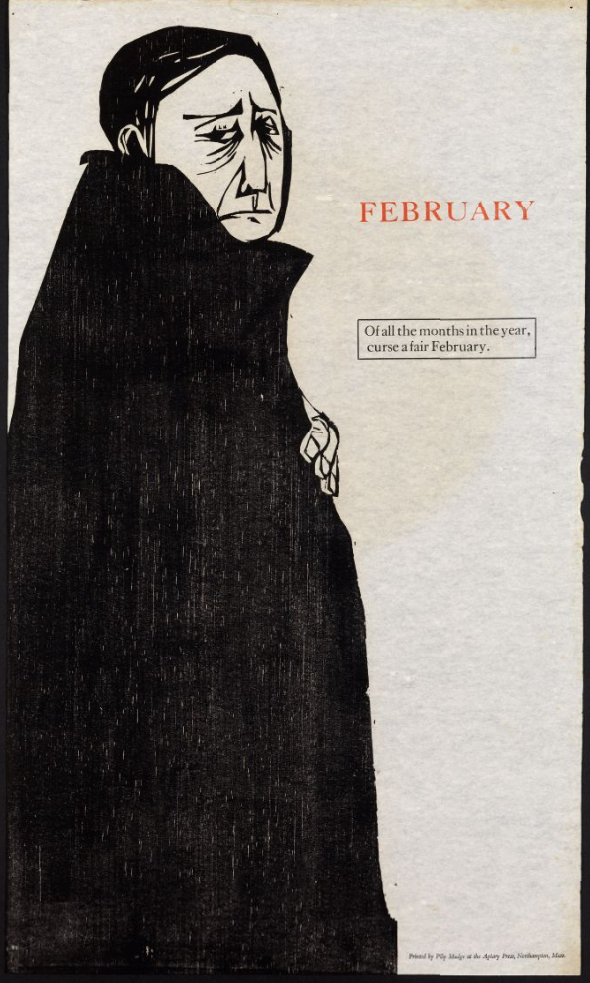
February, from the Apiary Almanac, 1960 by Polly Mudge (1938-1976)
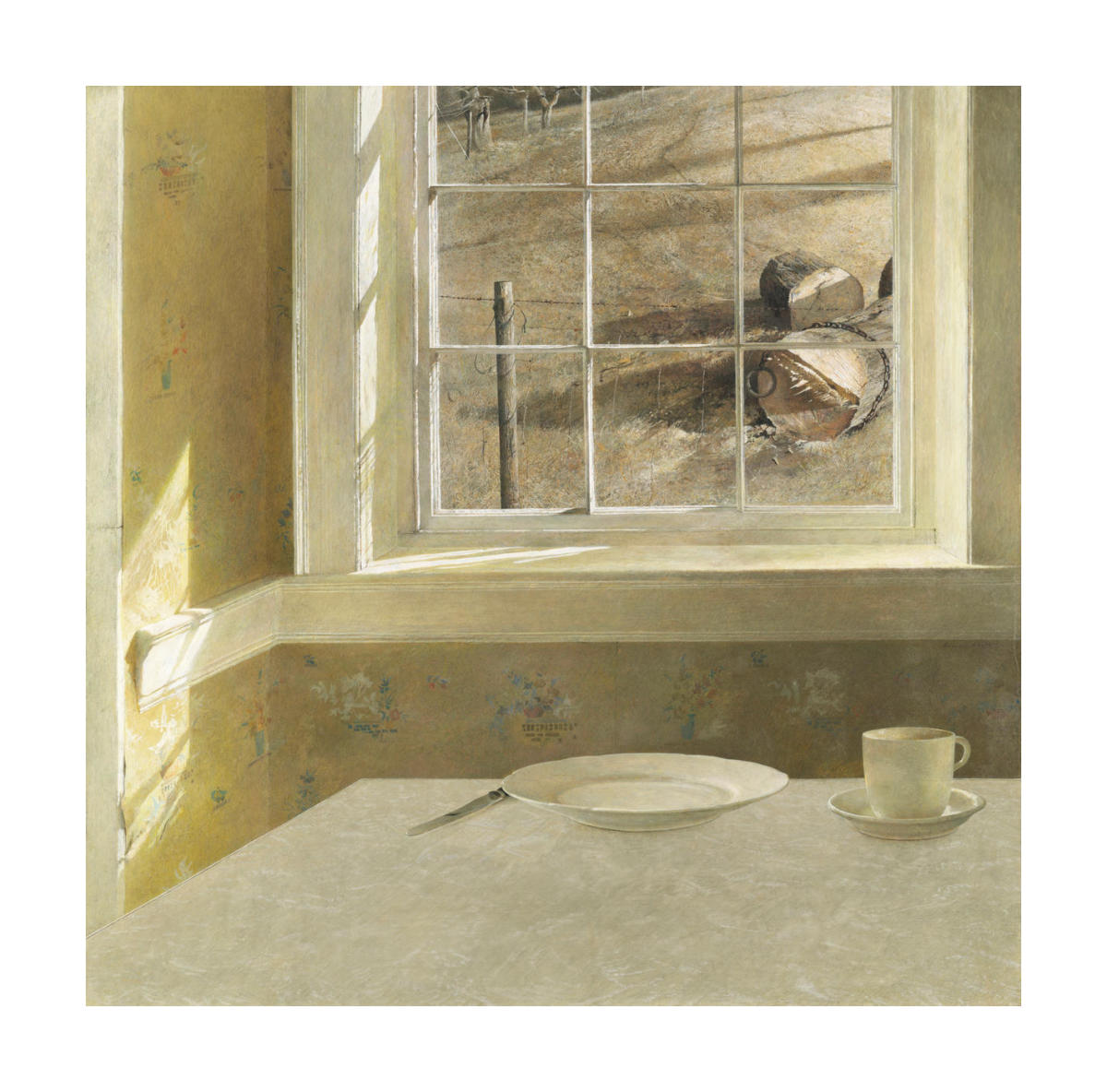
Groundhog Day, 1959 by Andrew Wyeth (1917-2009)
“The Little Berliner”
by
Robert Walser
Translated by Harriett Watts
PAPA boxed my ears today, in a most fond and fatherly manner, of course. I had used the expression: “Father, you must be nuts.” It was indeed a bit careless of me. “Ladies should employ exquisite language,” our German teacher says. She’s horrible. But Papa won’t allow me to ridicule her, and perhaps he’s right. After all, one does go to school to exhibit a certain zeal for learning and a certain respect. Besides, it is cheap and vulgar to discover funny things in a fellow human being and then to laugh at them. Young ladies should accustom themselves to the fine and the noble—I quite see that. No one desires any work from me, no one will ever demand it of me; but everyone will expect to find that I am refined in my ways. Shall I enter some profession in later life? Of course not! I’ll be an elegant young wife; I shall get married. It is possible that I’ll torment my husband. But that would be terrible. One always despises oneself whenever one feels the need to despise someone else. I am twelve years old. I must be very precocious—otherwise, I would never think of such things. Shall I have children? And how will that come about? If my future husband isn’t a despicable human being, then, yes, then I’m sure of it, I shall have a child. Then I shall bring up this child. But I still have to be brought up myself. What silly thoughts one can have!
Berlin is the most beautiful, the most cultivated city in the world. I would be detestable if I weren’t unshakably convinced of this. Doesn’t the Kaiser live here? Would he need to live here if he didn’t like it here best of all? The other day I saw the royal children in an open car. They are enchanting. The crown prince looks like a high-spirited young god, and how beautiful seemed the noble lady at his side. She was completely hidden in fragrant furs. It seemed that blossoms rained down upon the pair out of the blue sky. The Tiergarten is marvelous. I go walking there almost every day with our young lady, the governess. One can go for hours under the green trees, on straight or winding paths. Even Father, who doesn’t really need to be enthusiastic about anything, is enthusiastic about the Tiergarten. Father is a cultivated man. I’m convinced he loves me madly. It would be horrible if he read this, but I shall tear up what I have written. Actually, it is not at all fitting to be still so silly and immature and, at the same time, already want to keep a diary. But, from time to time, one becomes somewhat bored, and then one easily gives way to what is not quite right. The governess is very nice. Well, I mean, in general. She is devoted and she loves me. In addition, she has real respect for Papa—that is the most important thing. She is slender of figure. Our previous governess was fat as a frog. She always seemed to be about to burst. She was English. She’s still English today, of course, but from the moment she allowed herself liberties, she was no longer our concern. Father kicked her out.
The two of us, Papa and I, are soon to take a trip. It is that time of the year now when respectable people simply have to take a trip. Isn’t it a suspicious sort of person who doesn’t take a trip at such a time of blossoming and blooming? Papa goes to the seashore and apparently lies there day after day and lets himself be baked dark brown by the summer sun. He always looks healthiest in September. The paleness of exhaustion is not becoming to his face. Incidentally, I myself love the suntanned look in a man’s face. It is as if he had just come home from war. Isn’t that just like a child’s nonsense? Well, I’m still a child, of course. As far as I’m concerned, I’m taking a trip to the south. First of all, a little while to Munich and then to Venice, where a person who is unspeakably close to me lives—Mama. For reasons whose depths I cannot understand and consequently cannot evaluate, my parents live apart. Most of the time I live with Father. But naturally Mother also has the right to possess me at least for a while. I can scarcely wait for the approaching trip. I like to travel, and I think that almost all people must like to travel. One boards the train, it departs, and off it goes into the distance. One sits and is carried into the remote unknown. How well-off I am, really! What do I know of need, of poverty? Nothing at all. I also don’t find it the least bit necessary that I should experience anything so base. But I do feel sorry for the poor children. I would jump out the window under such conditions. Continue reading ““The Little Berliner” — Robert Walser”
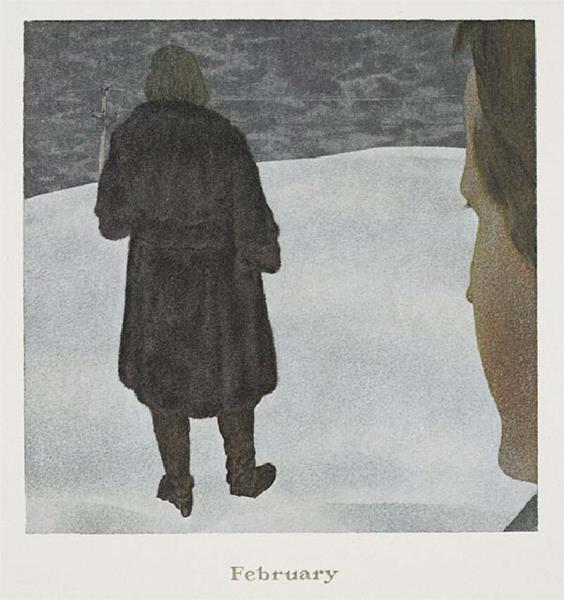
February, 1979 by Alex Colville (1920-2013)
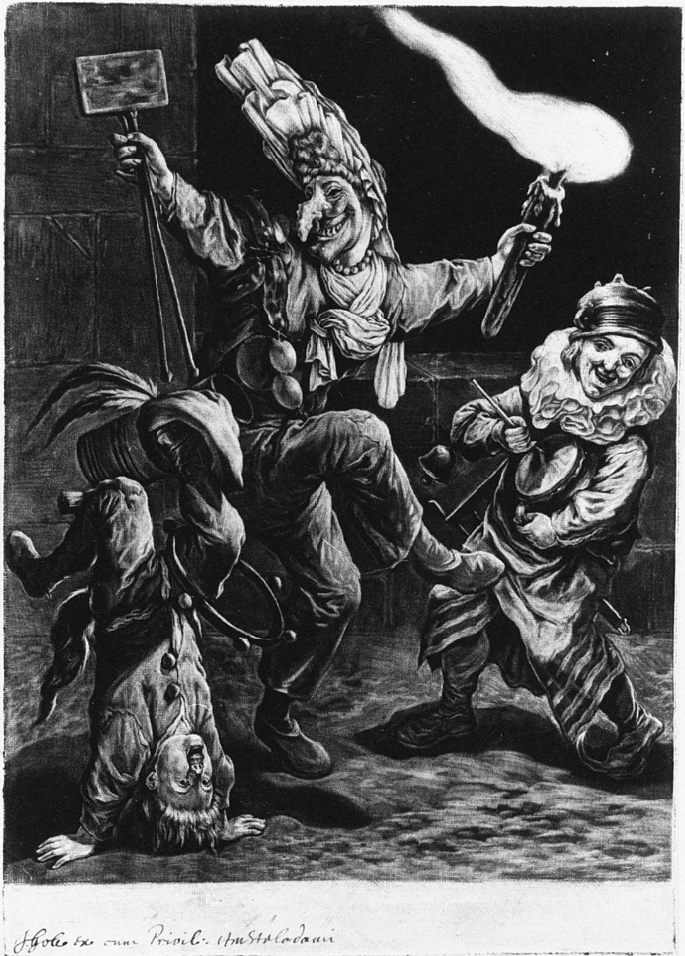
February, c. 1680s by Cornelis Dusart, 1660-1704
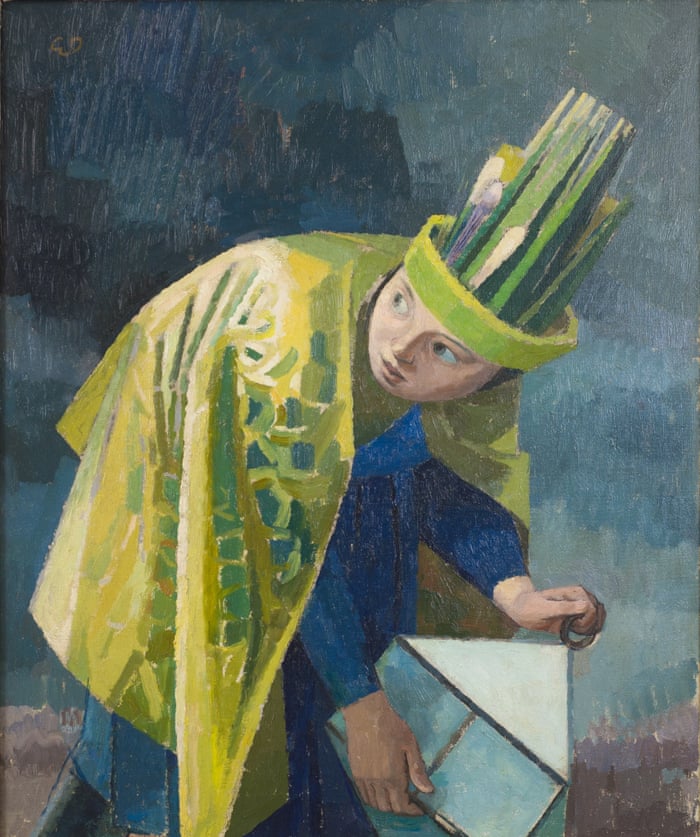
February, 1938 by Evelyn Dunbar (1906-1960)

Hotel Service, 2023 by Eric Fischl (b. 1948)

I finally broke down and bought a copy of Stephen Dixon’s 1995 novel Interstate via an online bookseller; I’d been trying to pick up a used copy of it or his novel Frog for a while now, after devouring 1988’s Garbage last year. I was able to get a signed first edition for less than the novel’s original price listing, which is maybe a little depressing? The novel has eight sections; I read the first last night, in something like a trance. Here is the novel’s first paragraph:
He’s in the car with the two kids, driving on the Interstate when a car pulls up on his side and stays even with his for a while and he looks at it and the guy next to the driver of what’s a minivan signals him to roll down his window. He raises his forehead in an expression “What’s up?” but the guy, through an open window, makes motions again to roll down his window and then sticks his hand out his window and points down at the back of Nat’s car, and he says “My wheel, something wrong with it?” and the guy shakes his head and cups his hands over his mouth as if he wants to say something to him. He lowers his window, slows down a little while he does it, van staying alongside him, kids are playing some kid card game in back though strapped in, and when the window’s rolled almost all the way down and the hand he used is back on the steering wheel, the guy in the car sticks a gun out the window and points it at his head. “What? What the hell you doing,” he says, “you crazy?” and the guy’s laughing but still pointing, so’s the driver laughing, and he says “What is this? What I do, what do you want?” and the guy puts his free hand behind his ear and says “What, what, what? Can’t hear ya,” with the driver laughing even harder now, and he says “I said what do you want from me?” and the guy says “Just to scare you, that’s all, you know, and you’re scared, right?—look at the sucker, scared shitless,” and he says “Yeah, okay, very, so put it away,” and the kids start screaming, probably just took their eyes off the card game and saw what was happening, or one did and the other followed, or they just heard him and looked or had been screaming all the time and he didn’t hear them, but he doesn’t look at them through the rearview, no time, just concentrates on the gun and guy holding it and thinking what to do and thinks “Lose them,” and floors the gas pedal and gets ahead of the van but it pulls even with him and when he keeps flooring it stays even with him and even gets a little ahead and comes back with the guy still pointing the gun out the window and now grinning at him, driver’s in hysterics and slapping the dashboard, things seem to be so funny, and he thinks “Should I roll the window up or keep it down, for rolling it up the guy might take it the wrong way and shoot, if he’s got bullets in there,” and he looks around, no other cars on their side of the Interstate except way in the distance front and behind, no police cars coming the other way or parked as far as he can see on the median strip, and he yells “Kids, get down, duck, stop screaming, do what Daddy says,” and sees them in the rearview staring at the van and screaming and he shouts “I said get down, now, now, unbuckle yourselves, and shut up, your screaming’s making me not think,” and slows down and rolls the window up and van slows down till it’s alongside him, the guy holding the gun out and one time slapping the driver’s free hand with his, and then the guy points the gun at the backseat with the kids ducked down in it and crying, maybe on the floor, maybe on the seat, for he can’t see them, and he swerves to the slow lane and the van gets beside him in the middle lane, and then he pulls onto the shoulder, stops, shifts quickly and drives in reverse on it bumping over some clumps, and the van goes on but much slower and from about a hundred and then two and three and four hundred feet away the guy steadies his gun arm with his other hand and aims at his car and he yells “Kids, stay down,” for both are now looking out the back, maybe because of the bumping and sudden going in reverse, and bullets go through the windshield. He screams in pain, glass in his head and a bullet through his hand, yells “Girls, you all right?” for there’s screaming from in back but only one of them, and his oldest daughter says “Daddy, Julie’s not moving, Daddy, she’s bleeding, Daddy, I don’t see her breathing, I think she’s dead.”

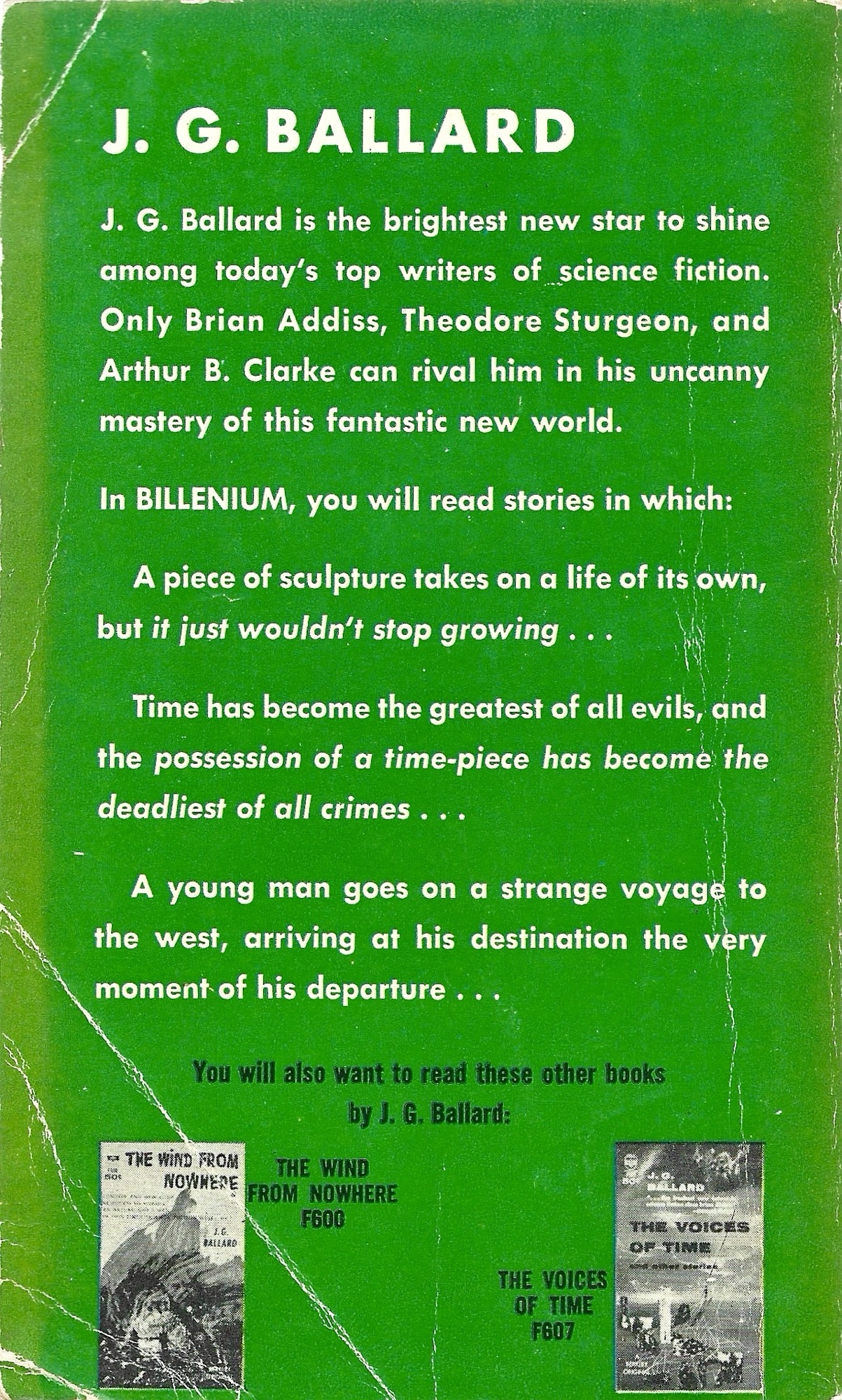
Billenium, J.G. Ballard. Berkley Medallion Books (1962). No cover designer or artist credited. 159 pages.
ISFDB credits Richard Powers as the cover artist.
Ten years ago I read The Complete Short Stories of J.G. Ballard and wrote about them on this blog. At the end of the (exhausting) project (about 1200 pages and just under 100 stories), I made a shortlist of 23 “essential” J.G. Ballard short stories. I included two of the ten stories from Billenium in that list: the title track “Billenium” and “Chronopolis.” Of the latter, I wrote:
“Chronopolis” offers an interesting central shtick: Clocks and other means of measuring and standardizing time have been banned. But this isn’t what makes the story stick. No, Ballard apparently tips his hand early, revealing why measuring time has been banned—it allows management to control labor:
‘Isn’t it obvious? You can time him, know exactly how long it takes him to do something.’ ‘Well?’ ‘Then you can make him do it faster.’
But our intrepid young protagonist (Conrad, his loaded name is), hardly satisfied with this answer, sneaks off to the city of the past, the titular chronopolis, where he works to restore the timepieces of the past. “Chronopolis” depicts a technologically-regressive world that Ballard will explore in greater depth with his novel The Drowned World, but the details here are precise and fascinating (if perhaps ultimately unconvincing if we try to apply them as any kind of diagnosis for our own metered age). Ending on a perfect paranoid note, Ballard borrows just a dab of Poe here, synthesizing his influence into something far more original, far more Ballardian. Let’s include it in something I’m calling The Essential Short Stories of J.G. Ballard.
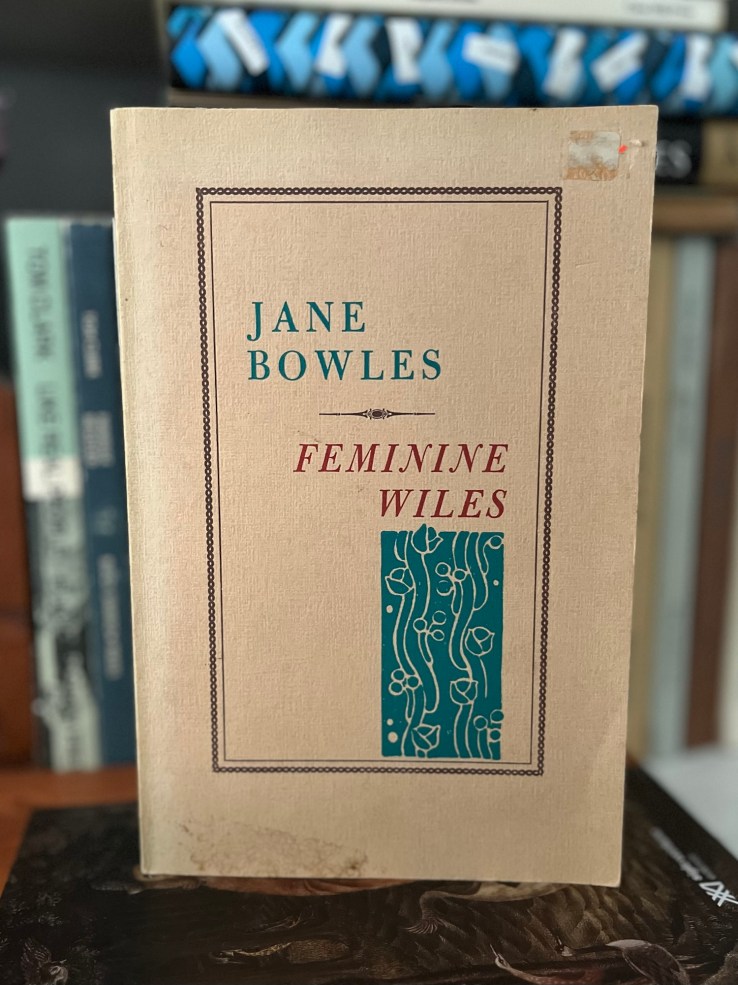
I couldn’t pass up this slim 1976 Black Sparrow Press edition of Jane Bowles’ sketches, letters, and photos — even if a lot of it is reproduced in the later collection My Sister’s Hand in Mine.
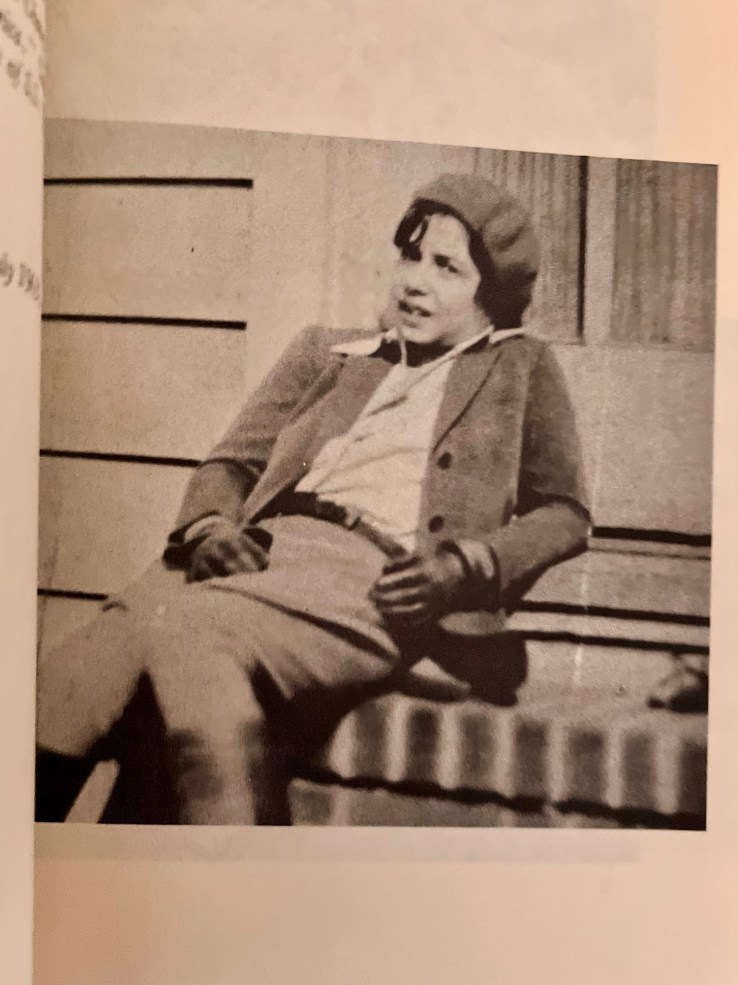
I reviewed Bowles’ sole novel, Two Serious Ladies, a decade ago:
Here’s a short review of Jane Bowles’s only novel, Two Serious Ladies: The book is amazing, a confounding, energetic picaresque suffused with sinister humor and dark delight. I read it knowing nothing about the plot on the recommendation of Ben Marcus, who described it as “so insane, so beautiful, and in some sense, unknowable to me. On the surface, it’s not really about much, but the arrangement of words does something chemical to me.” My recommendation is to dispense with the rest of my review and read Bowles’s novel.
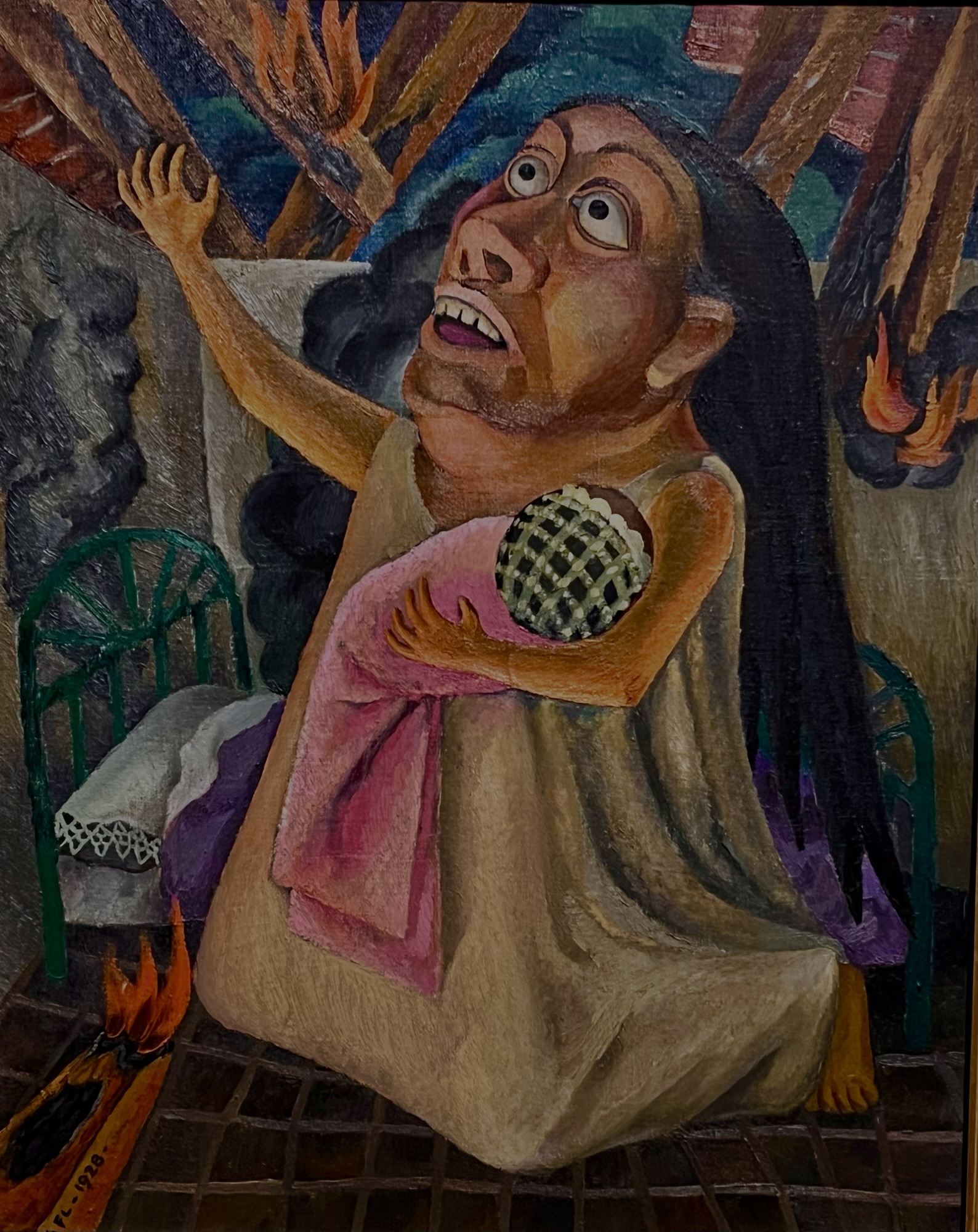
Terrible siniestro (Terrible Disaster), 1928 by Gabriel Fernández Ledesma (1900-1983)
Previously,
23 . “A Few Moments of Sleeping and Waking” (Unspeakable Practices, Unnatural Acts, 1968)
I’ve been reading the stories in Forty Stories as kinda-sorta palate cleansers, usually ingesting one or two between novels; my method is to take a few initial notes to come back to, cross-reference against Tracy Daugherty’s Barthelme biography Hiding Man, and then riff on my general impression. Sometimes a few weeks go by from the time I’ve read or reread one of these stories and the time I actually get around to writing about them. Until now, the title alone has activated some memory or aesthetic impression about the story, but “A Few Moments of Sleeping and Waking” was a total blank for me. I suppose in my memory it simply segued out of the story that preceded it in Barthelme’s excellent 1968 sophomore collection, Unspeakable Practices, Unnatural Acts. That story was “Edward and Pia,” metapseudoautobiographical stand-ins for Barthelme and his third wife Birgit. “A Few Moments” is more droll low-stakes tension between the pair; there’s a little here on films and dreams and their interpretations. The best bit of the story is a moment on cabbage:
Pia was chopping up an enormous cabbage, a cabbage big as a basketball. The cabbage was of an extraordinary size. It was a big cabbage.
“That’s a big cabbage,” Edward said.
“Big,” Pia said.
They regarded the enormous cabbage God had placed in the world for supper.
22 . “The Flight of Pigeons from the Palace” (Sadness, 1972)
A lovely little story, so short and sweet it really can’t be summarized! But I’ll give it a shot: “The Flight” is a comic riff on the audience’s addiction to novelty and sensation. The third-person “we” who narrates “Flight” is a kind of postmodern carnival barker, barking new wonders into existence:
The lineup for opening night included:
A startlingly handsome man
A Grand Cham
A tulip craze
The Prime Rate
Edgar Allan Poe
A colored light
We asked ourselves: How can we improve the show?
We auditioned an explosion.
Barthelme’s not really a moralist, hardly a Hawthorne, but I think he does offer oblique lessons, or warnings really, to his reader. “Flight” culminates thus:
The supply of strange ideas is not endless.
The development of new wonders is not like the production of canned goods. Some things appear to be wonders in the beginning, but when you become familiar with them, are not wonderful at all.
The story concludes in the threatening specter of newly-contracted volcano.
21 . “At the Tolstoy Museum” (City Life, 1970)
Like “Flight,” “At the Tolstoy Museum” is one of Barthelme’s literal cut-and-paste collage stories — that is, a story to include the author’s own visual collages, juxtaposed against his verbal collages. In “Flight,” the collages seem incidental. They aren’t exactly affectations, and they don’t add anything to the story–but they don’t detract either. The visual collages in “At the Tolstoy Museum” are deployed more judiciously, serving as punchlines that resound off of the narrator’s flat, affectless pose:
I was eating a sandwich at the Tolstoy Museum. The Tolstoy Museum is made of stone—many stones, cunningly wrought Viewed from the street, it has the aspect of three stacked boxes: the first, second, and third levels. These are of increasing size. The first level is, say, the size of a shoebox, the second level the size of a case of whiskey, and the third level the size of a box that contained a new overcoat. The amazing cantilever of the third level has been much talked about. The glass floor there allows one to look straight down and provides a “floating” feeling. The entire building, viewed from the street, suggests that it is about to fall on you. This the architects relate to Tolstoy’s moral authority.
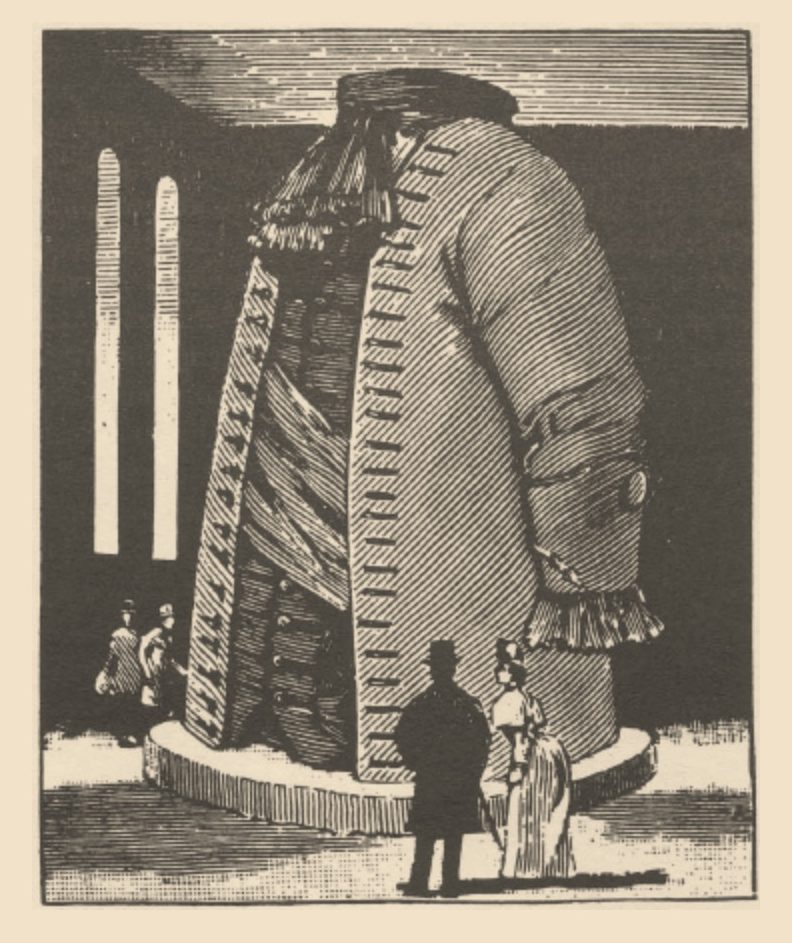
In Hiding Man, Daugherty relates that after “At the Tolstoy Museum” was published in The New Yorker (24 May 1969) “a family from Holly Hill, Florida [wrote to the magazine to learn the location of the Tolstoy Museum.” About two weeks later, Tolstoy’s daughter, the Countess Alexandra L. Tolstoy sent a more indignant letter to the magazine, referring to the story as “Donald Barthelme’s absurd article…What is the aim of such an article? To make people laugh? … How funny! Ha, ha, ha.” Great stuff all around.
20 . “The Wound” (Amateurs, 1976)
A surreal sketch featuring a bullfighter, his mother, his mistress, a bishop, and a famous aficionado (of, implicitly, bullfighting, and, explicitly, breasts), as well as a cast of grumbling minions and peons. Barthelme’s stories are often collage-like, anti-real, hyper-real, or outright absurd, but they are, at least in my estimation, rarely dreamlike. But “The Wound” moves like a dream — a brief, stifled dream, one that reveals something about himself to the dreamer, who later might lament, But I already knew that, like the Bishop who laments his therapy:
The Bishop begins to talk about his psychoanalysis: “I am a different man now,” the Bishop says. “Gloomier, duller, more fearful. In the name of the Holy Ghost, you would not believe what I see under the bed, in the middle of the night.” The Bishop laughs heartily. The torero joins him. The torero’s mistress is filming the Bishop. “I was happier with my whiskey,” the Bishop says, laughing even harder.
The Queen of Gypsies arrives, claiming wounds. There’s “An ecstasy of shrinking” and the final vision of “an immense black bull” blocking the door way. It “begins to ring, like a telephone.”
“The Wound” is a short example that might be handed off to any young person clamoring for meaning or theme or symbolism from every text they read. Sometimes it’s just a dream, a goof, an aesthetic gesture. Sometimes there’s just a surreal punchline that needs to erupt, like a giant black bull ringing like a telephone, blocking the only exit in sight.
 Biblioklept