My baby Biblioklept turns nine today, so nine sets of nine somethings

This blog is nine today (9/9 hey), which seems old for a blog.

Here are nine sets of nine somethings.

Nine Discourses on Commodus by Cy Twombly

Nine novels I want to re-read soon:

  1. J.R., William Gaddis
  2. The Golden Notebook, Doris Lessing
  3. The Lost Scrapbook, Evan Dara
  4. The House of Seven Gables, Nathaniel Hawthorne
  5. The Pale King, David Foster Wallace
  6. The Rings of Saturn, W.G. Sebald
  7. Mumbo Jumbo, Ishmael Reed
  8. Two Serious Ladies, Jane Bowles
  9. Against the Day, Thomas Pynchon

Continue reading “My baby Biblioklept turns nine today, so nine sets of nine somethings”

Apollo and The Nine Muses — Gustave Moreau

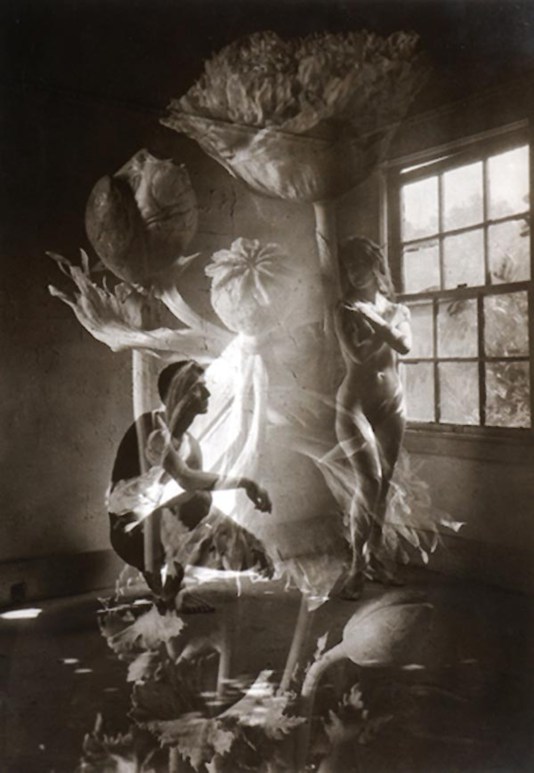
Bill Allard, Vicky Palermo Composite with Poppy — Edmund Rudolph Teske

bill-allard-vicky-palermo-composite-with-poppy-1964

Uncanny token of a vanished race (Cormac McCarthy’s Suttree)

In the afternoon he sat in the cool under the bluff. Summer thunderheads were advancing from the south. He leaned back against the rock escarpment. Jagged blades of slate and ratchel stood like stone tools in the loam. Tracks of mice or ground squirrels, a few dry and meatless nuthulls. A dark stone disc. He reached and picked it up. In his hand a carven gorget. He spooned the clay from the face of it with his thumb and read two rampant gods addorsed with painted eyes and helmets plumed, their spangled anklets raised in dance. They bore birdheaded scepters each aloft.

Suttree spat upon the disc and wiped it on the hip of his jeans and studied it again. Uncanny token of a vanished race. For a cold moment the spirit of an older order moved in the rainy air. With a small twig he cleaned each line and groove and with spittle and the tail of his shirt he polished the stone, holding it, a cool lens, in the cup of his tongue, drying it with care. A gray and alien stone of a kind he’d never seen.

He took off his belt and with his pocketknife cut a long thin strip of leather and threaded it through the hole in the gorget and tied the thong and put it around his neck. It lay cool and smooth against his chest, this artifact of dawn where twilight drew across the iron landscape.

Another excerpt from Cormac McCarthy’s Suttree.

Esotica Abitudine — Francesco Balsamo

DSCF6260

Monsters of virtue or bitchery (Leslie Fiedler)

There is a real sense in which our prose fiction is immediately distinguishable from that of Europe, though this is a fact that is difficult for Americans (oddly defensive and flustered in its presence) to confess. In this sense, our novels seem not primitive, perhaps, but innocent, unfallen in a disturbing way, almost juvenile. The great works of American fiction are notoriously at home in the children’s section of the library, their level of sentimentality precisely that of a pre-adolescent. This is part of what we mean when we talk about the incapacity of the American novelist to develop; in a compulsive way he returns to a limited world experience, usually associated with his childhood, writing the same book over and over again until he lapses into silence or self-parody.

Merely finding a language, learning to talk in a land where there are no conventions of conversation, no special class idioms and no dialogue between classes, no continuing literary language – this exhausts the American writer. He is forever beginning, saying for the first time (without real tradition there can never be a second time) what it is like to stand alone before nature, or in a city as appallingly lonely as any virgin forest. He faces, moreover, another problem, which has resulted in a failure of feeling and imagination perceptible at the heart of even our most notable works. Our great novelists, though experts on indignity and assault, on loneliness and terror, tend to avoid treating the passionate encounter of a man and woman, which we expect at the center of a novel. Indeed they rather shy away from permitting in there fictions the presence of any full-fledged, mature women, giving us instead monsters of virtue or bitchery, symbols of the rejection or fear of sexuality.

From the introduction to Leslie Fiedler’s Love and Death in the American Novel (1960).

“Then, I Will Love You Again” — Laetitia Sadier

Thoughts which bustle (Wittgenstein)

Screenshot 2015-09-08 at 3.38.33 PM

From Culture and Value.

Buttercups, Red Clover, and Plantain — School of Albrecht Dürer

RISDM 38-053

Curse in a Dead Man’s Eye — Patten Wilson (Illustration to Coleridge’s The Rime of the Ancient Mariner)

SH469

Drops of Rain, 1903 — Clarence White

Three Women Squatting — Koloman Moser

“Necessity” — Langston Hughes

Screenshot 2015-09-07 at 2

Dead of Night — Dragan Bibin

wWrIAkR

Voyage d’Hermès — Moebius

Moebius-VoyageHermes-5

They found his head. Man had it in a shoebox. (Cormac McCarthy’s Suttree)

I used to work on the river. The Cherokee. Then I was on the Hugh Martin. The H C Murry. It had a better store than them uptown. After the first war they wasnt no more packetboat trade. I was born in nineteen and hundred. Of a night you could hear them boats howlin on the river like souls. The old Martin had a steamhorn could and used to did bring the glass out of folks’ sashes. I went on the river when I was twelve. I weighed a hunnerd and eighty pound then. This white man shot me cause I whipped him. I didnt know no better. I was older then, must of been fourteen. Dumb as shit. I went home and got better and fore I could see him to kill him somebody had done done it. Cut his head off. Wasnt no friend of mine. Thowed my black ass in the jailhouse. Went up the side of my head with they old clubs and shit. I laid there in the dark, they aint give me nothin to eat yet. That was my first acquaintance of the wrath of the path. That’s goin on forty year now and it dont signify a goddamn thing. These bloods down here think it’s somethin to whip up on some police. They think that’s really somethin. Shit. You aint got nothin for it but a busted head. You caint do nothin with them motherfuckers. I wouldnt fight em at all if I could keep from it.

Suttree bent to see his face. Jones blinked, eyeballs like eggs in the mammoth black skull. He must have read his pale friend’s look because he said almost to himself: That’s the truth.

How did you get out?

They found his head. Man had it in a shoebox.

He was unscrewing the bottlecap, taking a drink. His eyes closed and opened slowly in the gloom. This man was a gambler and a whoremaster. He never drunk nor smoked. Run a whorehouse on Front Street that was well known in them days. Boats come in, the hands would all turn out for his place. Streets full of whores, queers any color. Thieves. They come out like roaches whenever you had a dockin. Then this feller cut his head off and carried it around in a shoebox with him. He got drunk one night down on Central Avenue and started showin the old head around. Folks runnin screamin into the streets. Next day I’s out.

Was he crazy?

Who?

The murderer.

I dont know. He didnt kill him to rob him. I guess he was a little bit crazy.

Would you have killed him?

I dont know. I reckon I would if that was how he’d of wanted it.

Suttree took a sip of his beer. He could hear Smokehouse in the outer room again, puttering about, glass clinking. He looked at Jones. Have you ever killed anyone? he said.

Not on purpose, said Jones.

From Cormac McCarthy’s SuttreeI read an echo of Huck and Jim in Sut and Jones, perhaps—a faint, distorted, reverberated echo, sure—but an echo. This episode also seems to obliquely reference Queequeg’s adventures with the shrunken head in Nantucket.