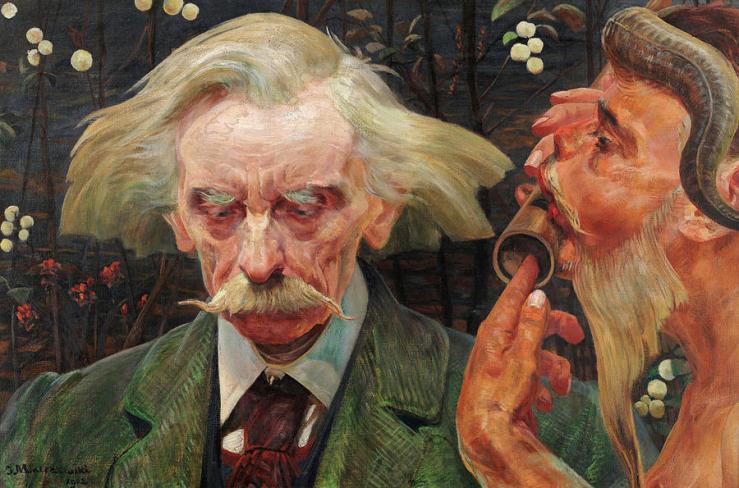
The Unknown Note — Jacek Malczewski

the-unknown-note-1902-jacek-malczewski

The Unknown Note, 1902 by Jacek Malczewski (1854-1929)

Saltwood Window — Robin Ironside

75_bg

Saltwood Window, c. 1955 by Robin Ironside (1912-1965)

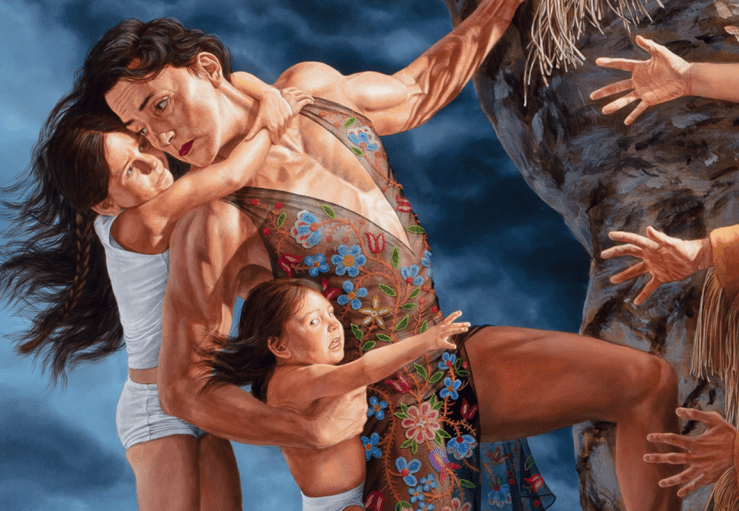
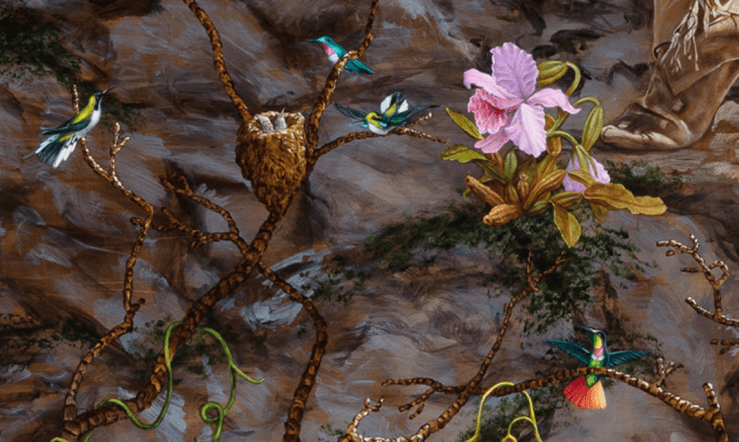
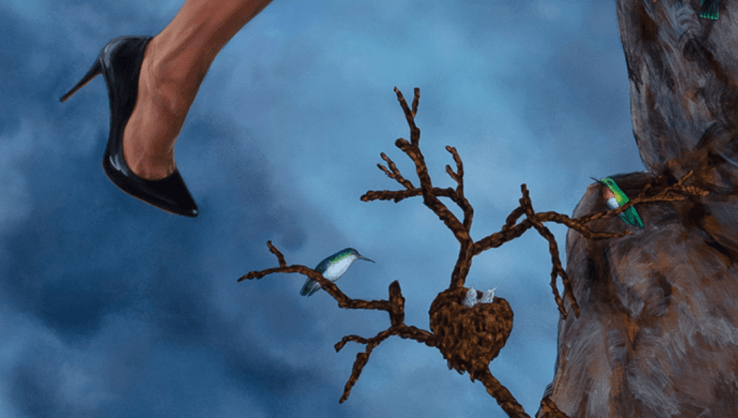
Passage — James Jean

passage-web-lores

abc

Passage, 2019 by James Jean (b. 1979)

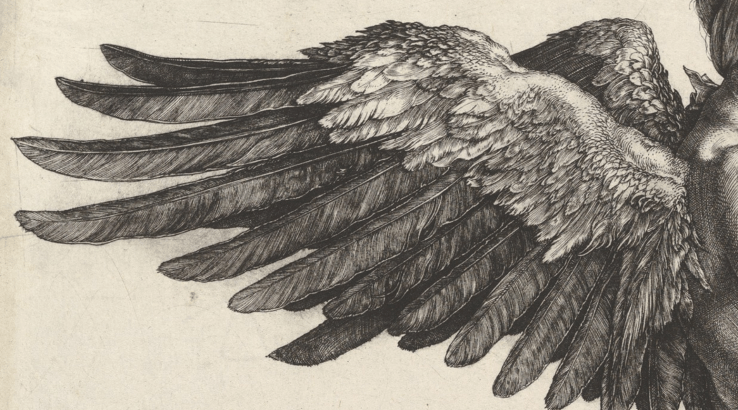
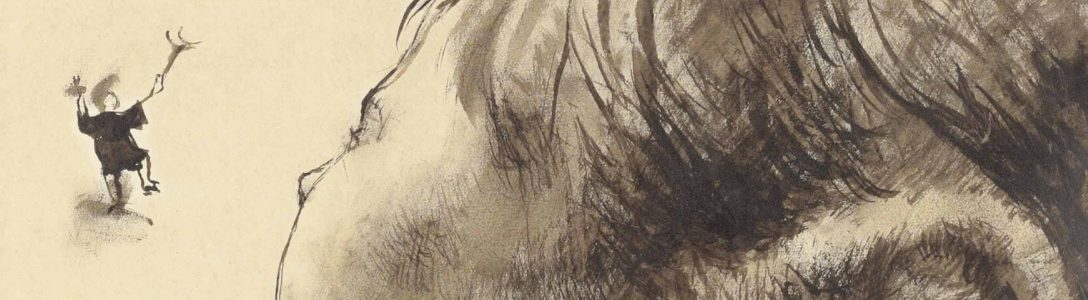
Nemesis (Detail) — Albrecht Durer

nemesis

Nemesis (Detail), 1503 by Albrecht Durer (1471-1528)

Rock Star — Marc Dennis

marc-dennis_rock-star_2015_oil-on-linen_70x60inches

Rock Star, 2015 by Marc Dennis (b. 1971)

The Well of Truth — René Magritte

welloftruth

The Well of Truth, 1963 by René Magritte (1898-1967)

Escaping the Candy Jail with My Good Eye Closed 1 — Drew Simpson

untitled-2-1024x819

Escaping the Candy Jail with My Good Eye Closed 1, 2016 by Drew Simpson

Three Baskets — Stephen McKenna

Three Baskets 1995 by Stephen McKenna born 1939

Three Baskets, 1995 by Stephen McKenna (1939–2017)

Jason — JMW Turner

Jason exhibited 1802 by Joseph Mallord William Turner 1775-1851

Jason, 1802 by Joseph Mallord William Turner (1775–1851)

Living Room — Zoey Frank 

frank-living-room

Living Room, 2018 by Zoey Frank (b. 1987)

Oriana — Frederick Sandys

Oriana 1861 by Frederick Sandys 1829-1904

Oriana, 1861 by Frederick Sandys (1829–1904)


“Ballad of Oriana”

by

Alfred Tennyson


She stood upon the castle wall, Oriana:
She watch’d my crest among them all, Oriana:
She saw me fight, she heard me call,
When forth there stept a foeman tall, Oriana,
Atween me and the castle wall, Oriana.

The bitter arrow went aside, Oriana:
The false, false arrow went aside, Oriana:
The damned arrow glanced aside,
And pierced thy heart, my love, my bride, Oriana!
Thy heart, my life, my love, my bride,Oriana!

Oh! narrow, narrow was the space, Oriana.
Loud, loud rung out the bugle’s brays, Oriana.
Oh! deathful stabs were dealt apace,
The battle deepen’d in its place, Oriana;
But I was down upon my face, Oriana.
They should have stabb’d me where I lay, Oriana!
How could I rise and come away, Oriana?
How could I look upon the day?
They should have stabb’d me where I lay, Oriana
They should have trod me into clay,Oriana.
O breaking heart that will not break, Oriana!

Peaches — Janet Fish

peaches-1971

Peaches, 1971 by Janet Fish (b. 1938)

Woman with the Hat — Hilary Harkness 

2011_woman20with20the20hat_8.520x20720inches

Woman with the Hat, 2011 by Hilary Harkness (b. 1971)

The real business of the War is buying and selling | Annotations for page 105 of Gravity’s Rainbow

“The blackmarket blights peace,” Dutch postwar propaganda poster, 1946

Don’t forget the real business of the War is buying and selling 1. The murdering and the violence are self-policing, and can be entrusted to non-professionals. The mass nature of wartime death is useful in many ways 2. It serves as spectacle, as diversion from the real movements of the War. It provides raw material to be recorded into History, so that children may be taught History as sequences of violence, battle after battle, and be more prepared for the adult world 3. Best of all, mass death’s a stimulus 4 to just ordinary folks, little fellows 5, to try ’n’ grab a piece of that Pie while they’re still here to gobble it up. The true war is a celebration of markets 6. Organic markets, carefully styled “black” 7 by the professionals, spring up everywhere. Scrip, Sterling, Reichsmarks continue to move, severe as classical ballet, inside their antiseptic marble chambers. But out here, down here among the people, the truer currencies come into being. So, Jews are negotiable. Every bit as negotiable as cigarettes, cunt, or Hershey bars. Jews also carry an element of guilt, of future blackmail, which operates, natch, in favor of the professionals. 8

From page 105 of Thomas Pynchon’s 1973 novel Gravity’s Rainbow.

1 Gravity’s Rainbow is often (unjustly and unfairly) maligned as a messy, even pointless affair—but here’s our author speaking through the narrator, offering up one of the novel’s points—clearly, without equivocation.

Our narrator digs irony though…

Entropy is all—but entropy doesn’t make for good capitalism, by which our sly narrator means, Their Capitalism. The adult world needs to be organized, systematized, caused and effected.

Cf. Jack Gibbs’s rant to his erstwhile young students, early in William Gaddis’s 1975 novel of capitalism, J R:

Before we go any further here, has it ever occurred to any of you that all this is simply one grand misunderstanding? Since you’re not here to learn anything, but to be taught so you can pass these tests, knowledge has to be organized so it can be taught, and it has to be reduced to information so it can be organized do you follow that? In other words this leads you to assume that organization is an inherent property of the knowledge itself, and that disorder and chaos are simply irrelevant forces that threaten it from the outside. In fact it’s the opposite. Order is simply a thin, perilous condition we try to impose on the basic reality of chaos . . .

Note the not-so-oblique reference to GR’s theme of stimulus-response (and upending that response).

Not too much earlier in the narrative, dedicated Pavlovian Dr. Edward W.A. Pointsman worries about the end of cause and effect, the rise of entropy:

Will Postwar be nothing but ‘events,’ newly created one moment to the next? No links? Is it the end of history?

5…the preterite?

Pynchon reiterates his thesis.

Note that organic (entropic?) markets fall outside of Their System—y’know, Them—the Professionals—these organic (chaotic, necessary) markets must be labeled “black” (preterite?).

Here’s another Dutch propaganda poster:

“Protect them against the black market!”, Dutch propaganda poster, 1944

Page 105 of Gravity’s Rainbow “happens,” more or less, in 1944, in the middle of an extended introduction of Katje Borgesius, a Dutch double agent. (Or is that double Dutch agent?). The propaganda poster above strikes me as overtly racist, but also seems to nod to King Kong (1933, dir. Cooper and Schoedsack). Gravity’s Rainbow is larded with references to King Kong, a sympathetic but powerful force of entropy, a force against the Professionals.

kong1933a
Still from King Kong, 1933

From the invaluable annotations at Pynchon Wiki’s Gravity’s Rainbow site (there is no annotation for page 105 at Pynchon Wiki, by the way, and no notes on the passage I’ve cited above either in Steven Weisenburger’s A Gravity’s Rainbow Companion):

King Kong & the Like

Fay Wray look, 57; Fay Wray, 57, 179, 275; “You will have the tallest, darkest leading man in Hollywood,” 179; “headlights burning like the eyes of” 247; “the black scapeape we cast down like Lucifer,” 275; Mitchell Prettyplace book about, 275; “Giant ape” 276; “the Fist of the Ape,” 277; “orangutan on wheels,” 282; taking a shit, 368; “The figures darkened and deformed, resembling apes” 483; “a troupe of performing chimpanzees” 496; “on the tit with no motor skills,” 578; “Negroid apes,” 586; “that sacrificial ape,” 664; “a gigantic black ape,” 688; Carl Denham, 689; poem based on King Kong, 689; See also: actors/directors film/cinema references;

The Kong-figure in the Dutch propaganda poster seems to wear the petasos (winged hat) and wield the caduceus of Hermes or Mercury—god of thieves. But also god of the market, of commerce, merchandise, all things mercenary.

From Joseph T. Shipley’s The Origin of English Words: A Discursive Dictionary of Indo-European Roots (1984):

img_3604

The passage as a whole, which emphasizes war as a conduit for the techne of the market (or do I have that backwards? should I note the market of techne?) echoes an earlier passage. From page 81:

It was widely believed in those days that behind the War—all the death, savagery, and destruction—lay the Führer-principle. But if personalities could be replaced by abstractions of power, if techniques developed by the corporations could be brought to bear, might not nations live rationally? One of the dearest Postwar hopes: that there should be no room for a terrible disease like charisma.

All signs seem to point to No.

The Blasphemer — William Blake

The Blasphemer c.1800 by William Blake 1757-1827

The Blasphemer, c. 1800 by William Blake (1757-1827)

And he that blasphemeth the name of the LORD, he shall surely be put to death, and all the congregation shall certainly stone him: as well the stranger, as he that is born in the land, when he blasphemeth the name of the LORD, shall be put to death.

—Leviticus 24:16, King James Version

Three Fragments — Samuel Branton


fragment20monkey20with20pufferfish20small

Fragment (Monkey, Pufferfish, and Peaches), 2019

fragment20horse20with20two20swans20small

Fragment (Horse with Two Swans), 2019

fragment20lion20with20humpback20whale20small

Fragment (Lion and Humpback Whale), 2019

From Samuel Branton’s Holy Ground series.

Butcher Lesson — Xiao Guo Hui

xiao-guo-hui-_cutts_2015_03_27_32631-931x1024

Butcher Lesson, 2015 by Xiao Guo Hui (b. 1969)