“Unbe-fucking-lievable,” interjects the ominvalent narrator of Alfred Döblin’s 1929 novel Berlin Alexanderplatz at one point. I’m not sure if the original German (Ist gar nicht zu glauben) conveys the amazed profanity here in Michael Hofmann’s 2018 translation, but “Unbe-fucking-lievable” nevertheless captures the raucous spirit and mutable form of Berlin Alexanderplatz. The novel is a polyglossic spree, an encyclopedic riot, a tragicomic masterpiece of syntax and diction, chopped and screwed, twisted and turned.
What is it about?
The first italicized page summarizes the entire novel in nine neat paragraphs, beginning with this one:
The subject of this book is the life of the former cement worker and haulier Franz Biberkopf in Berlin. As our story begins, he has just been released from prison, where he did time for some stupid stuff; now he is back in Berlin, determined to go straight.
For further clarification: It is the 1920s in Berlin, that slim decadent wedge between those two big wars, and the Weimar capital buzzes with working-class resentment and political unrest. (And drinking. Lots and lots of drinking.)
We soon find out the “stupid stuff” Biberkopf did that landed his ass in jail, and find that the stuff wasn’t so much stupid as stupid and horrific. But by the time we’ve discovered the crimes of Biberkopf, it’s too late: the narrator’s got his sharp teeth sunk into the bit of our brain that pumps sympathy for the supposed hero of the story.
But again: What is it about?
Well:
Biberkopf tries to play it straight, but life on the Alexanderplatz and its seedy environs ain’t easy. He slings newspapers, mixes it up with communists and Nazis alike, and tries to keep his nose clean. But, this being a picaresque tale, he falls in with old associates, falls into old petty crimes, and eventually loses his arm. (Like, literally.) He takes to pimping, thinking it easy, but pimping presents its own problems. There’s love, lust, murder, and betrayal. (And drinking. Lots and lots of drinking.)
What is it about? is not really the right question for Berlin Alexanderplatz. Instead: What is it?
Berlin Alexanderplatz is a literary montage, a vicious collage, an explosion of colors, a carnival of noise and chaos and entropy, told by a narrator who occasionally tries to sort the pieces out for the reader, but usually is more content to drop a metaphorical bomb on us and then spend a dozen or so pages explaining how the bomb got there and who planted it and why the saboteur was so hellbent on destruction in the first place.
Our narrator is a ventriloquist, popping into the consciousnesses and throats of characters major, minor, and peripheral (at best) alike. There’s a cinematic orality to the novel, a shuffling, skipping, vamping voiceyness to Döblin’s prose that Hofmann’s translation renders as a kind of cackling cockney English. It sparks and hoots and howls.
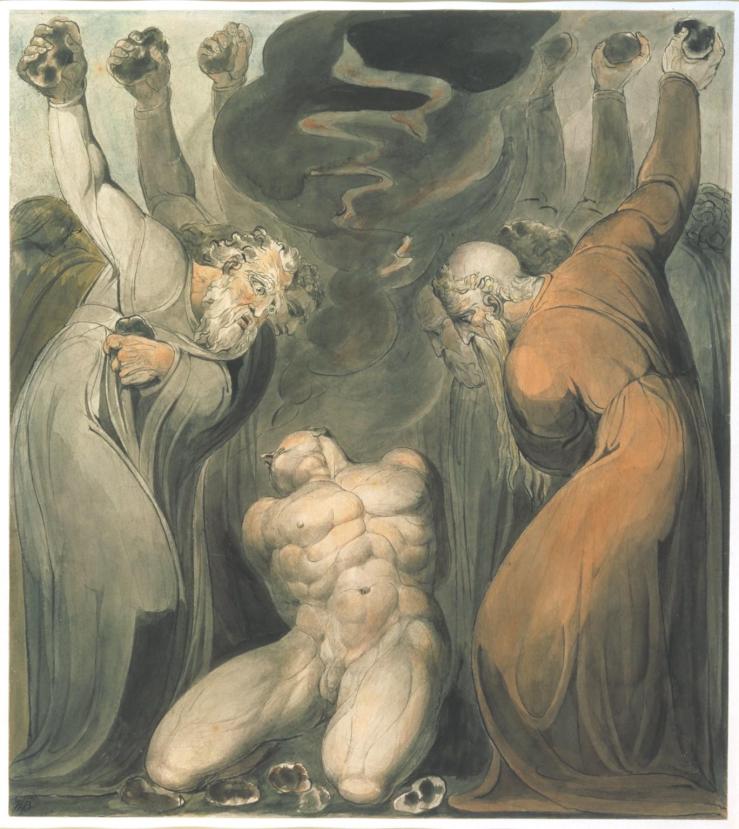
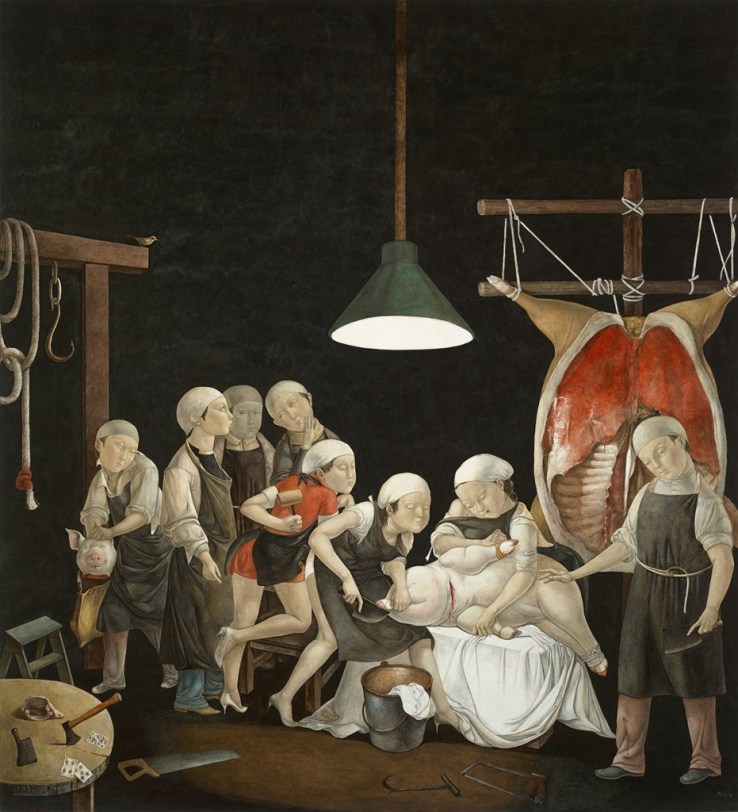
Döblin’s narrator might wander around in Biberkopf’s brain, and then end up in the voice of his girlfriend Mitzi (whom he pimps), or his friend and enemy Reinhold, or just some random cafe sitter or beer drinker at a bar. Döblin’s camera goes anywhere it likes; indeed, Berlin Alexanderplatz is crammed with flights into history, mythology, books of the Bible, math, industry, science. A riff on the First Newtonian Law? Sure. A lengthy treatise on industrial pork butchery? Why not. A retelling of the Book of Job? Of course. Ever wondered why berries sweeten in the cold of winter? Let Döblin’s narrator explain the relationship of temperature, starch, and sugar for you.
Berlin Alexanderplatz is voluminous, exhausting, exhaustive, ecstatic. Döblin’s narrator grabs a hold of a subject, picks at it, puts it down, picks up later. Sometimes these threads coalesce (the Books of Job and Ecclesiastes became refrains); other riffs seem to be included for no reason other than Döblin’s narrator finds them interesting. He gleefully steals from newspapers, injecting the narrative with tangential-at-best stories of the day: murders and plane crashes and invasions and assassination attempts and failures and successes and crimes, large and small. Döblin’s novel aims to be about everything, about both the small and the big worlds his petty criminal antihero Franz Biberkopf is a citizen of.
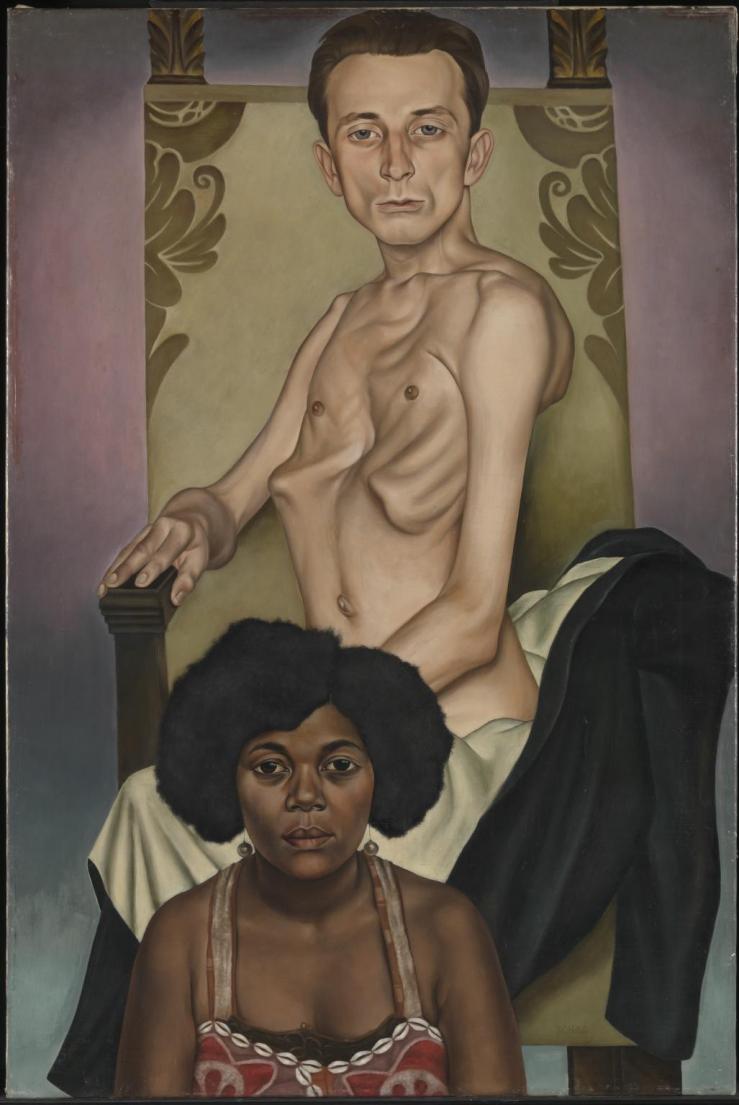
With its voracious, swirling, omnidirectional scope and undulating stylistic turns, Berlin Alexanderplatz readily recalls James Joyce’s big book Ulysses. Döblin’s novel seems less beholden to a series of correspondences than Joyce’s, however—it’s freer, more anarchic really, roiling around in its own entropy. Both novels are bawdy, smart, and very funny of course. With its celebratory attention to Berlin’s seedier side, Berlin Alexanderplatz also recalls the paintings of Otto Dix, Rudolf Schlichter, and George Grosz (whose 1919 painting Panorama adorns the cover of my NYRB edition). There are also notes of Kubrick here—there’s something of both A Clockwork Orange and Barry Lyndon to Berlin Alexanderplatz: the former’s energetic, horrific violence and pastiche-slang; the latter’s ironic and affecting treatment of the traditional bildungsroman. Döblin’s technique of stealing freely from newspapers also reminds me of Félix Fénéon’s Novels in Three Lines, as well as Doris Lessing’s The Golden Notebook, and segments of William Gaddis’s JR and The Recognitions. (All of these work belong in what the protagonist of William Gass’s novel Middle C dubbed “The Inhumanity Museum.”)
General comparisons of other works to Döblin’s great big fat novel don’t really do Berlin Alexanderplatz justice of course. There is simply no substitute for reading it. It is a novel about itself; it is a novel that one doesn’t so much read for plot (or worse, to learn something); rather, it is a novel that produces waves of feelings, confusions, problems in its reader. It is a novel packed with grotesquerie and excess, yes, and the turbulent humor does not leaven the novel’s core meanness. Berlin Alexanderplatz’s spine is a spike of ice, but lots of wonderful juicy rich fat hangs from that icy spine.
And through its meanness, the novel pushes its hero to a strange redemption of sorts, announced on the novel’s very first page: “The terrible thing that was his life acquires a purpose.”
And do I spoil the final line?
Why not: “We know what we know, we had to pay dearly enough for it.”
I did not pay dearly for Berlin Alexanderplatz, either in my money or in my time. I was rewarded. Very highly recommended.