
I watched David Lynch’s film The Elephant Man (1980) last night for the first time in at least a decade (likely more than a decade). The Elephant Man is not my favorite Lynch film to rewatch, perhaps because it is his most realistic film despite its fantastic touches.
The Elephant Man is emotionally devastating, propelled by naturalistic performances unusual in Lynch’s oeuvre. Lynch teases the titular elephant man’s hideous countenance for the first fifteen or so minutes of the film, but when we finally see John Merrick (played by an unrecognizable John Hurt), we feel only pity for his circumstance and contempt for a world that can’t accept him.
Dr. Treves (Anthony Hopkins) shares that mix of pity and contempt. Treves is the surgeon who moves Merrick from his freakshow prison to a respectable London hospital, where the young man can finally find some measure of comfort in his own skin. Away from his former handler, the sadistic Mr. Bytes (Freddie Jones), young Merrick quickly becomes an aesthete, the toast of London society.
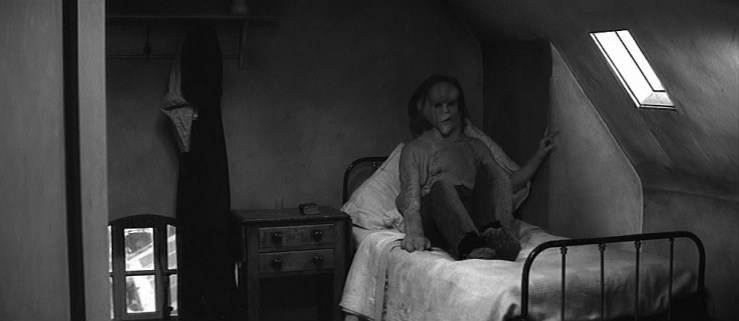
Merrick’s hospital suite becomes an artiste’s garret, where he builds a model of a nearby cathedral and takes tea with a famous actress. However, a cruel night porter named Jim (Michael Elphick) intrudes into this peace, selling tipsy gawkers tickets to see the elephant man in his new minor paradise. While Jim’s invasions are horrifying, more subtly terrible is the notion that Dr. Treves himself is simply recapitulating the freakshow, only this time to a “higher society” — a sin that Ms. Mothershead, the ward’s head nurse, warns Treves against. She serves as the moral anchor of the film, proclaiming that care and attention—bathing, feeding, cleaning—are the truest forms of “love.”
Despite its subject matter, The Elephant Man is possibly Lynch’s most straightforward, even traditional film (this estimation includes The Straight Story (1999)). The plot is ultimately a character study of a lonely man who craves not wholesale acceptance or dramatic love but simple friendship. The emotional crux of The Elephant Man rests in Treves’ reticence to truly befriend his patient, a reticence Lynch refuses to resolve.
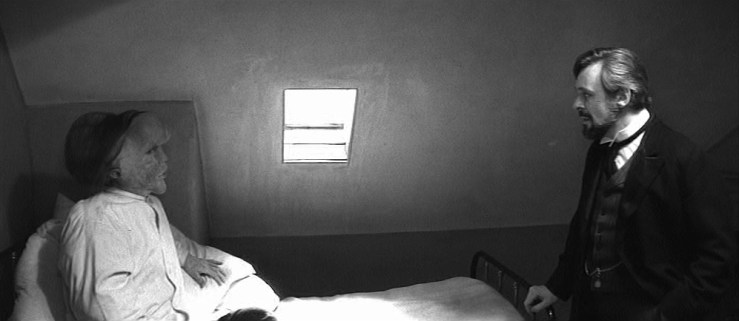
We feel pity for Merrick, but as his social status swells into a surreal ironic infamy, we feel a second pity—the fame goes to his head. Hurt portrays these strange emotional swings through thick layers of makeup, aided by Lynch’s impeccable framing and Freddie Francis’ dreamy black and white cinematography. (Francis served as cinematographer on Lynch’s next film, 1984’s Dune, as well as the aforementioned The Straight Story). Lynch’s sound design is haunting, but not as proficient as later efforts—too reliant on flange and echo, the sound design often subtracts through addition.

Visually, The Elephant Man plants seeds for any number of Lynchian set pieces to come. The nightworld Lynch creates for poor Merrick to endure repeats throughout his oeuvre, notably in Blue Velvet (1986), Lost Highway (1997) and Twin Peaks (1990-2017). Michael Elphick’s night porter Jim is particularly sinister, a proto-Frank Booth. Freddie Jones’ Mr. Bytes is a loathsome first copy of Baron Harkonnen from Dune. It’s all quite horrifying.
Lynch always tempers the dark with the light. The subtle supernatural touches in The Elephant Man—halos and orbs, night spectacles, bewitched paintings—are motifs that repeat throughout his work. So much of The Elephant Man’s DNA is in Twin Peaks, and perhaps my favorite thing about watching it—aside from the rich blacks and grays and lights—was how much it evoked for me Part 8 of Twin Peaks: The Return—the best thing I saw on a screen last year.
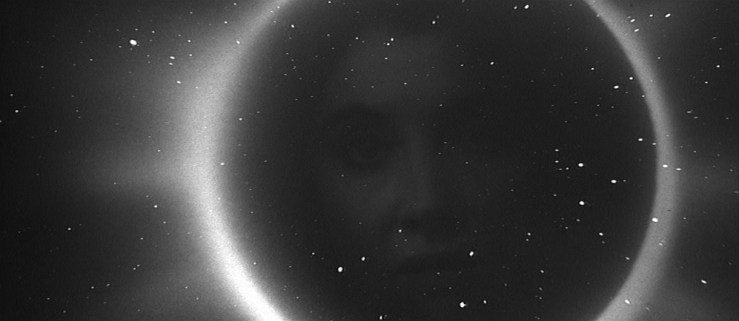
Lynch finds light in life’s grotesque pageant, and this strange light is what colors The Elephant Man as such an intensely meaningful film. Merrick is more than a freak, but also more than a human—Lynch refuses to show his title character’s humanity as a series of banal platitudes. Such a representation would not be true to human nature. And in the end, The Elephant Man is about human nature, or, more importantly, one real fantastic unreal human.
How I watched it: On a big TV via a streaming service, very late at night. I am indebted to the archive Film Grab as the source of the images used in this post.








 Biblioklept