Ishmael Reed/Nell Zink (Books acquired, 6.24.2015)

image

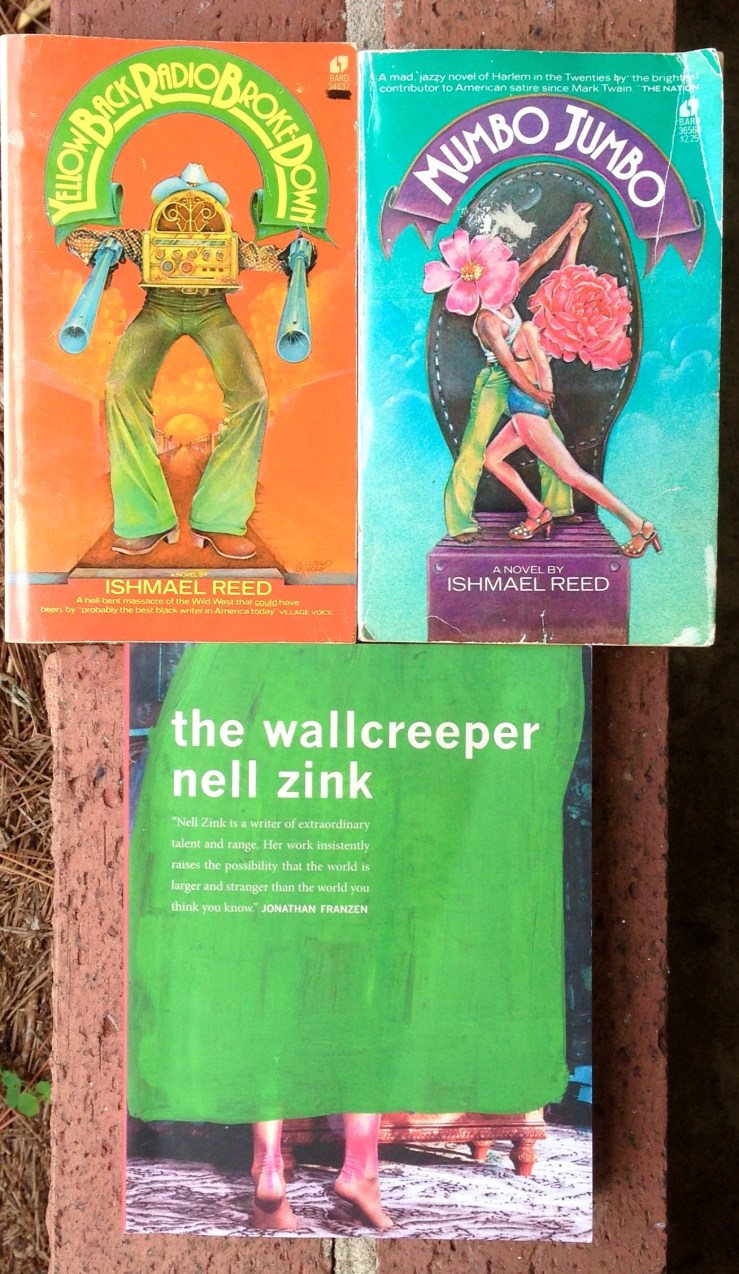
Went to my favorite bookstore today to get a copy of The Borrowers for my daughter and to replace a copy of Ishmael Reed’s Mumbo Jumbo, which I bought last month, read, and then gave away to a friend. I still aim to write something about it on the blog (hence replacing it), but short term: The book is extraordinary—metatextual, intratextual, very, very funny, filled with erudite citations and scathing humor. I can’t believe I hadn’t read it until now.

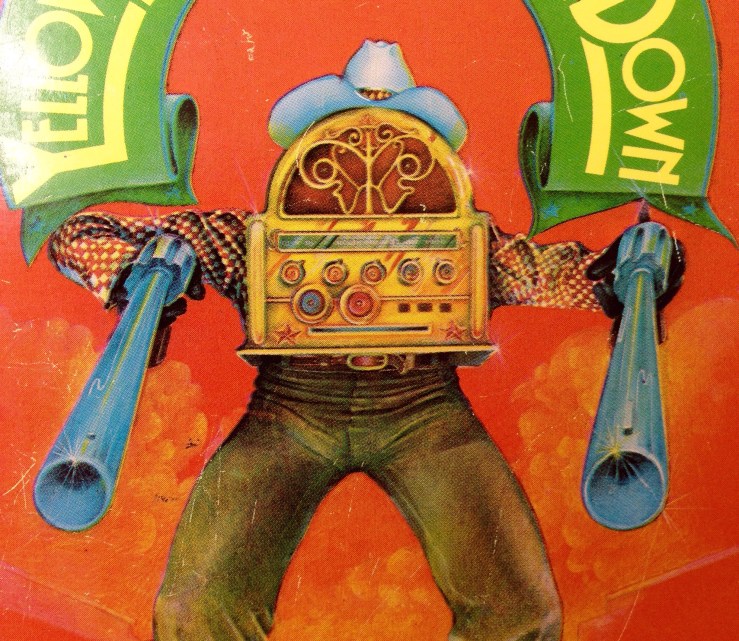
So, as I went to replace the copy I’d bought in May with the same edition, I spied this mass market paperback edition, which kinda sorta matches the copy of Yellow Back Radio Broke-Down—which hey look at that cover, how could I not pick it up?

image

I also found a copy of Nell Zink’s novel The Wallcreeper, which I’ve heard good things about from smart people.

The Spectators (Beautiful book acquried 6.11.2015)

image

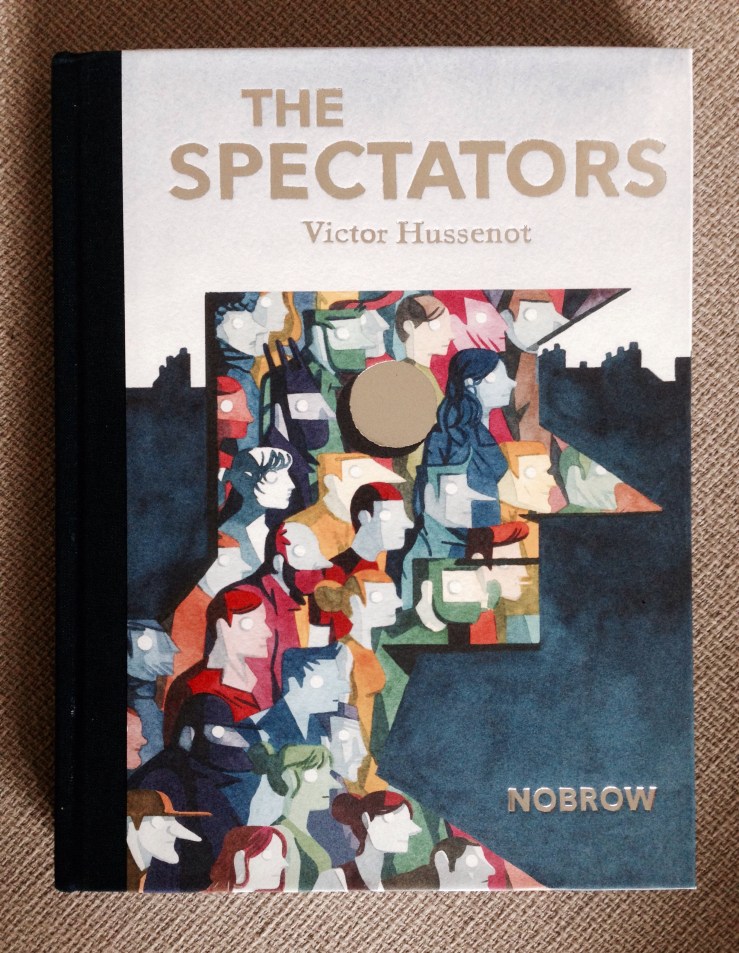
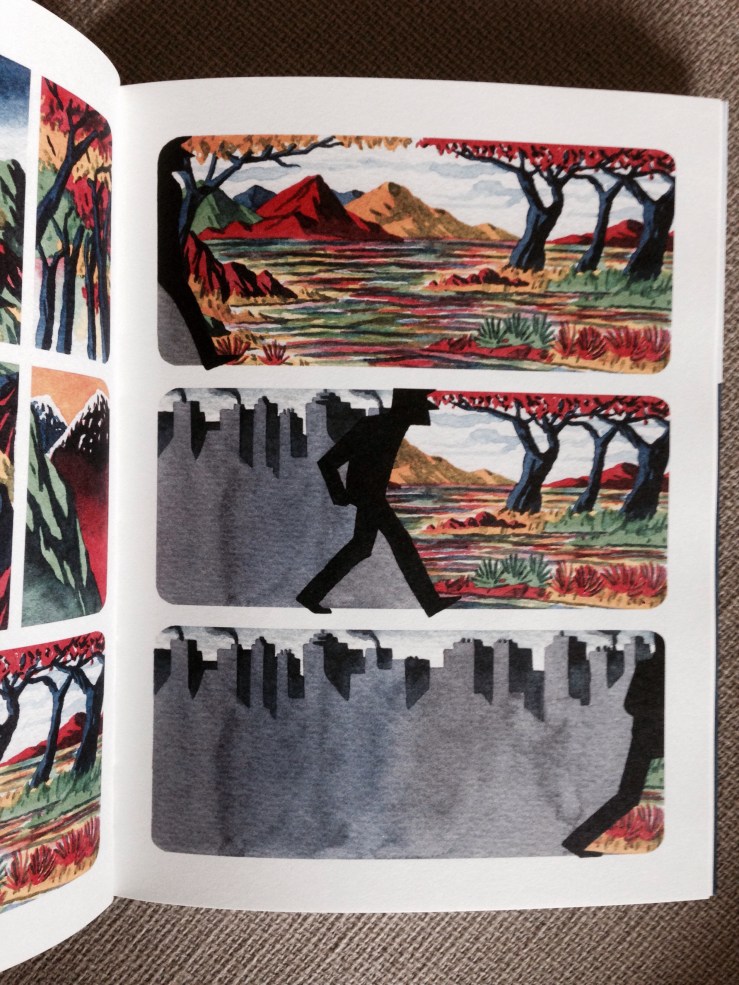
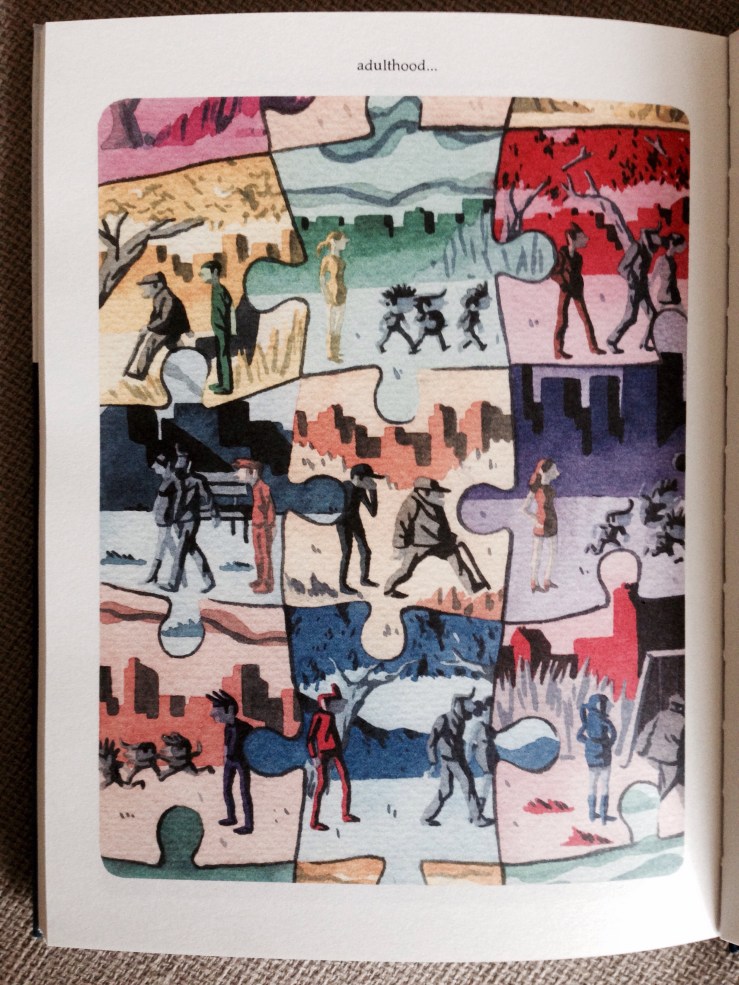
Victor Hussenot’s The Spectators is a gorgeous new graphic novel from Nobrow. I’ve read it twice now (“read” as a verb seems inadequate but—), and will get to a proper review later this week. Excellent stuff. Nobrow’s blurb:

What if we are merely shadows, our characters defined by a simple inflection of light? The realm of possibilities opens up, because in our world we are nothing but spectators.

The Spectators unfolds as a poetic and philosophical introspection on the nature of man. Victor Hussenot‘s palette is awash with subtle colour, gently carrying the narrative and allowing the reader to envelop themselves in the lyricism of the work. Reminiscent of French New Wave cinema with its clipped dialogue, gentle pacing and departure from a classic narrative structure, The Spectators is an exciting new graphic novel.

image image

Gaha: Babes of the Abyss (Book acquired and read sometime in May 2015)

image

Jon Frankel’s Gaha: Babes of the Abyss is simultaneously familiar and estranging, a bizarre California crime-noir-dystopian shot through a druggy haze. It’s funny and weird, part caper, part adventure story, where everything’s just a little off (and more than a little sleazy). The easy comparison to Philip K. Dick is not unwarranted: Frankel’s satire is a dark mind-bender and a propulsive page-turner. Civil War, a genetically-altered ruling class, sex, violence, drugs, and real estate. The title is new from new indie imprint Whiskey Tit (Ms. Miette’s the honcho there, so you know it’s good stuff). Their blurb:

She was seventeen and all leg, banging the hell out of a pinball machine. I watched her play, my back to the bar. There was a cigarette going in her left hand with a cone of ash hanging off the end. The muscles in her bare thighs tensed up every time she bumped her pelvis into the coin box. As the ball shot toward her flippers she turned her feet in and banged with the right and then the left hand, knocking the ash to the floor. The red light on top of the machine started to turn and a police siren went off. It barked, “Pull off to the side of the road!” and she slapped the flipper, sending the ball up into a thousand-point hole. While the lights flashed and sirens sang she took a long drag off the cigarette.

I should have known better.

So begins Jon Frankel’s unflinching saga of Bob Martin, real estate pimp of Los Angeles in the year 2540, and his hapless, hopeless efforts to stay out of trouble in the company of 17-year-old Irmela von Dorderer and her big sister Elma.  He should have known better, indeed.

True False (Book acquired, 6.11.2015)

image

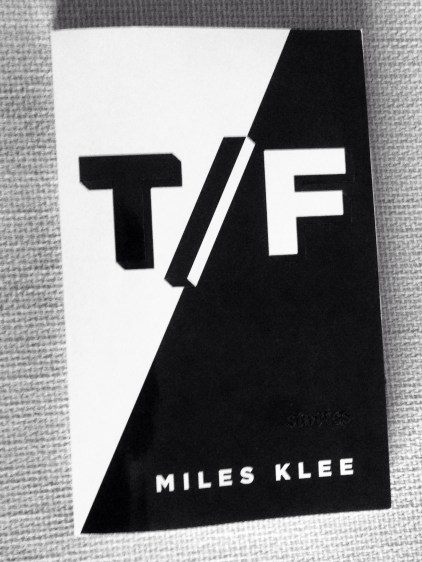
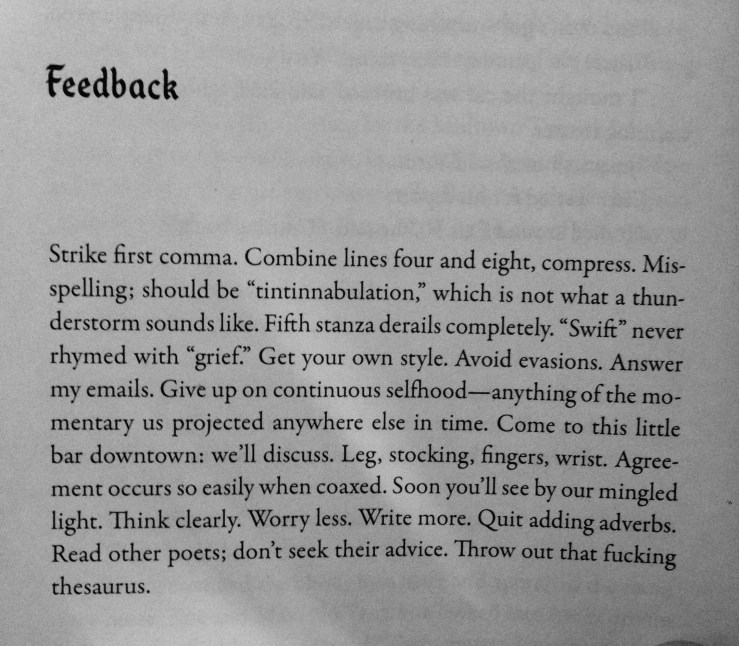
Miles Klee’s collection True False is new from indie O/R. You can read some excerpts at their site.

Blurb(s):

“Miles Klee demonstrates a delightfully prehensile grasp of the more oblique peculiarities of sentience. Very highly recommended.” —William Gibson

“Miles Klee is a fresh genius of the American literary sentence, and his every paragraph is aburst with nervous, agitative exactitudes. So much gets itself zanily and definitively rendered in the crackle of his ultravivid prose that True False is not just a joltingly original collection but the essential record of the inner terrors of our hyperurban era.” —Gary Lutz

A collection of stories that range from the very short to the merely short, these forty-four tales evoke extraordinary scenes in an understated manner that’s marked Klee one of today’s most intriguing writers. From the apocalyptic to the utopic, from a haunted office building to a suburban pool that may be alive, a day in the mind of a demi-god Pythagoras to a secret race to develop artificial love, True False captures a fractured reality more real than our own.

image

Tom Clark/John Fahey (Books acquired, 6.16.2015)

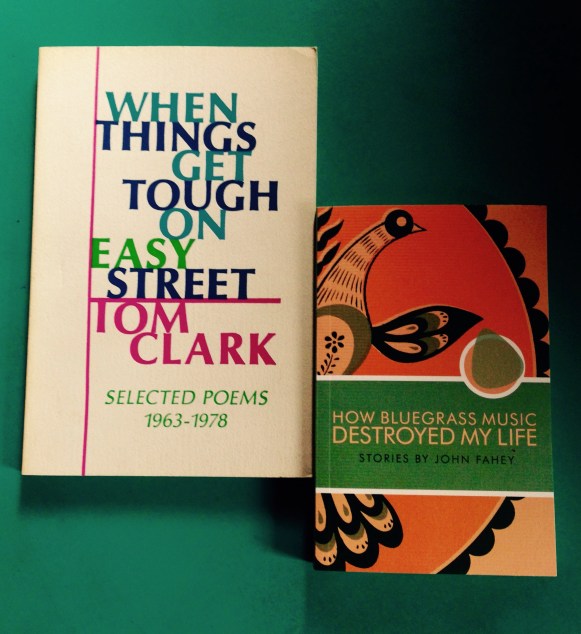
I spent the past couple of days in NYC, visiting friends and museums &c., and while to my shame I didn’t make it to the famous Strand (I blame my young children’s limited patience), I did visit Spoonbill & Sugartown Booksellers in Brooklyn, where I picked up this handsome Tom Clark collection for the friend who took me there, along with John Fahey’s collection How Bluegrass Music Destroyed My Life (which the same friend had loaned me 15 or so years ago, and I had actually returned). I also bought some kids books which I didn’t photograph because my kids absorbed them already.

The Syllabus (Book acquired, 5.14.2015)

IMG_6422

The Syllabus is the third Festschrift from Verbivoracious Press. Their blurb:

A monument to our insatiable verbivoracity, The Syllabus is an act of humble genuflection before the authors responsible for those texts which have transported us to the peak of readerly nirvana and back. The texts featured, chosen in a rapturous frenzy by editors and contributors alike, represent a broad sweep of the most important exploratory fiction written in the last hundred years (and beyond). Featuring 100 texts from (fewer than) 100 contributors, The Syllabus is a form of religious creed, and should be read primarily as a holy manual from which the reader draws inspiration and hope, helping to shape their intellectual and moral life with greater awareness, and lead them towards those works that offer deep spiritual succour while surviving on a merciless and unkind planet. Readers of this festschrift should expect nothing less than an incontrovertible conversion from reader to insatiable verbivore in 226 pages.

I’m one of those contributors—I have a piece in there on Flann O’Brien’s At Swim-Two Birds.

Ishmael Reed . . . and more Pynchon (Books acquired, 5.22.2015)

So I finished my second full reading of Gravity’s Rainbow today. And then I read the last section three more times. And my brain feels fried. I was thinking about rereading V. after this, but I think a break will do nicely. So I picked up Ishmael Reed’s Mumbo Jumbo on Pynchon’s recommendation (“check out Ishmael Reed,” the narrator tells us on page 588 of Gravity’s Rainbow). A stroll through the lit crit section led to my spying (okay, looking for and finding) the 20th Century Views collection on Pynchon. So we’ll see how that reads.

Don’t Try This at Home (Book acquired, 4.30.2015)

IMG_6010

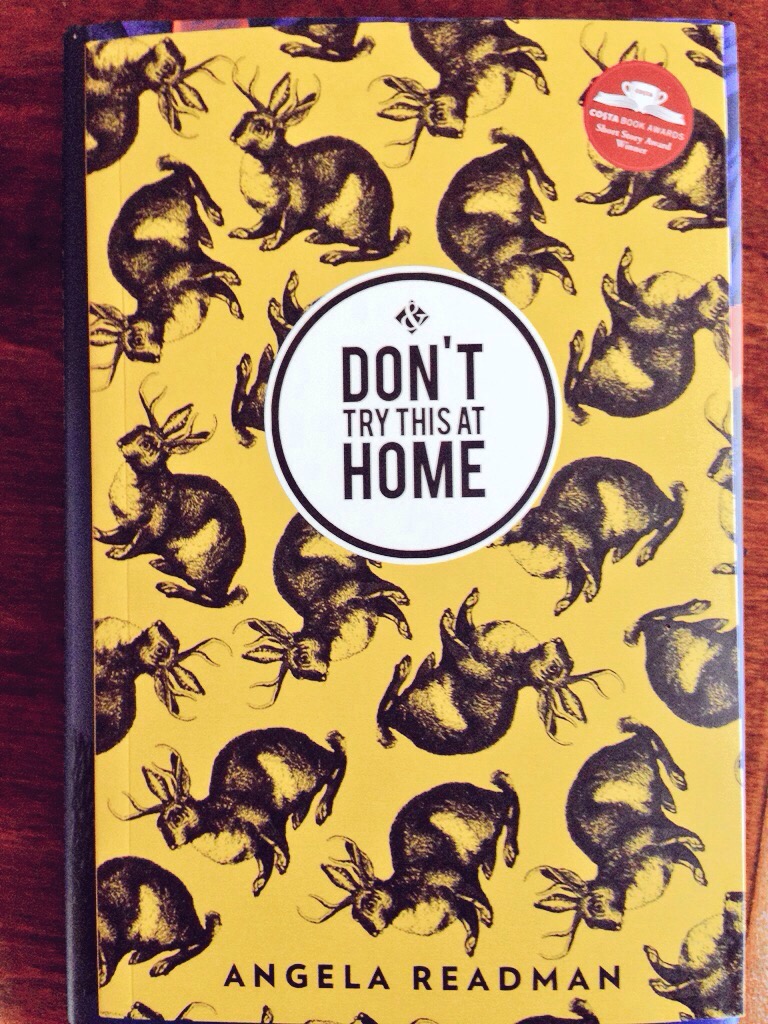
Angela Readman’s short story collection Don’t Try This at Home is new from And Other Stories. Their blurb:

A girl repeatedly chops her boyfriend in half but, while her ‘other half’ multiplies, she is still not satisfied. Love transforms a mother working down the chippie – into Elvis! An old witch takes in a young one and, despite her best, magical powers, can’t help revealing something of the real world to her apprentice. Beautiful, sharp and fearless, these stories breathe. Do Try This at Home.

In Angela Readman’s debut collection, each story packs its share of explosive material.  In every one, quirky new strategies for surviving troubled lives are revealed, often through a transformative touch of contemporary magic.

If Angela Carter were Readman’s fairy godmother, would that make David Lynch her wicked stepbrother? Don’t say you weren’t warned!


Fredric Jameson (Book acquired, 4.23.2015)

image

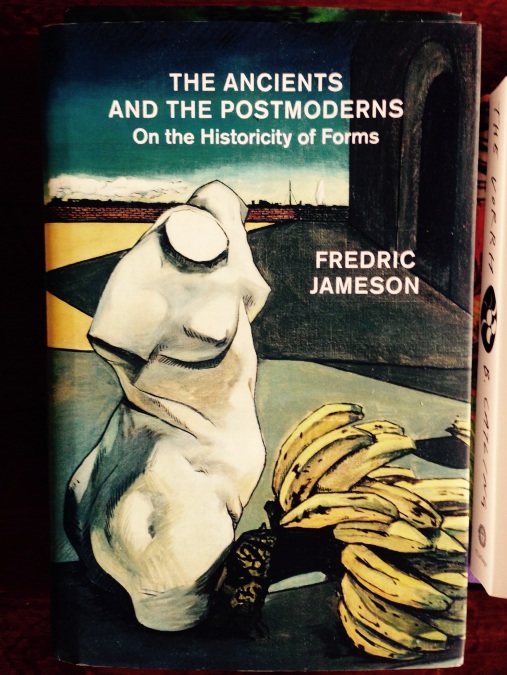
Fredric Jameson’s latest from Verso is The Ancients and the Postmoderns. Verso’s blurb:

High modernism is now as far from us as antiquity was for the Renaissance. Such is the premise of Fredric Jameson’s major new work in which modernist works, this time in painting (Rubens) and music (Wagner and Mahler), are pitted against late-modernist ones (in film) as well as a variety of postmodern experiments (from SF to The Wire, from “Eurotrash” in opera to Altman and East German literature): all of which attempt, in their different ways, to invent new forms to grasp a specific social totality. Throughout the historical periods, argues Jameson, the question of narrative persists through its multiple formal changes and metamorphoses.

The Memory Painter (Book acquired, 4.17.2015)

image

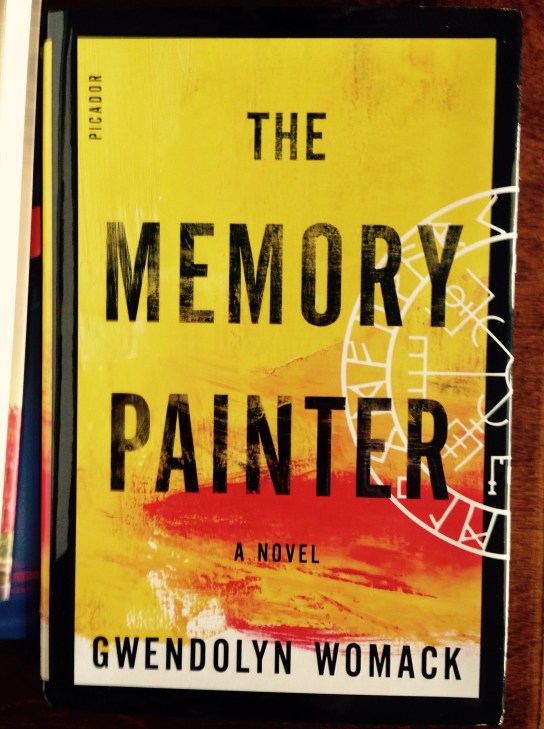
Gwendolyn Womack’s novel The Memory Painter is new in hardback from Picador. Their blurb:

Bryan Pierce is an internationally famous artist whose paintings have dazzled the world. But there’s a secret to his success: Every canvas is inspired by an unusually vivid dream. When Bryan awakes, he possesses extraordinary new skills…like the ability to speak obscure languages and an inexplicable genius for chess. All his life, he has wondered if his dreams are recollections, if he is re-experiencing other people’s lives. Linz Jacobs is a brilliant neurogeneticist, absorbed in decoding the genes that help the brain make memories, until she is confronted with an exact rendering of a recurring nightmare at one of Bryan’s shows. She tracks down the elusive artist, and their meeting triggers Bryan’s most powerful dream yet: visions of a team of scientists who, on the verge of discovering a cure for Alzheimer’s, died in a lab explosion decades ago.As Bryan becomes obsessed with the mysterious circumstances surrounding the scientists’ deaths, his dreams begin to reveal what happened at the lab, as well as a deeper mystery that may lead all the way to ancient Egypt. Together, Bryan and Linz start to discern a pattern. But a deadly enemy watches their every move, and he will stop at nothing to ensure that the past stays buried.A taut thriller and a timeless love story spanning six continents and 10,000 years of history, The Memory Painterby Gwendolyn Womack is a riveting debut novel unlike any you’ve ever read.

Ronald Fraser’s Drought (Book acquired, like, maybe two weeks ago)

image

Between end of term papers and Gravity’s Rainbow, I’ve been a bit too busy to do more than glance at a lot of the review copies that have been coming in this month. But Ronald Fraser’s forthcoming novel Drought looks interesting.

Fraser, a British historian, was the founder of New Left Books, now Verso Books—publisher of Drought. Verso’s blurb:

A brilliant novel about memory, love, and the clash between the old world and the new, set in 1950s Spain
“He turned his back on the old man to mourn in silence this unnecessary death and his part in it; but the sight of the coffin brought anger instead …”

In 1957, burned-out journalist John leaves London to recover in the Andalusian haven of Benalamar. Here he finds a village that has not changed since the Civil War, but when a foreign businessman, Bob, comes with plans to develop the area, the community is sent into turmoil. As a time of drought threatens, Bob promises to build a reservoir but this has unforeseen consequences. When a local farmer, Miguel, commits suicide, John is sent off on an investigation that leads back into recent history, lost love, and civil war.

Jeffrey Rotter’s The Only Words That Are Worth Remembering (Book acquired, 4.14.2015)

Jeffrey Rotter’s novel The Only Words That Are Worth Remembering  is new in hardback from Henry Holt. Their blurb:

A darkly comic, wildly original novel of a family in flight from the law, set in a near-future America — a Clockwork Orange with a Huck Finn heart.

In a not-so-distant future, astronomy has become a fairy tale, Copernicus is forgotten, and the Earth has resumed its lonely spot in the center of the universe. But when an ancient bunker containing a preserved space vehicle is discovered beneath the ruins of Cape Canaveral, it has the power to turn this retrograde world inside out.Enter the Van Zandt clan, whose run-ins with the law leave them with a no-win choice: test-pilot the rocket together as a family or be sent separately to prison for life. Their decision sets off an antic and heartbreaking search for human solace in a world bent on isolation, as the Van Zandts embark on an unforgettable road trip across the ass-end of an America only slightly more dissolute than our own. Uniquely tying an absurdist future to gut-bucket wit, The Only Words That Are Worth Remembering hauls our dark humanity into the light and shows us the precious places where it gleams.

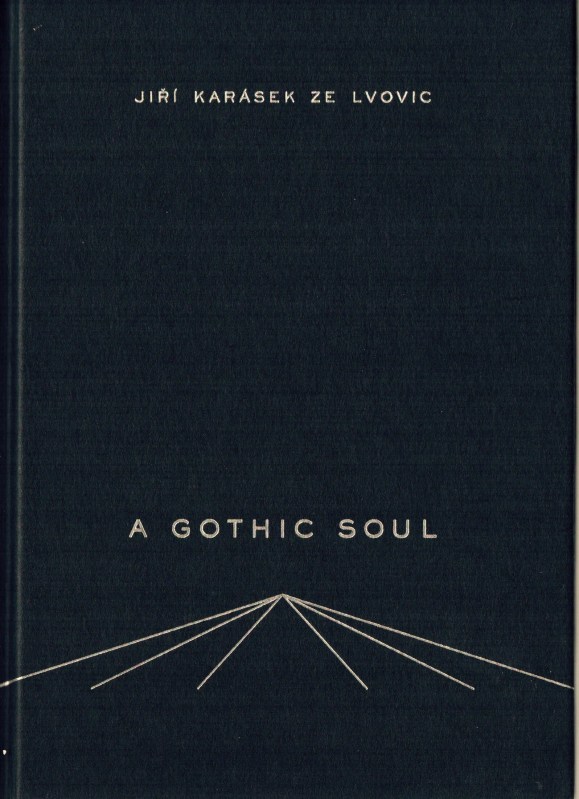
Jiří Karásek ze Lvovic’s A Gothic Soul (Book acquired, 3.30.2015)

image

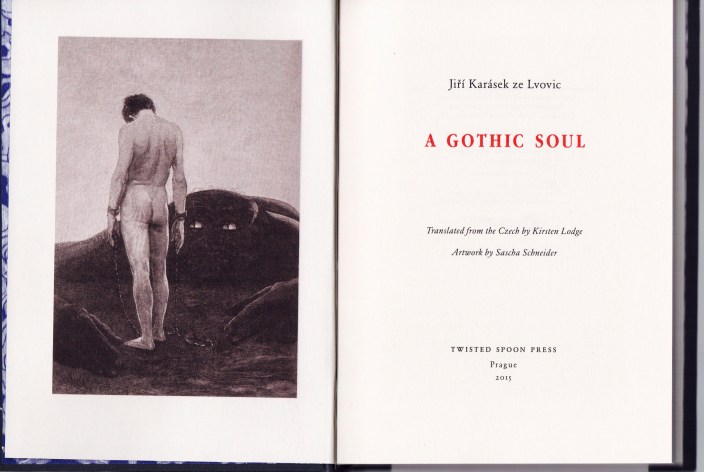
Another beautiful volume from Twisted SpoonA Gothic Soul by Jiří Karásek ze Lvovic, translated from the Czech by Kirsten Lodge, featuring prints by Sascha Schneider.

I dipped my toe in this weekend—strange, brooding stuff. More to come.
image

Twisted Spoon’s blurb:

A Gothic Soul is the most acclaimed work of Czech Decadent prose. Expressing concerns that are unique to the Czech movement while alluding creatively and ironically to Joris-Karl Huysman’s Against Nature, the novella is set in Prague, which is portrayed as a dead city, a city peopled by shades, who, like the protagonist — a nihilist and the “last scion of a noble line” — are only a dim reflection of the city’s medieval splendor. The man lives in a dreamworld, the labyrinth of his soul giving rise to visions. In his quest for meaning, he walks the city, often hallucinating, while pondering questions of religious fervor and loss of faith, the vanity of life, his own sense of social alienation, human identity and its relationship to a “nation,” the miserable situation of the Czechs under Habsburg rule, and Prague’s loss of its soul on the cusp of modernity as old sections, such as much of the squalid Jewish Quarter, are demolished to make way for gaudy new buildings and streets. With a history of madness running in the family and afraid the same fate awaits him, he ultimately retreats into seclusion, preferring the monastic way of life as the epitome of unity and wholeness and a tonic to present-day fragmentation. Yet Karásek eschews the mawkish, opting instead for darker tones that play with the tropes and motifs of Decadence while conflating the same-sex desires of his protagonist, the fatalism and futility of such an existence within the social construct of the day, with concerns for the dual fates of his nation and city.

Given his importance for Czech literature and for European Decadence, very little of Karásek’s work has been translated into English. Kirsten Lodge included translations of his poetry in Solitude, Vanity, Night: An Anthology of Czech Decadent Poetry, and we have made available her translations of some of his shorter prose here and here. This is the first time A Gothic Soul, or any full-length work of Karásek’s prose, has been translated into English.
Raymond Williams’s Politics and Letters: Interviews with New Left Review (Book acquired, 4.03.2015)

IMG_5721

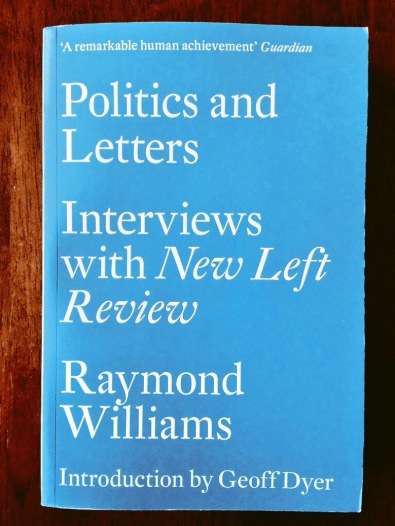
Politics and Letters: Interviews with New Left Review collects Raymond Williams’s interviews with the New Left Review. It’s new from Verso. Their blurb:

Raymond Williams made a central contribution to the intellectual culture of the Left in the English-speaking world. He was also one of the key figures in the foundation of cultural studies in Britain, which turned critical skills honed on textual analysis to the examination of structures and forms of resistance apparent in everyday life. Politics and Letters is a volume of interviews with Williams, conducted by New Left Review, designed to bring into clear focus the major theoretical and political issues posed by his work. Introduced by writer Geoff Dyer, Politics and Letters ranges across Williams’s biographical development, the evolution of his cultural theory and literary criticism, his work on dramatic forms and his fiction, and an exploration of British and international politics.

The Last Pilot (Book acquired 3.27.2015)

IMG_5683

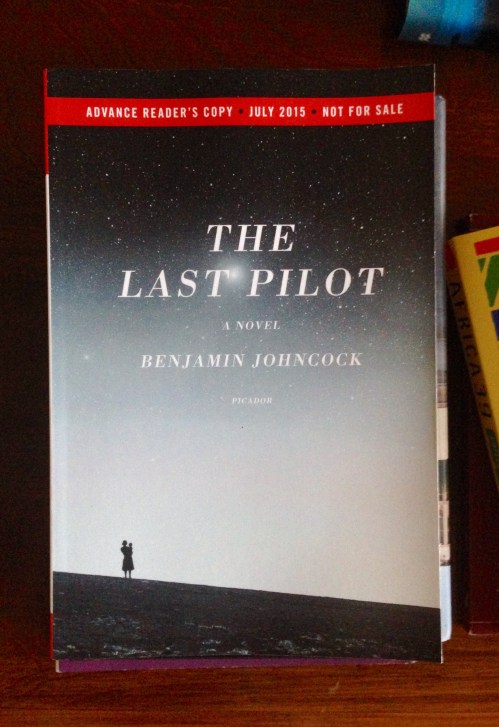
Benjamin Johncock’s novel The Last Pilot is forthcoming this summer from Picador. Their blurb:

Jim Harrison is a test pilot in the United States Air Force, one of the exalted few. He spends his days in a precarious dance with death above the Mojave Desert and his nights at his friend Pancho’s bar, often with his wife, Grace. Both are secretly desperate for a child-and are delighted when, against all odds, Grace learns that she is pregnant.

But Sputnik has put the country in a panic, and NASA, newly formed, has been tasked with manning space before the Russians. Harrison turns down the chance to participate in Project Mercury and becomes a father to Florence, his baby girl. Yet his life, as a father and as a pilot, grinds to a halt when she becomes seriously ill and dies at the age of two. Devastated, Harrison loses himself in his work-and, sometimes, in distressing thoughts of Florence-and this time, when he gets a ticket to the moon, he takes it, but without consulting Grace.

As Harrison trains to become an astronaut, the toll that his daughter’s death has taken upon his marriage becomes more palpable, even as his ability to reckon with the reality of it diminishes. Set against the backdrop of one of the most emotionally charged periods in American history, Benjamin Johncock’s The Last Pilot is a mesmerizing story of loss and finding courage in the face of it, from an extraordinary new talent.

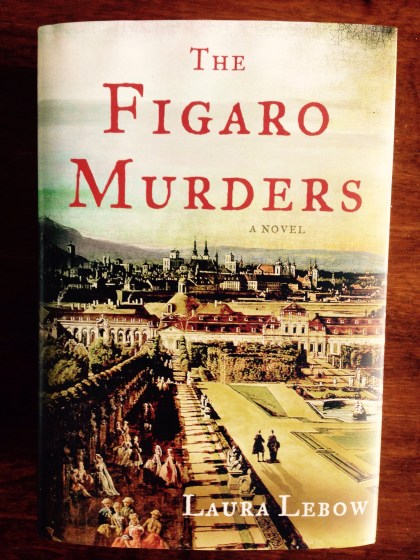
The Figaro Murders (Book acquired some time in February, 2015)

IMG_5571

Laura Lebow’s mystery The Figaro Murders is new in hardback from Macmillan’s Minotaur imprint. Their blurb:

In 1786 Vienna, Lorenzo Da Ponte is the court librettist for the Italian Theatre during the height of the enlightened reign of Emperor Joseph II. This exalted position doesn’t mean he’s particularly well paid, or even out of reach of the endless intrigues of the opera world. In fact, far from it.

One morning, Da Ponte stops off at his barber, only to find the man being taken away to debtor’s prison. Da Ponte impetuously agrees to carry a message to his barber’s fiancée and try to help her set him free, even though he’s facing pressures of his own. He’s got one week to finish the libretto for The Marriage of Figaro for Mozart before the opera is premiered for the Emperor himself.
Da Ponte visits the house where the barber’s fiancée works–the home of a nobleman, high in the Vienna’s diplomatic circles–and then returns to his own apartments, only to be dragged from his rooms in the middle of the night. It seems the young protégé of the diplomat was killed right about the time Da Ponte was visiting, and he happens to be their main suspect. Now he’s given a choice–go undercover into the household and uncover the murderer, or be hanged for the crime himself.
Brilliantly recreating the cultural world of late 18th century Vienna, the epicenter of the Enlightenment, Lebow brings to life some of the most famous figures of music, theatre, and politics.

Geoff Dyer’s Another Great Day at Sea (Book acquired, 3.26.2015)

IMG_5682

Another Great Day at Sea, Geoff Dyer’s account of life (okay, two weeks of life) on board a U.S. aircraft carrier, is new in trade paperback next week from Random House. Their blurb:

As a child Geoff Dyer spent long hours making and blotchily painting model fighter planes. So as an adult, naturally he jumped at the chance to spend a week onboard the aircraft carrier the USS George H.W. Bush. Part deft travelogue, part unerring social observation, and part finely honed comedy, Another Great Day at Sea is the inimitable Dyer’s account of his time spent wandering the ship’s maze of walkways, hatches, and stairs, and talking with the crew—from the Captain to the ship’s dentists. A lanky Englishman in a deeply American world, Dyer brilliantly records daily life aboard this floating fortress, revealing it to be a prism for understanding a society where discipline and conformity become forms of self-expression. At the same time we are reminded why Dyer is celebrated as one of the most original voices in contemporary literature.

Read an excerpt here.