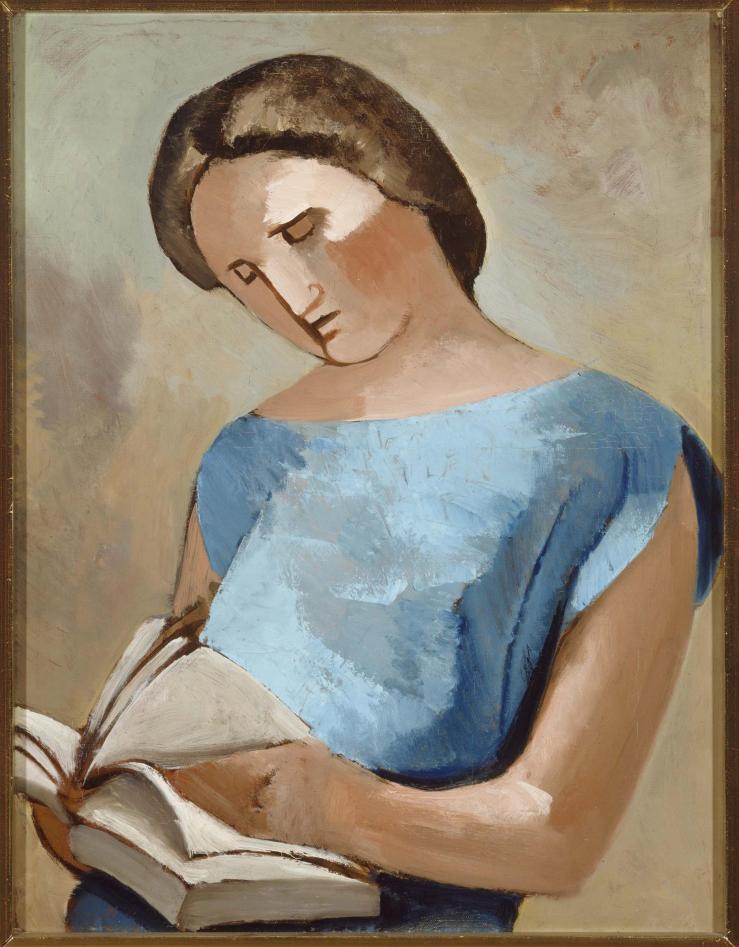
Woman Reading — Julio González

AS02966

Literature is like an ear that can hear things beyond the understanding of the language of politics (Italo Calvino)

Literature is necessary to politics above all when it gives a voice to whatever is without a voice, when it gives a name to what as yet has no name, especially to what the language of politics excludes or attempts to exclude. I mean aspects, situations, and languages both of the outer and of the inner world, the tendencies repressed and individuals and in society. Literature is like an ear that can hear things beyond the understanding of the language of politics; it is like an eye that can see beyond the color spectrum perceived by politics. Simply because of the solitary individualism of his work, the writer may happen to explore areas that no one has explored before, within himself or outside, and to make discoveries that sooner or later turn out to be vital areas of collective awareness.


This is still a very indirect, deliberate, and fortuitous use for literature. The writer follows his own road, and chance or social and psychological factors lead him to discover something that may become important for political and social action as well. It is the responsibility of the sociopolitical observer not to leave anything to chance, and to apply his own method to the business of literature in such a way as not to allow anything to escape him.


But there is also, I think, another sort of influence that literature can exert, perhaps not more direct but certainly more intentional on the part of the writer. This is the ability to impose patterns of language, of vision, imagination, mental effort, of the correlation of facts, and in short the creation (and by creation I mean selection and organization) of a model of values that is at the same time aesthetic and ethical, essential to any plan of action, especially in political life.


So it comes about that, having excluded political education from the functions of literature, I find myself stating that I do believe in a type of education by means of literature; a type of education they can yield results only if it is difficult and indirect, if it implies the arduous attainment of literary stringency.


Any results attained by literature, as long as it is stringent and rigorous, may be considered firm ground for all practical activities for anyone who aspires to the construction of a mental order solid and complex enough to contain the disorder of the world within itself; for anyone aiming to establish a method subtle and flexible enough to be the same thing as an absence of any method whatever.

From Italo Calvino’s essay “Right and Wrong Uses of Political Uses of Literature.” Translation by Patrick Creagh. Collected in The Uses of Literature.

Lydia Davis’s Can’t and Won’t (Book acquired, 3.6.2015)

IMG_5568 Almost finished with this bad boy, or as “finished” as one can be with Davis’s stuff, which I tend to linger on, return to. Full review forthcoming.
IMG_5570

St. Jerome in His Study — Marinus van Reynerswale

tumblr_lurmyzIcd91r5569zo1_1280

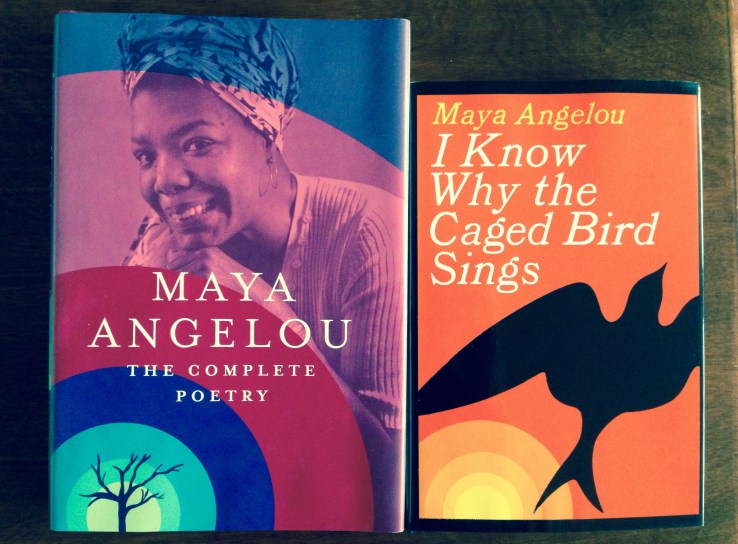
Maya Angelou (Books Acquired, 3.18.2015)

IMG_5573

Random House is reissuing Maya Angelou’s seminal memoir I Know Why the Caged Bird Sings in both hardback and paperback with the original 1970 cover (love love love the cover). The Complete Poetry is also new (in hardback); love how the cover matches Caged Bird.

The paperback reissue of Caged Bird features a new foreword by Oprah Winfrey.

IMG_5575

From The Complete Poetry:

IMG_5576

Reading/Have Read/Should Write About

All of this is basically reading around/between/over Gravity’s Rainbow:

Rereading Roberto Bolaño’s Nazi Literature in the Americas again. (I reviewed it here on this blog over five goddamn years ago). I want to read 2666 (yet) again, so this is…I don’t know…a staving off against that urge?

Yuri Herrera’s excellent novella Signs Preceding the End of the World also makes me want to read 2666. You should read this book (Signs, but also 2666). I will write a Full Goddamn Review—but excellent. Get it from And Other Stories.

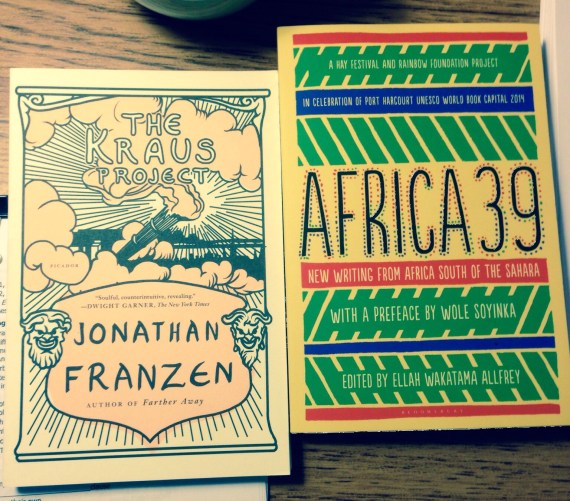
Reading GR interspersed with short (often very short) stories from the collection Africa 39—two hits, a miss, and a shrug so far. More thoughts to come.

Can’t and Won’t by Lydia Davis. Like a palate cleanser. Wait. Not the right term. I mean, like, a sorbet—tasteful, tasty, snappy, bright. There are some longer pieces at the end, I see, that I will not get to for awhile. More to come—but let’s get real, you either like what Davis does or you don’t and your indifference, like all indifference, is uninteresting, but not boring or damning, let alone an indictment of your beautiful character. Chill.

David Winters’s collection Infinite Fictions. Damn him! Not really. This book is great—the book I wish that I had written.

I have tried and failed to write about Jason Schwartz’s first book A German Picturesque four goddamn times now.

I don’t think I will even try to write about Gravity’s Rainbow. (Unless I do try).

Look at Borges (Pynchon’s Gravity’s Rainbow)

In the days of the gauchos, my country was a blank piece of paper. The pampas stretched as far as men could imagine, inexhaustible, fenceless. Wherever the gaucho could ride, that place belonged to him. But Buenos Aires sought hegemony over the provinces. All the neuroses about property gathered strength, and began to infect the countryside. Fences went up, and the gaucho became less free. It is our national tragedy. We are obsessed with building labyrinths, where before there was open plain and sky. To draw ever more complex patterns on the blank sheet. We cannot abide that openness: it is terror to us. Look at Borges. Look at the suburbs of Buenos Aires. The tyrant Rosas has been dead a century, but his cult flourishes. Beneath the city streets, the warrens of rooms and corridors, the fences and the networks of steel track, the Argentine heart, in its perversity and guilt, longs for a return to that first unscribbled serenity… that anarchic oneness of pampas and sky…

From Thomas Pynchon’s novel Gravity’s Rainbow.

Newton’s Diary — Amy Judd

amy_judd_large_17

Paris Red (Book acquired some time in February, 2015)

IMG_5138

Maureen Gibbon’s novel Paris Red is forthcoming (April 2015) in hardback from W.W. Norton. Their blurb:

For readers of Girl with a Pearl Earring, a luminous and evocative novel of Édouard Manet’s muse.

Paris, 1862. A young girl in a threadbare dress and green boots, hungry for experience, meets the mysterious and wealthy artist Édouard Manet. The encounter will change her—and the art world—forever.

At seventeen, Victorine Meurent abandons her old life to become immersed in the Parisian society of dance halls and cafés, meeting writers and artists like Baudelaire and Alfred Stevens. As Manet’s model, Victorine explores a world of new possibilities and stirs the artist to push the boundaries of painting in his infamous portrait Olympia, which scandalizes even the most cosmopolitan city.

Manet becomes himself because of Victorine. But who does she become, that figure on the divan?

Intense, erotic, and beautifully wrought, Paris Red evokes the unconventional love story of a painter and his muse that changed the history of art.

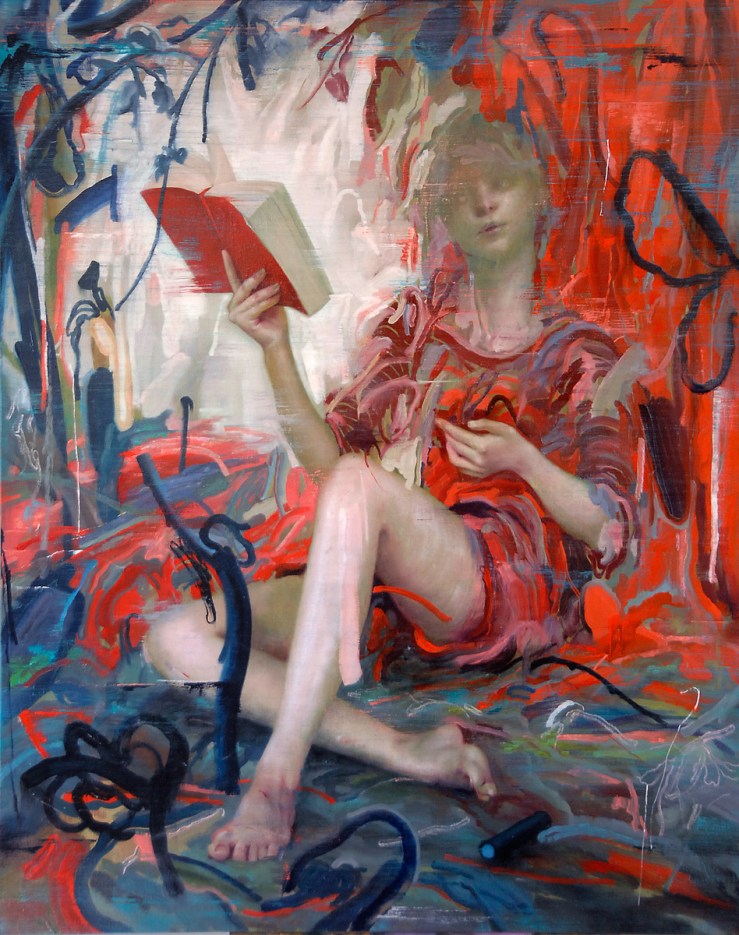
Reader — James Jean

tumblr_mr59qa3Iba1s213u5o1_1280

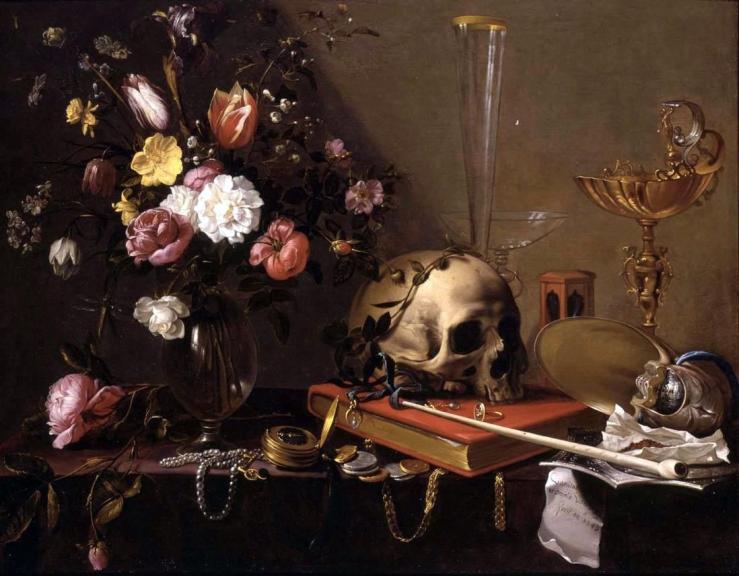
Small Bouquet and Skull — Adriaen van Utrecht

tumblr_lun3mnsEhb1r5569zo1_1280

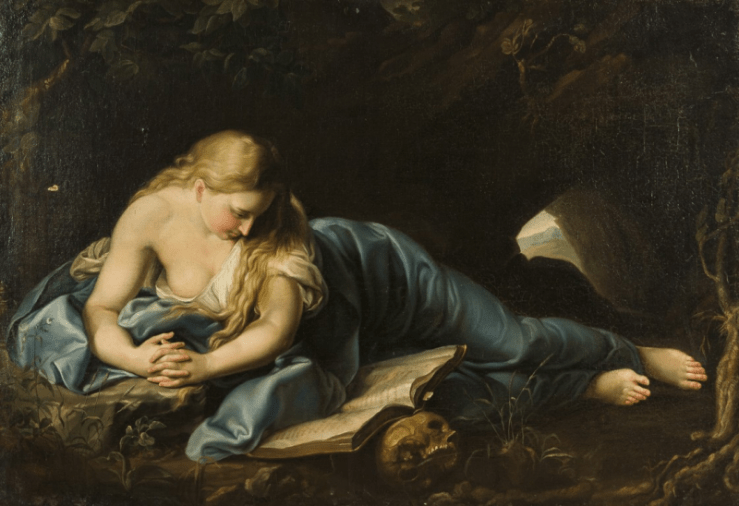
Madeleine Reading — Italian School of the Eighteenth Century (Attributed)

1394629586030218 (1)

Infinite Fictions (Book acquired 2.10.2015)

Portrait of Luca Pacioli — Jacopo de’ Barbari (Attributed)

Pacioli

The Ill-Matched Couple — Goya

ESL — James Jean

ESL-painting

Morfinomane — Vittorio Corcos

tumblr_luihc1kwMi1r5569zo1_1280