“A Book of Utopias” (Prospero’s Books)

RIP Ken Russell

RIP Ken Russell.

Filmmaker Ken Russell died last night at 84. I was a huge fan of his weird wonderful films, including Lisztomania, The Music Lovers, overlooked gem The Lair of the White Worm, Altered States,  and my personal favorite, The Devils (based on Aldous Huxley’s The Devils of Loudon).

Russell’s films deeply divided critics, who alternately lauded his hyperbolic visual flair and dramatic staging or lashed out at the perceived bad taste of his films. Simply put, a Russell film is turned to 10 from the get go, a style that worked well for strange projects like Lisztomania and Tommy, based on The Who’s concept album.

Russell’s career began provocatively with an adaptation of D.H. Lawrence’s Women in Love; the film featured a nude wrestling match between Oliver Reed and Alan Bates. Russell was able to push the limits of good taste, narrative cohesion, and sensory overload throughout the 1970s, but his career faltered in the 1980s, due in part, perhaps, because mainstream culture eventually caught up with him. Despite the histrionics and camp that marks much of his work, Russell’s singular vision as a filmmaker undoubtedly influenced a generation of filmmakers who would go on to turn the music video into an art form.

While Russell’s sensational synesthesia is not for everyone (I distinctly remember friends asking me to turn off The Devils in college), his films hold up remarkably well—and not just as documentation of the strange, grand period of filmmaking that was the 1970s. They are still provocative, even today. Russell was a strange bird, a filmmaker blending high art with popular culture who constantly pushed his audience. Do yourself a favor and check out one of his mind twisting films.

Martin Scorsese on Realism and Artifice in Film

Alfonso Cuarón on the Power of Movies

Werner Herzog on Types of Stupidity

“What Would Socrates Say?” — Woody Allen Attempts Syllogistic Logic

“An Ecstasy of Truth” — Werner Herzog Distinguishes Fact and Truth

“These Go to 11”

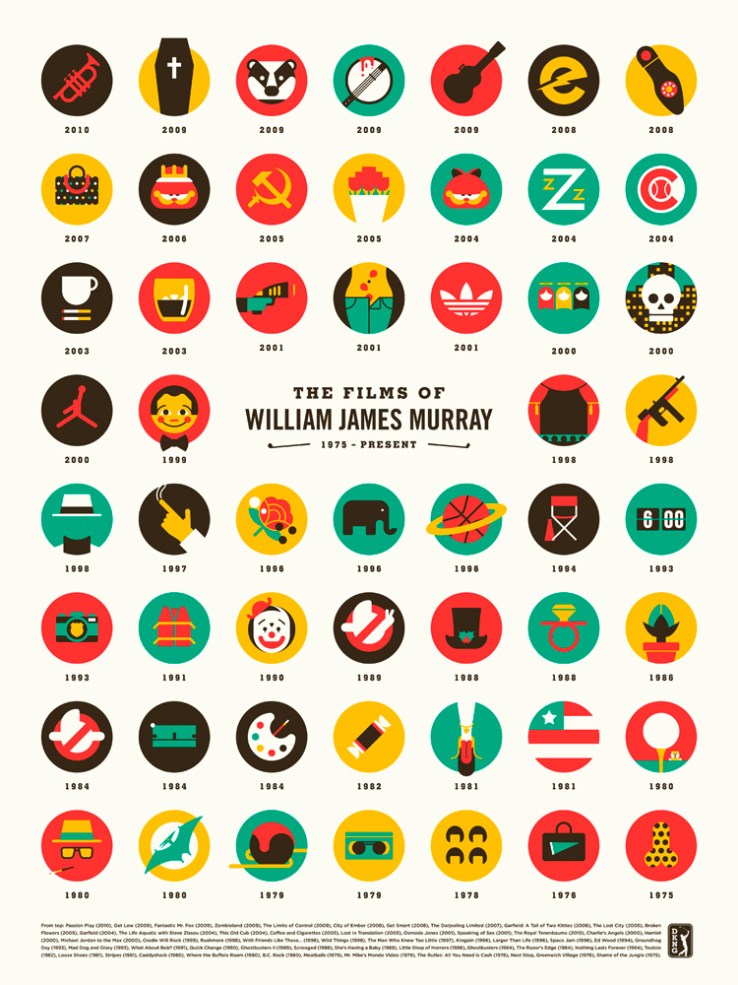
A Graphic Representation of Bill Murray Films

“Hit Me” — A Scene from Terrence Malick’s Film The Tree of Life

Klaus Kinski Is Bored

Woody Allen on Existentialism

Bret Easton Ellis on David Fincher’s Film Zodiac

This weekend, Twitter followers of novelist Bret Easton Ellis were treated to BEE’s views on the films of director David Fincher, with particular consideration paid to Fincher’s overlooked (by audiences, at least) 2007 film Zodiac. I liked Ellis’s commentary, not just because I think he’s spot on here, but also because he points out why so many people might not have liked (or, dare I say “got”) Zodiac on first viewing: the movie was mismarketed. Here’s BEE—

In my original review of Zodiac, I pointed to my own early misunderstanding of what the film was—

When Zodiac came out last year, I prejudicially–and wrongly–assumed that the film, the tale of the infamous Zodiac killer who menaced California in the late sixties and early seventies, would be a moody character study, all ominous texture, smoggy chase scenes, and desperate anger à la Fincher’s 1995 thriller, Se7en (that movie where Gwyneth Paltrow’s head gets chopped off), or even worse, Fincher’s awful 1997 effort The Game. Most Hollywood suspense films–Fincher’s included–propel themselves on chase sequences, meaningless yelling, and overstated light and music queues that seem to scream “this is the part where you feel tense.” Zodiac, however, eschews all of these often vacuous tropes in favor of simply telling a story.

Zodiac is a methodical, investigative procedural about truth, a film that looks at what happens when we try to put order to disorder, when we try to give narrative to life’s loose ends—when we try to understand radically stochastic violence. In retrospect, it seems to me that Fincher’s work here is akin to Roberto Bolaño in some ways, and I think that if people went into it understanding that it was going to be a meditation on truth, and not, say, a cops and robbers thriller, they might appreciate it more (for what it’s worth, several people wrote in on my review to tell me how wrong I was about what I liked about the film. I think, like Ellis, they should give it another shot).

“The Impulse Is to Record” — Martin Scorsese Talks About Storytelling

Five Creepy Scenes from David Lynch

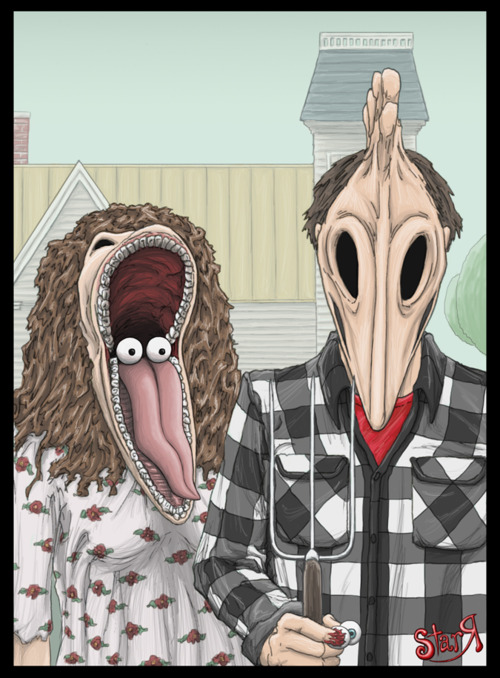
American Gothic, Beetlejuice Style (Or Beetlejuice, American Gothic Style) — Dick Starr

Werner Herzog Explains Why His Films Are Funnier Than Eddie Murphy’s