A few weeks ago, I saw (and loved) Children of Men, and it reminded me of one of my favorite books of all time, Ape and Essence by Alduous Huxley.

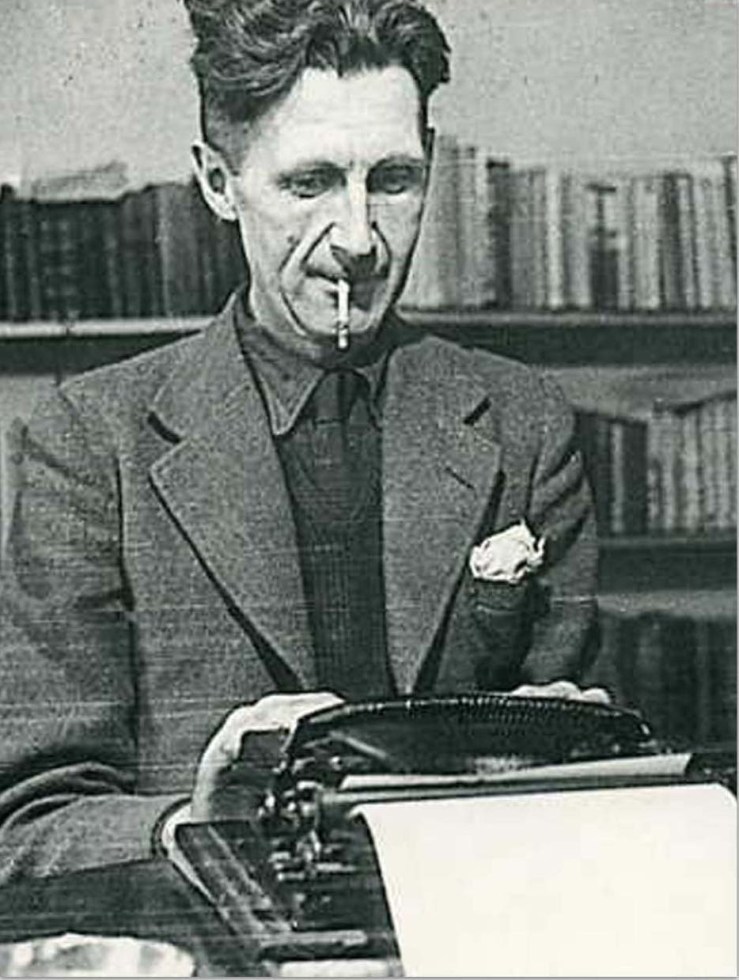
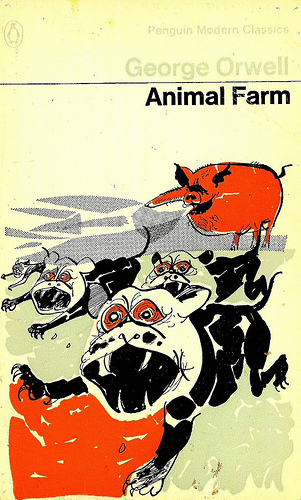
If you’ve only read one book by Huxley, chances are it was Brave New World, an incredibly prescient novel that really “got it right” so to speak–especially when compared to George Orwell’s vision of a dystopian future, 1984. In 1984, Orwell assumes that a totalitarian regime will hide and distort information from a suppressed public, that a Big Brother will watch our every move. Huxley’s BNW posits a future where the public could care less about information at all, a public that willingly cedes an antiquated ideal of “privacy.” In 1984, books are banned; in BNW no one wants to read (and who would want to read when a trip to the feelies provides a total synesthetic experience?)
But where was I…
So. Yes. Hmmm. Ape and Essence. This is a fantastic book, thoroughly entertaining–blackly sardonic, acidic and biting, yet funny and moving, full of pathos and dread and the possibility of loss, extinction, the end of beauty. I have forced this book on just about everyone I know, to the point that it is now Duck-taped together. Ape and Essence is a frame tale of sorts: it begins (significantly, on the day of Gandhi’s assassination) with two Hollywood types discovering the screenplay for an unmade movie called Ape and Essence. Intrigued by the strange story, the two head out to the desert to meet the writer, only to find that he’s recently died. The surreal and imagistic screenplay is then presented uncut as the remainder of the book. Ape and Essence presents an illiterate, post-apocalyptic world where grave-robbing is the primary profession. The hero of the story is one Dr. Poole, a scientist from New Zealand (New Zealand was isolated enough to resist nuclear holocaust) who arrives with a team of scientists to the West Coast of America. Poole is quickly separated from the other scientists and forced into slave labor, excavating graves. He finds a world where people worship the satanic god Belial, who they believe, in his anger, is responsible for the high numbers of genetically deformed children. These children are ritualistically slaughtered in purification rites that frame the social discourse of this New America. Additionally, procreation is proscribed to a two week ritual-orgy; other than this fortnight of lust and blood, sex and love are completely forbidden. The rest of the book details Poole’s infatuation with a woman named Loola, and their plan to escape to a rumored colony of “hots,” outsiders who don’t accept Belial and orgies and book burning and so on.

Like Children of Men, Ape and Essence presents infanticide as the ultimate negation of progress. In both stories, people are both root and agent of their own destruction. But playing against this self-destructive death drive is the drive for life, for beauty, for sex. Neither story is willing–or able, perhaps–to make a definitive statement on which drive will prevail. Both stories resist “happy endings,” or can only be said to have “happy” endings in the simplest of senses. Ultimately, the endings are inconclusive, unsure, tentative at best. Will the human race die out? Are simple gestures of human fellowship, of poetry, of love, are these enough to conquer the infinite infanticide recapitulated within the narrative framework? We leave the theater feeling some hope, we close the book praying (to who?) that the characters will make it to a (never) Promised Land, but somewhere in the margins of our consciousness lurks the possibility of extinction–the predicate of loss that drives any story worth telling.











 Biblioklept