Books Acquired, 3.19.2012 — Or, Here’s What’s New From Picador

20120403-153037.jpg

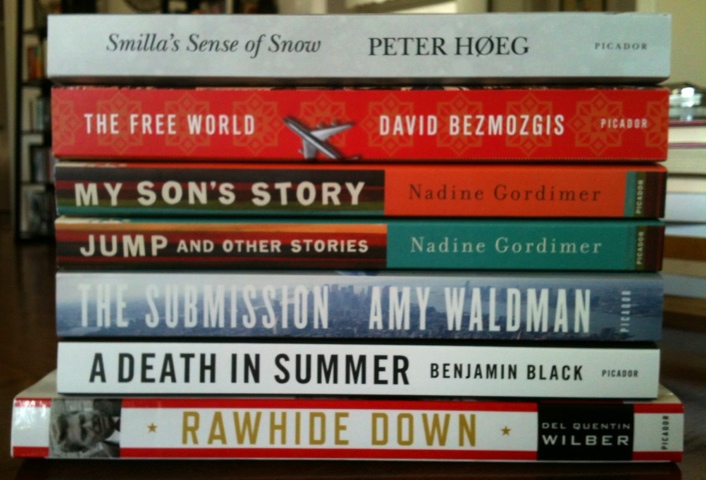
New and newish titles from the good people at Picador. A few highlights:
20120403-153044.jpg

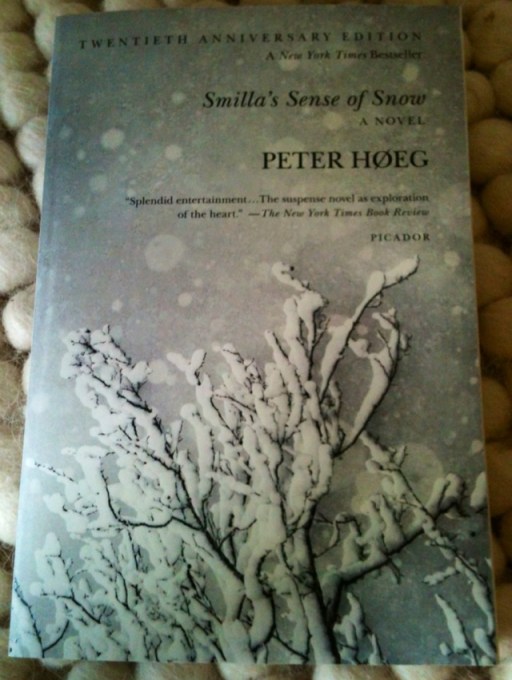
I read Peter Hoeg’s bestseller Smilla’s Sense of Snow over a decade ago; I recall reading it in a day or two, maybe as part of a long bus ride somewhere, and enjoying caustic Smilla’s murder investigation. It’s 20 years old now and getting the rerelease treatment. From Robert Nathan’s original 1993 review at The New York Times:

TRY this for an offer you could easily refuse. How would you like to be locked in a room for a couple of days with an irritable, depressed malcontent who also happens to be imperiously smart, bored and more than a little spoiled? Say no, and you will miss not only a splendid entertainment but also an odd and seductive meditation on the human condition. With “Smilla’s Sense of Snow,” his American debut following two previous books, the Danish novelist Peter Hoeg finds his own uncommon vein in narrative territory worked by writers as varied as Martin Cruz Smith and Graham Greene — the suspense novel as exploration of the heart. Mr. Hoeg’s heroine, Smilla Jaspersen, is the daughter of an Eskimo mother who was a nomadic native of Greenland and a wealthy Danish anesthesiologist father, parentage that endows her with the resilience of the frozen north and urban civilization’s existential malaise. One day just before Christmas, Smilla arrives at her Copenhagen apartment building to find a neighbor boy, 6-year-old Isaiah Christiansen, sprawled face down in the snow, dead after a fall from the roof of a nearby warehouse.
20120403-153052.jpg

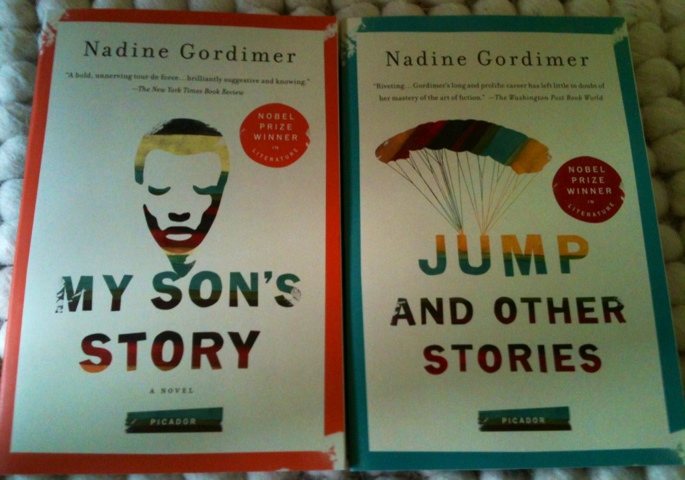
Love love love the covers for these pair by Nadine Gordimer—nice design work. I haven’t read Gordimer’s stuff — she’s a South African writer who won the Nobel in 1991 — so Jump and Other Stories seems like a good starting place. Here’s James Wood on Gordimer:

Gordimer’s talent is poetic and intellectual…Her best writing, sensuous, but aerated with deep intelligence, moving shrewdly between the serene claims of the poetic and the frantic compulsions of the political, makes her the lyrical analyst of an entire country
20120403-153103.jpg

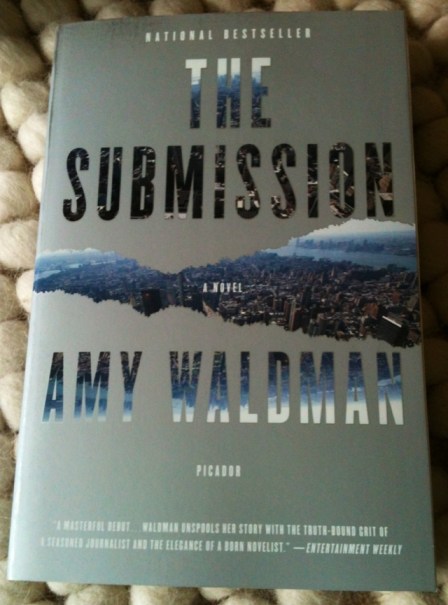
Amy Waldman’s The Submission is a 9/11 novel. Here’s Michiko Kakutani gushing in The New York Times:

A decade after 9/11, Amy Waldman’s nervy and absorbing new novel, “The Submission,” tackles the aftermath of such a terrorist attack head-on. The result reads as if the author had embraced Tom Wolfe’s famous call for a new social realism — for fiction writers to use their reporting skills to depict “this wild, bizarre, unpredictable, Hog-stomping baroque country of ours” — and in doing so, has come up with a story that has more verisimilitude, more political resonance and way more heart than Mr. Wolfe’s own 1987 best seller, “The Bonfire of the Vanities.”
20120403-153120.jpg

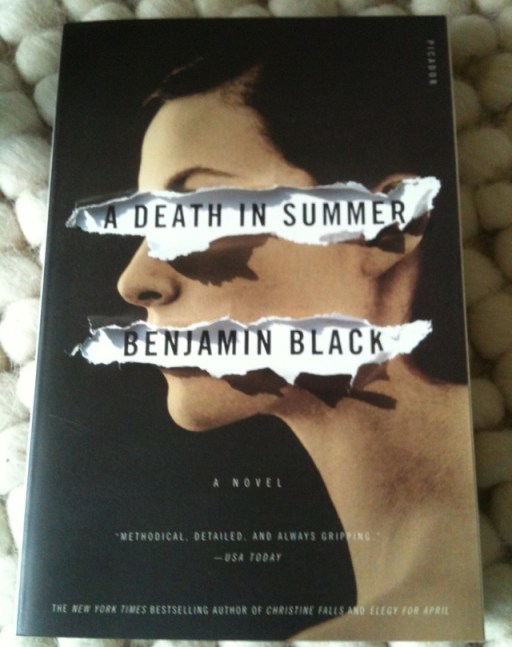
A Death in the Summer is new in trade paperback. It’s another in the Quirke crime series from Benjamin Black — pen name of writer John Banville. Jacket copy:

On a sweltering summer afternoon, newspaper tycoon Richard Jewell—known to his many enemies as Diamond Dick—is discovered with his head blown off by a shotgun blast. But is it suicide or murder? For help with the investigation, Detective Inspector Hackett calls in his old friend Quirke, who has unusual access to Dublin’s elite.

Jewell’s coolly elegant French wife, Françoise, seems less than shocked by her husband’s death. But Dannie, Jewell’s high-strung sister, is devastated, and Quirke is surprised to learn that in her grief she has turned to an unexpected friend: David Sinclair, Quirke’s ambitious assistant in the pathology lab at the Hospital of the Holy Family. Further, Sinclair has been seeing Quirke’s fractious daughter Phoebe, and an unlikely romance is blossoming between the two. As a record heat wave envelops the city and the secret deals underpinning Diamond Dick’s empire begin to be revealed, Quirke and Hackett find themselves caught up in a dark web of intrigue and violence that threatens to end in disaster.

Tightly plotted and gorgeously written, A Death in Summer proves to the brilliant but sometimes reckless Quirke that in a city where old money and the right bloodlines rule, he is by no means safe from mortal danger.
20120403-153135.jpg

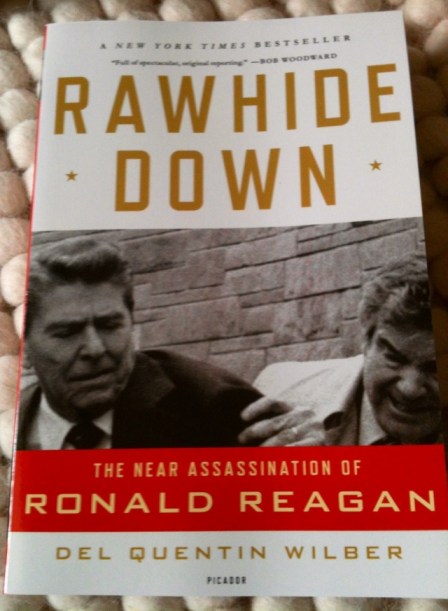
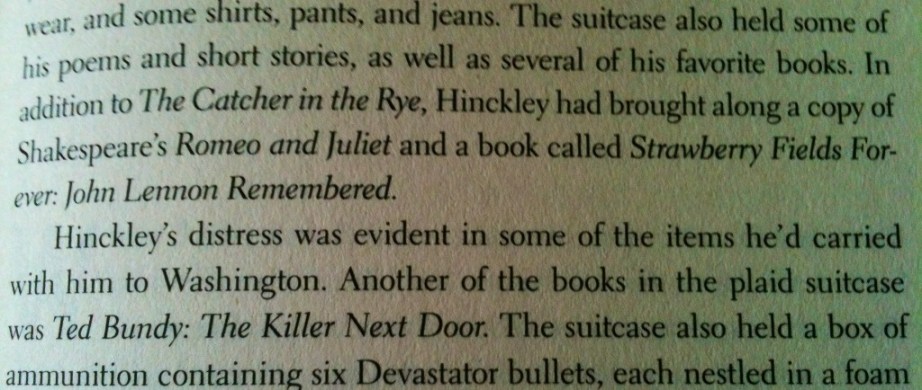
Del Quentin Wilber’s Rawhide Down: The Near Assassination of Ronald Reagan demanded more of my attention than I thought it would. It’s tightly paced book, telegraphed in sharp language—but most of all, the story of John Hinckley is just too bizarre. Here’s a sample of the would
20120403-153153.jpg

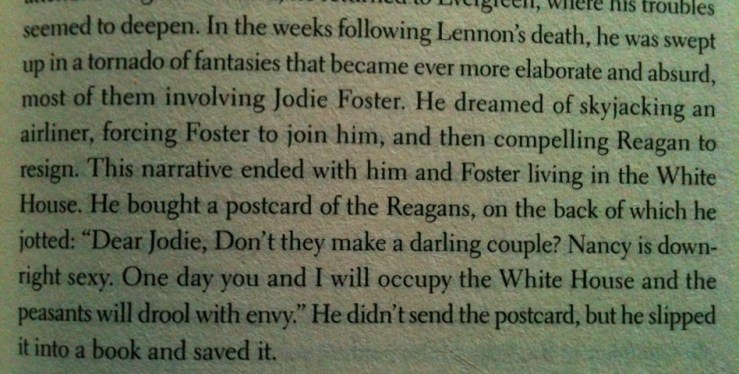
And if that’s not weird enough for you, check out Hinckley’s fantasy life:
20120403-153208.jpg

Satantango (Book Acquired, 3.15.2012)

20120317-165939.jpg

Was happy to get a finished copy of Laszlo Krasznahorkai’s Satantango (new in English translation for the first time from the good people at New Directions). From Jacob Silverman’s review at The New York Times:

As in much of Krasznahorkai’s work, a sense of hallucinatory conspiracy is in the air. People speak ominously, if vaguely, about what lies ahead. They see visions and hear bells they can’t place. “If they read the papers properly,” one character says, “they would know that there is a real crisis out there.”

But there is also a shared belief that things aren’t as they appear. Some mistake must have been made; things can’t be as bad as they seem. And so the residents “are waiting. They’re waiting patiently, like the long-suffering lot they are, in the firm conviction that someone has conned them. They are waiting, belly to the ground, like cats at pig-killing time, hoping for scraps.” (This repetition, with its gradual slathering of metaphoric detail, characterizes Krasznahorkai’s style.)

I started the ARC I got of Satantango (mistitled on the spine; see below), but got sidetracked with epic books by William Gaddis and William Vollmann. (Blame the Bills). I will give the book my full attention in the nearish future.

20120317-165946.jpg

Books Acquired, 1.17.2012—Or, Here’s What’s New from Picador This Month

20120121-100054.jpg

The kind people at Picador sent me a box of books, including a memoir (Margaux Fragoso’s Tiger, Tiger), a few novels (The Lover’s Dictionary by David Levithan; Ralph Sassone’s The Intimates; Alan Glynn’s noir thriller Bloodland; Dieter Schlesak’s The Druggist of Auschwitz, which purports to be a “documentary novel”; and Zoë Heller’s first novel, Everything You Know), and a work of political science (Ari Berman’s Herding Donkeys).

A box of books is a bit overwhelming, but I make it a point to spend some time with every book that comes into Biblioklept World Headquarters. Here’s some thoughts on these.

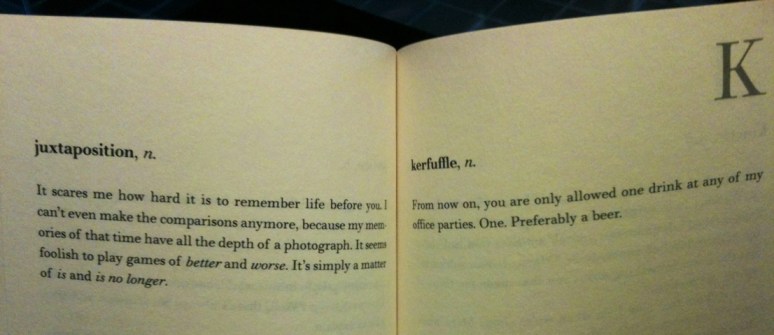
I actually ended up reading almost all of The Lover’s Dictionary, despite it having the word “lover” in the title, which, jeez. When my wife picked it up, she said something like, “How can they call this a novel?” — fair question, because the book is structured like a dictionary. In point of illustration:

20120121-100117.jpg

I’ve got a bigger post on Levithan’s book coming up, one that tries to situate it in the context of other non-novelly novels—but in short it is a novel, a very contemporary one that tells the oldest story in the proverbial book (boy meets girl) in an elliptical way that suits our post-information age. Like I said more to come, but for now: The Lover’s Dictionary is funny, occasionally cruel, too-often saccharine, awfully real, sometimes deeply flawed, but consistently engaging (sorry for all the adverbs).

I imagine Margaux Fragoso’s memoir Tiger, Tiger will capture the fascination of a large audience, but half an hour of the book was almost more than I could bear. Not because Fragoso can’t write—far from it, in fact—but her subject matter, which is to say her stolen childhood, is rendered too raw,   too real for me; there’s nothing pulpy or lurid about Fragoso’s work, nor is there the aesthetic sheen of Lolita to gloss any of the ugly, sordid details.  Kathryn Harrison ponders the question of Tiger, Tiger’s audience in her favorable review at The New York Times:

So who — other than voyeurs looking for a sustained close-up of a pedophile in action — will want to read this book? To bear witness to a numbingly long series of violations of a child by a man who has honed his wickedness for decades is not more pleasant than it sounds. As a society we energetically oppose sexual abuse; as individuals most of us shy away from investigating a relationship characterized by creepy kisses and inappropriate fondling. Worse, we defend cowardice by calling it discretion — minding our own business. Maybe a book like “Tiger, Tiger” can help us be a little braver. Certainly, it took courage to write.

20120121-100131.jpg

Ralph Sassone’s The Intimates: sex scenes (straight and gay); lots of notations about parents; lots of characters.

Dieter Schlesak’s The Druggist of Auschwitz: This “documentary novel” blends actual testimony from the Frankfurt Auschwitz Trial, interviews with camp guards and prisoners, and fictional narrative to tell the true story of Dr. Victor Capesius, an SS officer who worked with Mengele. The book is less gimmicky than it sounds in this description, and if its documentary elements are blunter and less ambiguous than W.G. Sebald’s historical fragments, I suppose that’s what the subject matter merits.

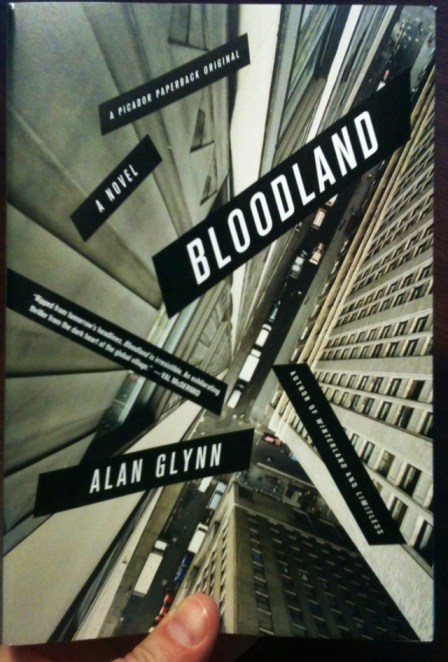
Alan Glynn’s new novel Bloodland (a Picador paperback original) is a noirish thriller set against the backdrop of political and corporate intrigue. Glynn writes with terse immediacy, telegraphing the plot in short punchy sentences that recall James Ellroy (without the finnicky slang). The book reads almost like a movie script, vivid and concrete. It’s a fast-paced page turner with a smart plot, just the sort of thing one wants from a thriller.

20120121-103504.jpg

Herding Donkeys by Ari Berman: Honestly not my thing, but if you want to read about the DNC from the time of Howard Dean to the rise of Barrack Obama, this is probably a book for you.

Zoë Heller’s Everything You Know: This is new in paperback again after over a decade. The story focuses on a cantankerous, unlikable son-of-a-bitch named Willy Muller. Things aren’t going well for him: he’s just suffered a heart attack, his daughter’s committed suicide, and the public still believes he murdered his wife. No wonder he hates humanity. Heller is probably most famous for her novel Notes on a Scandal, which was adapted into an excellent film in 2006.

Biblioklept’s picks: The Lover’s Dictionary; Tiger, Tiger; Bloodland.

Kakutani, Limn Addict

There’s a piece today in Salon about Michiko Kakutani taking up her favorite verb “limn” again. Thrilling stuff, I know, but it recalled to me this list compiled in Harper’s eight years ago by Christian Lorentzen of Kakutani’s use of “limn” (the Harper’s bit is not mentioned in the Salon article) —

Limn an entire life in a couple of pages

Limn the trajectory of an entire life in a handful of pages

Limn the suffocating atmosphere of small-town life and the alienation experienced by those who defy its provincial mores

Limn the last days of an alcoholic frontierswoman living in a small western town

Limn a man’s sudden apprehension of vulnerability and loss–all brought on by his discovery of a dead rat on his kitchen floor

Limn his inner life or probe the sources of his equipoise

Limn the inner life of people, surprised by the deceptions of time

Limn, with tenderness, wisdom, and humor, a vast array of human relationships, both straight and gay

Limn the rituals of hunting, trapping, planting, and canning with a wry mixture of amusement and respect

Limn the daily minutiae of life

Limn the human condition

Limn the complicated emotional geometry

Limn the delicate geometry of emotions

Limn a marriage of enduring passion and shared ideals

Limn Willy’s fears of losing Biff’s love and his own longings for immortality

Limn the brutal, perilous, and harrowing art of killing a forty-ton creature with a hand-thrown weapon

Limn some of its burgeoning manifestations

Limn the social and geopolitical fallout

Limn the surrealness of contemporary life

Limn the rhythms of the universe and an artist’s inner state of mind

Limn a future in which Pop Art gives way to Poll Art

Limn the nervous, almost flirtatious banter

Limn a hero’s efforts to achieve self-understanding

Limn girls’ secret struggle for womanhood in the post-sexual-revolution world

Limn the dangers posed by emerging diseases

Limn the spiritual yearnings and dislocations of an entire nation as it lurched from the certainties of the World War II years toward the confusions of the 1970s

Limn the irrationalities of history

Limn the impermanence–and emotional chaos–that threatens to overwhelm ordinary people

Limn the fabulous

Limn the ordinary with seeming nonchalance

Limn this deeply felt, if somewhat limited, theme with clarity and moral vigor

“I Have a Very Vivid Child’s View” — A 1967 Interview with J.R.R. Tolkien

Read this marvelous 1967 profile of J.R.R. Tolkien by Philip Norman, in The New York Times. The piece focuses on Tolkien’s impact in America, particularly in the universities and the counterculture. From the piece—

Tolkien wasn’t a hearty child. At the age of 3 he was brought home from Bloemfontein, South Africa, his birthplace, and brought up at Sarehole, near Birmingham. Until he won a scholarship to grammar school his mother taught him. He is particularly attached to the powder horn; it reminds him of being “borrowed” by an African named Isaac, who wanted to show a white baby off in his kraal. “It was typical native psychology but it upset everyone very much, of course. I know he called his son Isaac after himself, Mister Tolkien after my father and Victor-ha! ha!-after Queen Victoria.

“I was nearly bitten by a snake and I was stung by a tarantula, I believe. In my garden. All I can remember is a very hot day, long, dead grass and running. I don’t even remember screaming. I remember being rather horrified at seeing the Archdeacon eat mealies [Indian corn] in the proper fashion.” …Tolkien stuck his fingers in his mouth.

“Quite by accident, I have a very vivid child’s view, which was the result of being taken away from one country and put in another hemisphere-the place where I belonged but which was totally novel and strange. After the barren, arid heat a Christmas tree. But no, it was not an unhappy childhood. It was full of tragedies but it didn’t tot up to an unhappy childhood.”

“David Was A Big Sweater” — The NYT Profiles Karen Green, David Foster Wallace’s Widow

Dear Dr./Bolinas Lagoon -- Karen Green

The New York Times profiles Karen Green, David Foster Wallace’s widow. The article details Green’s new art show Sure Is Quiet at the Space Arts Center and Gallery in South Pasadena,California. The article is worth reading in full, of course (it’s actually quite moving), but here are some of Green’s own words from the piece, on Wallace and her art—

David was a big sweater, and I just remember the sweat marks on his pillow when I changed the cases.

. . .

I wanted to redirect my anger, which is useless and fuels nothing, by invading my own privacy and then covering it up.

. . .

There’s been so much chaotic conversation in my head . . . I’ve been thinking, thinking so much. I wanted to take all the chaotic stuff and make it quiet.

. . .

David could be the great artist in the household, I didn’t care . . . I’ve been accused by academic friends of not having the right dialogue with the art world — not being knowledgeable about what’s cool, what’s desirable out there right now. But I’d rather work at Starbucks and make what I want.

. . .

I kept making art because I didn’t know what else to do, and that’s what I’ve always done . . . I felt everyone else was so much more advanced in the grieving process.

. . .

I really was thinking about language, the power of it . . . The power of David’s work, for example, which meant so much to people. But when you get as sick as he was, everything loses meaning.

. . .

You can be charmed and fooled by language .  .  It doesn’t stop, but it’s never enough.

Tom McCarthy Reads from His Novel C (. . . and We Gripe about Michiko Kakutani)

At The Guardian, Tom McCarthy reads from his novel C. Here’s Biblioklept’s review of C.

And, while we’re on reviews of C, I want to gripe about Michiko Kakutani’s negative review of the book at The New York Times. If you don’t like a book, fine. But if you’re a critic at an organ that purports to be the nation’s beacon of journalistic excellence, you need to practice better criticism than what Kakutani’s done here. I think it’s pretty much a given that a critic should judge a book on its own terms–in terms of what the author was trying to do. Instead, Kakutani faults McCarthy’s book for not living up to a standard she finds in Ian McEwan’s Atonement, of all things–

But unlike Mr. McEwan’s masterpiece “C” neither addresses larger questions about love and innocence and evil, nor unfolds into a searching examination of the consequences of art. Worse, “C” fails to engage the reader on the most basic level as a narrative or text.

Kakutani provides no real evidence for that second claim but I’ll let that alone for a moment, simply because I think she’s wrong, and that she doesn’t bother to back her subjective judgment reveals a rushed reading. What really bothers me though is this idea that C was supposed to address “larger questions about love and innocence and evil”–where did she get that idea? She tells us where she got it: a novel by Ian McEwan.

Here she is again dissing McCarthy for not meeting the Kakutani standard–

Although Mr. McCarthy overlays Serge’s story with lots of carefully manufactured symbols and leitmotifs, they prove to be more gratuitous than revealing.

Just what was the novel supposed to reveal to Kakutani? The same mysteries that McEwan plumbed in his earlier novel? Why, exactly? One of C’s greatest pleasures is its resistance to simple answers, to its willingness to leave mysteries unresolved (I believe this is what Keats meant by negative capability).

Kakutani devotes a few sentences to C’s dominant theme of emerging technology and communication–

As for the repeated references to radio transmissions and coded messages sent over the airwaves, they are apparently meant to signal the world’s entry into a new age of technology, and to underscore themes about the difficulties of communication and perception, and the elusive nature of reality. But while the many technology references also seem meant to remind the reader of Thomas Pynchon’s use of similar motifs in “Gravity’s Rainbow,” Mr. McCarthy’s reliance on them feels both derivative and contrived.

Notice how instead of talking about McCarthy’s novel she retreats to another novel? Why? Why does she assume that C is echoing Gravity’s Rainbow? This isn’t a rhetorical question–she doesn’t bother to tell us. She just uses Pynchon’s book to knock McCarthy’s, not to enlarge any analysis of it. That is the laziest form of criticism.

The New York Times did better by publishing a review of C by Jennifer Egan this weekend. Egan’s review is positive–and I loved C–but that’s not why the review redeems the Times’ standard. Egan’s review actually considers the book, discusses its language and themes, and tackles it on its own terms. When Egan does reference another book–Dickens’s David Copperfield–she does so in a way that enlarges a reader’s understanding of McCarthy’s project–not her own ideal of what a book should be.