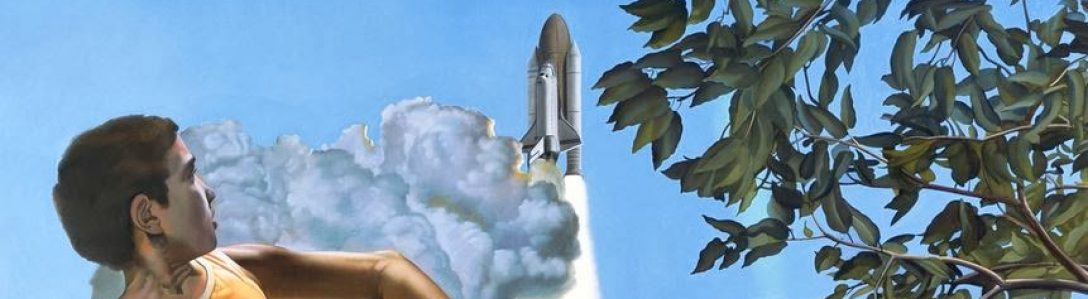
The object of art is to make the reader or viewer or listener aware of what he knows but doesn’t know that he knows … And this is doubly true of photography, because the photographer is making the viewer aware of what he is actually seeing and yet at the same time not seeing. So many people in urban environments are walking around without seeing what is in front of them, let alone what is at the margin of vision, because what they see seems to have no meaningful relationship to them as observers. It is the art of the photographer to wrest back meaning for the observer from the input of impressions. Cut, shuffle, pick a card, any card… what do we see as we walk the streets of a city? A jumble of fragments. Now, these fragments are meaningful to you because they are what you have chosen to see.
I used to have an exercise that I suggested to my students at New York City College. Walk around the block and try to keep your eyes open for a change. Now sit down and write what you have just seen with particular attention to what you were thinking when someone walked by, when you saw a certain billboard, when a car passed… and so forth.
It soon becomes apparent that these fragments are not meaningless, that they mean something very definite to you, spelling out messages, cryptic messages … Some students think they are going insane. “Everything is talking to me.” Of course it is … it always was… You are just starting to listen and see a little. (One student became convinced that I was the Anti-Christ and that voices were telling him to kill me. At this point I edged into the kitchen and sought the proximity of a potato masher.)
Another exercise I called “color walks.” Walk down a New York street and pick out all the reds-focusing on the red. Now shift to the blues, the yellows, the whites… Blue again and I know the car coming up behind me will be blue… and it is. Or you’re running out of yellow… a yellow cab comes right on cue. Just start looking and you will see. Example-I am thinking about New Mexico. Round a corner and there is a New Mexico license plate. “New Mexico, Land of Enchantment.”
Click, click, click. Catch these intersection points between your inner reality and what you are seeing, between the inner reality and the outer reality. They have a particular relevance to the observer and, if the observer is also a photographer, the intersection points give the photographs their special style. Now take a stack of photographs. We are looking for the point where inner reality and outer reality intersect.
From William S. Burroughs’s introduction to Robert Walker’s New York Inside Out, a 1984 collection of street photography. The introduction was published, along with several of Walker’s photographs, in the August 1984 issue of Popular Photography.










 Biblioklept