Some occult switchwork | Notes on Thomas Pynchon’s Shadow Ticket, Ch. 30-32

Notes on Chapters 1-7 | Glows in the dark.

Notes on Chapters 8-14 | Halloween all the time.

Notes on Chapters 15-18 | Ghostly crawl.

Notes on Chapters 19-20 | The needs of cold capitalist reality and those of adjoining ghost worlds come into rude contact.

Notes on Chapters 21-23 | Phantom gearbox.

Notes on Chapters 24-26 | Idiots get respect out here, they’re believed to be in touch with invisible forces.

Notes on Chapters 27-29 | We’re in for some dark ages, kid.


Chapter 30 opens in “The Vienna branch of MI3b, daytime, a modest-size office decorated with a movie poster of Lilian Harvey waltzing with Willy Fritsch in Der Kongreß tanzt and an ancient map of the Hapsburg Dual Monarchy.

Der Kongreß tanzt (The Congress Dances) is a 1931 UFA production set in Vienna, 1815 — if you want to go down the rabbit hole, maybe start with this contemporary New York Times review of the film. The Congress Dances was Weimar UFA’s tentpole shot at competing with Hollywood; later the production company would be subsumed by the Nazis. A current throughout Pynchon’s works has been something like, resist the military-industrial-entertainment complex. It’s worth noting the emphasis on dancing here, a motif in Shadow Ticket. Is dancing a form of transcendent resistance? Or is it a narcotizing agent?

The Habsburg Dual Monarchy, formed in 1867 after the Austro-Prussian War, joined two distinct nations under one emperor — a kind of bilocation — leaving ethnic and nationalist tensions unresolved. These divisions weakened the empire, contributing to the instability that helped spark World War I and, after its collapse, left a fragmented Central Europe whose resentments helped set the stage for World War II.

We are in that stage-setting right now, in that fragmented, fragmenting Central Europe, in the office of British Military Intelligence Section 3 where secret agent couple Alf and Pip Quarrender have been called before “Station chief Arvo Thorp.” Thorp informs the Quarrenders that their asset Vassily Midoff is “seeking to join a motorcycle rally in progress at the moment” — the Trans-Trianon 2000 Tour of Hungary Unredeemed that everyone’s set out on — and “that someone must be sent round” to cut off that loose end posthaste. The Quarrenders are upset — “But he was ours, Thorp…Our bloke” — but orders are orders. They do question the rationale of the orders though, wondering if it was simply “too much effort to keep all [Vassily’s] allegiances straight.” Here we have a neat little summary of how some readers may feel sussing motives and plot points from Shadow Ticket. 

Codebreaker Alf gets something proximal to an “answer” when he intercepts an encrypted message floating around various intelligence agencies: Vassily “has apparently been promoted to deputy operations officer of an unacknowledged narkomat, a Blavatskian brotherhood of psychical masters and adepts located someplace out in the wild Far East.” Pynchon further underlines Shadow Ticket’s haunted themes, bringing up Stalin’s “chief crypto genius Gleb Bokii [who] is also running a secret lab specializing in the paranormal.” 

But Alf can’t fully crack the code (natch), receiving “only glimpses behind a cloak of dark intention at something on a scale far beyond trivialities of known politics or history, which one fears if ever correctly deciphered will yield a secret so grave, so countersacramental, that more than one government will go to any lengths to obtain and with luck to suppress it.” In a chilly series of sentences, Alf, pushed by “some invisible power,” continues chipping at the encryption against his better judgment. But the encryption is, well, cryptic, even as it portends a future yet to come (including the ominous not that Stalin, “threatened by supernatural forces [would] probably go after Jews first.”

Alf concludes that Vassily “may have gone mad, he may in fact have crossed a line forbidden or invisible to the likes of us, thrown by some occult switchwork over onto an alternate branch line of history.” The “alternative branch line” again evokes the novel’s themes of bilocation (which I’ve tried to enumerate in previous riffs).

(The bigger Pynchonian bilocation is frequently visible/invisible, in the spiritualist-materialist sense — which perhaps finds a moral corollary in convenient/inconvenient.)

So well and anyway–the Quarrenders track down the Russian Trans-Trianon caravan and locate Vassily, but he manages to escape on a Rio-bound zeppelin painted like a watermelon, to their relief.

Graf Zeppelin over Guanabara Bay, in Rio de Janeiro, Brazil, 25 May 1930

“Hicks, Slide, and Zdeněk come rolling into a parts depot deep in the Transylvanian forest,” at the beginning of Chapter 31. (Slide is an American journalist; Zdeněk is a non-gigantic golem, if you need help keeping track.) They are on the Trans-Trianon 2000 motorcycle route, presumably tracking Hop Wingdale. Or Daphne Airmont. Or Bruno Airmont. Or…?

Here in “actual Transylvania, the vampire motherland itself,” the trio drives through hairpin turns frequented by vengeful spirits, passages cursed by some local shaman, marsh life you wouldn’t want swarming around you after dark…And the bats of course.” According to Zdeněk these vampire bats are the Unbreathing, who go about their business in a silence not even broken by pulsebeats.”

Slide’s brought along his Leica camera to “cover the supernatural angle,”  but the pictures all end up blank: “a vampire’s allergy to silver, an ambivalence as to light itself…” I’ve foregrounded Shadow Ticket’s Gothic motifs and impulses throughout my notes. I don’t really know what I could add to, like, golems and vampires in Transylvania.
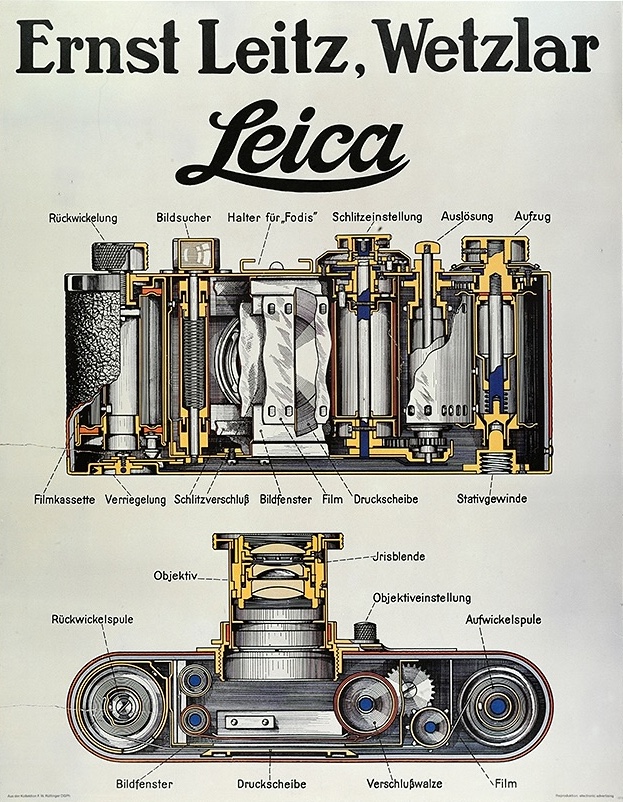
A diagram of the internal mechanisms of a Leica I camera

Noting that the Trans-Trianon 2000 motorcycle route allows for “impulses disallowed in normal society” to be acted upon, the narration then gives over to one of my favorite little bits in Shadow Ticket, a self-contained episode of spontaneous pig rescue.” The pig in question is “a Mangalica, a popular breed in Hungary at the moment, curly-coated as a sheep, black upper half, blonde lower. And that face! One of the more lovable pig faces, surrounded by ringlets and curls.”

Mangalica piggy looking cute

Pynchon’s porcophilia is well-documented, with pigs showing favorably throughout his work–particularly in Mason & Dixon and in Gravity’s Rainbow, where Tyrone Slothrop takes on the role (and costume) of Plechazunga, the Pig-Hero, and then later wanders through the Zone with a sweet pig as his companion-guide, while the narrator sings:

“A pig is a jolly companion,
Boar, sow, barrow, or gilt–
A pig is a pal, who’ll boost your morale,
Though mountains may topple and tilt.”

Back to Hicks: wandering the compound one day hears a piano in the distance, recognizes the tune as ‘Star of the County Down,’ a longtime favorite of Irish drinkers he’s known.” It turns out that none other than Pip Quarrender is singing and playing the song — which she identifies as “Dives and Lazarus,” a traditional English folk song that that adapts a riff from the Gospel of Luke. Pips notes that it’s “technically it’s a Christmas carol, though uncomfortable for the average churchgoer given its rather keen element of class hostility.” We have here another bilocation, a song with two separate but real co-existing lives. (Throw in a little class warfare, too.)

Hicks then runs into Terike, who’s concerned that Ace Lomax is missing, on the run from she-knows-not-what (it’s Bruno). The chapter ends with “Zdeněk the golem [locating] Hop Wingdale en route to a Croatian guerrilla training camp near the Hungarian border.” He decides to go check it out.


We’re back to Hop Wingdale and his band in Chapter 32 begins with their tricked-out road-Pullman ominously “moving deeper into Vladboys terrain.” We learn that the “band find themselves growing less enthusiastic about the Trans-Trianon 2000 Tour of Hungary Unredeemed [as] Loose cocaine isn’t always practical on these beat-up roadbeds.” The musicians settle on enormous pills of “cocaine and morphine, known as a speedball.” 

The band pulls in to a “towering wooden cylinder set in a clearing, filled with the snarling of low-displacement bike engines.” Their gig is at a Wall of Death motor cycle stunt show.
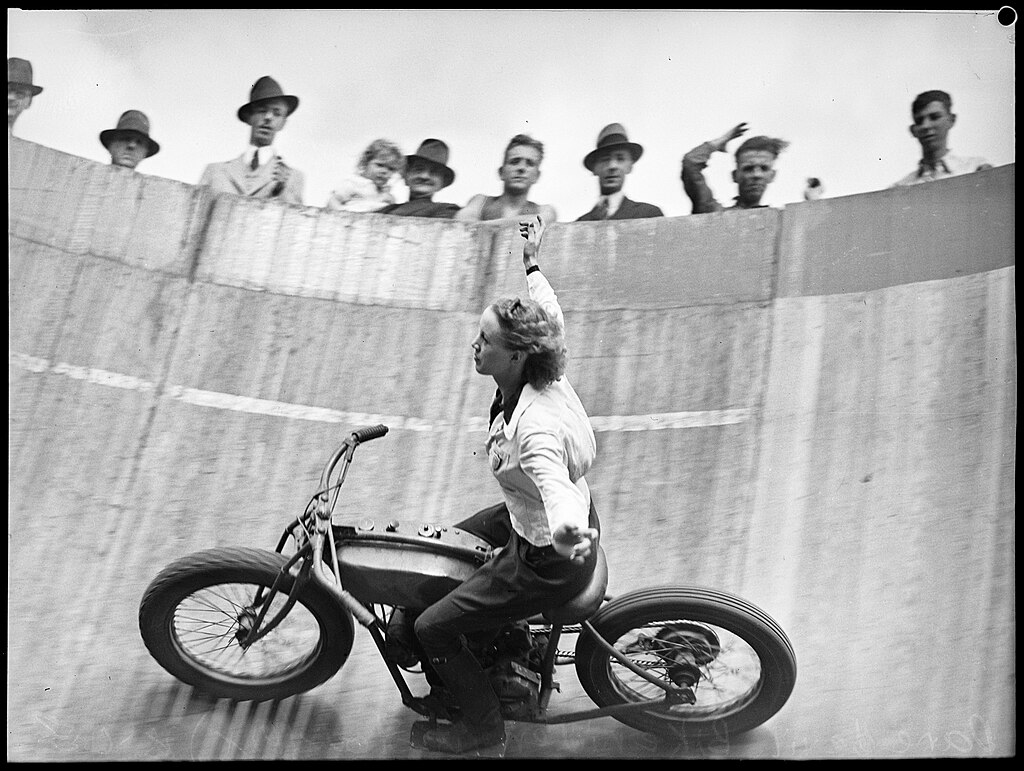
Motorcyclist Clara Lee riding the ‘Wall of Death’, Sydney Easter Show, 1938

Pynchon invokes the image of a wall of death late in Gravity’s Rainbow: “somewhere, out beyond the Channel, a barrier difficult as the wall of Death to a novice medium, Leftenant Slothrop, corrupted, given up on, creeps over the face of the Zone.” The metaphor here of course is the wall between the living and the dead.

It turns out that Ace Lomax has been stunt riding on the Wall of Death for tips. Prompted by the band, he sings a Western tune: “Things were so jake, at the O.K. Corral— / Till those Earps and Clantons came along—.” The fantasy here is of an unspoiled West which eventually succumbs to the violence of competing agencies.

Ace recognizes Hop and congratulates his being “still vertical.” He proceeds to tell the musician that Bruno Airmont had tried to get Ace to assassinate Hop, but he decided that wasn’t his gig and hit the road: “By nightfall he’s in Bratislava and slipping unnoticed in among a convoy of Trans-Trianon machinery.” In their discussion about the Wall of Death, Hop brings up motordrome physics: “Somebody said it’s safe long as you keep moving fast enough, something about centrifugal force.” We get here a repetition of one of Shadow Ticket’s major themes, neatly summed up by Stuffy Keegan back in Ch. 20: as long as you can stay on the run, that’s the only time you’re really free.” 

Ace then hits the road. He fails to check in back at the Trans-Trianon base camp, causing Terike’s cryptic road-adventuress face…to drift into disarray. She decides to light out looking for him.

The chapter ends with the narrator telling us that it turns “out that in some walled-in maze of a mountain town Ace has missed a turn…and ends up running on fumes.” He’s pursued by not only wolves but also the fascist Vladboys, “who also run this terrain in packs.” The fascist gang are on what I take to be dirt bikes, faster than Ace’s Harley. The last line, “Ace finds himself in the hands of the Vladboys,” sets up a nice opportunity for a big dramatic climactic rescue scene.


Spontaneous pig rescue | A self-contained episode from Thomas Pynchon’s Shadow Ticket

What seems to’ve begun happening out here on the route with some regularity is that impulses disallowed in normal society are surfacing unexpectedly and being acted upon. Some more benevolent than others, spontaneous pig rescue, for example.

Unaccustomed bustle one day in the repair shop, where the ill-tempered Sándor Zsupka, across whose path few who have ever ventured care to do so again, currently on the run from a number of felony charges, including actual bodily harm, is putting together a pig-customized helmet and goggles combination revealing along with his criminal activities a gift for millinery.

“This is your…”

“Spirit guide, and even a spirit guide can do with some extra windproofing now and then. Further questions?”

“Never seen a pig quite like this…”

She’s a Mangalica, a popular breed in Hungary at the moment, curly-coated as a sheep, black upper half, blonde lower. And that face! One of the more lovable pig faces, surrounded by ringlets and curls. Squeezita Thickly should only look half this adorable.

No more than idly cruising the countryside, Sándor happened to get off on one of those fateful back roads, and there in a steep farmyard were a family and their livestock, a cute meet, you’d say, though not half as cute as the pig herself. “Oh and this is Erzsébet, we’re eating her for Christmas.”

Hell they are. Sándor and some barroom accomplices perform a snatch-and-grab in the middle of the night, the pig pretending to be asleep, as she is picked up, installed in the sidecar of Sándor’s rig, and spirited away, just like that. Next thing anybody knows she’s riding in the sidecar, done up in helmet and goggles, beaming, posing like a princess in a limousine. Anybody feels like commenting, they don’t.

A self-contained episode from Thomas Pynchon’s 2025 novel Shadow Ticket.

Gravity’s Rainbow, annotations and illustrations for page 299 | Some of us love to be taken under mountains, and not always with horny expectations

In the Venusburg, John Collier (1901)

There is that not-so-rare personality disorder known as Tannhäuserism 1 . Some of us love to be taken under mountains, and not always with horny expectations 2 .—Venus, Frau Holda, her sexual delights—no, many come, actually, for the gnomes , the critters smaller than you, for the sepulchral way time stretches along your hooded strolls down here, quietly through courtyards that go for miles, with no anxiety about getting lost… no one stares, no one is waiting to judge you… out of the public eye… even a Minnesinger needs to be alone…4  long cloudy-day indoor walks… the comfort of a closed place, where everyone is in complete agreement about Death 5. Slothrop knows this place. Not so much from maps he had to study at the Casino 6 as knowing it in the way you know someone is there… .

Plant generators are still supplying power. Rarely a bare bulb will hollow out a region of light 7 . As darkness is mined and transported from place to place like marble, so the light bulb is the chisel that delivers it from its inertia, and has become one of the great secret ikons of the Humility, the multitudes who are passed over by God and History 8. When the Dora prisoners 9  went on their rampage, the light bulbs in the rocket works were the first to go: before food, before the delights to be looted out of the medical lockers and the hospital pharmacy in Stollen Number 1, these breakable, socketless (in Germany the word for electric socket is also the word for Mother—so, motherless too 10 ) images were what the “liberated” had to take… .

From Thomas Pynchon’s Gravity’s Rainbow, page 299. All ellipses are Pynchon’s

1 Tannhäuser was a 13th-century German Minnesinger, a troubadour—a knight-poet. A bard, I guess. Is Slothrop a bard, a knight-poet—a knight-errant? Not sure. (He’ll later deny he’s on a grail-quest).

In German legend, Tannhäuser falls from grace when he discovers Venusberg, the underground home of Venus. He stays there a year, neglecting his betrothed and indulging in erotic delights. Teutonic Christian knight that he is, Tannhäuser leaves Vensuberg (Hörselberg) for Rome to beg forgiveness from Pope Urban IV, who denies him, saying absolution would be as impossible as his papal staff flowering in bloom. The staff does bloom—but not until Tannhäuser has disappeared back into the Venusian underworld (and his gal Lisaura has killed herself in grief).

2006au1525_jpg_l
Title page to ‘The Story of Venus and Tannhäuser’ Aubrey Beardsley (1895)

Cf. the sonnet on pages 532-33 of Gravity’s Rainbow:

Where is the Pope whose staff will bloom for me?
Her mountain vamps me back, with silks and scents,
Her oiled, athletic slaves, her languid hints
Of tortures transubstantiate to sky,
To purity of light-of bonds that sing,
And whips that trail their spectra as they fall.
At weather’s mercy now, I find her call
At every turn, at night’s foregathering.

I’ve left no sick Lisaura’s fate behind.
I made my last confession as I knelt,
Agnostic, in the radiance of his jewel…
Here, underneath my last and splintering wind,
No song, no lust, no memory, no guilt:
No pentacles, no cups, no holy Fool…

The Tannhäuser myth connects to Gravity’s Rainbow’s Orphean motif, and readers may take note of the hero’s descent played against the mystical “blooming” of a staff…eh, what with the sexy phallic overtones and all.

And we can use the third line of Gravity’s Rainbow here to describe the bloom on the staff: “It is too late” (3).

2 “Some of us love to be taken under mountains, and not always with horny expectations” — one problem with reading Gravity’s Rainbow only once or twice is that it is too full of great sentences and you’ll likely miss them. Pynchon continues to deflate what he has inflated (only to inflate it again)—sex will give over to death—or, an un-death (an un-sex) here. Slothrop inert, underground, in the tombs.

3 Cf. Pynchon’s 2006 novel Against the Day, wherein (briefly, too briefly), the heroic Chums of Chance take on “the increasingly deranged attentions of the Legion of Gnomes, the unconscionable connivings of a certain international mining cartel, the sensual wickedness pervading the royal court of Chthonica, Princess of Plutonia, and the all-but-irresistible fascination that subterranean monarch would come to exert, Circelike, upon the minds of the crew of Inconvenience [ETC.]”

4 . “…out of the public eye… even a Minnesinger needs to be alone…”

pynchon-simpsons-0-01

5 A perhaps puzzling line, if only because I think I get what everyone’s in “agreement about Death” here—Death as a kind of cozy promise that we all say “Fuck off” too in lieu of “long cloudy-day indoor walks” (and the horny expectations of underground sexbergs). I’m interested on anyone else’s ideas, of course.

6 The Casino Hermann Goering—Slothrop’s last “official” assigned post.

7 We privilege light over darkness; Pynchon inverts the image here: light is a violent “chisel”; darkness is a commodity to be mined.

The bulb becomes one of GR’s most powerful motifs, culminating in the late (and essential) episode “Byron the Bulb” (find Harold Bloom’s essay on Byron the Bulb if ye can).

References to Byron, via the indispensable folks at References to Byron, via the indispensable Pynchon Wiki:

“a bulb over his head burning all night long. He dreamed that the bulb was a representative of Weissmann, a creature whose bright filament was its soul” 426-27; “a theatre marquee whose sentient bulbs may have looked on […] witnesses to grave and historical encounters” 464; “The Story of” 647-55; “Someday he will know everything, and be just as impotent as before” 654; “electrical tidal wave” 665; “young Jack may have had one of them Immortal Lightbulbs then go on overhead” 688; screwed into Gustav’s kazoo hashpipe, 745

8 Pynchon loves to underline his big theme of “preterite vs elect” in Gravity’s Rainbow. There’s something sweet and even sad in the idea of the Humiliated, the preterite, finding an “ikon” in a lightbulb—a self-spark, a fragment of light. (I riffed a bit a while ago on GR’s theme of fragmentation and the dream of wholeness, the redemption of total light).

9 Laborers in the Mittelbau-Dora concentration camp who were forced to work toward producing V-2 rockets for the Nazis. Myth—Venus, gnomes, etc.—tips back into the horrific reality of slave labor. Pynchon seems to cast the Dora laborers as the preterite, grasping at their own spark of redemption by looting lightbulbs…and then reframes their preterite condition in the ironic quotation marks around “freedom.”

10  I don’t think the German word for electric socket, steckdose, corresponds so much to the word for “mother,” but maybe…it does? In any case, the etymology does seem to correspond to the concept of absence, or cavity, which permeates this episode of GR.

I looked for the root of “socket” in Josepth T. Shipley’s The Origins of English Words: A Discursive Dictionary of Indo-European Roots, and while I didn’t find anything about mothers or Venus or lightbulbs, I did find a connection to another of Gravity’s Rainbow’s big motifs: Pigs!—-

img_3852


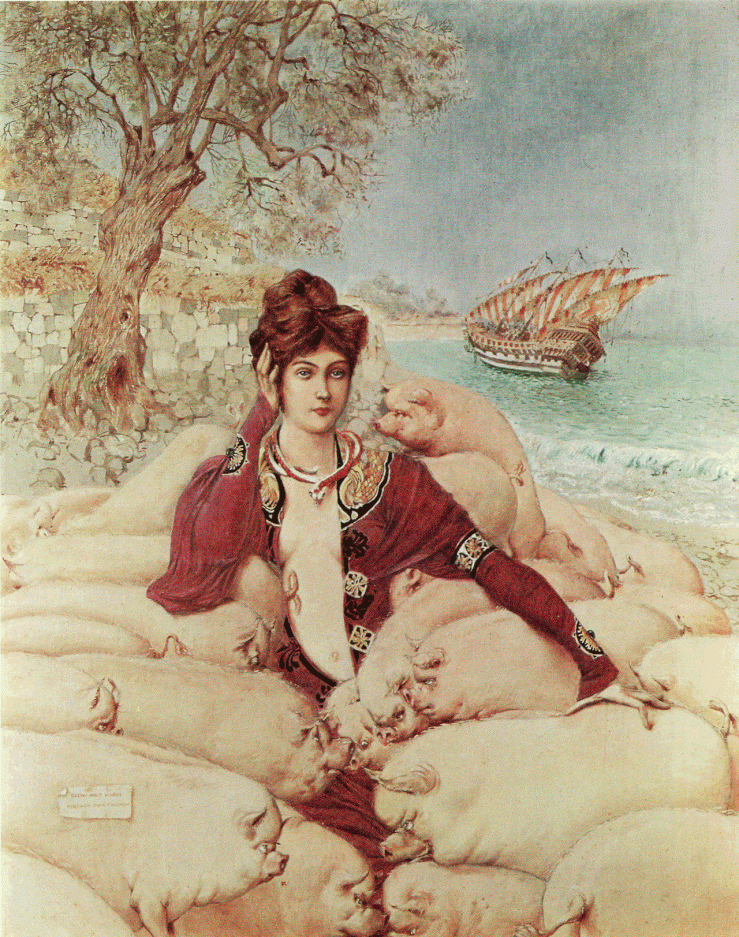
Circe — Gustav-Adolf Mossa

tumblr_na9apljsa81qf8evxo1_1280

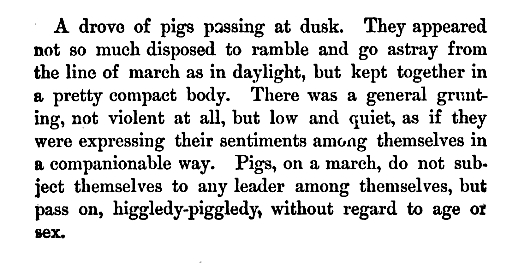
Note on pigs (From Nathaniel Hawthorne’s August 31, 1838 journal entry)

Screenshot 2015-08-31 at 3

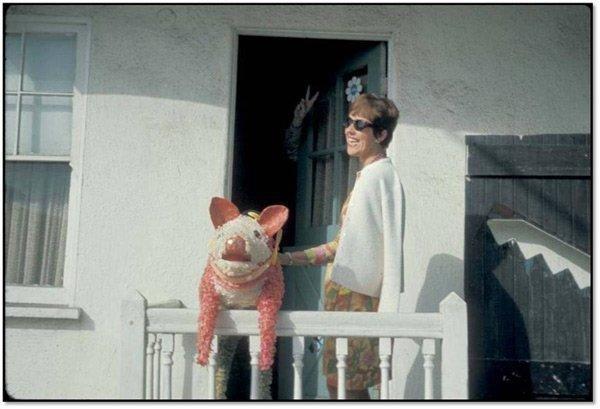
Possible photographic evidence of Thomas Pynchon’s hand (and a pig piñata)

6a00d8341c630a53ef014e88434d23970d

From an article in LAist:

A photograph on the back cover of a memoir by Phyllis Gebauer, a close friend of Pynchon’s, shows the author’s hand extending out of the door of his apartment giving a peace sign with a pig piñata named Claude and Gebauer in the foreground. In 2011, Gebauer donated her rare collection of signed Pynchon novels to UCLA.

I seem to recall mention of this pig piñata in A Journey into the Mind of P (but I could be wrong).

Big thanks to Doug Eklund for pointing the photo out to me.