Tag: Poetry
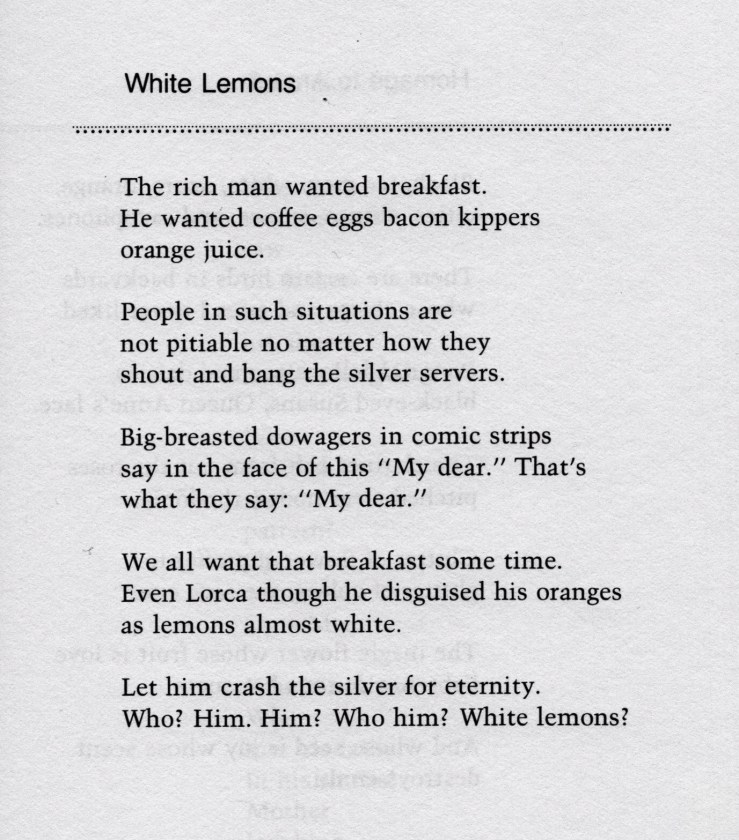
“White Lemons” — Gilbert Sorrentino
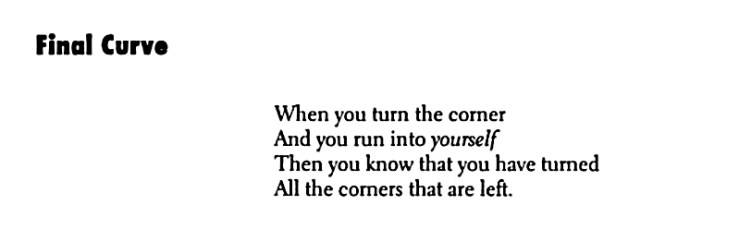
“Final Curve” — Langston Hughes
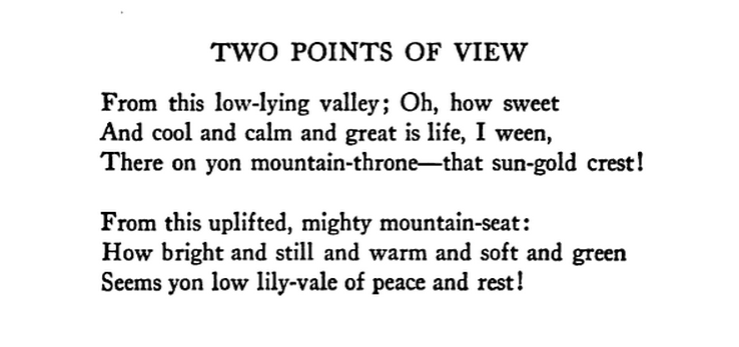
“Two Points of View” — Lucian B. Watkins
The artist must not become a storyteller (Balthus)
…the artist must not become a storyteller. The anecdote should not exist in painting. A picture or subject imposes itself, and it alone knows how profound and vertiginous it is. Nothing happens in a picture, it simply is; it exists by essence or does not exist at all. Baudelaire said a poem is there before it is there. Otherwise, it would be akin to something narrative, something inflected, willed into being by the artist. A picture or poem escapes these contingencies, with terrifying freedom and fiercely self-sufficient violence. In this sense, the artists is a mere link in a chain that began long ago. At Lascaux, for example, and even before Lascaux. There is no hierarchy, and Chardin is not better than Lascaux. All these creative connections belong to the same earthly song, from the ancient source of the world that I know nothing about, but which sends me a few messages by flashes of sun—or starlight. The artist constantly seeks to rediscover the illuminating fire, the hearth where sparks are made.
From Balthus’ memoir Vanished Splendors.
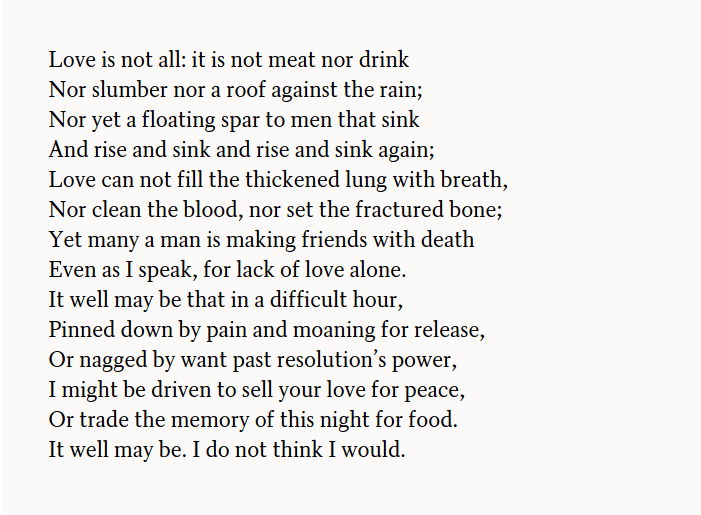
“Love is not all” — Edna St. Vincent Millay
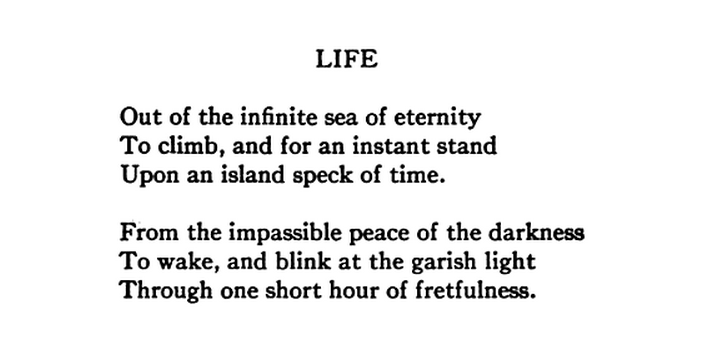
“Life” — James Weldon Johnson
“What You Mean I Can’t Irony?” — Ishmael Reed
“What You Mean I Can’t Irony?”
by Ishmael Reed
A high-yellow lawyer womantold me I ought to go toEurope to “broaden your perspective.” This happened ata black black cocktail partyan oil portrait, Andrew Carnegie,smiling down
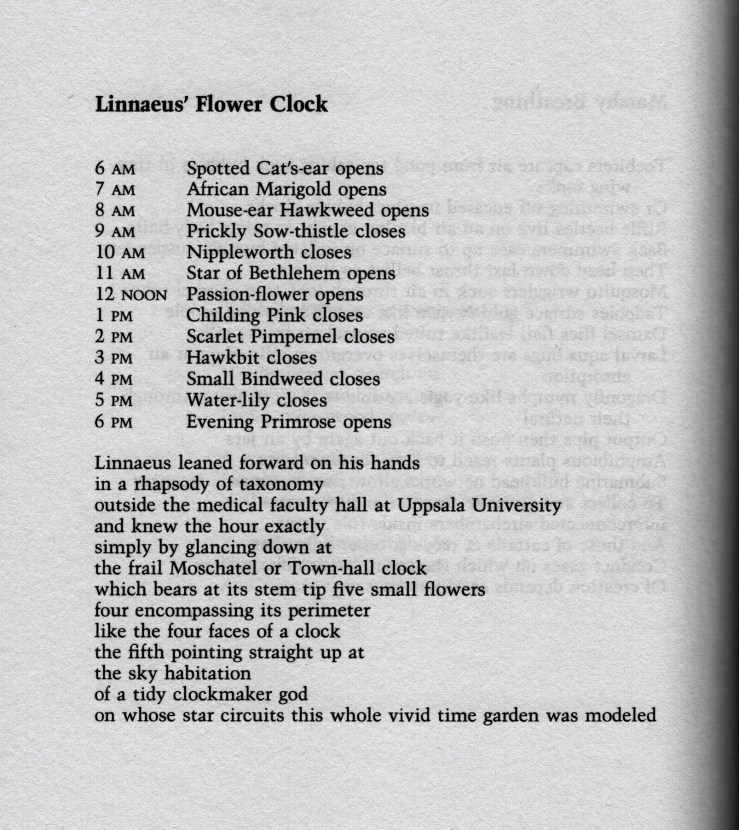
“Linnaeus’ Flower Clock” — Tom Clark
“All Things Decay and Die” — Robert Herrick

“Population Explosion” — Archibald MacLeish

“If I should learn, in some quite casual way” — Edna St. Vincent Millay

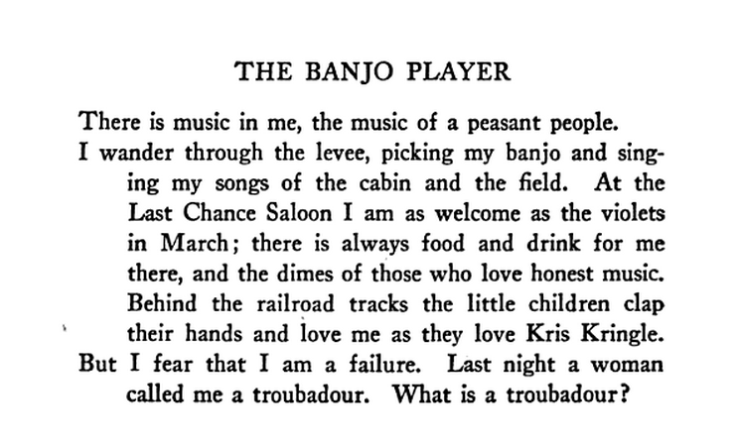
“The Banjo Player” — Fenton Johnson
History is an attempt to make the past seem stable (William Carlos Williams)

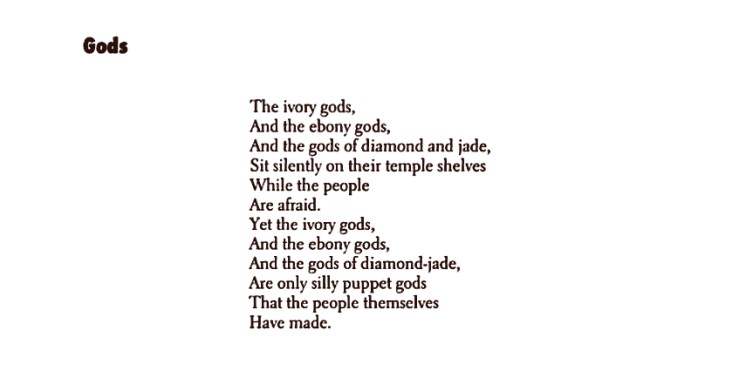
“Gods” — Langston Hughes
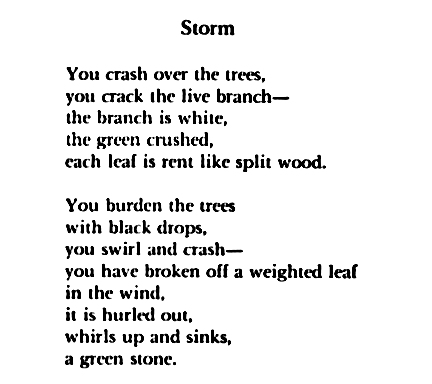
“Storm” — H.D.
“One Art” — Elizabeth Bishop
“One Art”
by Elizabeth Bishop
The art of losing isn’t hard to master;
so many things seem filled with the intent
to be lost that their loss is no disaster.

Lose something every day. Accept the fluster
of lost door keys, the hour badly spent.
The art of losing isn’t hard to master.

Then practice losing farther, losing faster:
places, and names, and where it was you meant
to travel. None of these will bring disaster.

I lost my mother’s watch. And look! my last, or
next-to-last, of three loved houses went.
The art of losing isn’t hard to master.

I lost two cities, lovely ones. And, vaster,
some realms I owned, two rivers, a continent.
I miss them, but it wasn’t a disaster.


—Even losing you (the joking voice, a gesture
I love) I shan’t have lied.  It’s evident
the art of losing’s not too hard to master
though it may look like (Write it!) like disaster.
 Biblioklept