Book Acquired 1.03.2012 — Tim Tebow Edition

My father doesn’t read a lot of books, or at least I don’t think he does, but I know he read Through My Eyes, the Tim Tebow memoir. I’m pretty sure he must have gotten a duplicate for Christmas, because he sent a copy my way yesterday.

If you don’t know who Tim Tebow is (that is, if you’re not a fan of U.S. football, or not from the States, or you just don’t care about sports, or Twitter, or whatever), he was one of the greatest college players of all time, leading the Florida Gators to two national championship titles and two SEC titles. He’s also a devout Christian, the son of missionaries. He currently is the starting quarterback for the Denver Broncos, a team he helped take (quite improbably) to the playoffs this year.

Also: a vocal contingent of people really enjoy hating on him.

Not me. Tebow is from my hometown. I went to the University of Florida. I’m a big Gator fan. And even though I’m not exactly simpatico with evangelical Christianity, Tebow has always struck me as a genuinely good, nice person.

Anyway, I have some interest in the book, although I’m sure it’s pretty standard ghostwritten sports celebrity memoir stuff.
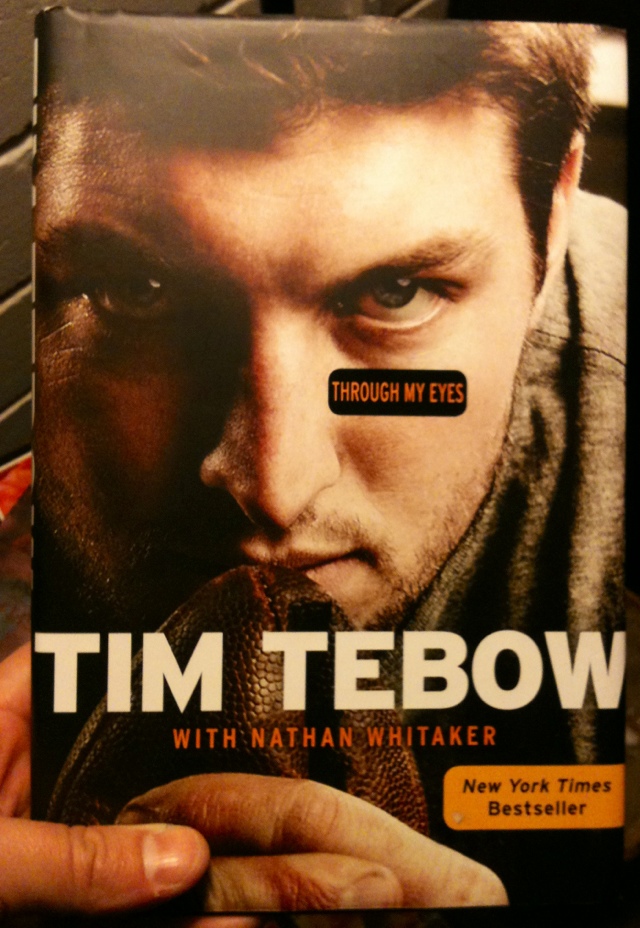
20120103-175429.jpg

Here is what my dad also got for Christmas: a signed Tebow ball. (My name is also Ed, so one day maybe I will have this ball too):

20120103-175448.jpg

Bret Easton Ellis on David Fincher’s Film Zodiac

This weekend, Twitter followers of novelist Bret Easton Ellis were treated to BEE’s views on the films of director David Fincher, with particular consideration paid to Fincher’s overlooked (by audiences, at least) 2007 film Zodiac. I liked Ellis’s commentary, not just because I think he’s spot on here, but also because he points out why so many people might not have liked (or, dare I say “got”) Zodiac on first viewing: the movie was mismarketed. Here’s BEE—

In my original review of Zodiac, I pointed to my own early misunderstanding of what the film was—

When Zodiac came out last year, I prejudicially–and wrongly–assumed that the film, the tale of the infamous Zodiac killer who menaced California in the late sixties and early seventies, would be a moody character study, all ominous texture, smoggy chase scenes, and desperate anger à la Fincher’s 1995 thriller, Se7en (that movie where Gwyneth Paltrow’s head gets chopped off), or even worse, Fincher’s awful 1997 effort The Game. Most Hollywood suspense films–Fincher’s included–propel themselves on chase sequences, meaningless yelling, and overstated light and music queues that seem to scream “this is the part where you feel tense.” Zodiac, however, eschews all of these often vacuous tropes in favor of simply telling a story.

Zodiac is a methodical, investigative procedural about truth, a film that looks at what happens when we try to put order to disorder, when we try to give narrative to life’s loose ends—when we try to understand radically stochastic violence. In retrospect, it seems to me that Fincher’s work here is akin to Roberto Bolaño in some ways, and I think that if people went into it understanding that it was going to be a meditation on truth, and not, say, a cops and robbers thriller, they might appreciate it more (for what it’s worth, several people wrote in on my review to tell me how wrong I was about what I liked about the film. I think, like Ellis, they should give it another shot).

The AV Club Interviews William Gibson

The AV Club interviews cyberpunk pioneer William Gibson about his new novel, Zero History. From the interview–

AVC: You’ve talked elsewhere about the modern dilemma of separating the real from the virtual. How does something like Twitter confuse the issue?

WG: More and more, I think the thing our descendants will find most quaint and old-fashioned about us is the trouble we still take to make that distinction, between the virtual and the “real.” I think that will seem sort of Victorian to them, because I think we’re already losing the need to make the distinction, and I don’t see that as necessarily a bad thing. That doesn’t fill me with the panic it fills some people with. The back-and-forth [of Twitter] is the same back-and-forth we’re having right now in a telephone conversation, and it’s very much like the back-and-forth that Victorian English people had with their three mail deliveries a day. Except that with a medium like Twitter, it’s simultaneously public, in large part. It becomes a communal activity. I don’t see it as a new activity, inherently. I think it’s something we’ve had equivalents of for forever, but the completely post-geographical way in which we’re able to do it is new. And it must be changing it somehow. I actually don’t think we can know what emergent technologies are doing to us while they’re doing it to us. In fact, I don’t think we know yet what broadcast television did to us, although it obviously did lots. I don’t think we’re far enough away from it yet to really get a handle on it. We get these things, I think they start changing us right away, we don’t notice we’re changing. Our perception of the whole thing shifts, and then we’re in the new way of doing things, and we take it for granted.

Roger Ebert’s Lovely, Sarcastic Tweets about E-books

Great series of tweets today from Roger Ebert about e-books. Here’s what he’s done so far–

Here’s my old e-book “10,000 Jokes, Toasts and Stories,” and written inside “To my boy Roger from Daddy.”

Look at this theater ticket stub I found! I used it in an old e-book, from Stratford-upon-Avon.

Needed: New Yorker cover showing Dr. Johnson in his library, a cup of tea at hand, with shelves and piles of his e-books.

I found this e-book on a top shelf of a used e-book store. Its cover somehow reached out to me.

I love to relax in my library and let my eyes stray over my e-books, each one triggering its own response.

We only met in the first place because she spotted the cover of the e-book I was reading across the aisle on the train.

Great stuff!

Proust 101

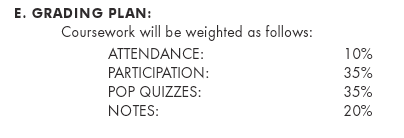
For the next week, October 1st-7th 2009, the folks who brought you Patrick Alexander’s guide to Marcel Proust, Marcel Proust’s Search for Lost Time will host a series of 140-character “lectures” about Proust’s oeuvre on Twitter. The course will repeat on the week of the 8th. The press release includes the following grading component:

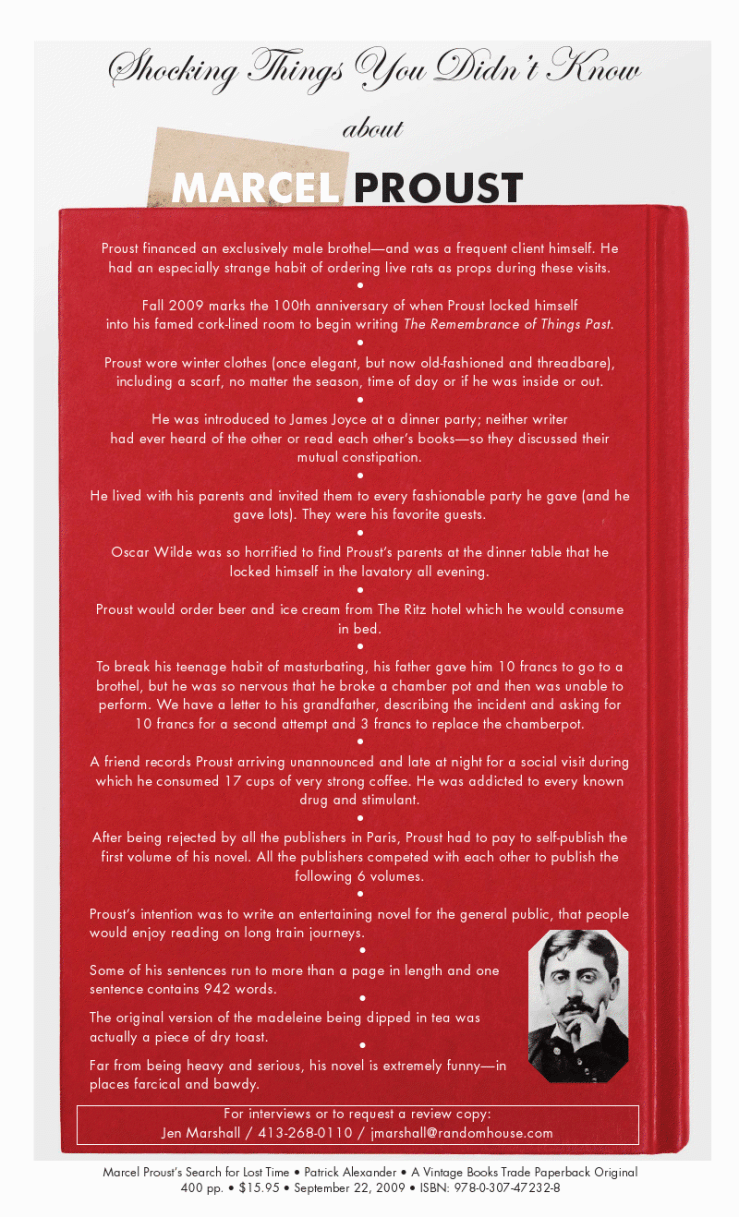
Picture 1We’re pretty sure the grading plan is fairly tongue in cheek, but the lectures might be fun, and perhaps might contain something a bit more substantial than the average, uh, tweet (ugh). More at Proust Guide. There’s also a chance to win free Proust stuff for those who participate in the Proust Questionnaire on Facebook, so check that out too. In the meantime, we got a kick out of this “Shocking Things You Didn’t Know about Marcel Proust” flier that came with the press release:
gview