“A Good Book Needs Time” — Nietzsche

153. A Good Book Needs Time. —Every good book tastes bitter when it first comes out, for it has the defect of newness. Moreover, it suffers damage from its living author, if he is well known and much talked about. For all the world is accustomed to confuse the author with his work. Whatever of profundity, sweetness, and brilliance the work may contain must be developed as the years go by, under the care of growing, then old, and lastly traditional reverence. Many hours must pass, many a spider must have woven its web about the book. A book is made better by good readers and clearer by good opponents.

—Friedrich Nietzsche, Human, All Too Human, Part II.

I Burn Paris (Book Acquired, Some Time Last Week, Or Maybe Late the Week Before)

20120403-153842.jpg

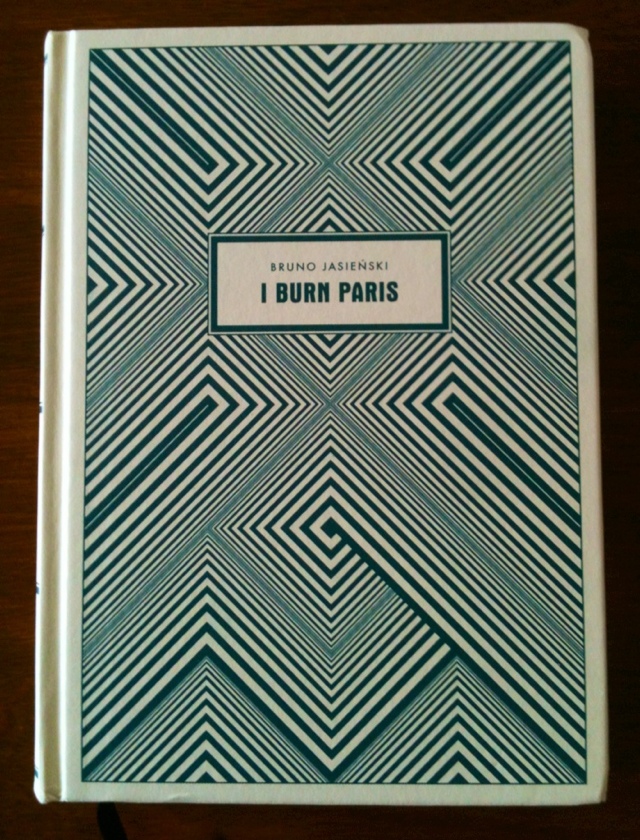
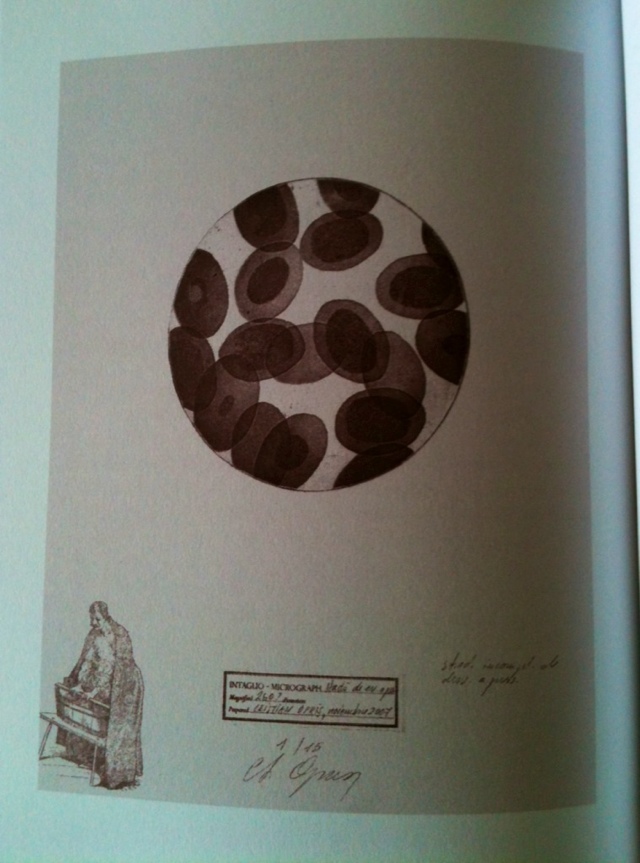
Bruno Jasieński was one of the leaders of the Polish Futurist movement, and his novel I Burn Paris looks fascinating. It’s also a beautiful looking book — publisher Twisted Spoon has done a lovely job here — an embossed hardback with no superfluous jacket, and even a nice lace bookmark (doesn’t show up in my photo). There are also illustrations by Cristian Opris.
20120403-153853.jpg

I’m hoping to get into this this weekend, but for now, here’s publisher Twisted Spoon’s description:

I Burn Paris has remained one of Poland’s most uncomfortable masterstrokes of literature since its initial and controversial serialization by Henri Barbusse in 1928 inL’Humanité (for which Jasienski was deported for disseminating subversive literature). It tells the story of a disgruntled factory worker who, finding himself on the streets, takes the opportunity to poison Paris’s water supply. With the deaths piling up, we encounter Chinese communists, rabbis, disillusioned scientists, embittered Russian émigrés, French communards and royalists, American millionaires and a host of others as the city sections off into ethnic enclaves and everyone plots their route of escape. At the heart of the cosmopolitan city is a deep-rooted xenophobia and hatred — the one thread that binds all these groups together. As Paris is brought to ruin, Jasienski issues a rallying cry to the downtrodden of the world, mixing strains of “The Internationale” with a broadcast of popular music.

With its montage strategies reminiscent of early avant-garde cinema and fist-to-the-gut metaphors, I Burn Parishas lost none of its vitality and vigor. Ruthlessly dissecting various utopian fantasies, Jasienski is out to disorient, and he has a seemingly limitless ability to transform the Parisian landscape into the product of disease-addled minds. An exquisite example of literary Futurism and Catastrophism, the novel presents a filthy, degenerated world where factories and machines have replaced the human and economic relationships have turned just about everyone into a prostitute. Yet rather than cliché and simplistic propaganda, there is an immediacy to the writing, and the modern metropolis is starkly depicted as only superficially cosmopolitan, as hostile and animalistic at its core.

This English translation of I Burn Paris fills a major gap in the availability of works from the interwar Polish avant-garde, an artistic phenomenon receiving growing attention with recent publications such as Caviar and Ashes.

RIP Cynthia Dall

Pitchfork has reported the death of singer-songwriter Cynthia Dall. Dall was a frequent collaborator with fellow Drag City musician Bill Callahan, who sang and played on her 1996 album, which is now called Untitled, but was simply known as that record with the awesome cover and strange awesome songs when it came out: there was no attribution, although it clearly bore the mark of Callahan and fellow Drag City wunderkind Jim O’Rourke. Untitled was the strange hazy soundtrack for my last teenage years; Dall’s songs are still in my blood and brain. Her young death—she was only 41—feels surreal. Dall released Sound Restores Young Men in 2002, and was apparently working on demos for a new album at the time of her death.

From the Drag City website:

We are shocked and deeply disappointed to post this notice: Cynthia Dall passed away at her home in Sacramento last Thursday.

Cynthia was a muse that crossed over into actual-artist-dom. Her self was her original art, a spirit and image that was inspirational on first sight. The ’90s were a great time to start playing music when you didn’t really know the first thing about it other than you liked it, andCynthia was able to use her unique abilities along with her incredible energy to inspire those around her to help her make two really great albums.

It hasn’t sunken in yet that we won’t be hearing from Cindy again. Though she hadn’t released a new album in ten years, she called in regularly, sometimes to talk about her music and plans, sometimes to talk about everything BUT music and plans. She was an enormous fan of the world, and there were few topics that didn’t engage her in some way. Even outrage was conveyed with an enormous vivacity that could not be suppressed. It was this energy that lifted her up above the melancholy that infused her songs, and the devastating visions they often conveyed.

When Cynthia rang us the week before last with an update on the progress of new demos, we were glad to know it; glad to think of her getting her music together and to think of another chapter in the Dall Saga. It is stunning not merely because of the loss of that vision and that unheard record; more stunning and hurtful is to know that we will won’t be talking to her anymore. A light has gone from this world — and we hope you will join us in hoping that it has gone to place of greater peace.

Goodbye Cynthia — we’ll carry your love and joy and sorrow with us until we too are gone.

Dr. Seuss Portrait — Bill Sienkiewicz

(Via Hey Oscar Wilde!)

Slavoj Žižek Riffs on Kung Fu Panda

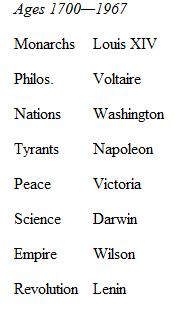
“Ages 1700-1967” — F. Scott Fitzgerald

From F. Scott Fitzgerald’s Notebooks.