Watch The Straight Story, David Lynch’s Disney Film

Hunt — Franz Stuck

Infinite Map Depicts the Geography of David Foster Wallace’s Infinite Jest


A description of Infinite Map from artist/creator William Beutler’s site, Infinite Boston:

A geographic infographic poster depicting the “territorially reconfigured North America” of the novel and identifying 250 of the most interesting locations with a color-coded dot and corresponding footnote. As you can see from the acromegalic thumbnail above, the 24”x36” print includes four telescoping map insets: O.N.A.N.’s North America, Northeast U.S. & Canada, Greater Boston and Metro Boston. The red shading represents my own painstaking, overdetermined conclusions about the most probable outline of the Great Concavity. In the upper right corner is the Great Seal of O.N.A.N., based on the description from page 153, and the map labels throughout include sometimes-obscure references to the novel’s the text. This image is the principal result of a long-term collaboration between myself and the Los Angeles-based creative design agency JESS3, whose technical ability and patience with yrstruly knows no bounds.

Biblioklept will run an interview with Beutler about his graphic work with David Foster Wallace’s Infinite Jest next week.

Read “Clara,” a Short Story by Roberto Bolaño


“Clara,” a short story by Roberto Bolaño:

She had big breasts, slim legs, and blue eyes. That’s how I like to remember her. I don’t know why I fell madly in love with her, but I did, and at the start, I mean for the first days, the first hours, it all went fine; then Clara returned to the city where she lived, in the south of Spain (she’d been on vacation in Barcelona), and everything began to fall apart.

One night I dreamed of an angel: I walked into a huge, empty bar and saw him sitting in a corner with his elbows on the table and a cup of milky coffee in front of him. She’s the love of your life, he said, looking up at me, and the force of his gaze, the fire in his eyes, threw me right across the room. I started shouting, Waiter, waiter, then opened my eyes and escaped from that miserable dream. Other nights I didn’t dream of anyone, but I woke up in tears. Meanwhile, Clara and I were writing to each other. Her letters were brief. Hi, how are you, it’s raining, I love you, bye. At first, those letters scared me. It’s all over, I thought. Nevertheless, after inspecting them more carefully, I reached the conclusion that her epistolary concision was motivated by a desire to avoid grammatical errors. Clara was proud. She couldn’t write well, and she didn’t want to let it show, even if it meant hurting me by seeming cold.

(Read the rest at The New Yorker)


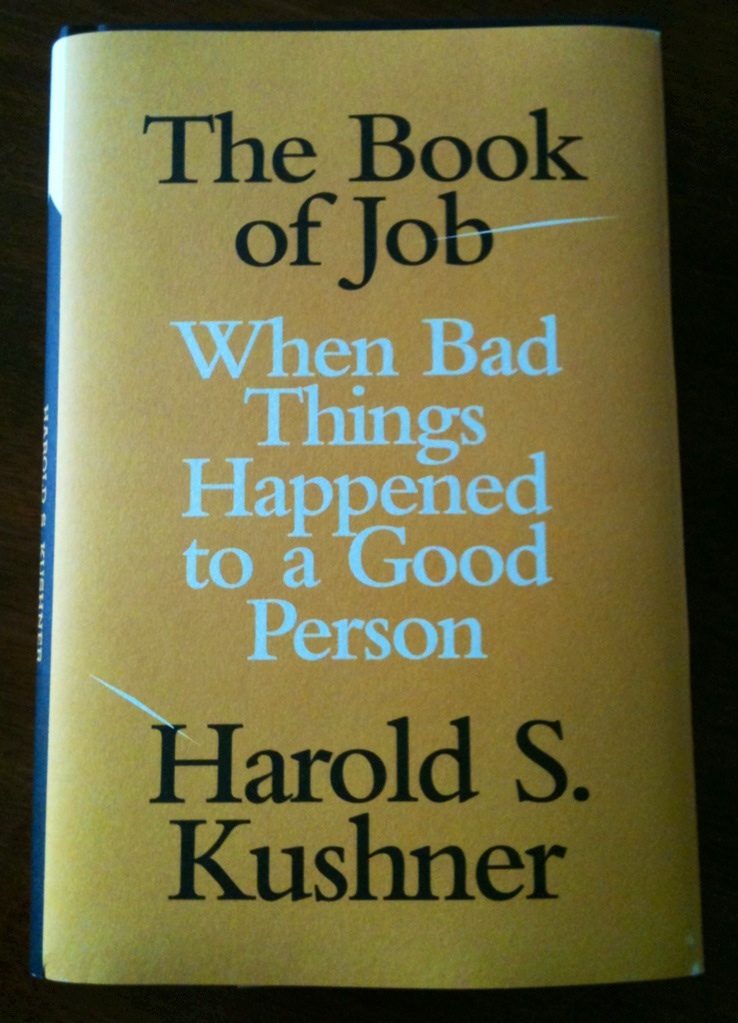
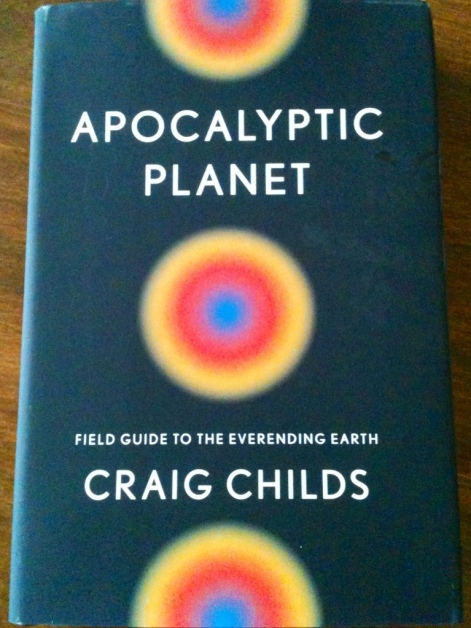
Apocalyptic Planet/The Book of Job: When Bad Things Happened to a Good Person (Books Acquired, 9.14.2012)

20120914-170929.jpg

Two new review copies from the good people at Pantheon.

First, Apocalyptic Planet, which looks pretty cool. Pub copy:

The earth has died many times, and it always comes back looking different. In an exhilarating, surprising exploration of our planet, Craig Childs takes readers on a firsthand journey through apocalypse, touching the truth behind the speculation.Apocalyptic Planet is a combination of science and adventure that reveals the ways in which our world is constantly moving toward its end and how we can change our place within the cycles and episodes that rule it.

In this riveting narrative, Childs makes clear that ours is not a stable planet, that it is prone to sudden, violent natural disasters and extremes of climate. Alternate futures, many not so pretty, are constantly waiting in the wings. Childs refutes the idea of an apocalyptic end to the earth and finds clues to its more inevitable end in some of the most physically challenging places on the globe. He travels from the deserts of Chile, the driest in the world, to the genetic wasteland of central Iowa to the site of the drowned land bridge of the Bering Sea, uncovering the micro-cataclysms that predict the macro: forthcoming ice ages, super-volcanoes, and the conclusion of planetary life cycles. Childs delivers a sensual feast in his descriptions of the natural world and a bounty of unequivocal science that provides us with an unprecedented understanding of our future.

I suppose I’m less enthusiastic about Harold Kushner’s take on The Book of Job

20120914-170918.jpg

Here’s the pub copy:

From one of our most trusted spiritual advisers, a thoughtful, illuminating guide to that most fascinating of biblical texts, the book of Job, and what it can teach us about living in a troubled world.

The story of Job is one of unjust things happening to a good man. Yet after losing everything, Job—though confused, angry, and questioning God—refuses to reject his faith, although he challenges some central aspects of it. Rabbi Harold S. Kushner examines the questions raised by Job’s experience, questions that have challenged wisdom seekers and worshippers for centuries. What kind of God permits such bad things to happen to good people? Why does God test loyal followers? Can a truly good God be all-powerful?

Rooted in the text, the critical tradition that surrounds it, and the author’s own profoundly moral thinking, Kushner’s study gives us the book of Job as a touchstone for our time. Taking lessons from historical and personal tragedy, Kushner teaches us about what can and cannot be controlled, about the power of faith when all seems dark, and about our ability to find God.

Rigorous and insightful yet deeply affecting, The Book of Job is balm for a distressed age—and Rabbi Kushner’s most important book since When Bad Things Happen to Good People.
Woman in Blue Reading a Letter — Johannes Vermeer